
Directing
Wen Pulin
Born 1957-01-01 · Shenyang, Liaoning Province, China
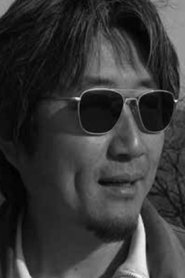
Wen Pulin is an art critic, writer, independent producer and documentary filmmaker. Since the 1980s, he has documented the development of Chinese contemporary art in the form of the moving image, photography, interviews and texts. Wen also lived in Tibet for many years and made many documentaries about Tibetan culture.
Acting credits
Behind the camera
 NR
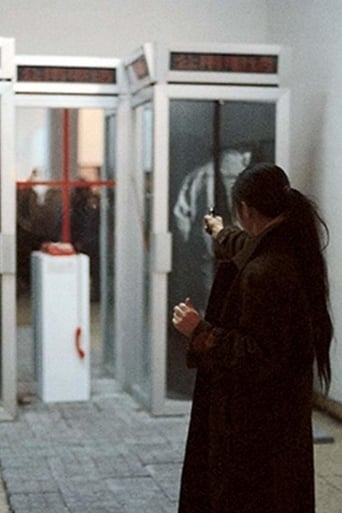
NRIn 1989, a group of avant-garde artists who had collaborated in private for years received permission to organize their own exhibition at the National Art Museum of China. However, one of the terms was to exclude performance artists from participating. The seven artists who were left out took action. At the opening ceremony, their lives changed as the sounds of gunfire rang out.
Seven Sins: 7 Performances during 1989 China Avant-Garde Art Exhibition
2016
NRIn 1989, a group of avant-garde artists who had collaborated in private for years received permission to organize their own exhibition at the National Art Museum of China. However, one of the terms was to exclude performance artists from participating. The seven artists who were left out took action. At the opening ceremony, their lives changed as the sounds of gunfire rang out.
Seven Sins: 7 Performances during 1989 China Avant-Garde Art Exhibition
2016
 NR
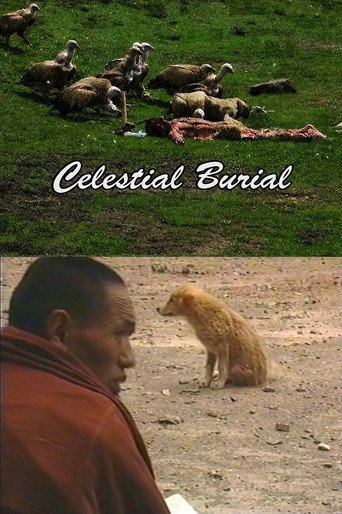
NRThis documentary follows the whole process of a celestial burial ceremony in Tibet. It shows Tibetan religious customs, arts, and many vanishing life styles.
Celestial Burial
1993
 NR
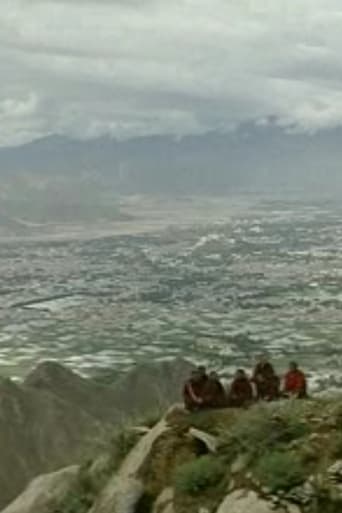
NRQingpu is a famous sacred mountain in Tibet, where countless monks have practiced for thousands of years. In 1989, Wen Pulin and Duan Jinchuan followed several monks up the mountain and took video of them. After three years, they revisited the same people and got a little closer to understanding their lives. As an in-depth dialogue with down-to-earth, rural people in Tibet, the film strives to understand Buddhism both as a philosophy, but also as a personal choice of lifestyle, as a transcendence of the chaos of life.
The Sacred Site for Asceticism
1993
 NR
NRThe Wen brothers, Wen Pulin and Wen Puqing -- as director and cinematographer, respectively -- document the social conditions, customs, and spiritual life of Buddhist nuns in Minqiong mountain near Lhasa, China in the 1990s.
The Nuns of Minqiong
1992
 NR
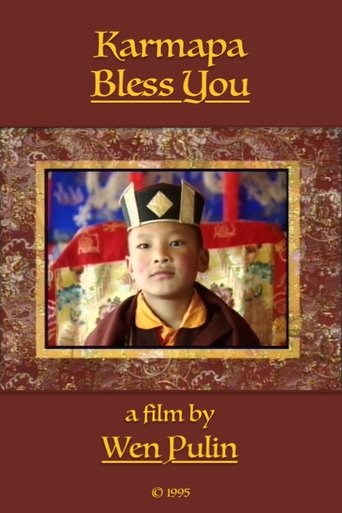
NRA documentary on the XVII Karmapa of Tibet. The film also presents the spiritual life of Tibetan Buddhists in the 1990s through interviews.
Karmapa Bless You
1995
Wen Pulin documents the social conditions, customs, and spiritual life of Tibetans in Lhasa.
Rebuilding Gongdelin
2001
 NR
NRA documentary film showing the oldest street in Lhasa, Bajiao St., also called Bakhor or Baghor), located in the town center. In the past, Bajiao was only used as a ritual circumambulation route, "a saint road" in the eyes of the Tibetans. Now it's developed into an old shopping district with colorful Tibetan houses lining the street, and the ground paved with man-made flagstones, preserving its ancient look. The film also shows the social conditions, customs, and spirtual lives of the Tibetan inhabitants.
Bajiao Street
1992
 NR
NRIndependent documentary by Jiang Yue.
The Residents of Lhasa's Potala Square
1992
 NR
NROn Tomb Sweeping Day, in 1988, a film crew set out for the monument of the Tangshan earthquake to shoot a memorial ceremony for the victims. This marked the beginning of shooting for a documentary called "The Great Earthquake." The crew continued to shoot through the rest of 1988, even staging a large-scale rock 'n' roll concert and performance art event on the Great Wall, and into 1989, including footage shot at the famous 1989 Avant-Garde Art Exhibition, where one artist fired two gun shots at her exhibit. More footage was shot during the Tiananmen protests, up until the events of June 4th shut down production for good. Shortly before, a two-hour "rough cut" was assembled by main director Wen Pulin and Assistant Director Hao Zhiqiang, which screened only once (and is preserved at University libraries in the U.S.). The footage has been recycled in some of Wen's later films, notably "China Action," but "The Great Earthquake" itself was never finished.
The Great Earthquake
1989
 NR
NRThe Wen brothers, as director and photographer of the film, documented their 10 years of journey in Tibet, from 1989 to 1999. Their film investigates the social conditions, customs, and the spiritual life of Tibetans.
Tibet: 10 Years
1999
 NR
NRA documentary about politically-charged Chinese performance art -- contains footage of the most significant performance art activities that took place in Mainland China during the 1980s and 1990s.
China Action
1999
 NR
NREarly filmed theater performance by avant-garde artist Wen Pulin.
Uncle's Dream
1985
 NR
NRDocumentary about the lives of a group of Tibetan religious dance performers.
Gods Go Down to Earth
1998
 NR
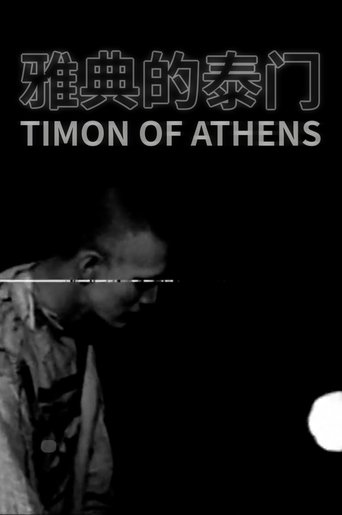
NRIn April of 1986, Wen Pulin and his then-wife Zheng Ziru directed students at Beijing Second Foreign Language Institute in an English-language play adaptation of William Shakespeare's "Timon of Athens." The play was part of "The First Shakespeare Festival in China," and in a move that was unusual for the era, Wen — who had already dabbled in independent filming with his students — decided to record the entirety of the play. This 'video' was screened for public audiences the same year of its production. And in March of 1987, it was displayed on television sets as a 'video installation' during the "Wen Pulin 1987 Art Exhibition." It is one of the earliest examples of video art in China.
Timon of Athens
1986
 NR
NRThird short film on Tibet, 'Murals and Stone Carvings of Lama Temple,' from Wen Pulin's Archive of Chinese Avant-Garde Art.
Tibet #3
1998
 NR
NRIn 1993, on the 100th anniversary of Mao Zedong’s birth, Wen Pulin mobilized the “Sun 100” series of artistic activities, staging programs at official institutions featuring avant-garde artists in Mao’s hometown, Shaoshan. The film "Sun 100" was intended to be a document of that work, representing the country and the nation thinking about a specific quandary: What is the spiritual heritage that's been left behind by Mao Zedong, if there is any at all? Wen planned for the film to show at the 1994 Hong Kong Film Festival, but withdrew it, and has never finished it, stating that his own views on Mao have shifted. 17 discs worth of footage (roughly 28 hours) from the unfinished film are included in the Wen Pulin Avant-Garde Art Archive held at Cornell University in the U.S.
Sun 100
1993
NRShort film on Tibet #1, 'Tibetan Artist Visit,' from Wen Pulin's Archive of Chinese Avant-Garde Art.
Tibet #1
1998
A biographical film of the the Karma-pa XVI and XVII of Tibet. The film also presents the spiritual life of Tibetan Buddhists in 1990s through interviews.
Karma-pa Bless You
1995
 NR
NRThe Wen brothers lived and traveled together with the living lama, Bajia, in Beijing and to his homeland in Ganzi Zangzu Zizhizhou in 1990s. This film documents that period. With the Wen brothers' help, Bajia made his dream come true -- building a Buddhist temple in his homeland.
Dreaming of Axu
1999
 NR
NRShort documentary with English narration that was prepared for the Inside Out: New Chinese Art exhibition at Asia Society in New York City, which ran from September 15, 1998 to January 3, 1999.
Avant-Garde Decade
1998