
Directing
René Vautier
Born — Died
1928-01-15 — 2015-01-04
Place of birth
Camaret-sur-Mer
Known for
Directing
Credits
65 titles
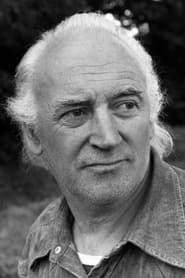
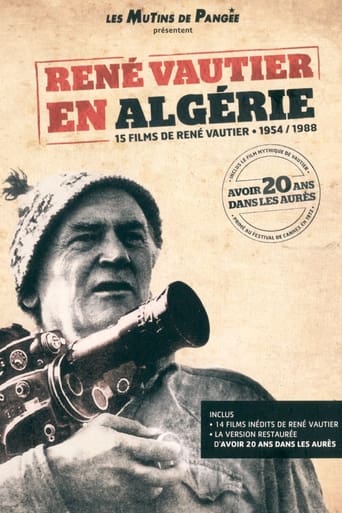
René Vautier, born January 15, 1928 in Camaret-sur-Mer (Finistère) and died January 4, 2015 in Cancale (Ille-et-Vilaine), is a French director and screenwriter, communist and anticolonialist, particularly known for his film Have twenty years in the Aurès. Born to a factory worker father and a teacher mother, René Vautier carried out his first militant activity within the Resistance in Brittany in 1943, when he was fifteen years old, which earned him several decorations. He was decorated with the Croix de Guerre at the age of sixteen, responsible for the “youth” group of the René Madec clan, cited in the Order of the Nation by General Charles de Gaulle for acts of Resistance (1944). René Vau…
Known for
 7.6
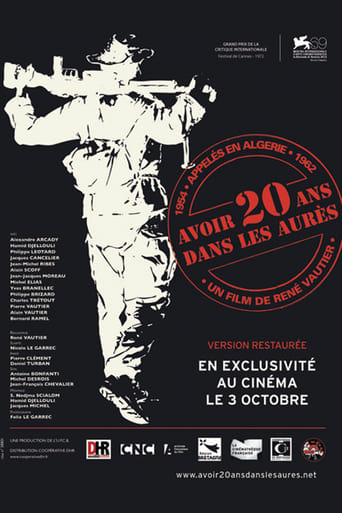
7.6A group of refractory and pacifist Bretons is sent to Algeria. These beings confronted with the horrors of war gradually become killing machines. One of them did not accept it and deserted, taking with him an FLN prisoner who was to be executed the next day.
To Be Twenty in the Aures
1972
The “Journal Annales” consists of almost 2.000 hours of video footage collected by filmmaker Lionel Soukaz since 1991. For “Carottage”, the idea was to take a random sample from this vast volume, like a geological core sample. The result is a condensed history of political struggles and radical cultural experimentation spanning two decades.
Carottage
2013
 NR
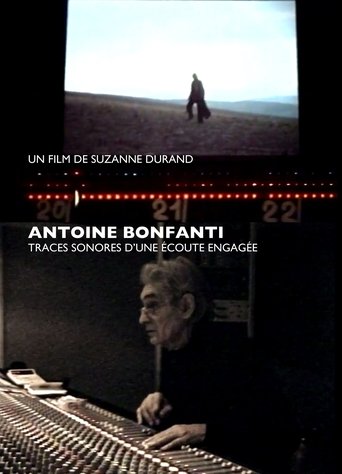
NRA documentary on the professional and personal affordances of the influential sound engineer Antoine Bonfanti.
Antoine Bonfanti, sonic traces of an engaged listening
2002
 9.0
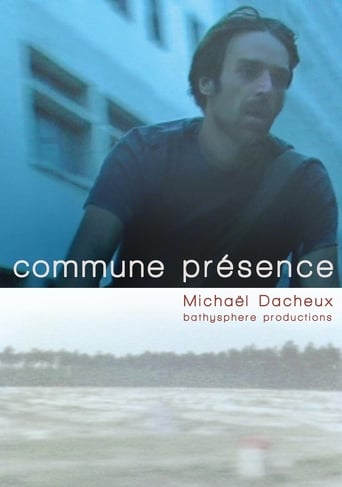
9.0Guided by a letter from an childhood friend, a young man visits places and people from the past marked by history and commitment. He then meets other people throughout the night, looking for ways to act and imagine collectively.
Commune présence
2008
 10.0
10.0Long quest for a director specializing in commissioned films, who after a depression rediscovers his loved ones, his Casbah district, himself. Taken in hand, for a while, by his Islamist neighbor, it is above all the meeting with an old projectionist giving him a censored history of cinema and Algeria, which helps him to change, and to accept his own fantasies, embodied by Marilyn Monroe and the Andalusian.
Lumières
1989
 8.5
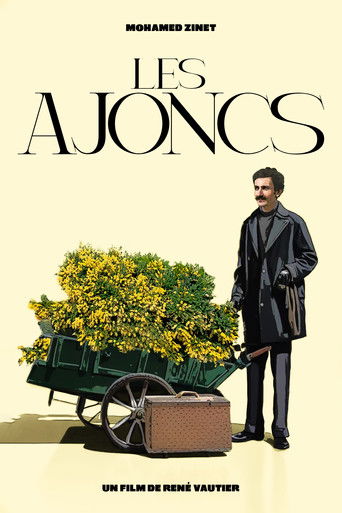
8.5An unemployed Algerian worker leaves Paris by hitchhiking. He soon found himself in Brittany and, seduced by the beauty of wild gorse, eventually established himself as a gorse merchant. But for problems with parking his little cart, he had a rough explanation with a law enforcement officer. The happy intervention of factory workers, the eager kindness they showed him, saved him from despair. This film is part of a trilogy "Them And Us" with the films "Les 3 Cousins" and "Techniquement Si Simple".
Les Ajoncs
1970
Film credits
2010s · 3 titles
The “Journal Annales” consists of almost 2.000 hours of video footage collected by filmmaker Lionel Soukaz since 1991. For “Carottage”, the idea was to take a random sample from this vast volume, like a geological core sample. The result is a condensed history of political struggles and radical cultural experimentation spanning two decades.
Carottage
2013
 NR
NRFounded in the second half of the 1990s, the experimental film association L'Etna witnessed the transition from film to digital cinema. Its premises, located in the heart of Paris, were unable to withstand gentrification.
Une certaine histoire du cinéma expérimental français
2019
 6.0
6.0In 1950, in full reconstruction, the workers of Brest went on strike. It will last more than a month and will be bloody. Edouard Mazé, a 26-year-old worker from Brest, will die during the demonstration on April 17, dozens of his comrades will be injured and one of them, Pierre Cauzien, will be amputated five days later. The city is under siege. René Vautier, a 20-year-old filmmaker, goes clandestinely to Brest, at the call of the CGT, to shoot a film on the reasons for anger. The trace of these events is now tenuous and carried by witnesses whose words are gradually dying out. This film proposes to find the traces of these events, to collect the words of the witnesses, to search their personal archives, to exhume the forgotten photograms, to open the official files hitherto protected, to delve into the depths of individual memories to understand. In 1950, a man died... But who still remembers?
Histoires d’images, images d’Histoire
2014
2000s · 8 titles
NRA documentary on the professional and personal affordances of the influential sound engineer Antoine Bonfanti.
Antoine Bonfanti, sonic traces of an engaged listening
2002
9.0Guided by a letter from an childhood friend, a young man visits places and people from the past marked by history and commitment. He then meets other people throughout the night, looking for ways to act and imagine collectively.
Commune présence
2008
 10.0
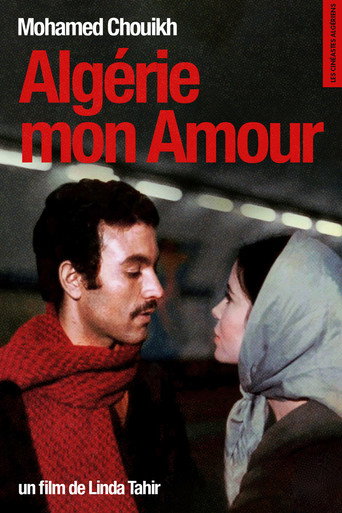
10.0This portrait from the "Algerian Filmmakers" collection, created by Linda Tahir-Meriau, focuses on Mohamed Chouikh, born in 1943 in Mostaganem, an Algerian actor and director. In 1965, he starred in one of the first major Algerian films, "L'Aube des Damnés" (The Dawn of the Damned) by René Vautier and Ahmed Rachedi. In 1966, he appeared in "Le Vent des Aurès" (The Wind of the Aurès) by Mohammed Lakhdar-Hamina. The film won the Best First Feature Award at Cannes. Until 1970, Mohamed Chouikh devoted himself primarily to his acting career in theater and film. It was Michel Drach's film, "Elise Ou La Vraie Vie" (Elise, or Real Life), based on the novel by Claire Etcherelli, that brought him to the attention of French audiences. In the 1970s, he became a director for Algerian television. In 1989, he directed "The Citadel", which was selected for more than 70 international festivals and won around twenty awards.
Mohamed Chouikh, Algérie mon Amour
2008
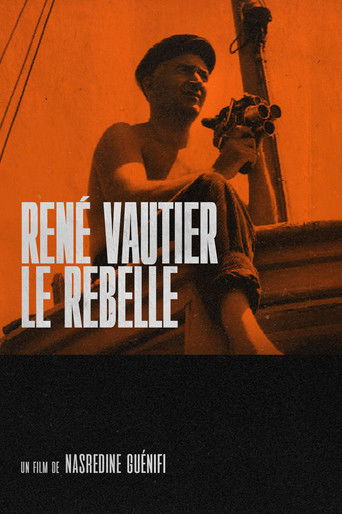 10.0
10.0No synopsis available yet.
René Vautier, le rebelle
2000
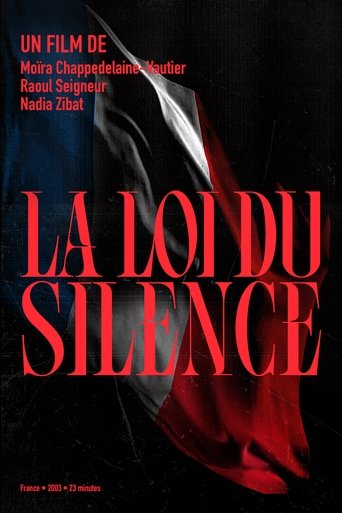 9.0
9.0The Law of Silence, a final-year documentary by Moïra Chappedelaine-Vautier at Femis, examines the 1963 Amnesty Law and the consequences it had on studies of the Algerian War. It brings together interviews conducted in 2002 with Henri Alleg, editor of the daily newspaper Alger Républicain from 1951 to 1955, and Pierre Vidal-Naquet, historian and essayist. It also features incredible statements from General Massu and lawyers unraveling the various legal defenses of people like Jean-Marie Le Pen. Not only does Moïra have her father, René Vautier, speak, but she also includes footage he himself filmed forty years earlier. A very interesting report, which notably reminds us that the Amnesty is not a pardon but the erasure of the sentence and also of the crime itself.
The Law of Silence
2003
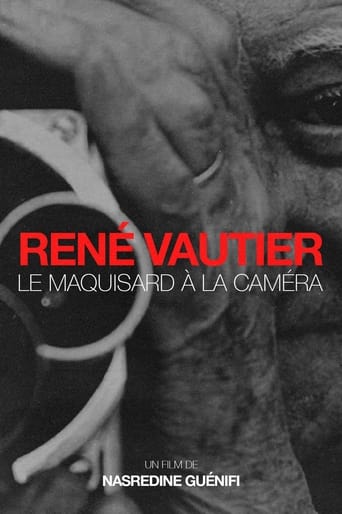 10.0
10.0No synopsis available yet.
René Vautier, le maquisard à la caméra
2000
No synopsis available yet.
Remise du Collier de l'Hermine à René Vautier
2000
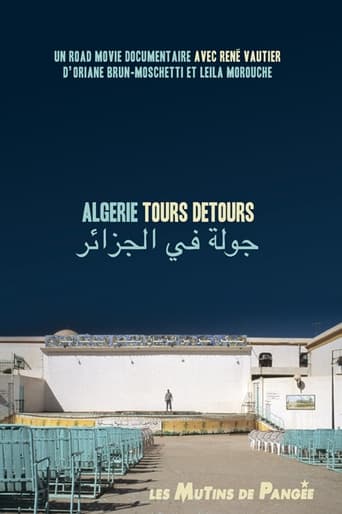 10.0
10.0A documentary road movie with René Vautier In the aftermath of Algeria's independence, René Vautier, a militant filmmaker, considered "the dad" of Algerian cinema, set up the cine-pops. We recreate with him the device of itinerant projections and we travel the country in ciné-bus (Algiers, Béjaïa, Tizi Ouzou, Tébessa) to hear the voices of the spectators on the political situation, youth and living conditions of men and Of women today.
Algérie Tours Détours
2007
1990s · 3 titles
 3.0
3.0An adaptation of the novel by the famous soil writer Vasily Belov, raising the problems of the harmful influence of Western civilization on the Russian mentality.
Everything is Ahead
1991
No synopsis available yet.
René Vautier, l'indomptable
1996
 10.0
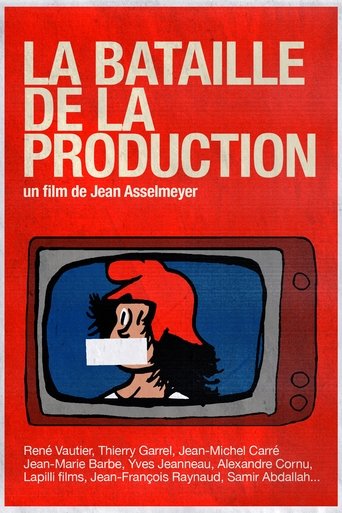
10.0In 1997, the committed filmmaker Jean Asselmeyer, armed with his camera, posed the following question at the General Assembly of Documentary Film in Lussas and in Paris: Is it possible today to make a committed creative documentary?, to René Vautier, Thierry Garrel, Jean-Michel Carré, Jean-Marie Barbe, Yves Jeanneau, Alexandre Cornu, Lapilli films, Jean-François Raynaud, Samir Abdallah and many others, not the least of whom.
The Battle of Production
1998
1980s · 3 titles
10.0Long quest for a director specializing in commissioned films, who after a depression rediscovers his loved ones, his Casbah district, himself. Taken in hand, for a while, by his Islamist neighbor, it is above all the meeting with an old projectionist giving him a censored history of cinema and Algeria, which helps him to change, and to accept his own fantasies, embodied by Marilyn Monroe and the Andalusian.
Lumières
1989
 10.0
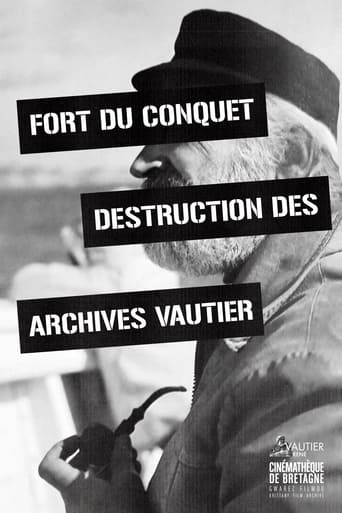
10.0Resistance fighter under the occupation, committed to the FLN during the Algerian war, member of the Medvedkine group after May 1968 and defender of Breton autonomy, René Vautier was a committed filmmaker, author of an anti-colonialist work in which he denounces the repression, torture and racism. In 1983, René Vautier discovered, by the light of a flashlight, his films cut up and scattered at Fort du Conquet. Police also came to check the damage.
Fort Du Conquet Destruction of the Vautier Archives
1983
No synopsis available yet.
Le Dur Désir de dire
1981
1970s · 4 titles
8.5An unemployed Algerian worker leaves Paris by hitchhiking. He soon found himself in Brittany and, seduced by the beauty of wild gorse, eventually established himself as a gorse merchant. But for problems with parking his little cart, he had a rough explanation with a law enforcement officer. The happy intervention of factory workers, the eager kindness they showed him, saved him from despair. This film is part of a trilogy "Them And Us" with the films "Les 3 Cousins" and "Techniquement Si Simple".
Les Ajoncs
1970
 9.0
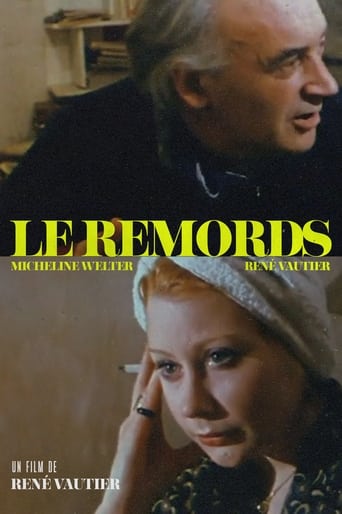
9.0A filmmaker witnesses an act of racist police violence in Paris. He discusses with a friend whether and how he should make a film out of this.
Le Remords
1974
 8.7
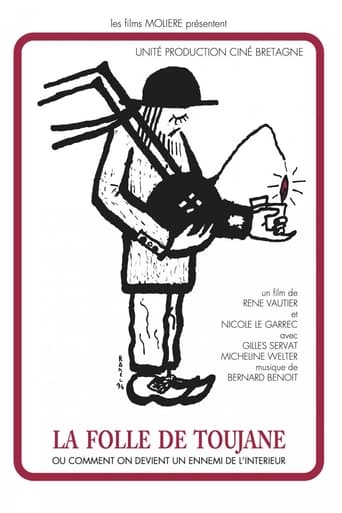
8.7This rambling political melodrama tells the story of a French Breton who learns about colonialism while teaching native students in France's colonies of Tunisia and Algeria and returns to his native Brittany to see that the same conditions prevail there.
The Madwoman of Toujane
1974
 10.0
10.02039... A third world war on every continent... Isolated in an old building with his partner, a young man refuses to seek shelter during an alert. He rejects all historical awareness. But tragic circumstances will decide otherwise. Day One: BEYOND THE WIND. Day Two: VERTICAL COMBAT. Day Three: HORIZONTAL COMBAT. 2045. Day Four: BEYOND THE WIND.
Four Days of a Partisan
1975
1950s · 2 titles
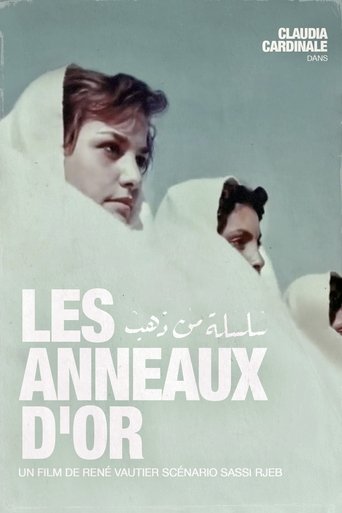 7.5
7.5At the time of Tunisian independence, owners of large boats decide to sell, while many small fishermen soon find themselves without work. Their wives then decide to pool their gold rings to sell them and thus buy boats.
Les Anneaux d'Or
1956
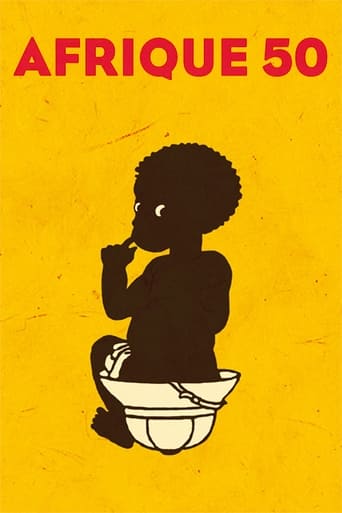 6.8
6.8The first French anti-colonialist film, derived from an assignment in which the director was to document educational activities by the French League of Schooling in West Africa. Vautier later filmed what he actually saw: “a lack of teachers and doctors, the crimes committed by the French Army in the name of France, the instrumentalization of the colonized peoples.” For his role in the film, Vautier was imprisoned for several months. The film was banned from public screening for more than 40 years.
Afrique 50
1950
Behind the camera
7.6A group of refractory and pacifist Bretons is sent to Algeria. These beings confronted with the horrors of war gradually become killing machines. One of them did not accept it and deserted, taking with him an FLN prisoner who was to be executed the next day.
To Be Twenty in the Aures
1972
7.6A group of refractory and pacifist Bretons is sent to Algeria. These beings confronted with the horrors of war gradually become killing machines. One of them did not accept it and deserted, taking with him an FLN prisoner who was to be executed the next day.
To Be Twenty in the Aures
1972
8.5An unemployed Algerian worker leaves Paris by hitchhiking. He soon found himself in Brittany and, seduced by the beauty of wild gorse, eventually established himself as a gorse merchant. But for problems with parking his little cart, he had a rough explanation with a law enforcement officer. The happy intervention of factory workers, the eager kindness they showed him, saved him from despair. This film is part of a trilogy "Them And Us" with the films "Les 3 Cousins" and "Techniquement Si Simple".
Les Ajoncs
1970
8.5An unemployed Algerian worker leaves Paris by hitchhiking. He soon found himself in Brittany and, seduced by the beauty of wild gorse, eventually established himself as a gorse merchant. But for problems with parking his little cart, he had a rough explanation with a law enforcement officer. The happy intervention of factory workers, the eager kindness they showed him, saved him from despair. This film is part of a trilogy "Them And Us" with the films "Les 3 Cousins" and "Techniquement Si Simple".
Les Ajoncs
1970
7.5At the time of Tunisian independence, owners of large boats decide to sell, while many small fishermen soon find themselves without work. Their wives then decide to pool their gold rings to sell them and thus buy boats.
Les Anneaux d'Or
1956
9.0A filmmaker witnesses an act of racist police violence in Paris. He discusses with a friend whether and how he should make a film out of this.
Le Remords
1974
8.7This rambling political melodrama tells the story of a French Breton who learns about colonialism while teaching native students in France's colonies of Tunisia and Algeria and returns to his native Brittany to see that the same conditions prevail there.
The Madwoman of Toujane
1974
10.02039... A third world war on every continent... Isolated in an old building with his partner, a young man refuses to seek shelter during an alert. He rejects all historical awareness. But tragic circumstances will decide otherwise. Day One: BEYOND THE WIND. Day Two: VERTICAL COMBAT. Day Three: HORIZONTAL COMBAT. 2045. Day Four: BEYOND THE WIND.
Four Days of a Partisan
1975
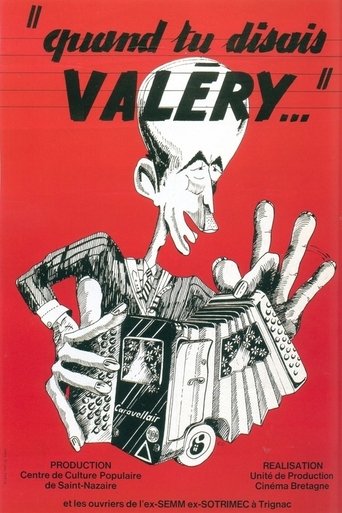 9.5
9.5Divided into five parts, this film traces the long strike by workers at the Caravelair caravan factory in Trigniac, near Saint-Nazaire, led by the C.G.T. and C.F.D.T. unions. Shot in 1975, the film achieved the strange feat of being produced entirely by workers' producers - 15,000 of them paid in advance for their tickets - and of being amortized, and even made profitable, by being shown outside the commercial circuit alone.
Quand tu disais, Valéry
1976
6.8The first French anti-colonialist film, derived from an assignment in which the director was to document educational activities by the French League of Schooling in West Africa. Vautier later filmed what he actually saw: “a lack of teachers and doctors, the crimes committed by the French Army in the name of France, the instrumentalization of the colonized peoples.” For his role in the film, Vautier was imprisoned for several months. The film was banned from public screening for more than 40 years.
Afrique 50
1950
6.8The first French anti-colonialist film, derived from an assignment in which the director was to document educational activities by the French League of Schooling in West Africa. Vautier later filmed what he actually saw: “a lack of teachers and doctors, the crimes committed by the French Army in the name of France, the instrumentalization of the colonized peoples.” For his role in the film, Vautier was imprisoned for several months. The film was banned from public screening for more than 40 years.
Afrique 50
1950
6.8The first French anti-colonialist film, derived from an assignment in which the director was to document educational activities by the French League of Schooling in West Africa. Vautier later filmed what he actually saw: “a lack of teachers and doctors, the crimes committed by the French Army in the name of France, the instrumentalization of the colonized peoples.” For his role in the film, Vautier was imprisoned for several months. The film was banned from public screening for more than 40 years.
Afrique 50
1950
No synopsis available yet.
Mission Pacifique
1988
 5.8
5.8Louis Malle’s meditative investigation of the inner workings of a French automotive plant.
A Human Condition
1974
 7.4
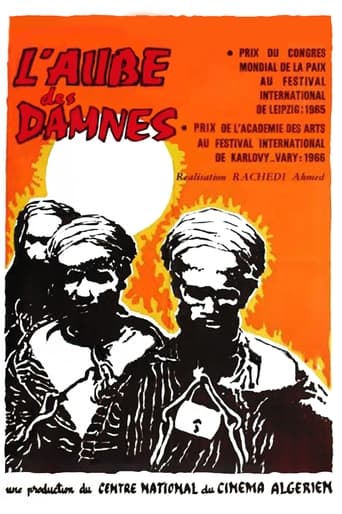
7.4This excellent feature-length documentary - the story of the imperialist colonization of Africa - is a film about death. Its most shocking sequences derive from the captured French film archives in Algeria containing - unbelievably - masses of French-shot documentary footage of their tortures, massacres and executions of Algerians. The real death of children, passers-by, resistance fighters, one after the other, becomes unbearable. Rather than be blatant propaganda, the film convinces entirely by its visual evidence, constituting an object lesson for revolutionary cinema.
Dawn of the Damned
1965
10.0Resistance fighter under the occupation, committed to the FLN during the Algerian war, member of the Medvedkine group after May 1968 and defender of Breton autonomy, René Vautier was a committed filmmaker, author of an anti-colonialist work in which he denounces the repression, torture and racism. In 1983, René Vautier discovered, by the light of a flashlight, his films cut up and scattered at Fort du Conquet. Police also came to check the damage.
Fort Du Conquet Destruction of the Vautier Archives
1983
10.0Resistance fighter under the occupation, committed to the FLN during the Algerian war, member of the Medvedkine group after May 1968 and defender of Breton autonomy, René Vautier was a committed filmmaker, author of an anti-colonialist work in which he denounces the repression, torture and racism. In 1983, René Vautier discovered, by the light of a flashlight, his films cut up and scattered at Fort du Conquet. Police also came to check the damage.
Fort Du Conquet Destruction of the Vautier Archives
1983
 6.5
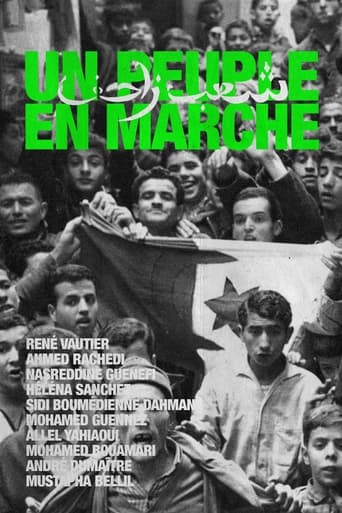
6.5Collectively directed by the members of the Centre audiovisuel d'Alger at Ben Aknoun, the film traces, in two parts, Algeria's recent history, from colonial repression to the birth of the National Liberation Army, and the country's postwar reconstruction, framed in sympathy with the socialist project of Ahmed Ben Bella's government. Released in 1964, the film was banned and sealed after Houari Boumediene's June 1965 coup, precisely because of its favorable treatment of Ben Bella.
A People on the March
1963
 8.0
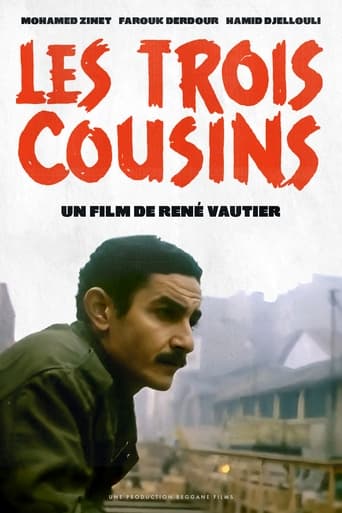
8.0The Three Cousins is a comedy-drama by René Vautier released in 1970 about the living conditions of three Algerian immigrant cousins looking for work in Paris. Housed in a narrow construction shed, the coal stove will cause them to suffocate. The Three Cousins won the Best Human Rights Film Award in Strasbourg in 1970.
Les Trois Cousins
1970
8.0The Three Cousins is a comedy-drama by René Vautier released in 1970 about the living conditions of three Algerian immigrant cousins looking for work in Paris. Housed in a narrow construction shed, the coal stove will cause them to suffocate. The Three Cousins won the Best Human Rights Film Award in Strasbourg in 1970.
Les Trois Cousins
1970
 9.0
9.0The essay by René Vautier, "Déjà le sang de Mai ensemençait Novembre", starts with the recapitulation of the representations of Algeria throughout the history of visual arts in France in an effort to explore the causes for the quest for independence.
Déjà le sang de mai ensemençait novembre
1982
 8.0
8.0The action takes place in a metallurgical factory which was part of the Pechiney-Ugine-Külhman trust in Couëron, Loire-Atlantique, in 1975. To show their solidarity with their husbands on strike, workers' wives invaded the director's office and obtained in two hours what was refused to them for months. But the management complained and sued. Twelve wives were charged with forcible confinement. The mobilization then widened. The women called on the Bretagne Cinema Production Unit (UPCB) to make a film about their struggle. Narrating the courageous action of solidarity of women with the strikers of the factory and the emergence of a collective awareness, both feminist and working-class, the film is also an echo chamber sensitive to the aspirations of the twelve women who were charged.
Quand les femmes ont pris la colère
1977
No synopsis available yet.
Le Scorpion de Saint-Nazaire
1980
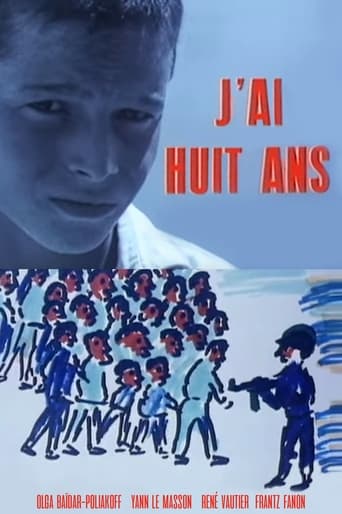 9.0
9.0With my wife, Olga Poliakoff, we made "I'm Eight Years Old" based on an idea by René Vautier. Using drawings by Algerian children who were refugees in Tunisia, the film immerses the viewer in the traumatized world of these children, horrifically linking the word "France" with words like "kill," "burn," and "torture." The live-action footage was shot in Tunisia by René Vautier and myself. A second set of drawings was compiled, and the children's testimonies were recorded by Olga at the Algerian-Tunisian border. The entire film was edited in collaboration with Jacqueline Meppiel. The first screening took place in Paris on February 10, 1962, without any precautions or authorization, for about fifty people. Sponsored by the Maurice Audin Committee, the film then circulated clandestinely throughout France in dozens of copies and was seen by tens of thousands of people while the OAS was carrying out bombings in Paris and Algiers – Yann Le Masson
J'ai Huit Ans
1962
No synopsis available yet.
La Caravelle
1972
No synopsis available yet.
Carte blanche à Gilles Servat
1977
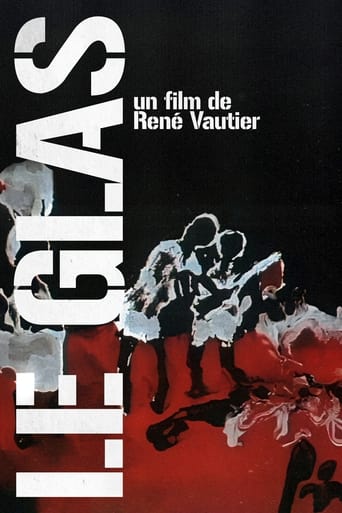 10.0
10.0At the beginning of the 1960s, in Salisbury (now Harare), in Southern Rhodesia (now Zimbabwe), the government of Ian Smith hanged three black revolutionaries who had nevertheless been pardoned by the Queen of England. René Vautier, with ZAPU (Zimbabwe African Party for Unity), denounces this killing. Expelled by the Rhodesian police (informed by the French secret services), the filmmaker shoots a film in Algeria in the form of an indictment against colonial savagery. The film was first banned in France, then authorized in 1965.
The Death Knell
1964
10.0At the beginning of the 1960s, in Salisbury (now Harare), in Southern Rhodesia (now Zimbabwe), the government of Ian Smith hanged three black revolutionaries who had nevertheless been pardoned by the Queen of England. René Vautier, with ZAPU (Zimbabwe African Party for Unity), denounces this killing. Expelled by the Rhodesian police (informed by the French secret services), the filmmaker shoots a film in Algeria in the form of an indictment against colonial savagery. The film was first banned in France, then authorized in 1965.
The Death Knell
1964
10.0At the beginning of the 1960s, in Salisbury (now Harare), in Southern Rhodesia (now Zimbabwe), the government of Ian Smith hanged three black revolutionaries who had nevertheless been pardoned by the Queen of England. René Vautier, with ZAPU (Zimbabwe African Party for Unity), denounces this killing. Expelled by the Rhodesian police (informed by the French secret services), the filmmaker shoots a film in Algeria in the form of an indictment against colonial savagery. The film was first banned in France, then authorized in 1965.
The Death Knell
1964
No synopsis available yet.
Hirochirac 1995
1995
6.0In 1950, in full reconstruction, the workers of Brest went on strike. It will last more than a month and will be bloody. Edouard Mazé, a 26-year-old worker from Brest, will die during the demonstration on April 17, dozens of his comrades will be injured and one of them, Pierre Cauzien, will be amputated five days later. The city is under siege. René Vautier, a 20-year-old filmmaker, goes clandestinely to Brest, at the call of the CGT, to shoot a film on the reasons for anger. The trace of these events is now tenuous and carried by witnesses whose words are gradually dying out. This film proposes to find the traces of these events, to collect the words of the witnesses, to search their personal archives, to exhume the forgotten photograms, to open the official files hitherto protected, to delve into the depths of individual memories to understand. In 1950, a man died... But who still remembers?
Histoires d’images, images d’Histoire
2014
 7.0
7.0March 16, 1978. The Amoco-Cadiz supertanker tanker sank off Portsall, a small port in northern Finistère. This film sets out to demonstrate the misleading information campaign that followed the accident as well as its disastrous ecological consequences. René Vautier denounces the ridiculous measures then taken by the governments, the financial interests, the traffic of oil tankers and those of the tugs and the role of the media complicit in this policy. Faced with this, the anger of the Breton people and local elected officials who were never consulted.
Marée noire, colère rouge
1978
Video film on the relationship between immigrant workers and the French working class, shown in working-class and student circles.
Ensemble, vivre et travailler
1986
No synopsis available yet.
Entretien avec Pierre Clément
1998
No synopsis available yet.
Tournevache
1985
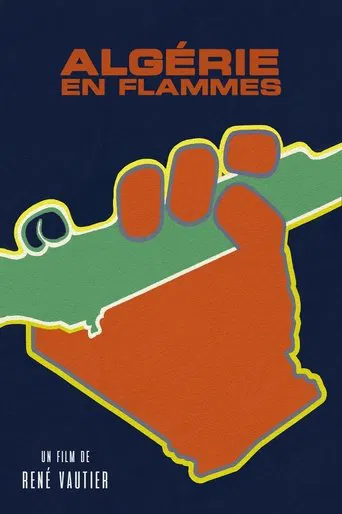 8.5
8.5These are the first images shot in the ALN maquis, camera in hand, at the end of 1956 and in 1957. These war images taken in the Aurès-Nementchas are intended to be the basis of a dialogue between French and Algerians for peace in Algeria, by demonstrating the existence of an armed organization close to the people. Three versions of Algeria in Flames are produced: French, German and Arabic. From the end of the editing, the film circulates without any cuts throughout the world, except in France where the first screening takes place in the occupied Sorbonne in 1968. Certain images of the film have circulated and are found in films, in particular Algerian films. Because of the excitement caused by this film, he was forced to go into hiding for 25 months. After the declaration of independence, he founded the first Algerian Audiovisual Center.
Algeria in Flames
1958
8.5These are the first images shot in the ALN maquis, camera in hand, at the end of 1956 and in 1957. These war images taken in the Aurès-Nementchas are intended to be the basis of a dialogue between French and Algerians for peace in Algeria, by demonstrating the existence of an armed organization close to the people. Three versions of Algeria in Flames are produced: French, German and Arabic. From the end of the editing, the film circulates without any cuts throughout the world, except in France where the first screening takes place in the occupied Sorbonne in 1968. Certain images of the film have circulated and are found in films, in particular Algerian films. Because of the excitement caused by this film, he was forced to go into hiding for 25 months. After the declaration of independence, he founded the first Algerian Audiovisual Center.
Algeria in Flames
1958
 9.0
9.0Documentary edited from testimonies on the torture of people who experienced the war. Some witnesses were tortured by Jean-Marie Le Pen. These testimonies will help defend the newspaper Le Canard Enchaîné in court against Jean-Marie Le Pen for defamation. The film was shown in 1985 during the trial and some witnesses also came to support the newspaper. But the 1963 amnesty law protects the politician, prohibiting the use of images that could harm people who served during the Algerian war.
À Propos De... L'autre Détail
1985
9.0Documentary edited from testimonies on the torture of people who experienced the war. Some witnesses were tortured by Jean-Marie Le Pen. These testimonies will help defend the newspaper Le Canard Enchaîné in court against Jean-Marie Le Pen for defamation. The film was shown in 1985 during the trial and some witnesses also came to support the newspaper. But the 1963 amnesty law protects the politician, prohibiting the use of images that could harm people who served during the Algerian war.
À Propos De... L'autre Détail
1985
9.0Documentary edited from testimonies on the torture of people who experienced the war. Some witnesses were tortured by Jean-Marie Le Pen. These testimonies will help defend the newspaper Le Canard Enchaîné in court against Jean-Marie Le Pen for defamation. The film was shown in 1985 during the trial and some witnesses also came to support the newspaper. But the 1963 amnesty law protects the politician, prohibiting the use of images that could harm people who served during the Algerian war.
À Propos De... L'autre Détail
1985