

Acting
Octavia Handworth
Born — Died
1887-12-24 — 1978-10-03
Place of birth
New York City, New York, USA
Known for
Acting
Credits
6 titles
Octavia Handworth (December 24, 1887 – October 3, 1978) was an American actress of Danish heritage during the silent film era. She was born Octavia Boas and was married to Harry Handworth (1878/or1882-1916) an actor, producer and film director who headed Excelsior Feature Film Co. and Gordon De Main(1886–1954) an actor. Most of her career was appearing in short films i.e. for Pathe, then Lubin however she made half a dozen feature films.
Known for
 7.0
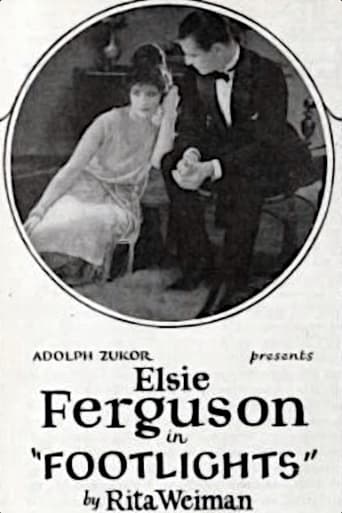
7.0Exotic Russian actress Lisa Parsinova tires of her glamorous life on the New York stage and returns, under her actual identity as Lizzie Parsons, to her small New England hometown. But she is pursued by a young man who is in love with the famed Russian alter ego.
Footlights
1921
No synopsis available yet.
Sweeter Than Revenge
1915
 NR
NRThe world's finest ruby was stolen from the bride of Prince Kassim's great-grandfather several generations ago in India by a marauding rajah. It's now several decades later and the British have conquered India, and one day the ruby shows up for sale by a wealthy London jeweler, Sir John Garnett. Garnett has his own problems--there have been a rash of thefts of his wife's jewels, and he hires a private detective named James Brett to investigate.
The Great Ruby
1915
Dr. John Wright a poor but promising young physician is influenced by his selfish wife, who was raised in luxury, to sell his breakthrough serum to a group of shady businessmen. That decision eventually begats tragedy and ruin for them all. Ultimately though there is a glimmer of hope on the horizon.
The Toll of Mammon
1914
A costly gem is stolen from a Hindoo idol and brought to America. Introducing numerous startling incidents, including an auto wreck and a leap for life.
The Eye of a God
1913
A young girl is presented, on her birthday, with a beautiful pearl necklace, the oldest heirloom in the family. Her maid carefully locks it up in the bureau drawer; but the next morning the necklace is missing. Naturally, the maid is accused, but she denies all knowledge of the whereabouts of the necklace, and puts the blame on the washerwoman, who had called at the time she was locking the jewels up; in consequence, the washerwoman is arrested, and her little son, thrown on his own resources, finds employment with the milkman. Two or three days later, while delivering milk at a fashionable residence, he sees a young lady walking in her sleep, out across the lawn, and follows her to a hollow tree, where he sees her dig up the jewels, which she has hidden on a previous somnambulistic promenade. Of course, this soon leads to the straightening out of all the difficulty. This short is presumably lost.
The Lost Necklace
1911
Film credits
1910s · 5 titles
No synopsis available yet.
Sweeter Than Revenge
1915
NRThe world's finest ruby was stolen from the bride of Prince Kassim's great-grandfather several generations ago in India by a marauding rajah. It's now several decades later and the British have conquered India, and one day the ruby shows up for sale by a wealthy London jeweler, Sir John Garnett. Garnett has his own problems--there have been a rash of thefts of his wife's jewels, and he hires a private detective named James Brett to investigate.
The Great Ruby
1915
Dr. John Wright a poor but promising young physician is influenced by his selfish wife, who was raised in luxury, to sell his breakthrough serum to a group of shady businessmen. That decision eventually begats tragedy and ruin for them all. Ultimately though there is a glimmer of hope on the horizon.
The Toll of Mammon
1914
A costly gem is stolen from a Hindoo idol and brought to America. Introducing numerous startling incidents, including an auto wreck and a leap for life.
The Eye of a God
1913
A young girl is presented, on her birthday, with a beautiful pearl necklace, the oldest heirloom in the family. Her maid carefully locks it up in the bureau drawer; but the next morning the necklace is missing. Naturally, the maid is accused, but she denies all knowledge of the whereabouts of the necklace, and puts the blame on the washerwoman, who had called at the time she was locking the jewels up; in consequence, the washerwoman is arrested, and her little son, thrown on his own resources, finds employment with the milkman. Two or three days later, while delivering milk at a fashionable residence, he sees a young lady walking in her sleep, out across the lawn, and follows her to a hollow tree, where he sees her dig up the jewels, which she has hidden on a previous somnambulistic promenade. Of course, this soon leads to the straightening out of all the difficulty. This short is presumably lost.
The Lost Necklace
1911