Writing
Azouz Begag
Born
1957-02-05 (69)
Place of birth
Lyon, Rhône, France
Known for
Writing
Credits
10 titles
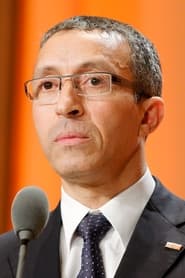
Azouz Begag (Arabic: عزوز بقاق) (born 5 February 1957) is a French writer, politician and researcher in economics and sociology at the CNRS. He was the delegate minister for equal opportunities of France in the government of French Prime Minister Dominique de Villepin (Union for a Popular Movement, UMP) till 5 April 2007. He resigned to support the moderate centrist candidate François Bayrou, one of the two UMP ministers to do so. Before becoming minister, Begag was decorated and made Chevalier de l’Ordre national du Mérite and Knight of the Legion of Honor. Begag is the son of Algerian parents who arrived in France in 1949. In his teens, he qualified as an electrician. He grew up in a sha…
Known for
 8.5
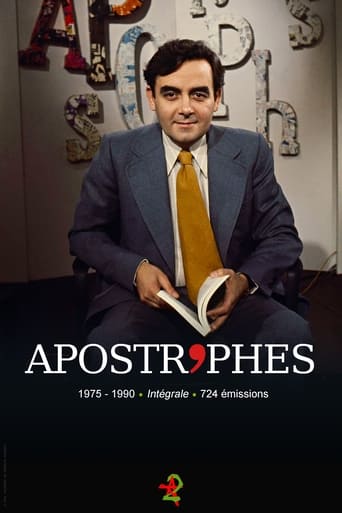
8.5Apostrophes was a live, weekly, literary, prime-time, talk show on French television created and hosted by Bernard Pivot. It ran for fifteen years (724 episodes) from January 10, 1975, to June 22, 1990, and was one of the most watched shows on French television (around 6 million regular viewers). It was broadcast on Friday nights on the channel France 2 (which was called "Antenne 2" from 1975 to 1992). The hourlong show was devoted to books, authors and literature. The format varied between one-on-one interviews with a single author and open discussions between four or five authors.
Apostrophes
1975
 5.8
5.8Télématin is a French breakfast television news show, broadcast on France 2 since January 7, 1985. It is broadcast in Metropolitan France weekdays from 6:30 to 9:00 am CET. TV5 broadcast the show in Canada in its entirety until September 2011: it now shows a 90 minute version between 6:30 and 8:00 am Eastern Time, when the French original version is now 2h30 long. Télématin is hosted by William Leymergie. The show is daily seen by around 40% of the French morning audience, a very high percentage for French TV. In Metropolitan France, the newscasts are presented at 7:00, 7:30 and 8:00, with newsflashes at 6:30 and 8:50, and two press reviews at 7:20 and 8:30. The 6:30, 7:30 and 8:50 newscasts are usually presented by a female reader and the hourly newscasts by a male. The usual readers are Nathanaël de Rinquesen, Sophie Le Saint, Julien Benedetto, Sophie Gastrain, Patrice Romedenne and Frédéric Vion.
Télématin
1985
 5.1
5.1On n'est pas couché was a French talk show broadcast on France 2 on Saturdays at 11 p.m., hosted by Laurent Ruquier assisted by various columnists.
On n'est pas couché
2006
 3.7
3.7Salut les Terriens! is a French talk show hosted by Thierry Ardisson, launched on Canal+ on November 4, 2006, and then moved to C8 on September 10, 2016. The show subsequently changed its name and format in 2018 to become Les Terriens du Samedi! (The Earthlings of Saturday!). Initially conceived as a humorous take on current events with several guests and various games and segments, it later evolved into a more structured format with panel discussions and regular segments. In 2018, Thierry Ardisson sought to revamp the concept, believing the previous version had run its course, hence the transition to Les Terriens du samedi! with a new set and new segments, and a 360-degree turn in the ideology of the guests.
Salut les Terriens !
2006
 6.2
6.2The story of the struggle of an autistic girl and her brother trying to survive without their parents.
The Devils
2002
 8.0
8.0No synopsis available yet.
Petites phrases, grandes conséquences
2021
Film credits
2010s · 3 titles
Who remembers that unlikely handful of marchers—campaigning "for equality and against racism"—who set out on the roads of France in October 1983 in obscurity, only to culminate in a triumphant finale in Paris, with nearly 100,000 people at the Bastille and the Élysée Palace as the finish line? "Put your guns away, we’re coming—hunting season is over," proclaimed the March, a response to the police violence and numerous racist crimes that had marked the early 1980s. A novel of the "Beur generation," Les Marcheurs revisits this little-known story.
Les Marcheurs, chronique des années beurs
2013
 4.7
4.7Dans la région de Marseille, un patron prépare à l’insu de ses ouvriers la délocalisation de son usine, couplée d’un détournement de 2 millions d’euros. Franck, l’un de ses salariés l’apprend et, sans en parler à sa femme Hélène, décide avec Max, son ami de toujours, de passer à l’action...
Dans la tourmente
2012
 NR
NRLooking back at the history of the struggle for true equality, we follow the daughters and sons of immigrant workers who have been nominated as candidates representing "diversity" in various election campaigns since the 2007 presidential election. On the ground, through meetings, debates, and more "intimate" encounters with candidates and actors from past struggles, a great diversity of thought emerges. But they all have the same goal: not to be just "candidates for Beurs." With many activists from working-class neighborhoods, from Clichy-sous-Bois to Marseille, via Roubaix, and candidates Mouloud Aounit, Kamel Hamza, Faouzi Lamdaoui, Halima Boumedienne, Omar Slaouti, Samia Ghali, Karim Zeribi, Rama Yade, and others... Will these "new faces" of the Republic be in the picture when the votes are counted, or will they simply be "candidates for the Beurs"?
Candidats pour du beur ?
2012
Series credits
8.5Apostrophes was a live, weekly, literary, prime-time, talk show on French television created and hosted by Bernard Pivot. It ran for fifteen years (724 episodes) from January 10, 1975, to June 22, 1990, and was one of the most watched shows on French television (around 6 million regular viewers). It was broadcast on Friday nights on the channel France 2 (which was called "Antenne 2" from 1975 to 1992). The hourlong show was devoted to books, authors and literature. The format varied between one-on-one interviews with a single author and open discussions between four or five authors.
Apostrophes
1975
5.8Télématin is a French breakfast television news show, broadcast on France 2 since January 7, 1985. It is broadcast in Metropolitan France weekdays from 6:30 to 9:00 am CET. TV5 broadcast the show in Canada in its entirety until September 2011: it now shows a 90 minute version between 6:30 and 8:00 am Eastern Time, when the French original version is now 2h30 long. Télématin is hosted by William Leymergie. The show is daily seen by around 40% of the French morning audience, a very high percentage for French TV. In Metropolitan France, the newscasts are presented at 7:00, 7:30 and 8:00, with newsflashes at 6:30 and 8:50, and two press reviews at 7:20 and 8:30. The 6:30, 7:30 and 8:50 newscasts are usually presented by a female reader and the hourly newscasts by a male. The usual readers are Nathanaël de Rinquesen, Sophie Le Saint, Julien Benedetto, Sophie Gastrain, Patrice Romedenne and Frédéric Vion.
Télématin
1985
5.1On n'est pas couché was a French talk show broadcast on France 2 on Saturdays at 11 p.m., hosted by Laurent Ruquier assisted by various columnists.
On n'est pas couché
2006
3.7Salut les Terriens! is a French talk show hosted by Thierry Ardisson, launched on Canal+ on November 4, 2006, and then moved to C8 on September 10, 2016. The show subsequently changed its name and format in 2018 to become Les Terriens du Samedi! (The Earthlings of Saturday!). Initially conceived as a humorous take on current events with several guests and various games and segments, it later evolved into a more structured format with panel discussions and regular segments. In 2018, Thierry Ardisson sought to revamp the concept, believing the previous version had run its course, hence the transition to Les Terriens du samedi! with a new set and new segments, and a 360-degree turn in the ideology of the guests.
Salut les Terriens !
2006
8.0No synopsis available yet.
Petites phrases, grandes conséquences
2021