
Editing
Kjell Andersson
Acting credits
 6.7
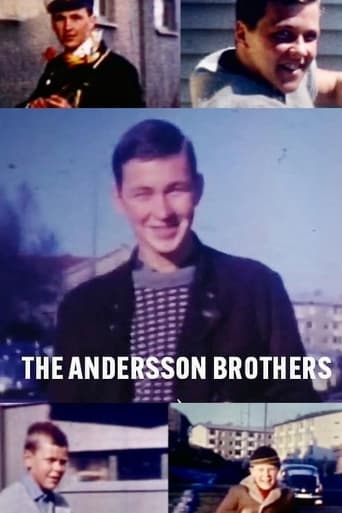
6.7A tender portrayal of four stubborn brothers becomes a touching contemporary Swedish family chronicle about dreams, class, heritage, and the difficulty of connection. The Andersson brothers grew up in a working-class home in Gothenburg. Roy became an internationally acclaimed filmmaker while Ronny ended up as a homeless man. Kjell became a documentary filmmaker, and Leif lives as a disability pensioner.
The Andersson Brothers
2024
 NR
NRFollows Roy Andersson around different film festivals as he tries to launch his new film "Songs from the Second Floor" mixed with interviews with family members and colleagues.
You Do the Best You Can
2001
Behind the camera
"A strange deal in the shadow of war". Nazi Germany made large orders of Swedish granite before and during World War II. The stone would be used to build a new world capital - Germania. A lot of stones were delivered, but after 1943 it became impossible due to the development of the war. But the quarrying in Bohuslän, Blekinge, Skåne and Småland continued anyway and Germany paid punctually until the end of the war. The stone was stored along the Swedish coasts and, after Germany's capitulation and the end of the war, it remained in Sweden.
Hitlerstenen: en märklig affär i krigets skugga
2013
"A strange deal in the shadow of war". Nazi Germany made large orders of Swedish granite before and during World War II. The stone would be used to build a new world capital - Germania. A lot of stones were delivered, but after 1943 it became impossible due to the development of the war. But the quarrying in Bohuslän, Blekinge, Skåne and Småland continued anyway and Germany paid punctually until the end of the war. The stone was stored along the Swedish coasts and, after Germany's capitulation and the end of the war, it remained in Sweden.
Hitlerstenen: en märklig affär i krigets skugga
2013
"A strange deal in the shadow of war". Nazi Germany made large orders of Swedish granite before and during World War II. The stone would be used to build a new world capital - Germania. A lot of stones were delivered, but after 1943 it became impossible due to the development of the war. But the quarrying in Bohuslän, Blekinge, Skåne and Småland continued anyway and Germany paid punctually until the end of the war. The stone was stored along the Swedish coasts and, after Germany's capitulation and the end of the war, it remained in Sweden.
Hitlerstenen: en märklig affär i krigets skugga
2013