
Acting
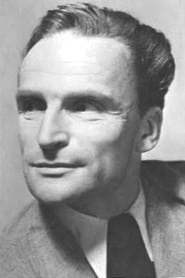
Herwart Grosse
Born — Died
1908-04-17 — 1982-10-27
Place of birth
Berlin, Germany
Known for
Acting
Credits
62 titles
Known for
 9.0
9.0No synopsis available yet.
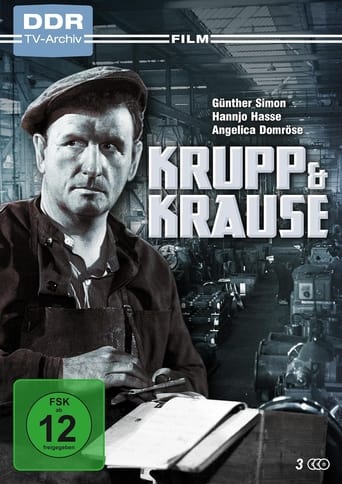
Krupp und Krause
1969
 6.6
6.6Based on the records of the Nuremberg trial of the chemical giant IG Farben; a story about the collaboration between international corporations and Nazi scientists, whose research contributed to the death of millions. The chemist Dr. Hans Scholz lives through a tortuous political transformation and maturation process. Eventually, he adopts political neutrality and closes his eyes to the fact that the poison being produced in his factory is being used in the extermination camps. Standing before the judges at the Nuremberg trials, he must face the fact that he is implicated in the deaths of millions in the gas chambers of the concentration camps.
Council of the Gods
1950
 5.9
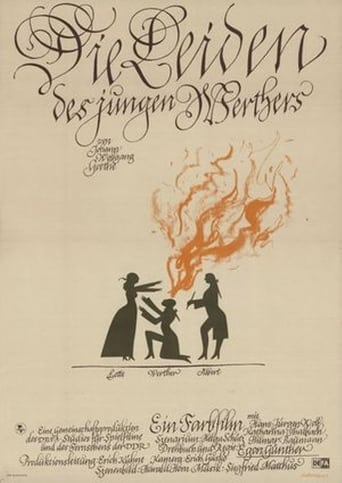
5.9The young and rebellious Werther is passionately, but hopelessly, in love with Lotte. Although he knows that she is married to somebody who can offer her a secure future, Werther tries to be near her. Lotte cannot decide between these two men. She eventually rejects Werther, who does not survive her decision.
The Sorrows of Young Werther
1976
 6.7
6.7An idealistic teacher is shocked to discover her pupils are already cynical and opportunistic. Her colleague soon grows resentful when she uses new and challenging techniques to help her students overcome obstacles.
Carla
1965
Jordan, a famous criminal lawyer, will only represent clients, of whose innocence he is convinced (must be financially not-too-well-off). One day, his future son-in-law, the jeweler Fabian, is arrested on suspicion of murder on the day before his wedding. He is said to have murdered his ex-wife, the dancer Ria Norady. The conductor Gillmore found her dead in her dressing room shortly after a visit from Fabian. Gisela Jordan asks her father to defend him. After speaking to Fabian, the lawyer is convinced he's innocent. But since there is no proof of this, he decides to go and try and find the real murderer himself.
Der Verteidiger hat das Wort
1944
 6.6
6.6A wild story set in eighteenth-century Prussia. Alexander can do everything that a real devil of a fellow must be able to do: ride, shoot, love and devise clever plots. As a result, he is able to climb the ladder from herder to chamber master, where he makes a fool of the feudal lords.
Mir nach, Canaillen
1964
Film credits
1980s · 3 titles
 NR
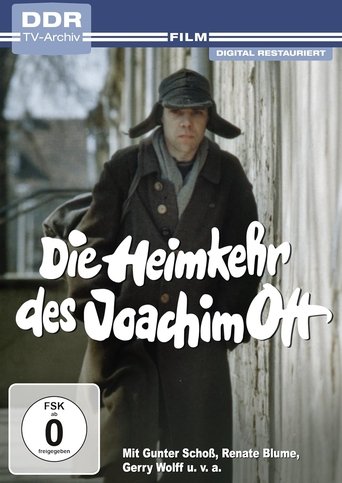
NRAfter a long period as a prisoner of war, Joachim Ott returns home to find that his wife is now living with another man.
Die Heimkehr des Joachim Ott
1980
 9.0
9.0In a small village in West Prussia in the 1870s, Germans, Poles, Gypsies and Jews live together as neighbors. One night Johann, a German mill-owner, secretly opens the dam gates and floods the mill of his Jewish rival Levin. After his business is ruined and his calls for justice go unanswered, Levin leaves town.
Levin's Mill
1980
 8.0
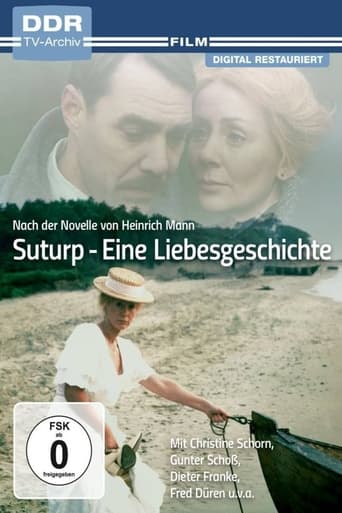
8.0It is the time before the First World War - in a fishing village on the Baltic Sea coast, the unusual love story of the young, ambitious lawyer Belling and the fun-loving actress Franziska begins. The young couple believes in career in the neighboring big city, would not be there the rich businessman of Elchem, who limits their love power of his money. Franziska has found an admirer and patron in the entrepreneur - a woman between two men who plays, but cleverly he makes the couple financially dependent on himself... The film adaptation of the novelle by Heinrich Mann describes the moral decay of a social layer fixed on success and money at the beginning of the 20th century.
Suturp - eine Liebesgeschichte
1981
1970s · 17 titles
5.9The young and rebellious Werther is passionately, but hopelessly, in love with Lotte. Although he knows that she is married to somebody who can offer her a secure future, Werther tries to be near her. Lotte cannot decide between these two men. She eventually rejects Werther, who does not survive her decision.
The Sorrows of Young Werther
1976
 6.0
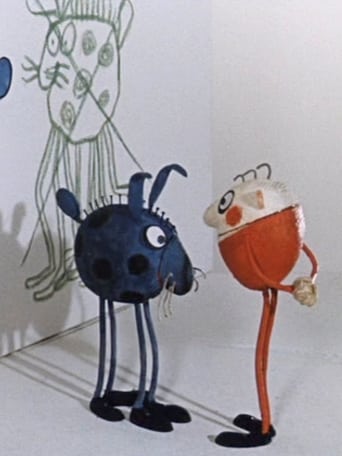
6.0Everything started with a forbidden apple. The independent and intellectual man is responsible for continuous progress. But when profit-greedy people use his new inventions to exploit others a revolution starts because people want to create their Garden of Eden here and now.
Der Apfel
1970
 5.8
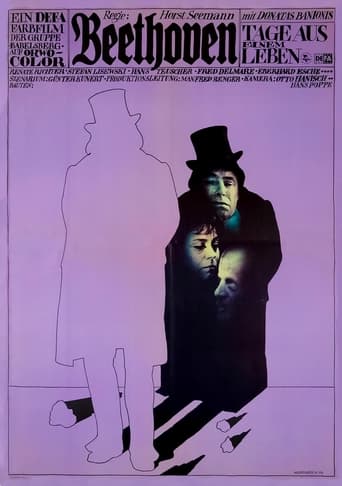
5.8Vienna, 1813-1819: Beethoven (played by Donatas Banionis) is at the peak of his fame. Orchestras all over the world play his music, but he lives modestly and is dependent upon private patrons. Nagged by his patronizing brothers, spied upon by officials for his republican beliefs and faced by his progressive hearing loss, the composer becomes more and more isolated. Seeman’s poetic film explores the joys, heartbreak and artistic spirit of the great composer as he works on his Ninth Symphony.
Beethoven - Days in a Life
1976
 6.6
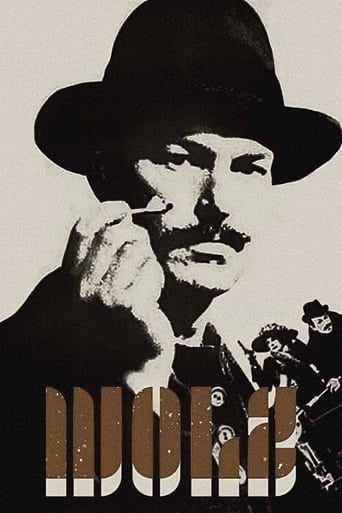
6.6Soldier Ignaz Wolz returns from WWI with an immeasurable hatred of capitalist war profiteers. He decides to start his own revolution, but tries to stay away from the organized class struggle. He steals from the rich men and divides the wealth among the poor. One day, Wolz is arrested and sentenced to life in prison; seven years later he is released due to mass protests. More than ever, it is hard for him to fit in. He severs ties with his former companions, who reject his ideas, and leaves Germany.
Wolz – Life and Transfiguration of a German Anarchist
1973
 7.0
7.0Comedy about the "Husarenstreich", the 1757 Berlin raid during the Seven Years' War.
Husaren in Berlin
1971
 5.2
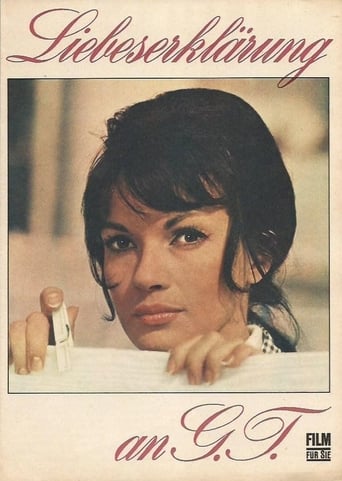
5.2Dr. Gisa Tonius, a physicist in her thirties who has a nearly adult stepdaughter, cherishes the desire to have her own child. Suddenly, a big interdisciplinary research project threatens to significantly change Gisa′s life. Uncertain whether to look for professional or private fulfillment she asks her family and friends for their opinions. They all have different views on the point at issue. While her husband is afraid of losing her to her profession, her professor thinks that because of her talent she has an obligation towards science. In the end, Gisa reaches a decision: She wants to have a baby as well as take on the research project.
Declaration of Love to G.T.
1971
 7.0
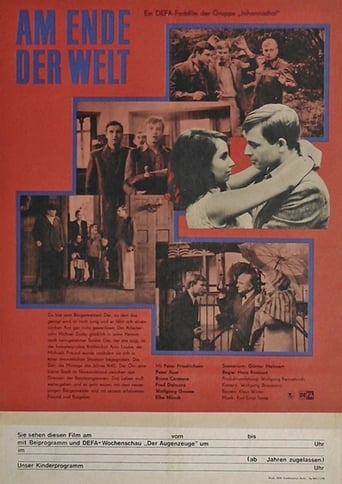
7.0In May 1945, returning soldier Michael Duda finds his hometown Weißenthal unoccupied. He meets escaped camp prisoner Arno Laube, who leads the town’s ad hoc move toward democracy and improbably appoints 19-year-old Michael as mayor. Tasked with refugees, shortages, and rogue soldiers, Michael must prove himself in a fractured No Man’s Land.
Am Ende der Welt
1975
 NR
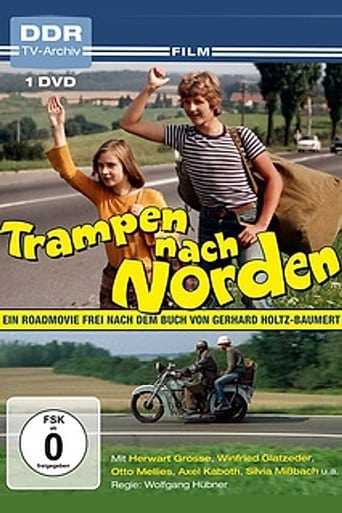
NRGunnar, a bigmouth, hitchhikes from Berlin to Rostock with his brother's duffel bag. Right at the start of his trip, he meets well-mannered Teresa, with whom he continues the journey in an old motorcycle. On the adventurous tour that follows, which is fraught with many obstacles, they meet a wide variety of people. For example, a pastor on his way to visit a dying man, an actor whose car breaks down or the shady Mercedes-Hurtig.
Trampen nach Norden
1977
 NR
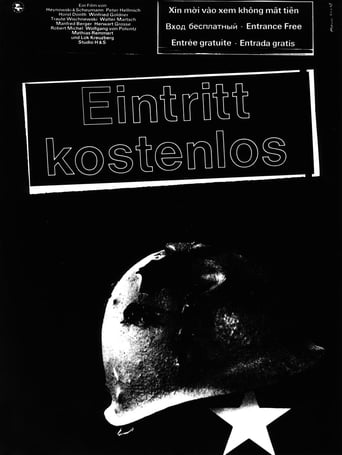
NRRustic weapons, centuries old traps; wreckage of U.S. bombers, a perforated “bulletproof” vest are exposed in the museums of Hanoi. “The neglected free visit to the Hanoi museums cost the American people 56,369 killed people and 146 billion dollars.”
Entrance Free
1976
Maria and Tatjana met during the Second World War and became friends for life, especially as they had to endure difficult days together during the Hitler fascist era. This friendship also gave Maria the strength to study medicine after the war and to succeed as a doctor. But the ongoing fight against the common class enemy also welds the two women together, and Maria Fabian then unexpectedly meets the former landowner and current industrialist Guttenberg. He was the tormentor of her family during the Nazi era; now it is time for Maria, now a self-confident woman who owes her professional success to her state, the GDR, to successfully confront this representative of the class enemy.
Prof. Dr. med. Maria Fabian
1972
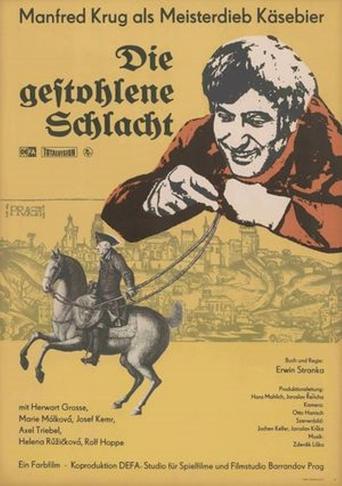 6.6
6.6In 1757, the second year of the Seven Years' War, Frederick II the Great stands at the gates of Prague. He has been trying to take the city for weeks, as the enemy commander Duke Charles of Lorraine is inside. Frederick has just defeated him, but the tide could soon turn against the Prussians, as new Austrian troops are approaching. None other than the famous master thief Andreas Christian Käsebier is to sneak into Prague to open the gates from the inside. As a reward, the king promises him freedom. Käsebier accepts the offer because he is tempted to steal an entire city. But by chance, Käsebier learns that the king wants to betray him. After a successful battle, he is put back behind bars for life. This doesn't suit the master thief at all, especially as he has just fallen in love with Katka in Prague.
The Stolen Battle
1972
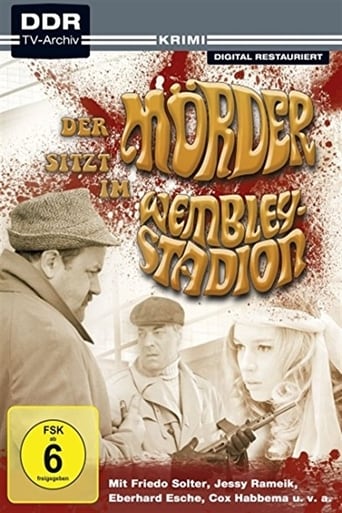 8.0
8.0Just as a large payroll transport operation for a major company is being carried out by several employees of London's Celtic Bank, shots suddenly ring out. The man behind the wheel of the car is hit. Then everything happens in a flash and the culprits escape with a large sum of money. The chauffeur had to give his life for 6000 pounds. Scotland Yard, in the form of Inspector Varney, investigates and strongly suspects that the crooks are not professionals. Scotland Yard Inspector Varney is wrong: what initially looks like a simple routine case turns out to be a tough nut to crack. Not least because he has to deal with a great unknown who operates in the background and keeps throwing sticks between the investigator's legs. Who is this man behind the scenes?
The Killer Is Sitting in Wembley Stadium
1970
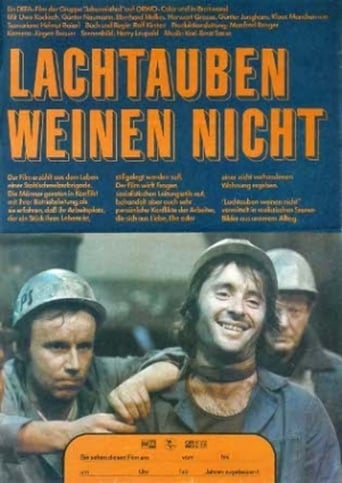 7.0
7.0The film tells the story of the smelter brigade of a steel mill whose members are connected by a strong comradeship. Among the workers are, for instance, young Rolf, whom everybody just calls "Lachtaube" and who always comes through for his co-workers, or the likable Hubert, who works as a simple smelter again after being dismissed as the head of the steel mill. Then, there is also the stubborn Manfred, who should have become a brigadier long ago because of his experience and his competence, but this privilege is refused to him because Manfred is not a party member. Ironically, it is Manfred who hears by accident about the plans of the mill to close down the old Martin furnaces – and to lay off the smelters. When the other men learn about the plans they enter the barricades for their jobs and force the plant′s management to face the workers′ demands and criticism.
Lachtauben weinen nicht
1979
 8.0
8.0The writer Schaffrath enters the office of Dr. Hans Kahler, a graduate engineer, and asks if he may look around the facility, as he intends to write a report on the workers in the new section of an oil refinery.
Netzwerk
1970
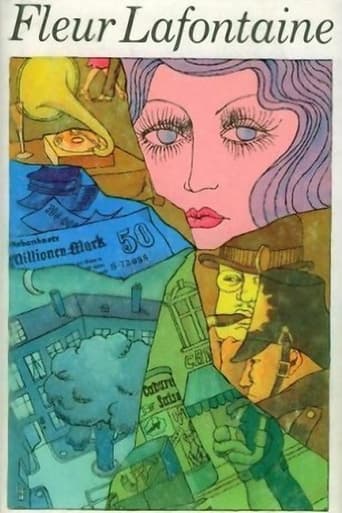 10.0
10.0Berlin, 1948: Paralyzed and robbed of her memory, Fleur regains consciousness after a serious fall. The doctor treating her recognizes that her problem is of a psychological nature and encourages her to face up to her past. The daughter of a brothel owner is reluctant to look back: on a hapless childhood, her relationships with bon vivant Dr. Goldner and the politically committed locksmith Philipp (Hilmar Thate) as well as the difficult period of fascism... This exciting journey into the German past is based on Dinah Nelken's novel "Das angstvolle Heldenleben einer gewissen Fleur Lafontaine".
Fleur Lafontaine
1978
Private detective Fritsch from Munich had received a lucrative assignment: he was to obtain proof of inheritance for a Mr. Seligmann from Canada; this would bring the client a sum of five million dollars. He is therefore looking for an old document that was hidden in a valuable painting that disappeared decades ago. The starting point is a trail that leads to a town in Poland. The painting in question is said to have disappeared there in the final years of the Second World War. But the object of desire cannot be found here, and a new clue points to a grave in Frankenthal in the German state of Rhineland-Palatinate. Fretsch then found out that the painting must probably be in the villa of a personality with significant influence in the economy and politics of West Germany. Fretsch manages to get in touch with the wife of the presumed new owner of the painting and to find out the secret of his rise to multimillionaire status. But the people concerned use their resources to counterattack.
Sein letzter Fall
1976
No synopsis available yet.
Verfolgung
1977
1960s · 27 titles
6.7An idealistic teacher is shocked to discover her pupils are already cynical and opportunistic. Her colleague soon grows resentful when she uses new and challenging techniques to help her students overcome obstacles.
Carla
1965
6.6A wild story set in eighteenth-century Prussia. Alexander can do everything that a real devil of a fellow must be able to do: ride, shoot, love and devise clever plots. As a result, he is able to climb the ladder from herder to chamber master, where he makes a fool of the feudal lords.
Mir nach, Canaillen
1964
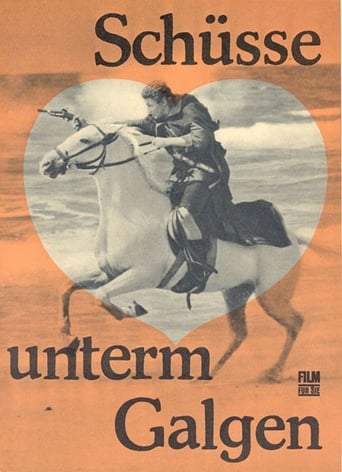 9.0
9.0In Scotland in 1751, young David Balfour is shanghaied aboard a ship where he meets Jacobite rebel Alan Breck Stewart with whom he escapes to the Scottish Highlands, dodging the redcoats.
Schüsse unterm Galgen
1968
 8.0
8.0After the death of their father, 18-year-old Helene Raupe (“coccoon”) and her younger sister Asta come under the guardianship of the youth welfare office in East Berlin. Helene fails miserably as a fishmonger, fashion assistant and bus conductor, all jobs ordained for her by the authorities. The young woman really only “emerges” in her fantasies, where she can escape from her dull, normal life.
Miss Butterfly
1966
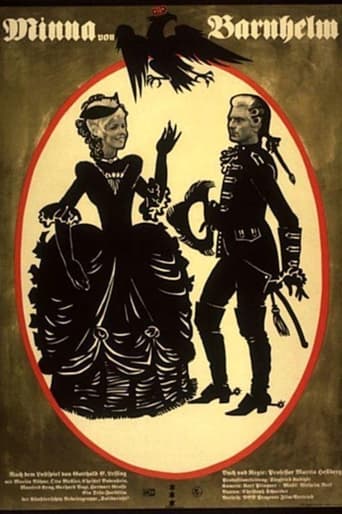 6.3
6.3This film takes place during the Seven Years' War. The Prussian Major von Tellheim has become engaged to the Saxon noblewoman Minna von Barnhelm. After the war, the King - in an unwarranted move - deprives the major of his honor. Von Tellheim becomes impoverished and, filled with shame, breaks off his relationship to Minna. An innkeeper in Berlin, who is a police informer, makes the Major move to a shabby little attic because he cannot pay his debt. In the meantime, Minna has also arrived at the inn. She and her lady's maid Franziska are questioned and spied on by the nosy innkeeper. Minna has followed her beloved Tellheim and she now cunningly manages to elicit a new declaration of love from him...
Minna von Barnhelm oder Das Soldatenglück
1962
No synopsis available yet.
...und immer wieder LEBEN
1964
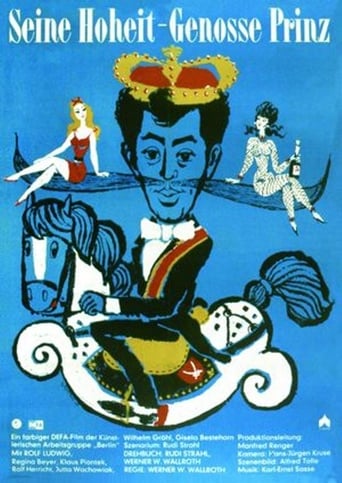 5.8
5.8Kasper Mai, an export merchant and comrade with a “clean” record, discovers he is the prince of Hohenlohe-Liebenstein. His royal grandmother designates him as the heir to her estate. A private trip to her reveals that she does not want a NATO airbase built on her land. The GDR and his grandmother thus find a common interest, and a clever lawyer from the East works against other family members looking to settle their debts with the estate money.
Seine Hoheit – Genosse Prinz
1969
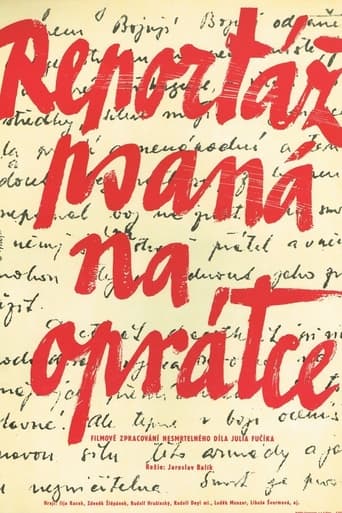 6.5
6.5Screen adaptation of Julius Fucik's story about communist fighters.
Reportáž psaná na oprátce
1962
 9.0
9.0No synopsis available yet.
Tod im Preis inbegriffen
1968
 6.9
6.9To justify their invasion of Poland at the start of WWII, Nazi high command hatches a secret plan: six Polish men from an SS training camp are sent on a special mission to the town of Gleiwitz, to fake a Polish raid on Germany. The ‘provoked’ Germans will thus launch a ‘counterattack’ on Poland.
The Gleiwitz Case
1961
 8.0
8.0Based upon Shakespeare′s "Twelfth Night", the movie tells the story of the Duke of Illyria who is in love with the Countess Olivia. Olivia, however, keeps eluding him. When the Duke sends her a page to bring her a message, Olivia falls in love with the messenger who is in fact a woman called Viola. After she was shipwrecked on the shores of Illyria, Viola assumed the role of her missing brother. She cannot return Olivia′s love because she, in turn, adores the Duke.
Nichts als Sünde
1965
 7.2
7.2A Jewish chief of surgery in 1933 Germany remains blind to the rising Nazi threat, dismissing political dissent from his son and a patient, until his family faces increasing anti-Semitic persecution.
Professor Mamlock
1961
 6.5
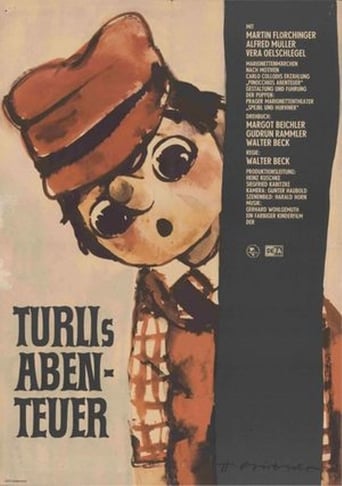
6.5The puppet boy Turli, who was only recently been carved from wood by the toymaker Kasimir, suddenly springs to life. Turli has nothing but nonsense on his mind and wreaks chaos everywhere he goes, although he is actually supposed to attend school.
Pinocchio
1967
No synopsis available yet.
Projekt Merkur
1960
 9.0
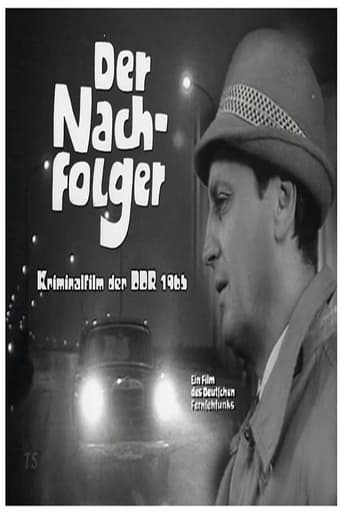
9.0The Federal Republic of Germany. Journalist Rohmann, seriously injured in a car accident, is dying in hospital. Before his death, he bequeaths his unfinished novel to his friend, the famous writer Frank Seburg, and asks him to complete the work he started. Frank Seburg examines the materials collected by Rohmann. It turns out that the journalist was trying to uncover the mystery surrounding the deaths of several West German officials. According to the official version, they all committed suicide. Seburg was unable to fulfill his friend's request to reveal the true causes of their deaths. The fight against the followers of fascism proved too much for him.
Der Nachfolger
1965
 8.0
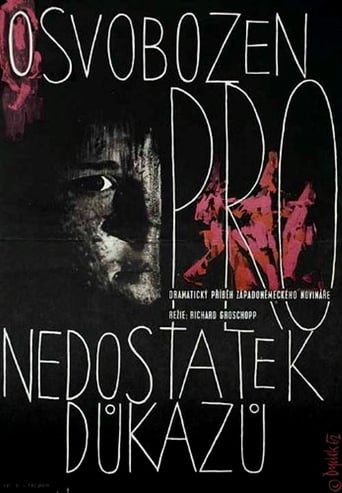
8.0The democratic Munich journalist and editor-in-chief of the "Südkurier" newspaper, Alexander Steinhorst, has reached the pinnacle of social reputation and private wealth. He can rent a theater for his son and women are at his feet. He then takes the liberty of publishing a newspaper with revelations about the dubious sources of the CSU election fund. CSU lawyer Dr. Fabricius sets a photographer on Steinhorst's private life to bring him down. He is charged with "fornication with addicts", but is acquitted due to a lack of evidence. Steinhorst, however, is ruined socially. Friends and colleagues turn their backs on him out of fear for their own careers and his assets are confiscated. Steinhorst commits suicide.
Freispruch mangels Beweises
1962
 NR
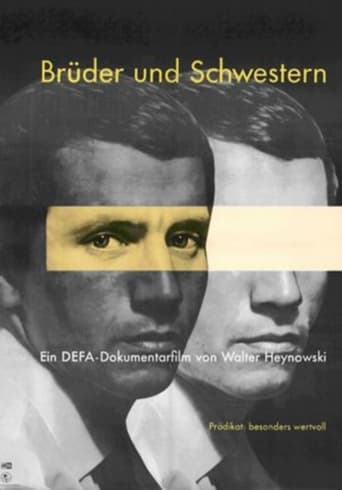
NRA few days after the GDR built the Berlin Wall, West German Chancellor Konrad Adenauer commented that this was "an infamous and brutal act against our brothers and sisters in the Zone." Director Walter Heynowski digs into this ubiquitous West German expression, using footage from West German newsreels and TV programs, and compares the life of "brothers and sisters" in East and West Germany. In this propagandistic documentary, the director juxtaposes images of class hierarchy and conflict in the West, with images of a flourishing East.
Brothers and Sisters
1963
 NR
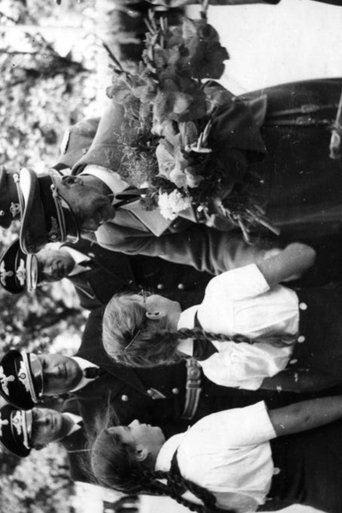
NRPortrait of Hans Globke, jurist at the ministry of interior during the Third Reich and co-author of an official commentary to the Nuremberg Laws of 1935, the Nazi Racial Legislation. While Adenauer appointed him Secretary of State in 1953, he was sentenced to lifelong imprisonment in absentia by a GDR court in 1963.
Globke heute
1963
 7.0
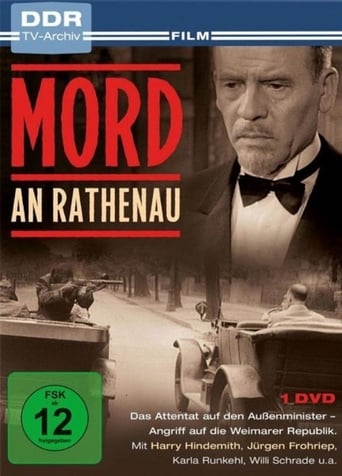
7.0Germany 1922 during the Weimar Republic: Foreign Minister Walther Rathenau signs the Treaty of Rapallo between Germany and the Soviet Union. German national, conservative forces then speak of betrayal and anti-Semitic tones become loud. Plans for murder Rathenaus are forged in the vicinity of the Freikorps. The young engineer Horst Bergmann learns about the preparations of the assassination attempt and tries to warn Rathenau.
Mord an Rathenau
1961
 5.5
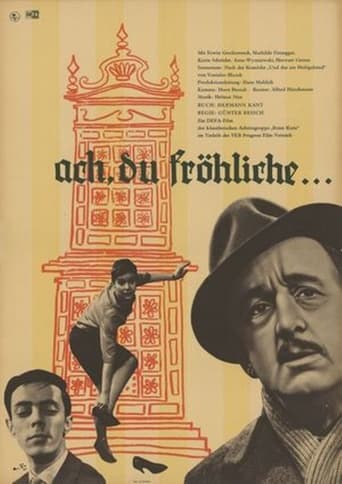
5.5It was supposed to be a cozy Christmas evening with the family. Labor Director Walter Lörke was particularly looking forward to it. But then his daughter Anne surprised him with her future son-in-law Thomas Ostermann. And that's not all: Lörke is to become a grandfather. This doesn't suit him at all, especially as the young man clearly shows his critical attitude towards the state whose ideals Lörke has fought for all his life. An argument ensues - on Christmas Eve. Lörke leaves the apartment in a rage. But he is driven by unrest: He wants to know what kind of person his future son-in-law is and why he has such a negative attitude towards the state. It turns out that Thomas has had bitter experiences with the opportunistic attitudes of many adults and that, although he was the best student in his class, he was not admitted to university because of his critical opinions.
Ach, du fröhliche
1962
 NR
NRIn spring 1946, Warsaw historian Wojtek arrives in a Polish provincial town to study the Renaissance. He soon becomes entangled in the fierce postwar power struggle between the Soviet-backed People’s Government—nationalizing industry and land—and reactionary exiled forces waging “bandit terror,” from train robberies to political assassinations. As violence escalates, Wojtek shifts from observer to active defender of the new “people’s power.”
Der Kristallspiegel
1968
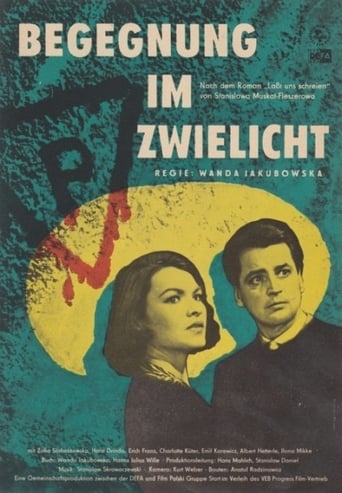 8.0
8.0A pianist from Poland visits a town in West Germany and starts to remember details about her life during the war.
Meetings In The Dark
1960
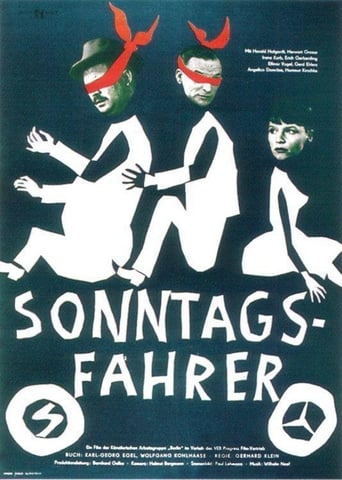 6.5
6.5On August 12, 1961, eight people in three cars set off for Berlin from Leipzig. They want to go to the West. The initiator is the philistine Spiessack, who drives the others, who have embarked on the adventure with mixed feelings. It becomes a journey with numerous incidents and panic, which causes the different characters to clash. When they finally arrive in Berlin the next day, they are not allowed to cross the border. The only option is to return. At home, Spiessack is met by a policeman in his living room - with the slogan "We'll be back" written on the wall.
Sunday Drivers
1963
 5.8
5.8A murder has been committed in "Pension Boulanka", a famous guesthouse for artists and circus people. Captain Bruckner is heading the investigating team.
Pension Boulanka
1964
 6.2
6.2In 1945, Ernst Machner returns home from the war in his mid-20s. Tuche would like him to weave for a living, but his comrades persuade him to become a young teacher instead.
The Best Years
1965
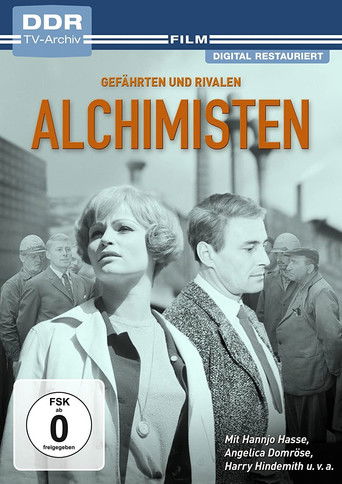 8.0
8.0Two-part TV movie about the inadequate production methods of a chemical plant, which come to light due to an accident and lead to numerous complaints. Against the resistance of the management, which tries to talk away all the difficulties, but with the support of the workforce, a party secretary sets about solving the problem.
Alchimisten
1968
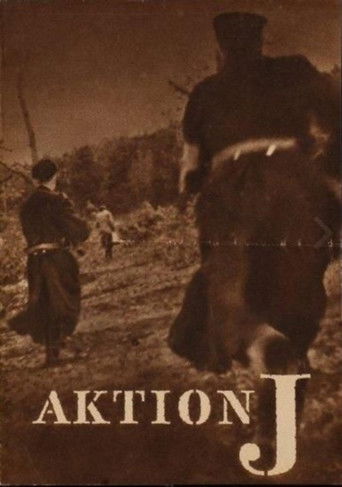 6.2
6.2Compilation film, tracing the political career of Dr. Hans Globke, allegedly a former Nazi, now Secretary of State in West Germany.
Action J
1961
1950s · 9 titles
6.6Based on the records of the Nuremberg trial of the chemical giant IG Farben; a story about the collaboration between international corporations and Nazi scientists, whose research contributed to the death of millions. The chemist Dr. Hans Scholz lives through a tortuous political transformation and maturation process. Eventually, he adopts political neutrality and closes his eyes to the fact that the poison being produced in his factory is being used in the extermination camps. Standing before the judges at the Nuremberg trials, he must face the fact that he is implicated in the deaths of millions in the gas chambers of the concentration camps.
Council of the Gods
1950
The writer Franz Schmidt reads to two editors from his new romance novel. The two criticize the lack of a problematic portrayal of the joyful life of youth, the role of women and the collective "welding together". He is asked to revise the work again. In his new version, the writer presents - in a staged setting - a pair of lovers who want to start a life together in front of smoking chimneys with a piece of steel from the new production. But even this does not satisfy the two art experts. A couple are kissing in front of the window. They point to it and recommend another revision. Outraged, Mr. Schmidt tells them he is going to write a story about real-life art experts and leaves. Their photo disappears into a folder labeled "superfluous contemporaries".
Das Stacheltier – Eine Liebesgeschichte
1953
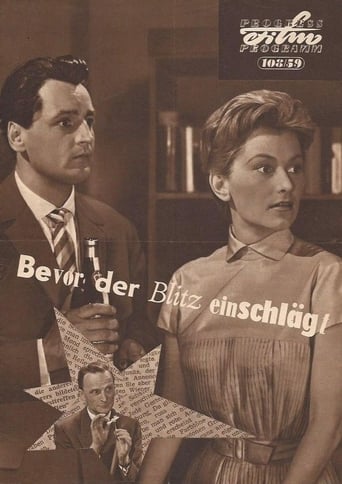 10.0
10.0No synopsis available yet.
Before lightning strikes
1959
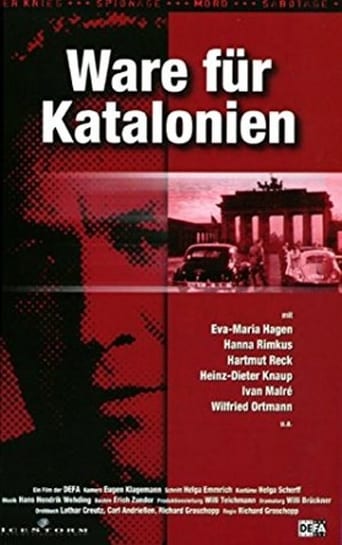 5.5
5.5At the end of the 1950s, the production of optics in the German Democratic Republic has reached top quality and instigates interest in the West. When national demand rises strongly and at the same time the export to South America heavily decreases, the Volkspolizei - the GDR police force - starts to look into the case. Two seemingly unrelated cases are the starting point for the investigation by second lieutenant Schellenberg of the department for optics racketeering: An old woman who was arrested in the Berlin city railway for trying to smuggle a pair of binoculars to West Berlin, and a dead person in an area of allotments who was involved in obscure dealings with optical devices.
Ware für Katalonien
1959
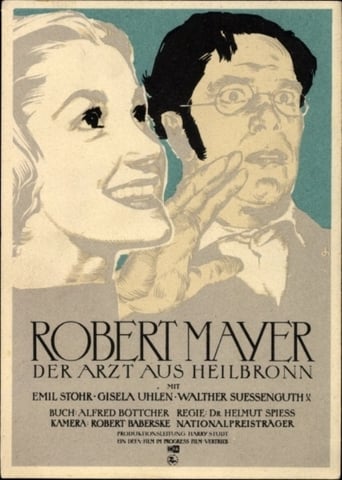 8.0
8.0Biographical movie about Julius Robert Mayer (1814-1878), a surgeon and town doctor in Heilbronn, who studied heat for many years and was the first to correctly formulate the basic principles of the theory of mechanical heat and the principle of conservation of energy. Competing Prussian scientists laugh at him, and his life is full of misunderstandings and persecution. The film tells of his fate and his long and futile struggle for recognition of the results of his scientific work.
Robert Mayer, der Arzt aus Heilbronn
1955
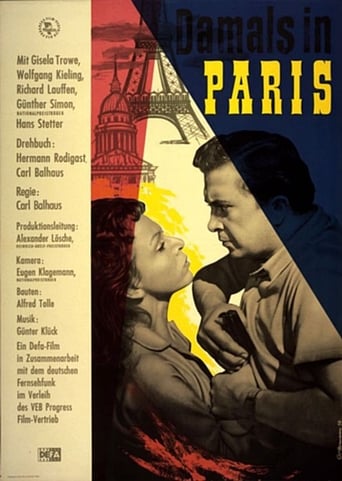 7.0
7.01944: Geneviève and René live in occupied Paris. They love each other, and the young woman looks fearfully at René's activities in the Resistance. She wants to stay out of it, and sometimes there are arguments about it. After one such argument, René goes to a meeting with a German comrade. While he is away, the Gestapo come to the house to take the resistance fighter Louise away. Geneviève intervenes and is arrested. The men of the resistance are very worried as she knows about a planned bridge demolition. René trusts her, and Geneviève does indeed withstand the torture. The bridge can be blown up as planned, contributing to a decisive defeat for the German army.
Damals in Paris
1956
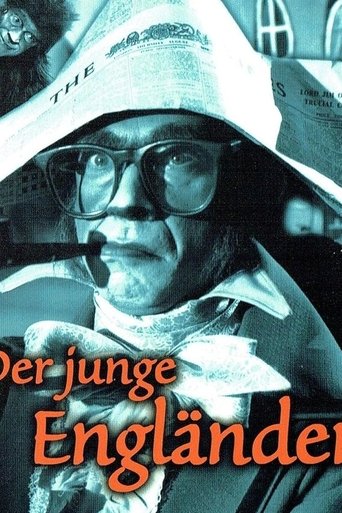 8.0
8.0No synopsis available yet.
Das Stacheltier - Der junge Engländer
1958
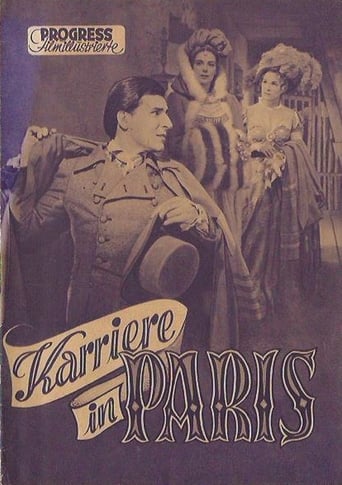 9.0
9.0France at the time of the Restoration. The young country gentleman Rastignac comes to Paris to study. He takes up residence in a poor boarding house, where his father Goriot, who has been excluded by his daughters, also lives. The penniless Rastignac is anxious to gain a foothold in Parisian society. His cousin advises him to take the rich banker's wife Delphine, one of Goriot's daughters, as his mistress, which he does. At the same time, however, he falls in love with the laundress Yvette. He is unable to make up his mind when boarding house guest Vautrin suggests a third option: To marry Victorine, the disinherited daughter of a millionaire, and kill her brother in a duel in order to get his inheritance after all. Rastignac agrees. This is his downfall. Instead of high society, he ends up in the gutter.
Karriere in Paris
1952
 8.0
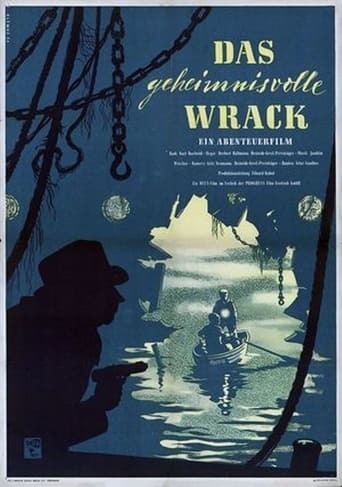
8.0Several children find out what's the matter with a wreck offshore, which puts them into jeopardy.
The Mysterious Wreck
1954
1940s · 4 titles
Jordan, a famous criminal lawyer, will only represent clients, of whose innocence he is convinced (must be financially not-too-well-off). One day, his future son-in-law, the jeweler Fabian, is arrested on suspicion of murder on the day before his wedding. He is said to have murdered his ex-wife, the dancer Ria Norady. The conductor Gillmore found her dead in her dressing room shortly after a visit from Fabian. Gisela Jordan asks her father to defend him. After speaking to Fabian, the lawyer is convinced he's innocent. But since there is no proof of this, he decides to go and try and find the real murderer himself.
Der Verteidiger hat das Wort
1944
 7.4
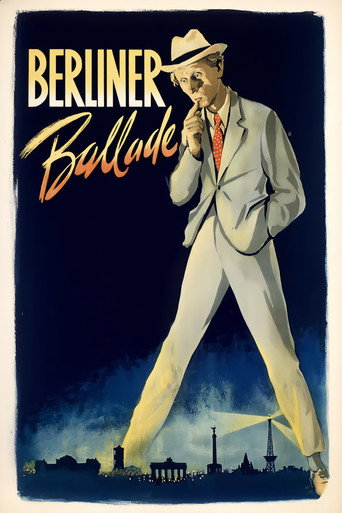
7.4Otto, a feckless Everyman, tries to adjust to the postwar travails of his defeated nation. Stymied by black-market profiteers and government bureaucrats, Otto begins fantasizing about a happier life at the end of that ever-elusive rainbow.
The Berliner
1948
 5.8
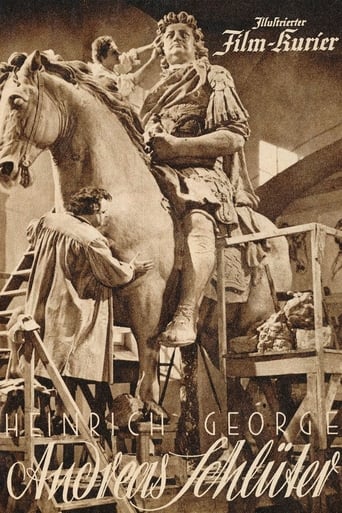
5.8Historical drama portraying the life of German baroque architect Andreas Schlüter.
Andreas Schlüter
1942
 7.3
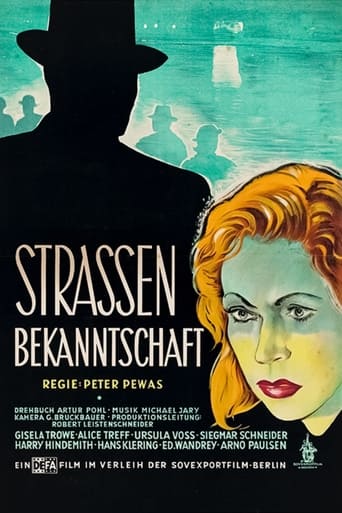
7.3The film centres around the young woman Erika, desperately seeking for love and escape from the depression of the times, drifting, and in the end becoming involved with a circle of rich people who sell goods for sexual favours.
Street Acquaintances
1948
Series credits
9.0No synopsis available yet.
Krupp und Krause
1969
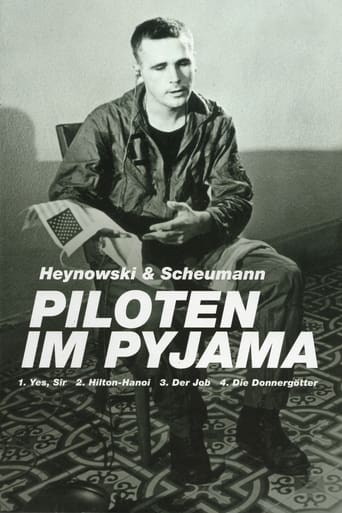 5.8
5.8Produced by DEFA and broadcast in four parts in 1968, this documentary series consists of extended interviews with ten United States Air Force and Navy pilots captured during bombing missions over North Vietnam. Filmed at Hỏa Lò Prison in Hanoi, the films focus on the pilots’ backgrounds, military service, and views on the bombing campaign and the war.
Pilots in Pajamas
1968