
Acting
Walter E. Fuß
Born — Died
1921-05-24 — 1996-04-01
Place of birth
Hamburg, Germany
Known for
Acting
Credits
40 titles
Known for
 5.1
5.1As American settlers encroach on the lands of the Lakota people, Tokei-ihto witnesses the murder of his father at the hands of Red Fox, who wanted information on where the tribe finds its gold. Two years later, at the height of the Great Sioux War, Tokei-ihto and Red Fox meet again.
The Sons of Great Bear
1966
 6.2
6.2A film about the historical uprising of the seamen in Kiel: During the Russian October Revolution of 1917, German and Russian soldiers start to solidarize with each other. By disarming the officers, machinist Henne Lonke and stoker Jens Kasten prevent the attack on a Russian freighter. When German admiralty gives out orders for operation "Nibelungen", which would lead the German fleet into a suicidal attack against England and quell the revolutionary spirit, seamen and soldiers from different political backgrounds unite in protest.
The Sailor's Song
1958
 7.9
7.9Two 17-year-olds, Werner Holt and Gilbert Wolzow, are pulled out of school and into Hitler's army. Gilbert becomes a fanatical soldier; but at the front, Werner begins to understand the senselessness of war.
The Adventures of Werner Holt
1965
 5.7
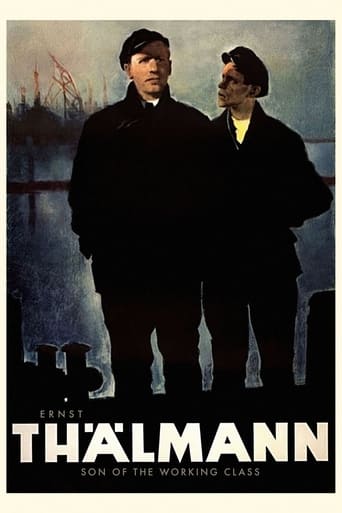
5.7This film is the first of a two-part historical and biographical portrait of the communist politician and anti-fascist Ernst Thälmann. In early November 1918, Ernst Thälmann is an unwilling soldier serving on the western front. As the revolutionary movement at home is threatened by the betrayal of the Social Democrats and fissures in the working class, Thälmann calls on his fellow soldiers to put down their weapons and unite with the workers in the communist struggle at home. Thälmann’s qualms about which side he is fighting on continue, but when the local police attempt to prevent a shipment of provisions and supplies from reaching the people in Petrograd, he intervenes and the ship is unloaded. With this moment of clarity, Thälmann continues to follow his political convictions and joins the workers at the Hamburg uprising in October 1923.
Ernst Thälmann – Son of the Working Class
1954
 6.2
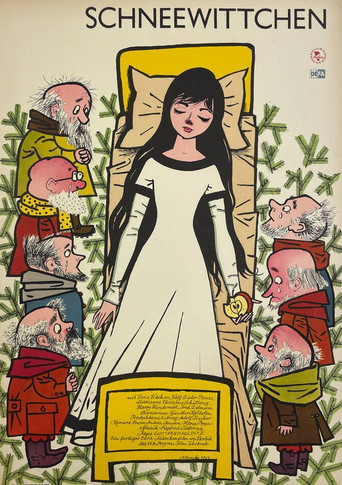
6.2Hated by her jealous and bloodthirsty stepmother, Snow White flees a murder attempt and seeks shelter in the woods with seven kindly dwarfs. Feeling she is safe from harm, Snow White welcomes the disguised queen into her home...with fatal consequences.
Snow White
1961
 7.0
7.0Film by Rolf Losansky.
Der Revolver des Corporals
1967
Film credits

1970s · 1 titles
1960s · 21 titles
5.1As American settlers encroach on the lands of the Lakota people, Tokei-ihto witnesses the murder of his father at the hands of Red Fox, who wanted information on where the tribe finds its gold. Two years later, at the height of the Great Sioux War, Tokei-ihto and Red Fox meet again.
The Sons of Great Bear
1966
7.9Two 17-year-olds, Werner Holt and Gilbert Wolzow, are pulled out of school and into Hitler's army. Gilbert becomes a fanatical soldier; but at the front, Werner begins to understand the senselessness of war.
The Adventures of Werner Holt
1965
6.2Hated by her jealous and bloodthirsty stepmother, Snow White flees a murder attempt and seeks shelter in the woods with seven kindly dwarfs. Feeling she is safe from harm, Snow White welcomes the disguised queen into her home...with fatal consequences.
Snow White
1961
7.0Film by Rolf Losansky.
Der Revolver des Corporals
1967
 6.7
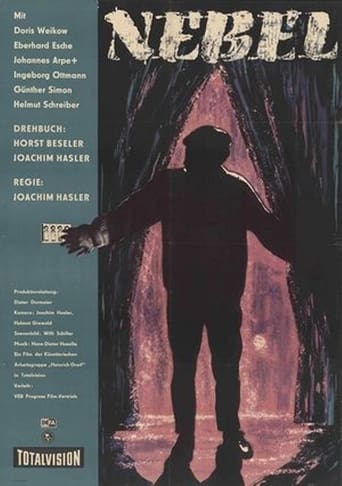
6.7At the beginning of the 1960s, a German turns up on behalf of the NATO in the British village of Rocksmouth. NATO wants to establish a naval base in Rocksmouth, but first, the German envoy has to salvage an old ship wreck. In 1942, the "Princess of India" was supposed to bring children to safety in Canada but was sunk by a German submarine at departure. 58 people were killed, most of them children.
Fog
1963
 7.0
7.0Co-pilot Horst Schubert is a braggart and a true Don Juan. Thus, he tells young Ilse that he is in fact an "aircraft commander". This assertion brings about an embarrassing situation, for he suddenly meets her onboard his new work place, an IL-14 charter plane where Ilse acts as a stewardess. It gets worse, however: During a stop in Varna the police appear because Horst’s former lover Madelon has vanished. At home, meanwhile, his landlady has her hands full with her lodger’s current and former playmates. Ilse decides to put an end to this mixup and since the dull captain of the plane, Richard, makes no move to confront his co-pilot about his unstable private life, the smart stewardess appeals to the rest of the crew to help her teach Horst a few lessons in love.
Die Liebe und der Co-Pilot
1961
 6.7
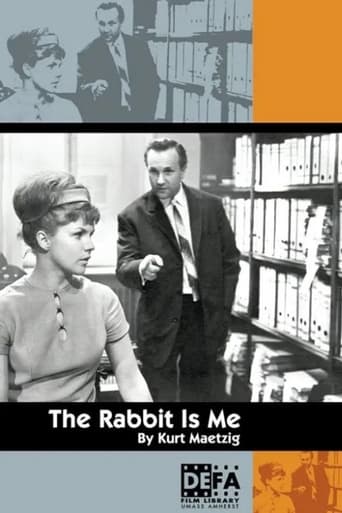
6.7Maria, a young student sees her brother Dieter going to prison for sedition against the state. She starts an affair with Paul, a judge who turns out to be the one who sentenced her brother, which eventually leads to a confrontation.
The Rabbit Is Me
1965
 5.3
5.3Adam receives a flashlight with special powers: every liar it shines on flies into the air. Production was cancelled in 1965/66 due to the film's political content. Only in 1989/90 could the director reconstruct the film, where missing sounds and images are replaced with script inserts.
When You’re Grown Up, Dear Adam
1966
 6.1
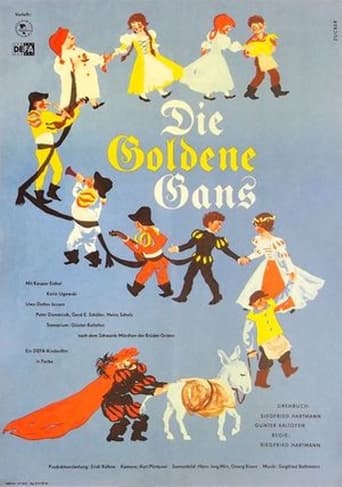
6.1Klaus lives with his two brothers Kunz and Franz in a little village. Together, they ply their trade as cobblers in a small workshop. But the workload rests mainly on the shoulders of ill-treated Klaus. When Kunz and Franz go off into the forest to chop wood for fuel they run into an old woman who asks them for some wine and bread. Rudely and gruffly, they refuse her request and return home without any wood. Klaus then has to set out and he meets the old woman as well. He gladly offers her his frugal meal which is suddenly turned into pancakes and good wine. In addition, he receives a golden goose for his kindness. The bird possesses a an unusual characteristic: all those who are prying, nosy, envious and rapacious get stuck to it and become glued to one another.
The Golden Goose
1964
 10.0
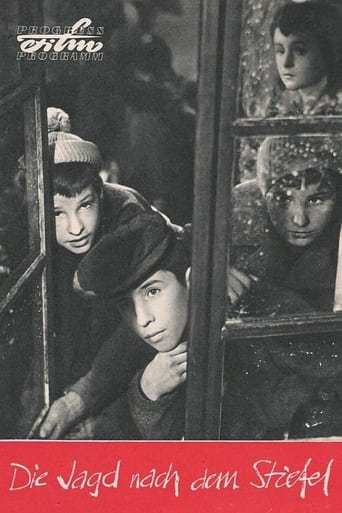
10.0Germany 1932, constant fights between Communists and Nazis tear the country apart. When a Communist is found dead, the police accuses another Communist being his murderer. But the Communist youth group follows another trail - the murderer left a characteristic boot print at the scene of the crime.
The Hunt for the Boot
1962
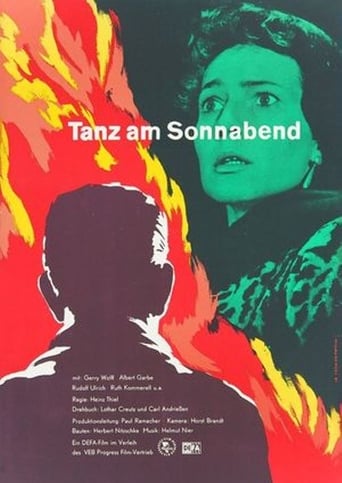 10.0
10.0A Saturday evening dance in the village pub is interrupted when the barn of local farmer Paul Gäbler catches on fire. The farmer himself is soon found – hanged. Sawmill owner Züllich claims that Gäbler committed suicide because he was forced to join an agricultural production cooperative, but others are convinced Gäbler was murdered. Officers Schneider and Anders must navigate their way through a complex maze of personal and political motivations in order to reconstruct the crime.
Tanz am Sonnabend-Mord?
1962
 10.0
10.0It is a fateful moment: during one of his concerts, Jewish pianist Klaus Seiser discovers Gestapo officer Dr. Becker in the audience. He had imprisoned and harassed the young Seiser in 1943 because of a leaflet. Although the musician had managed to escape from prison at the time, he was caught at the Swiss border and Becker had him sent to Dachau concentration camp. Now, years after the end of the Nazi regime, Seiser denounces the Gestapo man and hopes for justice.
Die letzte Chance
1962
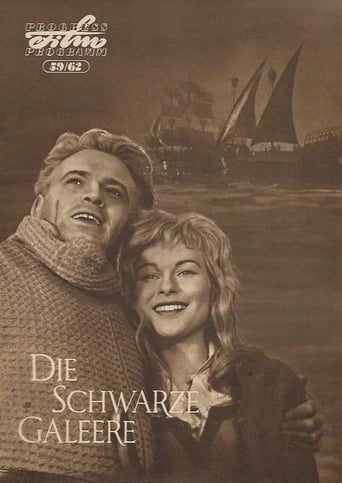 8.0
8.0Antwerp at the end of the 16th century. For the second time, the city falls into the hands of the plundering and murdering Spaniards. Jan and Myga are just ten years old. While Myga's father tries to come to terms with the Spaniards, Jan leaves the occupied country with his father. When Jan has grown into a young man, he joins the Geusen and is entrusted with the best ship as helmsman, the "Black Galley". He survives numerous battles and dangers, but one day he is captured by the Spanish. He frees not only himself but also his beloved Myga from the hands of the enemy. In 1609, the Spaniards are forced to finally recognize the independence of the northern provinces.
The Black Galley
1962
 6.9
6.9To justify their invasion of Poland at the start of WWII, Nazi high command hatches a secret plan: six Polish men from an SS training camp are sent on a special mission to the town of Gleiwitz, to fake a Polish raid on Germany. The ‘provoked’ Germans will thus launch a ‘counterattack’ on Poland.
The Gleiwitz Case
1961
 6.7
6.7In this German drama, Brock, a railroad inspector, witnesses a robbery at a train depot. He recognizes the thief, but turning the man in would mean acknowledging he knows him, thus revealing his own complicity with the Nazi war machine. When Brock’s daughter and her boyfriend begin to question him about the incident, will the secret he’s kept for nearly 20 years finally be exposed?
The Second Track
1962
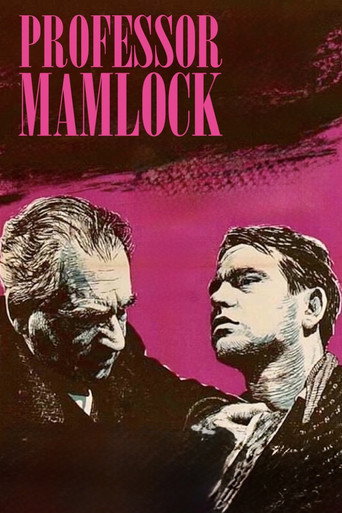 7.2
7.2A Jewish chief of surgery in 1933 Germany remains blind to the rising Nazi threat, dismissing political dissent from his son and a patient, until his family faces increasing anti-Semitic persecution.
Professor Mamlock
1961
 6.8
6.8„White mouse“ Fritz controls the traffic on Dresden’s Körner Square. Helene, who crosses the junction on her motor scooter every day, has taken a shine to Fritz a long while ago. Although Fritz yields right-of-way to her remarkably often, the two have not spoken to each other. In order to finally get to know him better, Helene deliberately performs a traffic violation. Her plan is working: She is ordered to take road safety education lessons from Fritz and they get closer. New problems arise in the shape of Mrs. Messmer who must pay a monetary fine. She feels discriminated against by Fritz and complains about him to his supervisor.
The Small White Mouse
1964
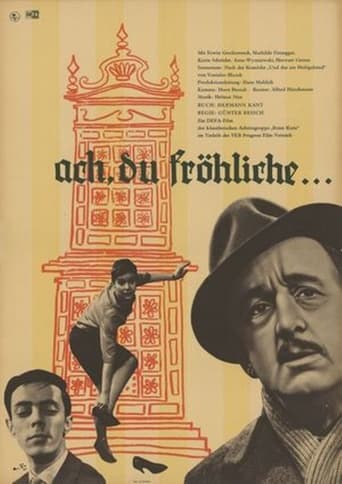 5.5
5.5It was supposed to be a cozy Christmas evening with the family. Labor Director Walter Lörke was particularly looking forward to it. But then his daughter Anne surprised him with her future son-in-law Thomas Ostermann. And that's not all: Lörke is to become a grandfather. This doesn't suit him at all, especially as the young man clearly shows his critical attitude towards the state whose ideals Lörke has fought for all his life. An argument ensues - on Christmas Eve. Lörke leaves the apartment in a rage. But he is driven by unrest: He wants to know what kind of person his future son-in-law is and why he has such a negative attitude towards the state. It turns out that Thomas has had bitter experiences with the opportunistic attitudes of many adults and that, although he was the best student in his class, he was not admitted to university because of his critical opinions.
Ach, du fröhliche
1962
 6.5
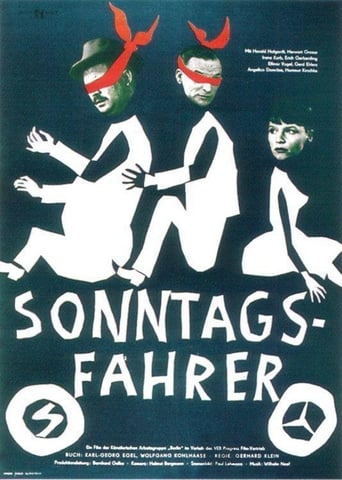
6.5On August 12, 1961, eight people in three cars set off for Berlin from Leipzig. They want to go to the West. The initiator is the philistine Spiessack, who drives the others, who have embarked on the adventure with mixed feelings. It becomes a journey with numerous incidents and panic, which causes the different characters to clash. When they finally arrive in Berlin the next day, they are not allowed to cross the border. The only option is to return. At home, Spiessack is met by a policeman in his living room - with the slogan "We'll be back" written on the wall.
Sunday Drivers
1963
Czech friends help refugees from Nazi Germany escape in 1939.
Prague at Zero Hour
1963
 10.0
10.0The marriage of Katrin and Richard Lot has become a routine. She has a career and he, as a Marine officer, comes home only once every fourteen days. The children greet him with joy, but she greets him only with anxiety because their marriage is missing its key ingredient: love. She wants a divorce, but he refuses mainly out of comfort as well as due to pressure from the party. Katrin finds a strange solution: she shoplifts and is put on probation for three months. This is enough to force Richard into a divorce because he is concerned about the "moral liability" of his wife.
Lot's Wife
1965
1950s · 17 titles
6.2A film about the historical uprising of the seamen in Kiel: During the Russian October Revolution of 1917, German and Russian soldiers start to solidarize with each other. By disarming the officers, machinist Henne Lonke and stoker Jens Kasten prevent the attack on a Russian freighter. When German admiralty gives out orders for operation "Nibelungen", which would lead the German fleet into a suicidal attack against England and quell the revolutionary spirit, seamen and soldiers from different political backgrounds unite in protest.
The Sailor's Song
1958
5.7This film is the first of a two-part historical and biographical portrait of the communist politician and anti-fascist Ernst Thälmann. In early November 1918, Ernst Thälmann is an unwilling soldier serving on the western front. As the revolutionary movement at home is threatened by the betrayal of the Social Democrats and fissures in the working class, Thälmann calls on his fellow soldiers to put down their weapons and unite with the workers in the communist struggle at home. Thälmann’s qualms about which side he is fighting on continue, but when the local police attempt to prevent a shipment of provisions and supplies from reaching the people in Petrograd, he intervenes and the ship is unloaded. With this moment of clarity, Thälmann continues to follow his political convictions and joins the workers at the Hamburg uprising in October 1923.
Ernst Thälmann – Son of the Working Class
1954
 10.0
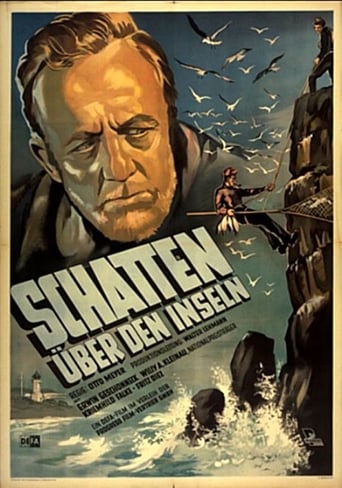
10.0On the Faroe Islands, people eke out a meagre existence by catching birds. Merchant Brause pays them little and does a good business. This comes under threat when Dr. Sten Horn suspects that the dangerous annual plague, which kills dozens of inhabitants, is transmitted by birds. Brause forces the people to work anyway and conceals the telegram from the Copenhagen research institute that confirms Horn's suspicions. Horn, supported by his cousin Arne, enlightens the islanders and the greedy Brause can only flee.
Schatten über den Inseln
1952
 7.0
7.0Frieda and August Walkowiak celebrate their 30th wedding anniversary. However, the marriage has been in crisis for some time. August wants to spend his old age in peace, while Frieda has no intention of giving up her position as LPG chairman. The problems in the countryside are huge, collectivization is not progressing fast enough, even comrade Heinrich Rantsch is clinging to his individual farm. Frieda fights for progress, even in her private life, because not only her burden but also her higher position is a thorn in her husband's side. During the wedding anniversary celebrations, Frieda is called to the LPG. This is the cause of the family quarrel that has been in the air for a long time. August demands her resignation. In vain - and so he moves in with Rantsch. Their daughter Helga also leaves the house because of the tensions. Frieda collapses. When she is in hospital, August comes to his senses.
An Old Love
1959
 8.0
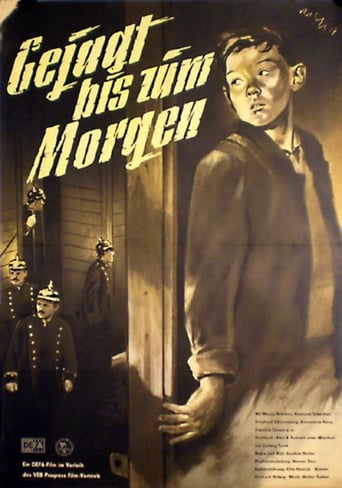
8.0Drama about an impoverished family, a widowed mother and her two sons, trying to get by.
Gejagt bis zum Morgen
1957
 8.0
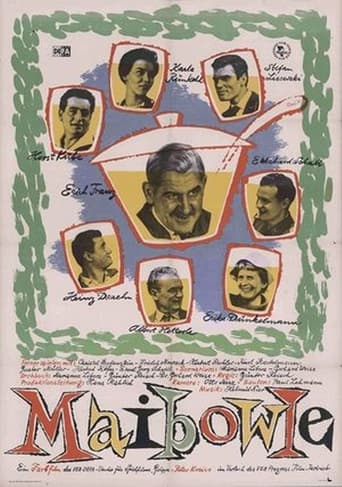
8.0It is the 65th birthday of Wilhelm Lehmann, foreman of a chemical company. All members of the large family are expected. Preparations are also being made in the company: Wilhelm is to be awarded the »Labor banner« and, as every year, the sons are responsible for the may bowl. But instead of family members, telegrams with rejections flutter into the house.
The Punch Bowl
1959
 5.8
5.8In 1955, Michael Vierkant, a Jew who had emigrated during the Nazi era, returns from abroad to the Federal Republic of Germany to obtain the conviction of Korn, the former informer responsible for the murder of his sister. Korn is back in office; Michael's efforts remain unsuccessful. There is a direct confrontation between the two, and Michael shoots Korn in self-defense. He flees and is hidden by the young, reclusive artist Marie Jäger, but is then caught by the police and charged with premeditated murder. The case is taken out of the hands of the criminal investigation department by the Office for the Protection of the Constitution, which constructs an act of political revenge on behalf of the communists. Michael manages to escape from prison. Marie and her friends organize a press conference at which Michael reveals the connections. The trial is postponed.
Der Prozeß wird vertagt
1958
 NR
NRHaving been happily married for ten years, Gerda Wagner, devoted mother and housewife, suddenly gets it into her head that she would like a career as a pop star. She had singing lessons in the past and her voice is still beautiful. A chance meeting with the idolized Italian singer Fabiani, revives her stage fever - much to the annoyance of her husband Gustl Wagner, head of the records section at a department store.
My Wife Wants to Sing
1958
 7.0
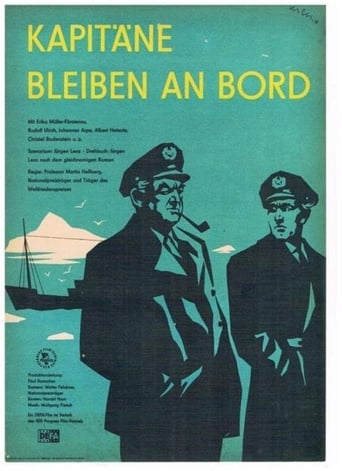
7.0Kurt Kars, the young, enthusiastic but rather inexperienced captain of a fishing vessel, lets his ambition drive him into a risky venture. According to a newspaper report, there are excellent fishing grounds in the Arctic Ocean. Against the orders of the combine, he heads for them. A collision with drift ice puts the crew and ship in extreme danger. Kurt proves his worth in this emergency situation, but is called to account on his return. Initially, he wants to resign out of defiance, but then comes to his senses, realizing his guilt. The older captains, who have always kept their fishing grounds a secret and hardly ever passed on their experiences to the collective, realize that they too were not entirely innocent in the "Kars case".
Kapitäne bleiben an Bord
1959
 9.0
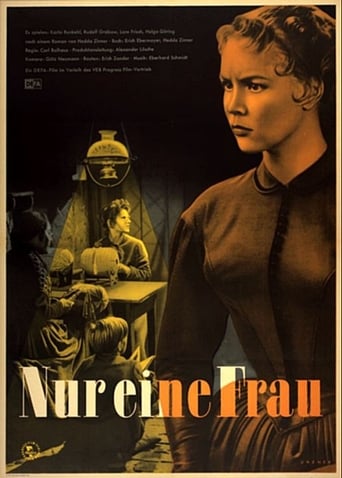
9.0The film tells the life story of Louise Otto Peters, who in the middle of the XIX century in Germany for the first time raised a voice of protest against the unfair treatment of women and their labor. She created the first "women's newspaper" in Germany. The daughter of a famous lawyer, Louise could have easily arranged her life by marrying the wealthy Baron Rodern. But she chose a different purpose in life - to fight for equal rights for women. Through her articles and public speeches, she won the authority and respect of ordinary people.
Only One Woman
1958
 7.2
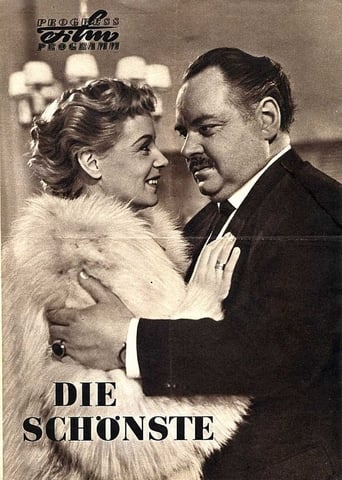
7.213-year old Thomas Berndorf, the son of the rich business man Alexander Berndorf, becomes friends with Hannes Wille, whose father works as foreman. They get to know each because Hannes sometimes is allowed to polish Berndorf′s Mercedes 300. They make a bet whose mother is the most beautiful. Hannes assumes that Mrs. Berndorf is only admired for her expensive jewellery. Thus, he suggests that Thomas should steal a collier from his mother. Out of solidarity, he also robs a golden brooch from his mother. At home at the Berndorfs, a severe crisis threatens Thomas′s parents′ "marriage of convenience", and financial hardships are following on the theft.
Die Schönste
1957
 NR
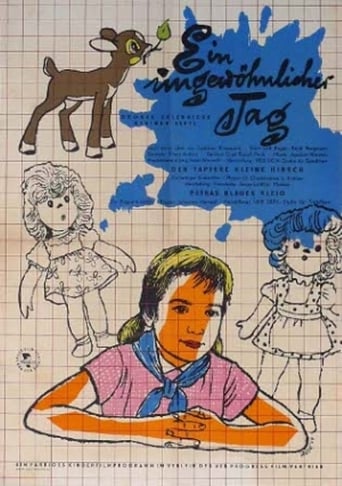
NRThis unusual day was preceded by little Maja's laziness. She didn't feel like doing any schoolwork. When she came to school the next day, the teacher didn't feel like teaching her. Everyone else she wants something from is not in the mood either. Maja begins to wonder whether this strange behavior could have something to do with her "listlessness" yesterday. And she comes to the conclusion that it is not right not to do your homework, as everyone has a duty to fulfill in their place.
An Unusual Day
1959
 7.0
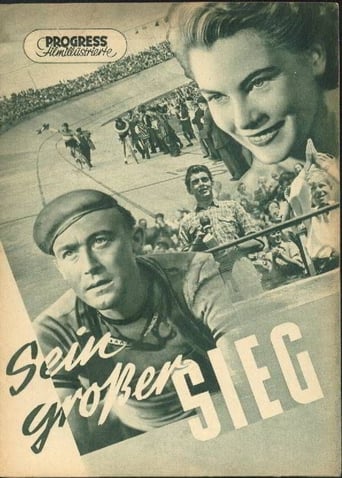
7.0GDR and West Berlin in the 1950s. Hans Nettermann, a designer at the "Komet" bicycle factory, is a favorite of the BSG road riders. His dream is to one day ride in a stand-up race. A construction error throws him back in the road race. They work for a long time to fix it. Then he is persuaded to go to West Berlin to become a professional rider. Although he makes it to the top class, he also learns about the scams in professional sport. He marries Marianne, who has followed him and tries to persuade him to return to the GDR, which he eventually does. After some difficulties at work, he is nominated for the first amateur endurance race in the GDR and wins.
Sein großer Sieg
1952
 9.0
9.0Erich Kubak is an excavator operator at the lignite plant. A technical weakness in the excavator, which repeatedly leads to production downtime, is causing problems for everyone. Erich works on an improvement, but this is not accepted by the chief engineer. On his own initiative, Erich carries out an experiment and causes a great deal of damage. He is dismissed as excavator operator and then resigns. Meanwhile, his son Ewald, who also works at the plant, manages to interest the chief engineer in his father's improvement proposal. Together they work on perfecting it. When Erich finds out about this, he returns to the factory.
Erich Kubak
1959
 7.0
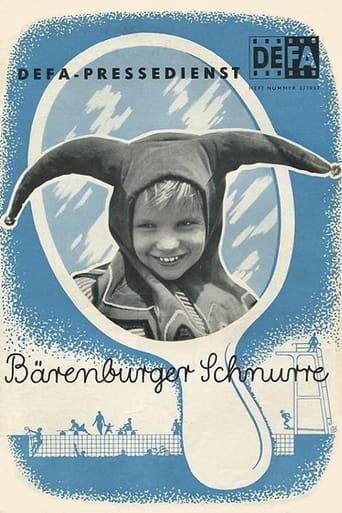
7.0A story about a group of children in German town of Bahrenburg who are trying to build themselves a swimming pool.
Bahrenburg Stories
1957
 6.7
6.7In 1930s Berlin, a woman’s life unravels as her unemployed husband succumbs to Nazi propaganda and joins the Storm Troopers, while her brother's anti-Nazi stance leads to his death, prompting her to confront her beliefs and make a risky choice.
Lissy
1957
 10.0
10.0At a GDR farm, VEAB chief Amann bans cabbage in favor of cauliflower, enraging LPG accountant Gritt. Mistaking visiting writer Hans Brauer for a high-level inspector, Amann backpedals, clearing the harvest issue, while Brauer and Gritt spark an unexpected romance.
Junges Gemüse
1956