
Acting
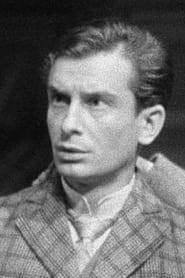
Peter Sturm
Born — Died
1909-08-24 — 1984-05-11
Place of birth
Vienna, Austria-Hungary [now Austria]
Known for
Acting
Credits
41 titles
Known for
 3.8
3.8Der Staatsanwalt hat das Wort was an East German television series.
Der Staatsanwalt hat das Wort
1965
 7.4
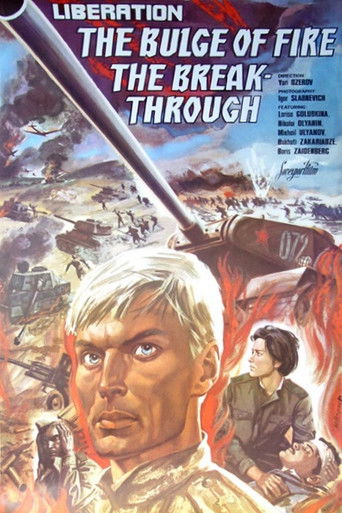
7.4The "Fiery Arc" tells of a grandiose battle on the Kursk Bulge in the summer of 1943. Here was the largest tank battle in the history of World War II. Along with the personal fate of the heroes, the film shows battle scenes, the activities of headquarters and intelligence, those who worked at the front and in the rear.
Liberation - Part 1 : The Fire Bulge
1970
 10.0
10.0This is part one of a two-part biopic about Karl Liebknecht. In 1914, Germany is arming itself for war. Karl Liebknecht, left-wing revolutionary Social Democrat, workers’ leader and a virulent antimilitarist, is one among 110 SPD members of Parliament who vote against approving war loans. From then on, he is considered un-German and a traitor to the fatherland, and his own party’s leadership turns against him. Despite threats, Liebknecht speaks up against the war and writes the manifesto “The Main Enemy Is at Home.” Even when he is arrested and charged with treason, he does not surrender.
As Long as There’s Life in Me
1965
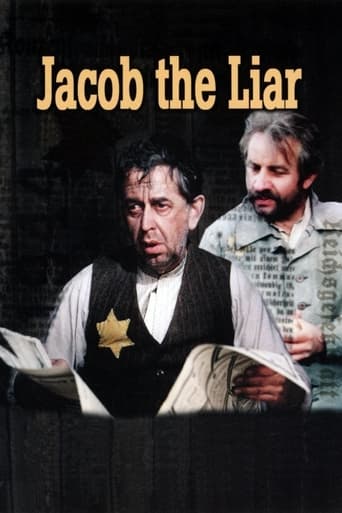 6.9
6.9A Jewish ghetto in the east of Europe, 1944. By coincidence, Jakob Heym eavesdrops on a German radio broadcast announcing the Soviet Army is making slow by steady progress towards central Europe. In order to keep his companion in misfortune, Mischa, from risking his life for a few potatoes, he tells him what he heard and announces that he is in possession of a radio - in the ghetto a crime punishable by death. It doesn't take long for word of Jakob's secret to spread - suddenly, there is new hope and something to live for - and so Jakob finds himself in the uncomforting position of having to come up with more and more stories.
Jacob the Liar
1974
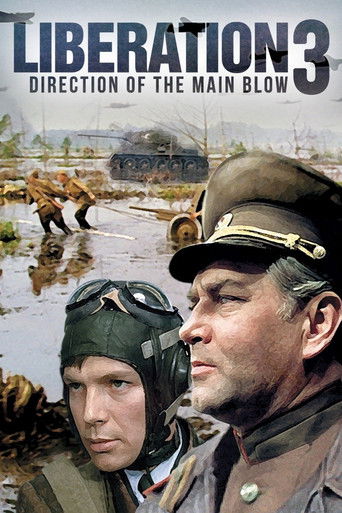 6.0
6.0This five part epic war drama gives a dramatized detailed account of Soviet Union's war against Nazi Germany during world war two. Each of the five parts represents a separate major eastern front campaign.
Liberation - Part 3 : Direction of the Main Blow
1971
 7.0
7.0This first film adaptation of Bertolt Brecht’s play about class distinctions was made in 1955 in the Vienna Rosenhügel studios, but it was only premiered five years later. Curt Bois plays the rich capitalist Puntila who only becomes somewhat agreeable when he is drunk (which he is most of the time in this film). In his inebriated state, Puntila not only gets amorously involved with three different ladies but also suggests that his daughter Eva marries his chauffeur Matti. The chauffeur, however, doesn’t really agree…
Herr Puntila and His Servant Matti
1960
Film credits
1980s · 7 titles
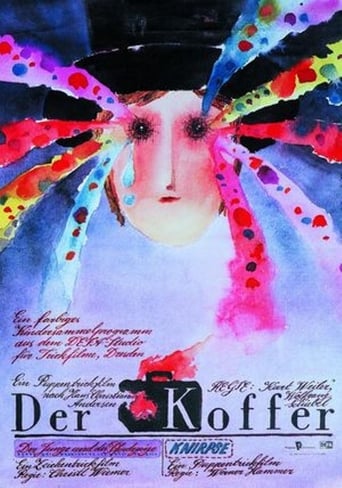 NR
NRA young merchant's son spends his entire fortune to be able to throw lavish parties with his cronies. All he has left in the end is an old magic suitcase that can be used to fly.
The Flying Trunk
1983
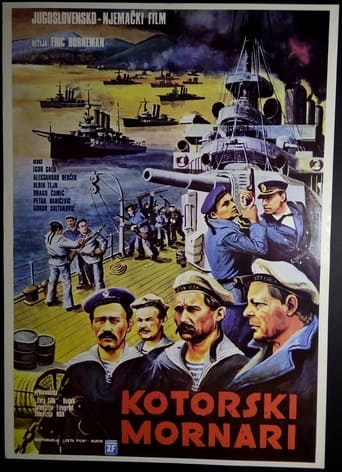 8.0
8.0In February of 1918, in Boka Kotorska, the greatest uprising of Austrian sailors broke out. Forty warships, with 6.000 sailors, rebelled against the Austrian Monarchy. The uprising was bloodily crushed after two days, and it's leaders shot.
Cattaro Mutiny
1980
 10.0
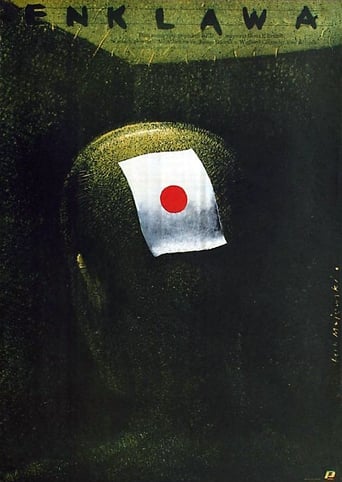
10.0South America at the beginning of the 1980s. A man is on the run from a group of armed pursuers. He does not manage to escape and is shot down mercilessly. Young Maria witnesses the cruel event and asks her friend, the journalist Oswaldo, to find out about the backgrounds of this case. The police also start to investigate the case and find out that a mysterious German farm is involved in the shooting. But the farm lies in an exterritorial area, thus the police officers cannot investigate any further.
Die Kolonie
1981
 9.0
9.0Max Stricker, an old anti-fascist, informs a class of eighth graders before their planned visit to the former concentration camp in Buchenwald. But the boys and girls are not very interested in Max′s lecture and instead stop his lecture with their constant interferences. On the trip to Buchenwald, the class roughnecks around wannabe hoodlum King also want to cause trouble. Thus, a small group of pupils secretly leaves the train before it arrives. Max notices the runaways, follows them, and offers them a bet: He challenges them to get to Weimar on their own, with only five Marks left.
Max und siebeneinhalb Jungen
1980
 7.0
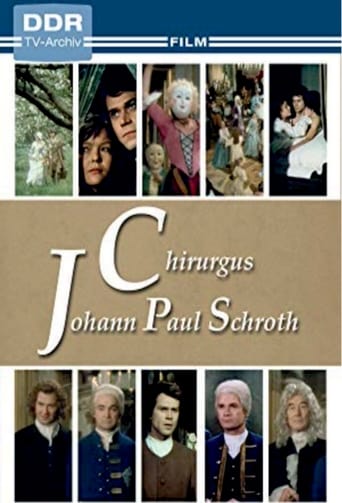
7.0Johann Paul Schroth is a 20-year-old barber's apprentice who breaks out of the barber-surgeon's trade. Schroth wants to realize his dream, which is to put aside the beard knife and use the scalpel in such a way that people are healed and not tortured...
Chirurgus Johann Paul Schroth
1981
No synopsis available yet.
Abends im Kelch
1983
 3.0
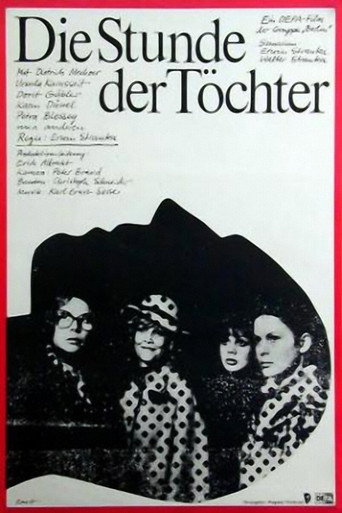
3.0A life-threatening heart attack confines Richard Roth to the hospital bed. There, Richard, who is in his late fifties, asks himself what will remain of him and his life. What happened to his four daughters? Do they take after him? How have they developed? His youngest daughter Nanny, who is still living with her father, gets her three other siblings to Weimar to visit their father.
Die Stunde der Töchter
1981
1970s · 7 titles
7.4The "Fiery Arc" tells of a grandiose battle on the Kursk Bulge in the summer of 1943. Here was the largest tank battle in the history of World War II. Along with the personal fate of the heroes, the film shows battle scenes, the activities of headquarters and intelligence, those who worked at the front and in the rear.
Liberation - Part 1 : The Fire Bulge
1970
6.9A Jewish ghetto in the east of Europe, 1944. By coincidence, Jakob Heym eavesdrops on a German radio broadcast announcing the Soviet Army is making slow by steady progress towards central Europe. In order to keep his companion in misfortune, Mischa, from risking his life for a few potatoes, he tells him what he heard and announces that he is in possession of a radio - in the ghetto a crime punishable by death. It doesn't take long for word of Jakob's secret to spread - suddenly, there is new hope and something to live for - and so Jakob finds himself in the uncomforting position of having to come up with more and more stories.
Jacob the Liar
1974
6.0This five part epic war drama gives a dramatized detailed account of Soviet Union's war against Nazi Germany during world war two. Each of the five parts represents a separate major eastern front campaign.
Liberation - Part 3 : Direction of the Main Blow
1971
 7.0
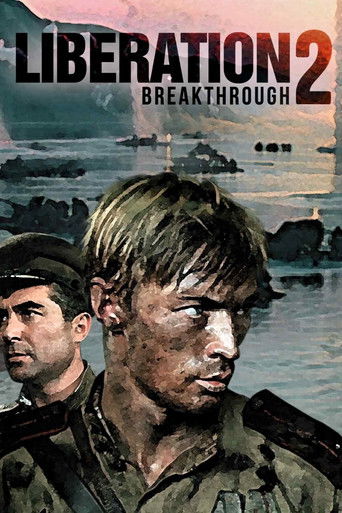
7.0Fascist Italy's prime-minister Mussolini is arrested following the Allies landing in Sicily. Meanwhile, Soviet troops plan their offense towards Kyiv. Lt. Col. Lukin's regiment crosses the Dnieper river as the division's vanguard. Unbeknownst to them, they're merely a ploy to mislead the Germans so the rest of the army can catch them off guard.
Liberation - Part 2 : Breakthrough
1970
 5.4
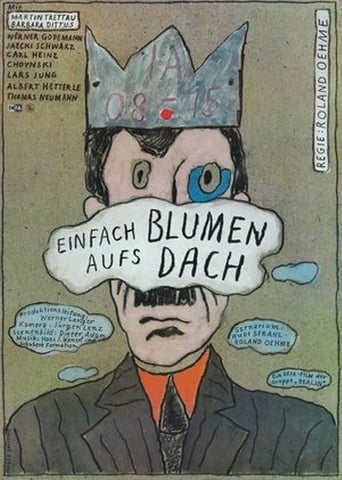
5.4Mechanic Hannes Blaschke and his wife Maxi, who works as a bus driver, have just become happy parents of twins. Now they have a serious transportation problem: Their Trabant is far too small for the grown family that furthermore includes two sons and a dog. Thanks to the support of a state secretary and of his brigade, Hannes acquires a Tschaika – a limousine that is normally restricted to representational purposes – for a small price. Whereas Maxi views the state carriage only as a useful means of transportation, Hannes enjoys the unusual pre-emption he is receiving for the spectacular car. Hannes, who normally is just a humble guy, starts to grate his colleagues with his new affectations. Thus, they teach him an effective lesson: They decorate the state carriage with flowers and thus bring Hannes back down to earth in a humorous way.
Einfach Blumen aufs Dach
1979
 NR
NRIn England in 1553, the marriage of Queen Mary Tudor to the Spanish crown prince Philip II is being considered. It is Simon Renard's task to force the issue. Maria, however, has lost her heart to Fabiano, who for his part is betraying the queen and is only interested in gaining power. When his relationship with Jane becomes apparent to both her admirer Gilbert and the queen herself, intrigues begin to unfold on several levels...
Die Liebe und die Königin
1977
 10.0
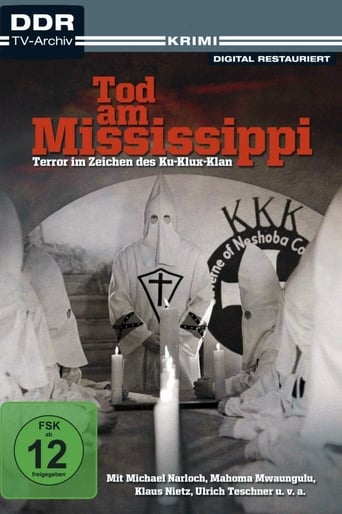
10.0USA 1964: Three young men are arrested on suspicion of speeding. As it turns out, they are employees of a civil rights center in Mississippi who are fighting against the racist Ku Klux Klan. The disappearance of the activists leads to a political scandal in the USA. There are riots and demonstrations against the president's civil rights policy. Despite smear campaigns in the south of the USA, a trial is held in which the background is to be clarified. But the real perpetrators have their own laws...
Tod am Mississippi
1974
1960s · 21 titles
10.0This is part one of a two-part biopic about Karl Liebknecht. In 1914, Germany is arming itself for war. Karl Liebknecht, left-wing revolutionary Social Democrat, workers’ leader and a virulent antimilitarist, is one among 110 SPD members of Parliament who vote against approving war loans. From then on, he is considered un-German and a traitor to the fatherland, and his own party’s leadership turns against him. Despite threats, Liebknecht speaks up against the war and writes the manifesto “The Main Enemy Is at Home.” Even when he is arrested and charged with treason, he does not surrender.
As Long as There’s Life in Me
1965
7.0This first film adaptation of Bertolt Brecht’s play about class distinctions was made in 1955 in the Vienna Rosenhügel studios, but it was only premiered five years later. Curt Bois plays the rich capitalist Puntila who only becomes somewhat agreeable when he is drunk (which he is most of the time in this film). In his inebriated state, Puntila not only gets amorously involved with three different ladies but also suggests that his daughter Eva marries his chauffeur Matti. The chauffeur, however, doesn’t really agree…
Herr Puntila and His Servant Matti
1960
 6.3
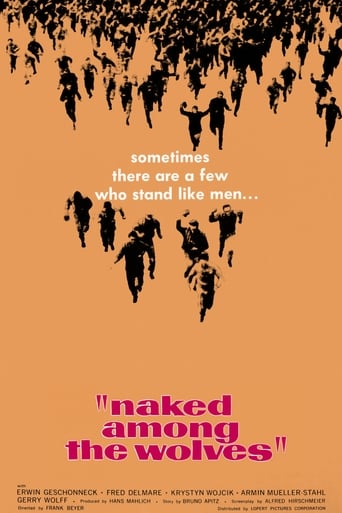
6.3Based on a true story of inmates at KZ Buchenwald that risked their lives to hide a small Jewish boy shortly before the liberation of the camp.
Naked Among Wolves
1963
 7.0
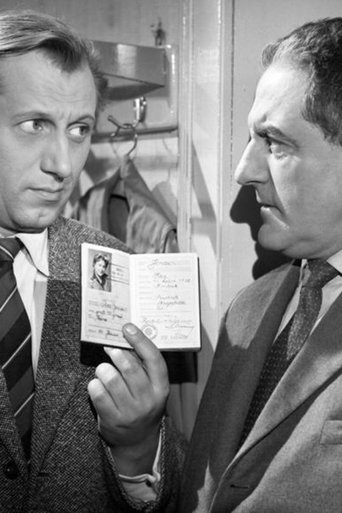
7.0After participating in more than 100,000 euthanasia crimes during the Nazi era, the former SS psychiatrist and physician Dr. Werner Heyde leads an unmolested life in West Germany after the war under a false name ("Fritz Sawade"). With the help of confidants, he manages to get a job as a medical expert. His true identity remains in the dark for many years. His wife has him declared dead and draws the pension of a psychology professor's widow. After remaining unidentified for ten years, Dr. Heyde is unmasked and arrested one day and found dead in his cell shortly before the start of the trial. The film plot is based on the authentic case of Dr. Werner Heyde.
Bonner Pitaval - Die Affäre Heyde-Sawade
1963
 6.7
6.7An idealistic teacher is shocked to discover her pupils are already cynical and opportunistic. Her colleague soon grows resentful when she uses new and challenging techniques to help her students overcome obstacles.
Carla
1965
 8.0
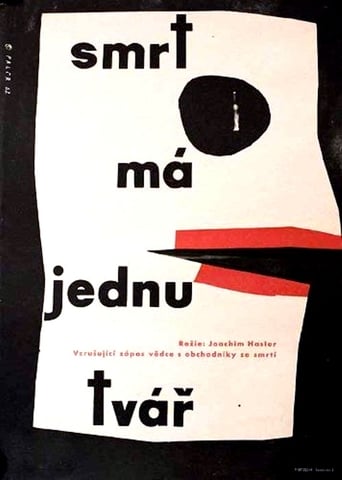
8.0Three chemists unveil “Substance L,” a pesticide capable of eradicating all life without harming material assets. When Dr. Zichy, haunted by his work on Zyklon B, dies in a car crash and the lethal vial vanishes, colleague Dr. Cramm uncovers a child’s poisoning. To suppress the scandal, the corporation and justice system commit him to an asylum, until his assistant Barbara risks everything to expose the truth.
Der Tod hat ein Gesicht
1961
1945: Buchenwald concentration camp shortly before liberation: Polish inmate Janowski rescues a small child hidden in a suitcase. A child in the world of death means hope and danger at the same time. When his fellow inmates and members of the secret resistance group discover the boy, they are faced with a difficult decision. But in the end, humanity prevails. The original and first German feature film about life and death in a concentration camp based on an authentic story.
Naked Among Wolves
1960
 8.0
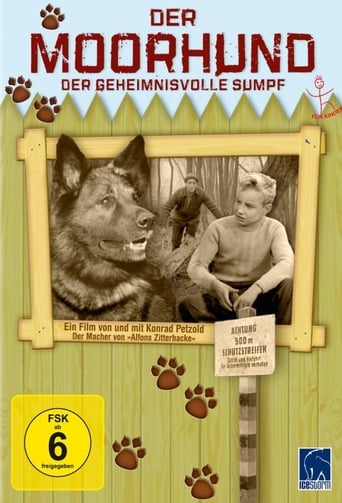
8.0Two boys are helping the border guards to find a mysterious moor hound used by spies to transfer messages across the border.
The Moorhound
1960
 7.0
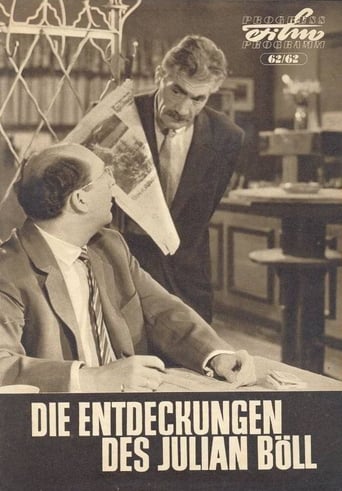
7.0The six members of the Julian Böll brigade have been working well together for years. One day, the brigadier is missing a 100-mark bill from his pay box. Ashamed of his own doubts about his colleagues, he remains silent. Böll investigates the question of why his colleagues in the brigade have not been able to get to know each other personally despite working well together, and why he does not have the confidence to resolve the matter collectively. He recognizes omissions and decides to have a clarifying discussion. It turns out that the money was not stolen.
Entdeckung des Julian Böll
1962
 9.0
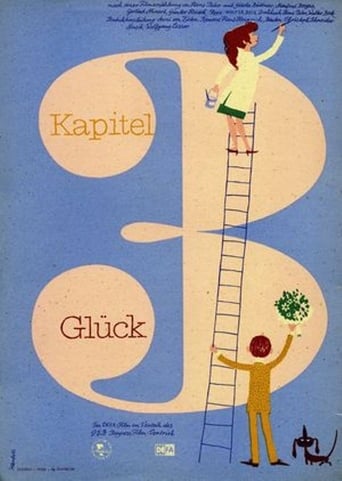
9.0Ev and Peter fall in love at first sight. Peter studies dentistry in Leipzig and is eager to work in the country. There is an unfilled dentist vacancy in his home village. Ev, on the other hand, is drawn to the city. Being a commercial artist, she sees no chance to find a job in the country. This conflict becomes the first real test for their relationship.
Drei Kapitel Glück
1961
 8.0
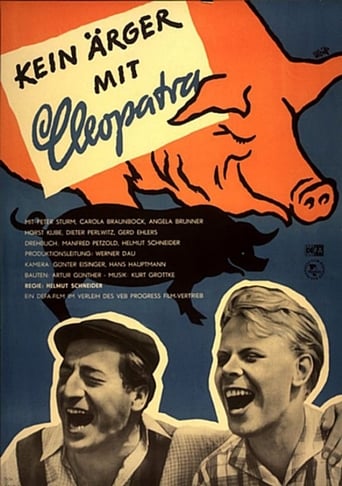
8.0The black cooperative Cornwall boar achieves single-handedly, so to speak, what the LPG functionaries in Bolbitz fail to do. He takes away the individual farmers' fear of the LPG by secretly covering their sows at night. The black piglets frighten the farmers at first, because black litters mean bad luck and presuppose a sin. Collectivization is seen as a sin by the superstitious, especially Grandma Kahlow. But when even the priest's sow is not spared and they find out who the "culprit" is, the superstition dissolves into laughter and the fear of the LPG is banished.
Kein Ärger mit Cleopatra
1960
 10.0
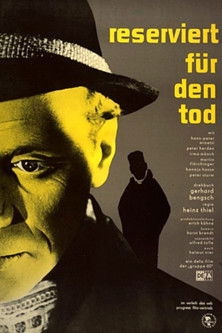
10.0Former East German engineer Erich Becker had been lured to West Germany by promises of a high reward. Now residing in Stockholm, he is recalled to serve as a spy in the East. He is to convince Dr. Jadenburg to flee from the GDR with the help of his daughter Hanna, who works for the West. While travelling on the train with Hanna, he is told that he is also to murder another agent who betrayed and now works for the Stasi. The traitor is revealed to be a former friend of Becker, Harry Korb.
Reserved for the Death
1963
 7.0
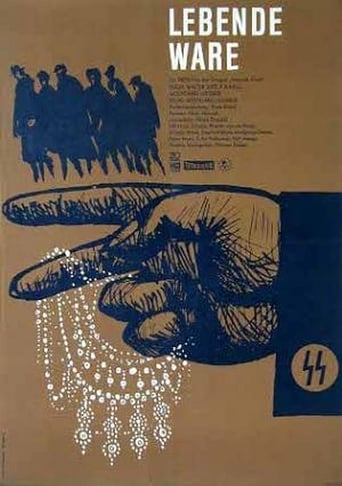
7.0In 1944, SS-Obersturmbannführer Becher arrives in Budapest in order to obtain material for the Waffen-SS. At the same time, he starts to gather private property by offering an insidious choice to the corporation′s Jewish majority shareholder, Dr. Chorin: Either Chorin assigns the company to Becker "on his own free will" – thereby obtaining the permission to travel abroad - or he his family will end up in an extermination camp.
Lebende Ware
1966
 8.0
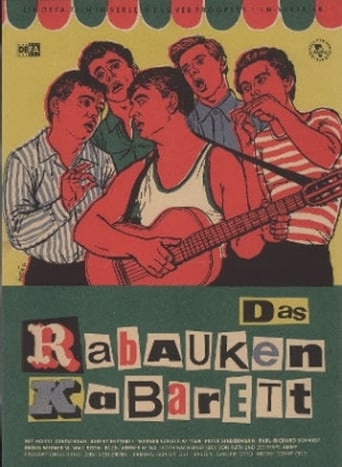
8.0Wolfgang is a bully, but overall he‘s not a bad guy. However, not everyone in Thuringia, where he goes to school, is sympathetic to him and his buddies. His daring adventures often go too far - up to and including stealing three bottles of liquor. Meanwhile, the new head of the boarding school knows how to use the undisputed skills of hooligans for the common good. Together with them he founds the "Cabaret of Debaucheries". With sharp jokes and music, they now pounce on slackers, slackers and drunks - and in the process slowly change for the better.
Das Rabauken-Kabarett
1961
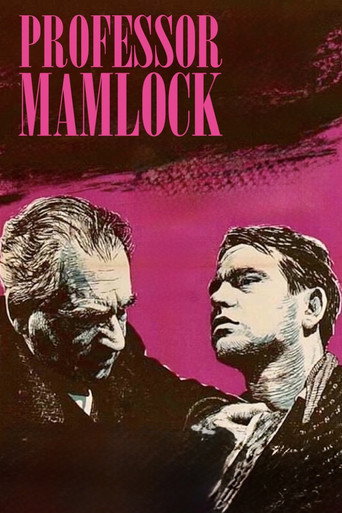 7.2
7.2A Jewish chief of surgery in 1933 Germany remains blind to the rising Nazi threat, dismissing political dissent from his son and a patient, until his family faces increasing anti-Semitic persecution.
Professor Mamlock
1961
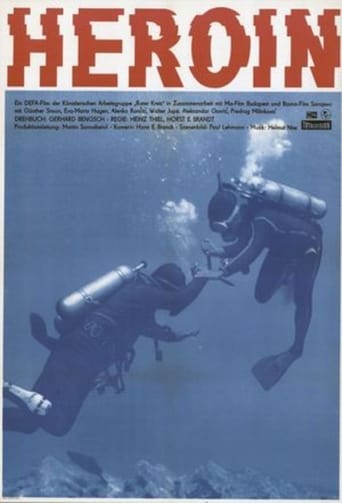 6.0
6.0This East German movie was co-produced with studios in Hungary and Yugoslavia, with many interesting location shots (border checkpoint to West Berlin, the Gellert bath in Budapest, and more). The plot is about French drug dealers, who obtain heroin somewhere in the Middle East, and smuggle it in several steps to East Berlin, and from there to France (or so it appears), killing when necessary. The hero is an officer of East German customs, who with detective work, some masquerade, and occasional violent action ultimately unravels the whole network, of course with the support of the local customs departments.
Heroin
1968
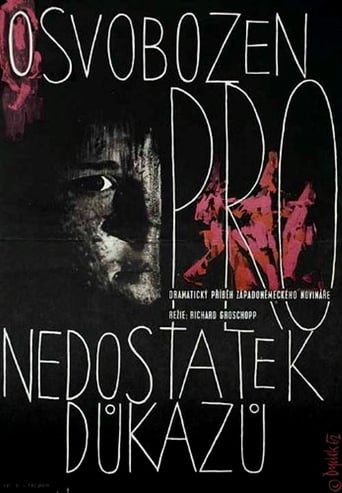 8.0
8.0The democratic Munich journalist and editor-in-chief of the "Südkurier" newspaper, Alexander Steinhorst, has reached the pinnacle of social reputation and private wealth. He can rent a theater for his son and women are at his feet. He then takes the liberty of publishing a newspaper with revelations about the dubious sources of the CSU election fund. CSU lawyer Dr. Fabricius sets a photographer on Steinhorst's private life to bring him down. He is charged with "fornication with addicts", but is acquitted due to a lack of evidence. Steinhorst, however, is ruined socially. Friends and colleagues turn their backs on him out of fear for their own careers and his assets are confiscated. Steinhorst commits suicide.
Freispruch mangels Beweises
1962
In the late summer of 1958, party secretary Ernst Wollni is sent from Berlin to the village of Schwarzwalde to help set up an agricultural cooperative. In the village he meets his childhood friend Fritz Grimmberger again. Their friendship is put to the test as Grimmberger opposes collectivization. Nevertheless, Wollni manages to motivate the villagers and get the LPG going. Grimmberger, however, ruins himself by going it alone. When his daughter Helga also wants to leave him and study in the city, he realizes his mistake. Grimmberger and Wollni reconcile at the village festival.
Sommerwege
1960
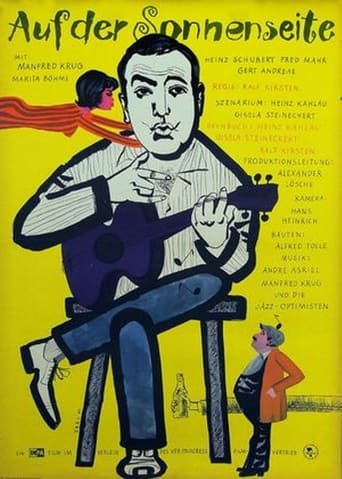 7.0
7.0The story of the steel melter Martin Hoff, whose factory delegates him to a drama school, corresponds to the real life of the actor Manfred Krug. Like his (film) hero, Krug works as a steel melter, does artwork, sings and acts, and is sent to drama school. Like his hero, who behaves anarchically and conspicuously, Krug is soon expelled from school.
On the Sunny Side
1962
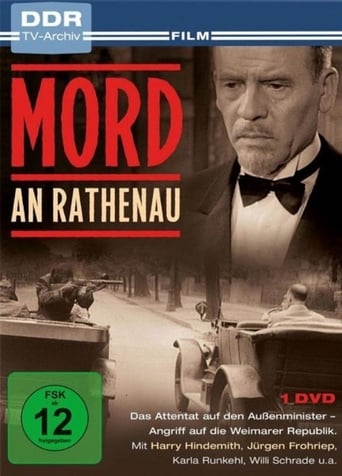 7.0
7.0Germany 1922 during the Weimar Republic: Foreign Minister Walther Rathenau signs the Treaty of Rapallo between Germany and the Soviet Union. German national, conservative forces then speak of betrayal and anti-Semitic tones become loud. Plans for murder Rathenaus are forged in the vicinity of the Freikorps. The young engineer Horst Bergmann learns about the preparations of the assassination attempt and tries to warn Rathenau.
Mord an Rathenau
1961
 9.0
9.0No synopsis available yet.
Steinzeitballade
1961
1950s · 2 titles
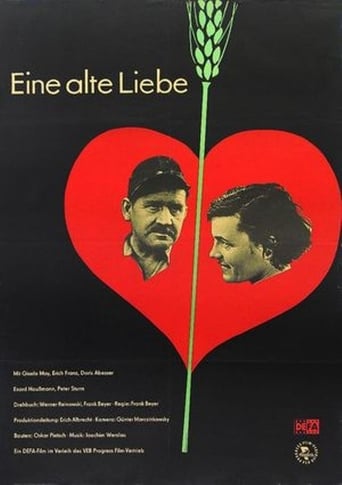 7.0
7.0Frieda and August Walkowiak celebrate their 30th wedding anniversary. However, the marriage has been in crisis for some time. August wants to spend his old age in peace, while Frieda has no intention of giving up her position as LPG chairman. The problems in the countryside are huge, collectivization is not progressing fast enough, even comrade Heinrich Rantsch is clinging to his individual farm. Frieda fights for progress, even in her private life, because not only her burden but also her higher position is a thorn in her husband's side. During the wedding anniversary celebrations, Frieda is called to the LPG. This is the cause of the family quarrel that has been in the air for a long time. August demands her resignation. In vain - and so he moves in with Rantsch. Their daughter Helga also leaves the house because of the tensions. Frieda collapses. When she is in hospital, August comes to his senses.
An Old Love
1959
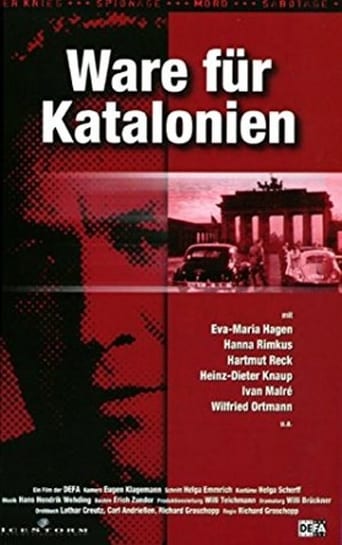 5.5
5.5At the end of the 1950s, the production of optics in the German Democratic Republic has reached top quality and instigates interest in the West. When national demand rises strongly and at the same time the export to South America heavily decreases, the Volkspolizei - the GDR police force - starts to look into the case. Two seemingly unrelated cases are the starting point for the investigation by second lieutenant Schellenberg of the department for optics racketeering: An old woman who was arrested in the Berlin city railway for trying to smuggle a pair of binoculars to West Berlin, and a dead person in an area of allotments who was involved in obscure dealings with optical devices.
Ware für Katalonien
1959
Series credits
3.8Der Staatsanwalt hat das Wort was an East German television series.
Der Staatsanwalt hat das Wort
1965
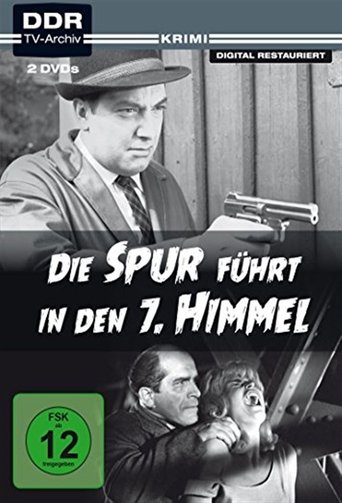 NR
NRViennese nightlife in "7th Heaven" This very exclusive club is frequented by the elegant social elite: rich snobs, dandies, pimps from bourgeois society. And mysterious things happen here that attract the attention of the criminal investigation department. Are they connected to a series of serious crimes? The interest of the criminal investigation department is directed toward a certain group of people who are regulars at "7th Heaven." All suspects can be assumed to have a motive: they need money...
Die Spur führt in den 7. Himmel
1963
 4.2
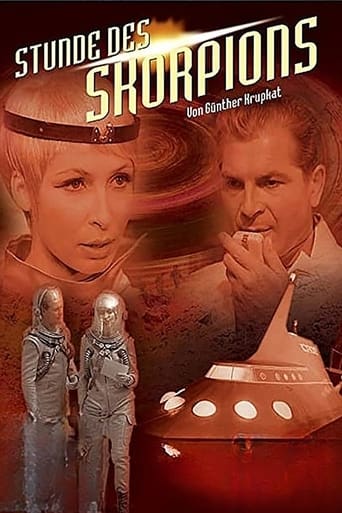
4.2In the 21st century, a global socialist security organization is concerned over a new energy source, of possible alien origin, falling into the hands of one of the last remaining capitalist countries and turned into a super-weapon.
Scorpion Hour
1968
 NR
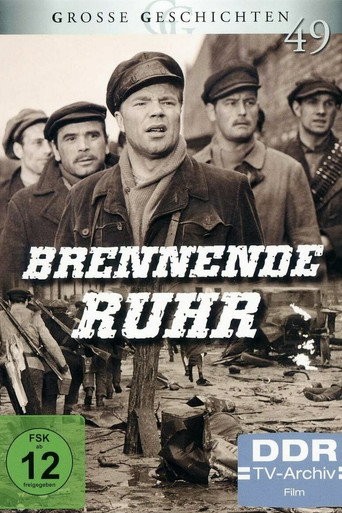
NRThe events during the Kapp-Putsch 1920 in a small German town in the Ruhr district. The main protagonist is Ernst Sukrow, a student who sympathises first with the bourgeois forces but finally decided to join the communists in their fight.
Brennende Ruhr
1967