

Acting
Erik S. Klein
Born — Died
1926-02-06 — 2002-10-22
Place of birth
Radebeul, Germany
Known for
Acting
Credits
79 titles
Known for
 6.2
6.2Polizeiruf 110 is a long-running German language detective television series. The first episode was broadcast 27 June 1971 in the German Democratic Republic, and after the dissolution of Fernsehen der DDR the series was picked up by ARD. It was originally created as a counterpart to the West German series Tatort, and quickly became a public favorite.
Polizeiruf 110
1971
 3.8
3.8Der Staatsanwalt hat das Wort was an East German television series.
Der Staatsanwalt hat das Wort
1965
The show was meant to compete with those on West German television. To this end it was fairly successful even attracting a following in parts of West Germany which could receive Eastern TV. Its production values were high. Apart from song and dance numbers and appearances from East German celebrities, almost every broadcast featured well-known stars from the west, often after their popularity had peaked in their home countries.
Ein Kessel Buntes
1972
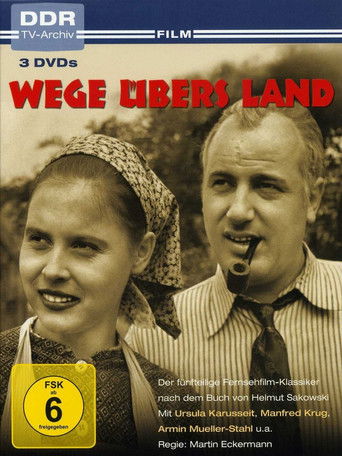 9.0
9.0East German TV miniseries about the young maid Gertrud Habersaat, who marries, moves from Mecklenburg to Poland in the early 1940s, has to come back to Mecklenburg as a refugee during World War II and finally finds her place during the 1950s.
Ways across the Country
1968
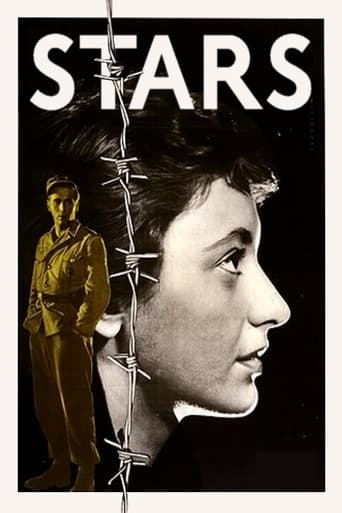 7.4
7.4Stationed in a secluded Bulgarian village in 1943, Walter – a German Wehrmacht sergeant and artist – lives in almost idyllic distance from the war. Then a transit camp is set up for Jews arriving from Greece. When Ruth, one of the internees, asks Walter to help a pregnant woman, the two form an unlikely bond.
Stars
1959
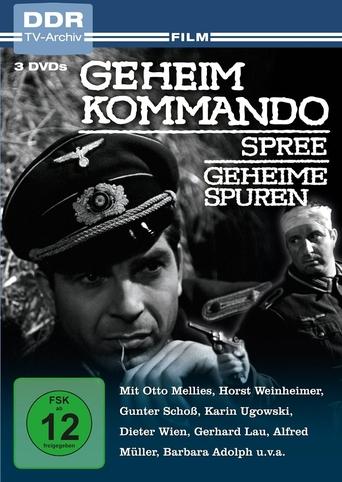 10.0
10.0Three members of the National Committee Free Germany form a secret commando that comes to Berlin from Minsk to take up the fight against the SS in the last days before the end of the war.
Geheime Spuren
1969
Film credits
1990s · 2 titles
 8.0
8.0Poor weavers Hans und Kumpan try to enter a town surrounded by a tall, impenetrable wall, where everyone is apparently very happy. When they finally make it inside, the tyrannical Emperor Max demands they make him new clothes that would "bring all creatures to their knees." Hans and Kumpan claim only intelligent people can see the robe, and in order to prove himself clever, the emperor haughtily displays himself before his subjects wearing his new invisible regalia.
The Robe
1991
 7.0
7.0Otto is turning 65 and a big celebration with relatives and friends is coming up. What does life bring? A comfortable retirement, looking after his beloved grandchildren, lamenting the aches and pains of old age. None of that. Otto falls in love with Klara and the two of them are looking for a place to live together. What is in itself a matter of course comes up against many barriers. A turbulent time begins for the two newly in love...
Alter schützt vor Liebe nicht
1990
1980s · 9 titles
 7.0
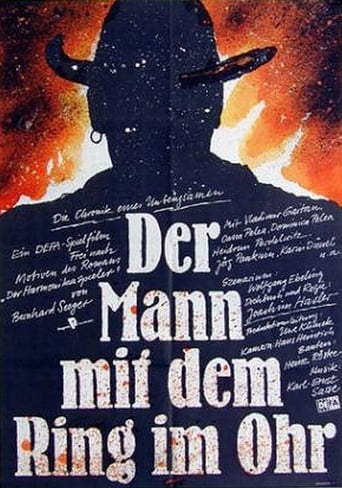
7.0For years, the carpenter Tillmann Rutenschneider has moved around. In 1932, at the age of thirty, he returns to his village in the Mark Brandenburg with a foreign wife. He builds a house and starts a family. It wasn't long before he became a victim of the new racial laws. His house is set on fire, his wife and child burn to death in the flames. He himself is sent to a concentration camp. After liberation, he returned to his home village, started a new family and built a new house. He joins forces with resettlers to form a cooperative, enforcing the land reform in his very own way. Tillmann falls into debt, gets into trouble and ends up in prison. He has to sell his house to pay off his debts. Released from prison, Tillmann Rutenschneider makes his way back to his village.
Der Mann mit dem Ring im Ohr
1984
 6.7
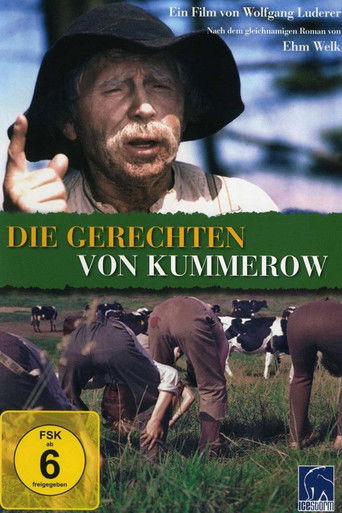
6.7In a remote Prussian village, the shepherd Krischan with his fantastic stories is the attraction point for the children. One day they experience together how the Müller Düker beats his horse to death and intervene. Düker sues her for body injury at the district court, and because the main accused, Krischan, lives illegally in the village without papers, the village community decides to deport him before the trial. Krischan disappears. The children feel the loss painfully, are outraged by the adults. The boys Martin and John search for Krischan on an adventurous ride and are put by the police. Krischan remains gone.
The Just People of Kummerow
1982
 NR
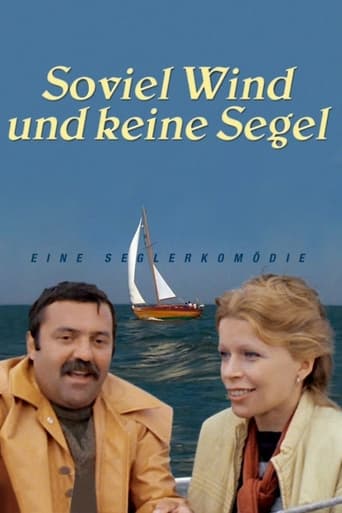
NRThe water sports fans of a cooperative on the coast finally want to acquire a seaworthy sailing ship. But at the board they encounter deaf ears. Only the chief accountant Irma shows interest in sailing and especially the leisure captain named Ali. Then a minister surprisingly his visit. Irma devises a plan to support the sailors. In order to vote the Minister benevolently, flights, a company sports community should be launched. The founding of a sailing section would be just right. But unfortunately, the Chairman Scheffel continues to be cross. He even wants to use the storage space of the sailors. Only when the minister finds pleasure in the spontaneously organised sailing trip for him, movement comes into the affair.
Soviel Wind und keine Segel
1982
 10.0
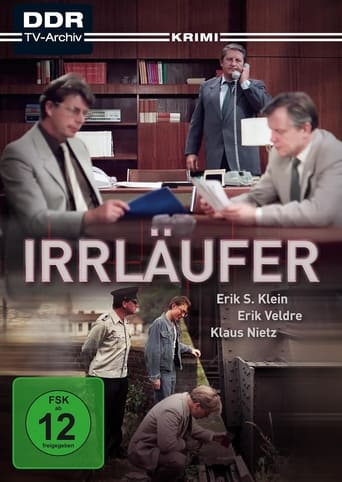
10.0At the freight yard of a small town in East Germany, a railcar loaded with Russian sparkling wine is causing a stir. Looters appear to have broken open the car’s doors, yet not a single bottle is missing. Major Bauer of the State Security Service and his team of investigators take on the case and quickly discover that something is amiss with the cargo’s accompanying documents.
Irrläufer
1985
 NR
NRFour small-time crooks occasionally enlist the help of their girlfriends to earn a living by robbing cars. It is only when a former television producer joins the business that they achieve visible success.
Puppen für die Nacht
1980
Mostly fictional episodes in the life of famous german social-critical painter Heinrich Zille.
Zille und ick
1983
 7.5
7.5Enemy secret services from the West had used modern technology for the "cold war", i.e. the confrontation with the Eastern Bloc, and developed a device called COMMINT 3-72. Its nickname was "Radiokiller". This weapon was not much bigger than a soccer and could be easily camouflaged on the territory of the GDR, for example as a fieldstone, the remains of a wall or a lump of earth. These enemy objects were inconspicuous on the outside, but packed with complicated inner workings, i.e. highly sophisticated microelectronics.
Radiokiller
1980
 9.0
9.0Pensioner Erich Zarling loves two things: his daughter Ulrike and his dog sports club, of which he is chairman. But this position is in danger, so he wants to make himself indispensable with a daring move: He wants to build a sports clubhouse. He has come up with a curious idea to raise the funds: the sale of thirty state-owned trees from Berlin's Puschkinallee. His daughter Ulrike, who loves to sing and dance, is a chambermaid at the "Stadt Berlin" hotel. And against her father's wishes, she dreams of the boards that mean the world. A guest, the pop singer Balter, hires her as a replacement for his absent partner at the "Night of the Celebrities". He promises her more, but disappoints her. Father Zarling comforts her and they sing the "Rose Song" together in his tricked-out sportsman's home.
Mensch, mein Papa...!
1988
 7.0
7.0A tale about the evil queen who gets swapped with a simple and nice woman.
The Swapped Queen
1984
1970s · 19 titles
 6.5
6.5In an enchanted forest, the princely brothers Michael and Andreas get lost and are transformed, by a mountain spirit who jealously guards his underground treasure, into animals until the unlikely event of sincere love from a human. The only persons who may be able to give such love are the local commoner sisters Snow-white and Rose-red, who are kind and helpful by nature and stand to harvest unimagined rewards.
Snow-White and Rose-Red
1979
 10.0
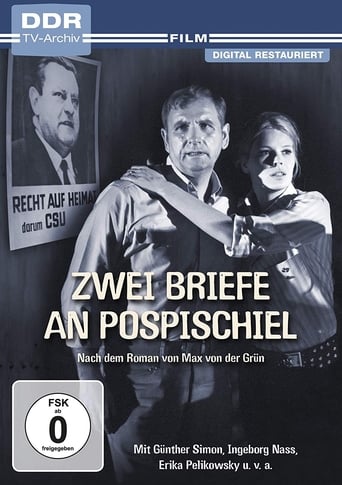
10.0Paul Pospischiel loses his job in the great colliery collapse in the Ruhr, retrains and builds a new life for himself. One day, he receives a letter from his mother, which tears him from his comfort zone and triggers a serious conflict. She has discovered the man who sent his father to a concentration camp decades ago and is therefore responsible for his death. The mother demands accountability from this man. Paul decides to confront the suspected informer and murderer...
Zwei Briefe an Pospischiel
1970
 3.7
3.7A flamboyant comedy about love, work and money—revealing that the "planned" economy produced some unconventional entrepreneurial methods.
Anton the Magician
1978
 7.0
7.0A commercial artist with a lisp chooses silence, unexpectedly propelling his career. His perceived innovation leads to rapid advancement in an ad agency. Mueller-Stahl shines in this biting critique of East German workplace culture.
Carnations in Aspic
1976
 NR
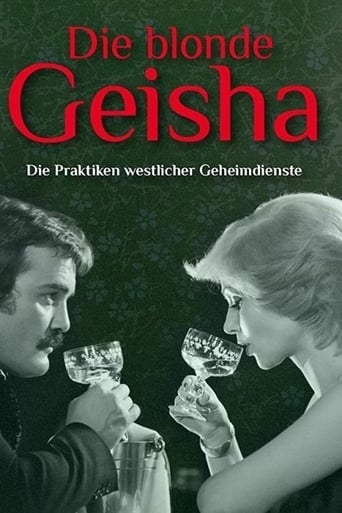
NRThe plot takes viewers to various places in Europe, including Prague, Erfurt, Frankfurt/Main and even Tenerife. And the title "The Blonde Geisha" turned out to be a nickname for the film's heroine, who had once been called that by her school friend Andreas. At the time, there was more than a hint of romance between the two, but then they lost sight of each other. Now, all of a sudden, a reunion in Prague! This would be a chance for Erika and Andraes to start afresh, but the two are not alone in the Czechoslovakian capital, as if on an island. Instead, the businesswoman from West Germany and the research engineer from East Germany find themselves in the sights of shady people who do not shy away from crime in order to achieve their goals, and so the two main protagonists find themselves in increasingly dangerous situations.
The Blonde Geisha
1979
 5.2
5.2Dr. Gisa Tonius, a physicist in her thirties who has a nearly adult stepdaughter, cherishes the desire to have her own child. Suddenly, a big interdisciplinary research project threatens to significantly change Gisa′s life. Uncertain whether to look for professional or private fulfillment she asks her family and friends for their opinions. They all have different views on the point at issue. While her husband is afraid of losing her to her profession, her professor thinks that because of her talent she has an obligation towards science. In the end, Gisa reaches a decision: She wants to have a baby as well as take on the research project.
Declaration of Love to G.T.
1971
 10.0
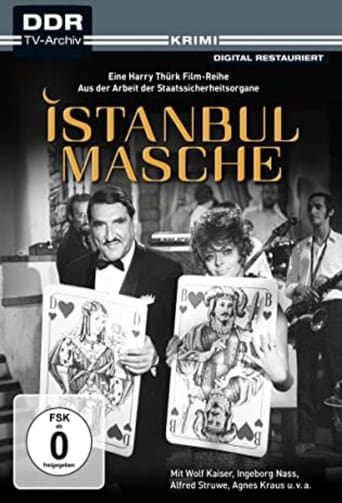
10.0What the trick and illusion artists Lina and Richard Kortmann have to offer their audience is by no means sensational. Their performances are too antiquated, so that the Kortmann show is only available from the Artists' Exchange at low rates. This also threatens the realization of Mr. and Mrs. Kortmann's secret wish - a private pension in the Black Forest for their old age. But they are not so quick to throw in the towel: together they devise a new trick that not only conjures up rabbits and paper flowers or makes them "magically" disappear from the stage; Kortmann manages to conjure people out of this world.
Istanbul – Masche
1971
 6.2
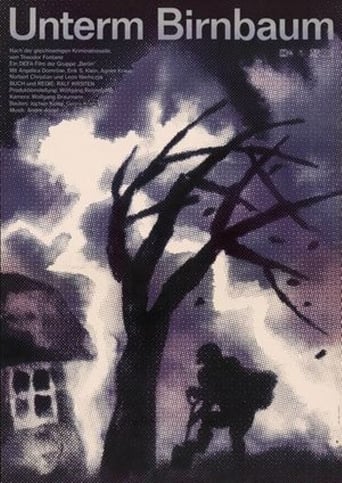
6.2Abel Hradscheck, the owner of an inn in the Oderbruch country, faces financial ruin. For this state of affairs, Ursula, his wife and former actress, is by no means free of blame. She is a "newcomer" to the area and even after eleven years in the area, still a "stranger". A Cracow company announces that a money-collector is on his way to the innkeeper. Mr. Szulski arrives and the debts are settled - with money supposedly stemming from an inheritance. The next day, Szulski departs but according to the maid and the stable-boy, behaves in a very strange manner. Soon afterwards, his carriage is discovered in the Oder River, but there is no trace of the drowned man. Hradscheck's neighbor starts casting suspicion on the innkeeper. The Counselor of Justice, who heads the investigations has the spot under the pear tree dug out. A dead body is exhumed...
Unterm Birnbaum
1973
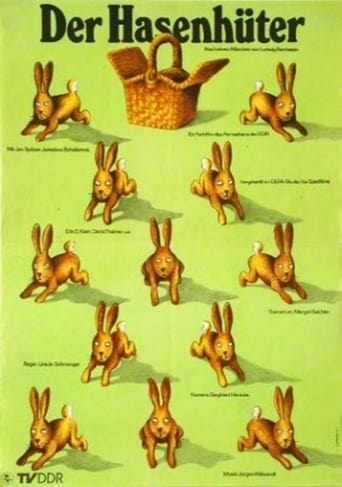 6.7
6.7The young shepherd Konrad wants to ask the princess to marry him. All the exhortations of the kitchen maid Anne are to no avail. With the help of a magic flute, Konrad solves all the tasks set by the king and the princess. In doing so, he recognizes the princess's true character and so he decides in favour of Anne, not without first severely punishing the greed of the royal court.
Der Hasenhüter
1977
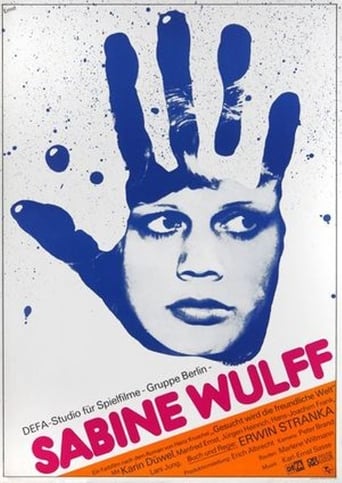 5.6
5.6Sabine Wulff is almost 18 when she is released from the juvenile detention center. She doesn't want to return to her unsupportive parents or to her former boyfriend Jimmy, who got her into trouble by persuading her to steal cigarettes. She instead chooses to begin an honest life by getting a job and renting her own room.
Sabine Wulff
1978
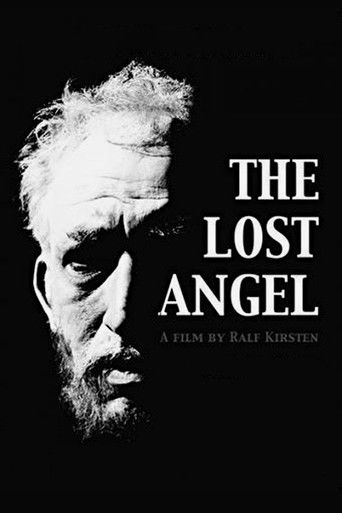 7.2
7.2August 24, 1937: a day in the life of expressionist sculptor and author Ernst Barlach (Fred Düren). Barlach lives in the small town of Güstrow, keeping to himself and wanting to steer clear of politics. On this day he learns that the Nazis have dragged his famous 1927 sculpture The Hovering Angel out of the Güstrow Cathedral. Barlach begins to reflect on his life of “inner emigration” and on his work.
The Lost Angel
1971
 10.0
10.0A detailed reconstruction of the censorship case against the landmark Weimar-era communist film, Kuhle Wampe, or Who Owns the World? (1932). Directed by Slatan Dudow, the crew and cast included left-wing luminaries, such as playwright Bertolt Brecht, composer Hanns Eisler and balladeer Ernst Busch. The film was the subject of vehement disputes and was banned twice for revolutionary and communist tendencies that were perceived to threaten the state. About 230 meters of the original film fell victim to the censor’s shears. This historic censorship case was argued over the course of three sessions. Censored: Kuhle Wampe re-enacts the censorship hearings, based on original minutes and documents, as well as personal records of the case. In addition to footage from the original film, this docudrama includes original clips of Berlin in the 1920s and '30s and short testimonies, filmed in the 1970s, with some of the actors involved in the original Kuhle Wampe film production.
Censored: Kuhle Wampe
1975
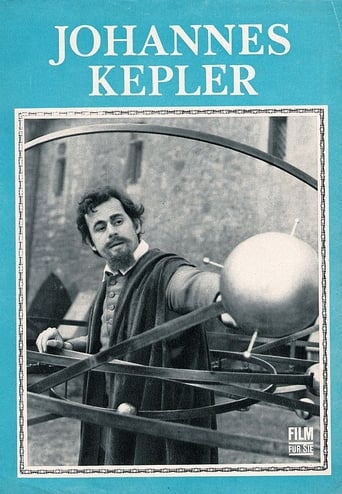 9.0
9.0Europe, 1620: The well-known astronomer and mathematician Johannes Kepler, who teaches as a professor in Linz, receives the message that his mother is prosecuted as a witch in Württemberg. The truth behind the allegations is rather simple: His mother has been denunciated by a former friend after an argument with the authorities. Kepler tries desperately to convince the prosecutors of the absurdity of their allegations with rational arguments.
Johannes Kepler
1974
 NR
NRThe little dog Nero looks around inquisitively in a world that is still somewhat foreign to him. He doesn't really know who or what he is and wants to have everything he admires in others. Only when the fox intrudes does Nero come to his senses.
Wer bist du?
1971
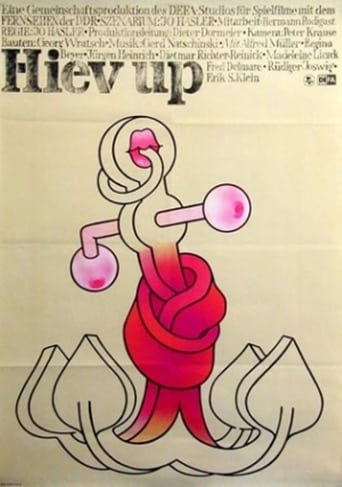 5.4
5.4The crew of a small Saßnitz fisherman has problems with the "making a cultural socialist life". In order not to lose the competition prize again in the future, they want to show the organizer a collective weekend with all the trimmings. And they really do not mind ...
Hiev up
1978
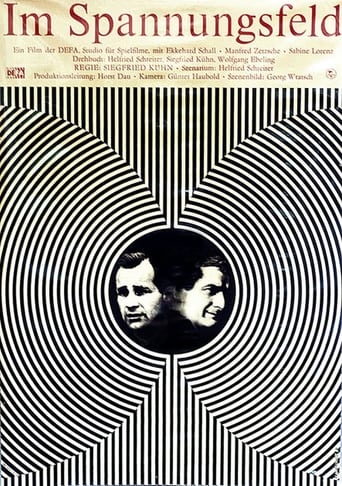 10.0
10.0Electronic data processing is an absolute must in the Information Age. Karl Hoppe, the director of a large plant, is aware of this need for modernization and hires mathematician Dr. Jochen Bernhardt to install computerized systems which are supposed to calculate ways in which the plant could be run more effectively. Dr. Bernhardt is so focused on efficiency that he forgets about the human side of work, causing his girlfriend to leave him and several dissatisfied employees to quit their jobs.
Im Spannungsfeld
1970
In the spring of 1969, a young man from a small town arrives at the partner company in Berlin, where he falls in love with red-haired Rita. A love story about "everyday heroes," in which director Egon Günther continues his idiosyncratic formal experiments with actress Jutta Hoffmann, which he began in "Junge Frau von 1914" (Young Woman of 1914).
Anlauf
1971
 6.5
6.5"Route Casanova" is how people call the train driver Roland Diesler, as a love awaits him at almost every station. His colleague even has to carry out a plan extra so that there are no collisions between his rendezvous. However, when Roland looks at Ulla, the daughter of the station manager Bünau, this and father Diesler step in. They change the rosters of the two turtle doves so that they cannot see each other. But can the young couple be stopped by it?
Der rasende Roland
1977
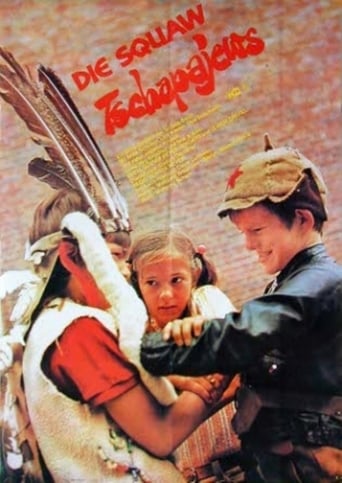 9.0
9.0Two school classes compete against each other. The prize for the winner is a trip to the Baltic Sea. Lars, Peter and the group leader Manni are confident of victory in the cross-country game, after all they have gained experience in the game as "Chapaev's cavalry army". The first point goes to them. However, they fail the math Olympiad - an Indian movie was more important to them than learning. And before the soccer match, they split into two groups. Lars leads a pitiful remnant of Chapaev riders, while Peter plays Indians with the others. At the soccer match, they put legs on each other, and the other class wins that point too. After the defeat comes the realization: maybe they should practice "Cosmonaut" together again - until next year's competition.
Die Squaw Tschapajews
1973
1960s · 20 titles
 6.3
6.3Was it an act of sabotage or willful negligence? The non-party engineer Heinz Solter is suddenly arrested and accused of approving a defective pipeline that caused a half million loss to his company. At first, the case seems clear-cut for the state prosecutor, but when he probes deeper, he discovers that Solter had acted against his better judgment due to the pressure from his career-driven and authoritarian boss.
Spring Takes Time
1965
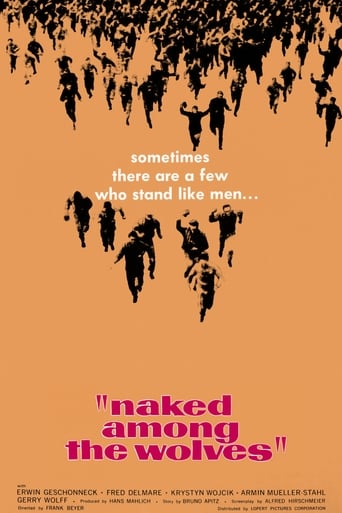 6.3
6.3Based on a true story of inmates at KZ Buchenwald that risked their lives to hide a small Jewish boy shortly before the liberation of the camp.
Naked Among Wolves
1963
 6.6
6.6A wild story set in eighteenth-century Prussia. Alexander can do everything that a real devil of a fellow must be able to do: ride, shoot, love and devise clever plots. As a result, he is able to climb the ladder from herder to chamber master, where he makes a fool of the feudal lords.
Mir nach, Canaillen
1964
 5.5
5.5A humorous and satirical comedy, which places a man from the year 2222 one day in the (then) present day life in GDR, East Germany under Communist regime. Using a crystal for mind reading he uncovers some improprieties and moral weaknesses in the "Beautiful future" professed by VEB ("Volkseigener Betrieb" – "State Owned Holdings").
The Man with the Objective Lens
1961
 6.3
6.3The communist and resistance fighter Lorenz Reger, who after the war put all his efforts in the creation of a socialist German state, learns that he has only a short time left to live. Nevertheless, he wants to take on one last difficult new task: He wants to restructure a large firm which has run deep into the red numbers. In a short amount of time, Reger manages to establish mutual trust between the employees and the new management. Furthermore, he motivates the employees with his personal interest for their concerns.
Time to Live
1969
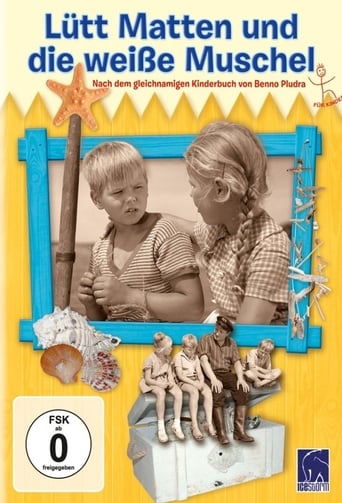 8.7
8.7Eleven years old Lutt Matten lives near Baltic Sea and has only one dream - to go deep sea fishing independently and catch some eels.
Lutt Matten and the White Seashell
1964
 7.2
7.2During the Thirty Years' War, the camp-follower Anna Fierling, called "Mother Courage", travels the length and breadth of Europe with her covered wagon. She does not care if it's Catholics or Protestants she trades with as long as business thrives. She loses her three children as a result of the war: bold and spirited Eilif, sincere and upright Swiss Cheese and mute Katrin, who saves the children of Halle by beating a drum on a farmstead roof In wartime, the Fierling children's virtues prove to be deadly. Yet, Mother Courage, remains incorrigible. She will not have anyone "spoil the war" for her and so sets out once more after the soldiers with her wagon.
Mother Courage and Her Children
1961
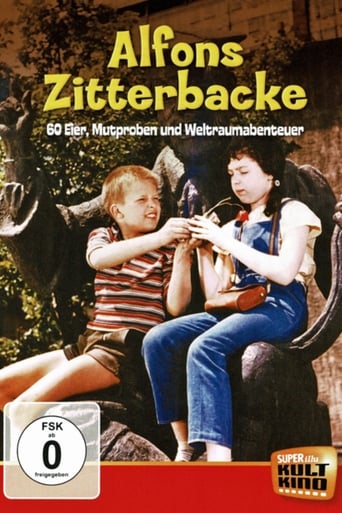 6.2
6.2Alfons is very unlucky boy. Even when he intends well everything is going wrong, so his life is full of various mishaps.
Alfons Zitterbacke
1966
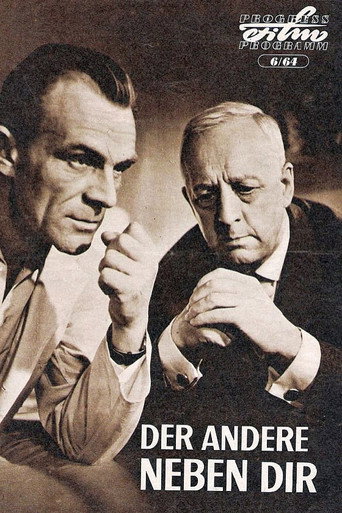 7.0
7.0Two doctors, a German and a Czech brain surgeon, meet in a Berlin hospital, unaware of how fatefully they are linked by events from a dark past. A trip to a congress in Prague and an encounter with the wife of his Czech colleague force the German chief surgeon to rethink his previous life. The film deals with the explosive topic of the extent and causes of complicity in the crimes of National Socialism.
Der Andere neben dir
1964
No synopsis available yet.
Projekt Merkur
1960
No synopsis available yet.
Sommer in Heidkau
1964
 6.7
6.7In this German drama, Brock, a railroad inspector, witnesses a robbery at a train depot. He recognizes the thief, but turning the man in would mean acknowledging he knows him, thus revealing his own complicity with the Nazi war machine. When Brock’s daughter and her boyfriend begin to question him about the incident, will the secret he’s kept for nearly 20 years finally be exposed?
The Second Track
1962
 NR
NRIn spring 1946, Warsaw historian Wojtek arrives in a Polish provincial town to study the Renaissance. He soon becomes entangled in the fierce postwar power struggle between the Soviet-backed People’s Government—nationalizing industry and land—and reactionary exiled forces waging “bandit terror,” from train robberies to political assassinations. As violence escalates, Wojtek shifts from observer to active defender of the new “people’s power.”
Der Kristallspiegel
1968
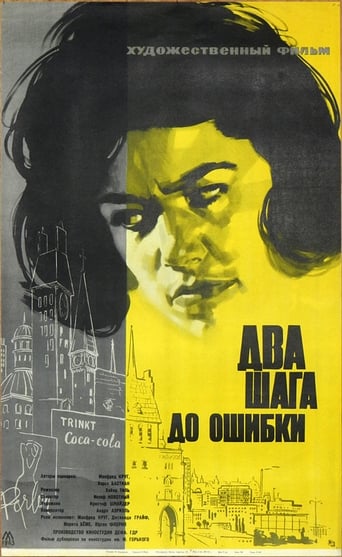 7.0
7.0Carolin lives in the East and works in a West Berlin bar. After the building of the wall she tries to persuade Georg, a soldier of the border regiment, to let her cross over. He falls in love with her and defends her against a West German pimp with a punch to the jaw.
The Punch to the Jaw
1962
GDR border guard Gunter Rist is a young man from humble homes. During a swimming competition he meets Penny, a professor’s daughter from a good family, and they fall in love. However, their different social backgrounds get in the way of their happiness: Penny’s friends make it obvious that they are not willing to accept Gunter in their group. Although Penny takes Gunter’s side, she doubts if love can overcome all obstacles. In this state, she falls for the advances of her ex-boyfriend Bob and joins him on vacation. In the meantime, Gunter has an accident and is hospitalized. In the hospital, he meets the nurse Li who seems to be perfect for him.
Julia lebt
1963
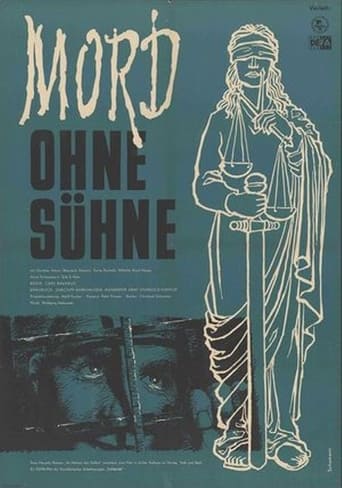 7.0
7.0Based on an authentic case from the 1920s. The head country constable Heinz Lippert arrests the Polish farm worker Jakubowski on suspicion of murdering a child - his adopted son. Although he has insufficient evidence, public prosecutor Becker takes the case to court. Jakubowski is sentenced to death, the "Polish murderer" fits in with the propaganda of the time. Lippert, encouraged by the communist editor Hartmann, tries to prevent the sentence from being carried out and even investigates the real perpetrator. In vain, the death sentence was carried out prematurely. After the Nazis seized power, the public prosecutor, now an SS leader, had the men who had uncovered the true facts arrested. Lippert joins the underground resistance.
Mord ohne Sühne
1962
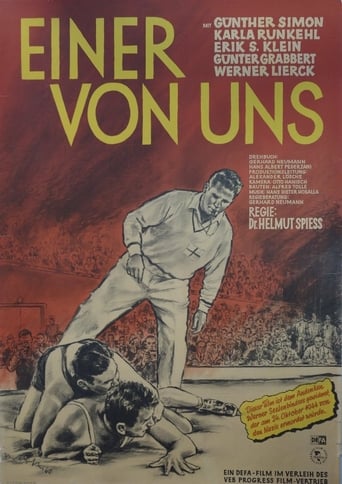 9.0
9.0A wrestler finds his political interest and activism through sport. However, this is extremely dangerous during the Nazi era and the workers' sports movement starts a resistance against the Nazi regime...
Einer von uns
1960
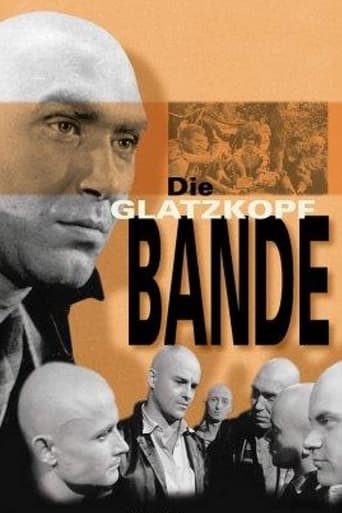 6.2
6.2August 1961. The former Foreign Legionnaire, King, has collected a gang of hooligans, with whom he creates mischief in the GDR. After some careless work on a construction site, an event during which two people lose their lives, they move to a campsite on the Baltic Sea. With sputtering mopeds, loud radios, and occasional outbursts, the gang makes the vacationers' lives living hell. Unfortunately for them, Lieutenant Czernik discovers the connection between them and the accident at the construction site. To stop them from fleeing to West Berlin, Lieutenant Czernik and the police need to arrest them, one at a time, with King as the last.
The Baldheaded Gang
1963
 5.6
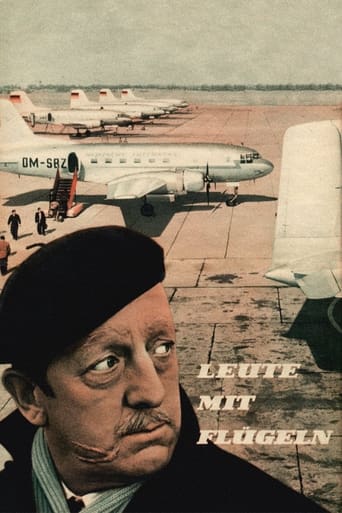
5.6This film continues the story of radio operator Ludwig Bartuschek from “The Sailor’s Song”. Near the end of the Weimar Republic, Bartuschek (Erwin Geschonneck) is working as a mechanic in the Sperber airplane plant. Director Dehringer offers him the opportunity to train as an airplane constructor if he is willing to give up his communist beliefs under oath. Bartuschek will not allow himself to be bought and instead joins the underground resistance movement.
People with Wings
1960
The film explores the visit of Yugoslav leader Josip Broz Tito to Germany, examining his political influence and interactions within the country. Utilizing archival footage and commentary, the documentary provides insight into Tito's presence in Germany during a pivotal time in Cold War Europe. The film highlights the relationships between East Germany and Yugoslavia, offering a glimpse into the geopolitical dynamics of the era.
Tito in Deutschland
1965
1950s · 10 titles
7.4Stationed in a secluded Bulgarian village in 1943, Walter – a German Wehrmacht sergeant and artist – lives in almost idyllic distance from the war. Then a transit camp is set up for Jews arriving from Greece. When Ruth, one of the internees, asks Walter to help a pregnant woman, the two form an unlikely bond.
Stars
1959
 5.8
5.8In 1955, Michael Vierkant, a Jew who had emigrated during the Nazi era, returns from abroad to the Federal Republic of Germany to obtain the conviction of Korn, the former informer responsible for the murder of his sister. Korn is back in office; Michael's efforts remain unsuccessful. There is a direct confrontation between the two, and Michael shoots Korn in self-defense. He flees and is hidden by the young, reclusive artist Marie Jäger, but is then caught by the police and charged with premeditated murder. The case is taken out of the hands of the criminal investigation department by the Office for the Protection of the Constitution, which constructs an act of political revenge on behalf of the communists. Michael manages to escape from prison. Marie and her friends organize a press conference at which Michael reveals the connections. The trial is postponed.
Der Prozeß wird vertagt
1958
 8.0
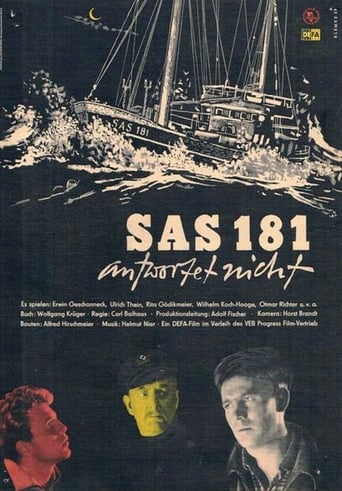
8.0Kurt, an apprentice in a fish combine, is an ambitious loner. He wants to show what a good sailor he is at a regatta, but fails because of his recklessness and the storm. Disappointed, he seeks affection from the girl Anke, but she loves the apprentice Hannes. During a trip together with Captain Laue, who presents himself as a fatherly friend to Kurt, the boys get into an argument. However, when Laue makes an unscheduled call at Bornholm and Kurt discovers that Laue wants to sell the cutter's catch and equipment and flee, he buries his differences with Hannes. Together and with the help of the old fisherman Jens, the boys rescue the cutter.
SAS 181 antwortet nicht
1959
 4.7
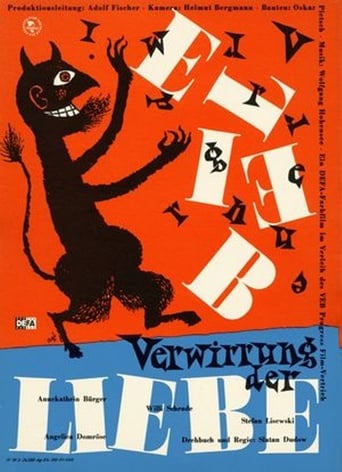
4.7The film tells the love story of two young couples. According to their social ranks, construction worker Edy is dating employee Siegi, while medical student Dieter is dating art school student Sonja. Rather unintentionally, they exchange partners. During a carnival ball, Dieter makes out with Siegi because he falls for her her fresh and happy girlish manner. Sonja coolly observes this game and sees this intermezzo as a test for their relationship. While Siegi and Dieter vacation at the sea, Sonja falls in love with Edy. Now the die seems to be cast for new constellations. But when both couples stand in front of the registrar’s office, they finally come to their senses.
Love's Confusion
1959
 10.0
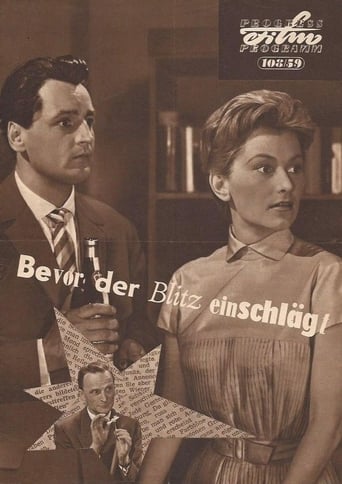
10.0No synopsis available yet.
Before lightning strikes
1959
 7.2
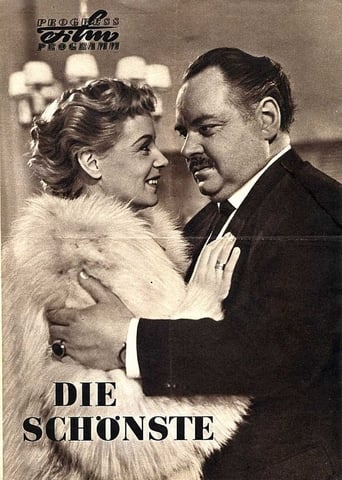
7.213-year old Thomas Berndorf, the son of the rich business man Alexander Berndorf, becomes friends with Hannes Wille, whose father works as foreman. They get to know each because Hannes sometimes is allowed to polish Berndorf′s Mercedes 300. They make a bet whose mother is the most beautiful. Hannes assumes that Mrs. Berndorf is only admired for her expensive jewellery. Thus, he suggests that Thomas should steal a collier from his mother. Out of solidarity, he also robs a golden brooch from his mother. At home at the Berndorfs, a severe crisis threatens Thomas′s parents′ "marriage of convenience", and financial hardships are following on the theft.
Die Schönste
1957
 7.0
7.0Railway employee Fritz Marr is not regarded well by his superiors. It is the year 1920, and trains regularly pass the railway hub of Erfurt to the East to secretly transport weapons for the fight against the young Soviet Union. Marr knows about this and wants to mobilise other workers to stop these illegal deliveries. To muzzle him, Marr is relocated to a remote rail work construction site.
Polonia-Express
1957
 10.0
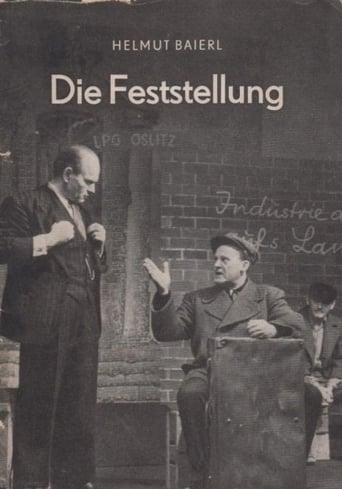
10.0A farmer who has fled the republic returns disappointed from the West to the village of Oslitz (GDR). He and his wife are supposed to get their house and farm back, but the case becomes the occasion for an unusual LPG meeting. The chairman, a comrade from the town and the farmers want to find out what caused the returnee to flee and whether it could have been avoided. The farmer claims that the chairman wanted to force him into the LPG because of illegal fertilizer purchases. He interprets his behavior differently. In order to clarify the matter and learn lessons from it, those present re-enact the events before the escape with reversed roles.
Die Feststellung
1958
No synopsis available yet.
Katzgraben
1957
 6.3
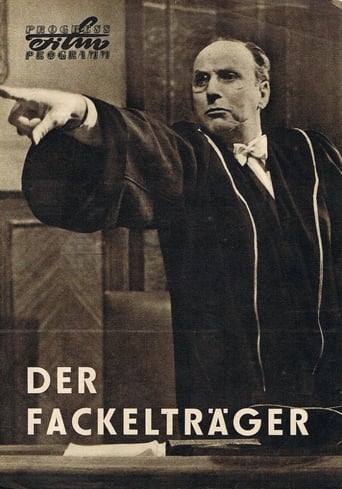
6.3Senior public prosecutor Sänger from West Berlin has only one goal in mind: to finally be appointed to the Federal Court of Justice.
Der Fackelträger
1957
Series credits
6.2Polizeiruf 110 is a long-running German language detective television series. The first episode was broadcast 27 June 1971 in the German Democratic Republic, and after the dissolution of Fernsehen der DDR the series was picked up by ARD. It was originally created as a counterpart to the West German series Tatort, and quickly became a public favorite.
Polizeiruf 110
1971
6.2Polizeiruf 110 is a long-running German language detective television series. The first episode was broadcast 27 June 1971 in the German Democratic Republic, and after the dissolution of Fernsehen der DDR the series was picked up by ARD. It was originally created as a counterpart to the West German series Tatort, and quickly became a public favorite.
Polizeiruf 110
1971
3.8Der Staatsanwalt hat das Wort was an East German television series.
Der Staatsanwalt hat das Wort
1965
3.8Der Staatsanwalt hat das Wort was an East German television series.
Der Staatsanwalt hat das Wort
1965
3.8Der Staatsanwalt hat das Wort was an East German television series.
Der Staatsanwalt hat das Wort
1965
The show was meant to compete with those on West German television. To this end it was fairly successful even attracting a following in parts of West Germany which could receive Eastern TV. Its production values were high. Apart from song and dance numbers and appearances from East German celebrities, almost every broadcast featured well-known stars from the west, often after their popularity had peaked in their home countries.
Ein Kessel Buntes
1972
9.0East German TV miniseries about the young maid Gertrud Habersaat, who marries, moves from Mecklenburg to Poland in the early 1940s, has to come back to Mecklenburg as a refugee during World War II and finally finds her place during the 1950s.
Ways across the Country
1968
10.0Three members of the National Committee Free Germany form a secret commando that comes to Berlin from Minsk to take up the fight against the SS in the last days before the end of the war.
Geheime Spuren
1969
No synopsis available yet.
Tierparkgeschichten
1989
 NR
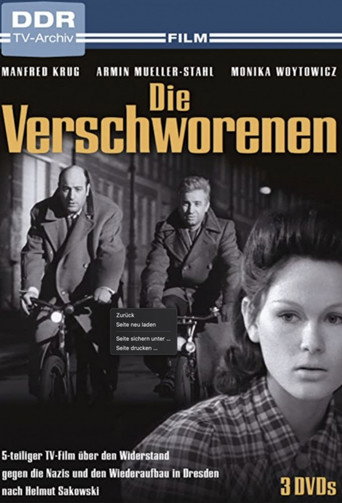
NRNo synopsis available yet.
Die Verschworenen
1971
 NR
NRNo synopsis available yet.
Ich-Axel Cäsar Springer
1968
 7.0
7.0No synopsis available yet.
Hans Beimler, Kamerad
1969
 7.0
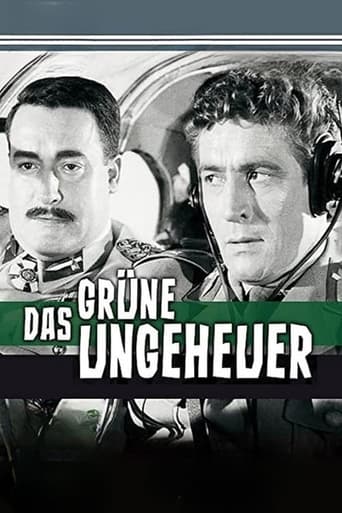
7.0On the run from police in America, Antonio Morena, a former World War II aviator and black-marketeer, finds himself in South America working for the all-powerful United Fruit Company, known to the natives as "the Green Monster".
The Green Monster
1962
 8.0
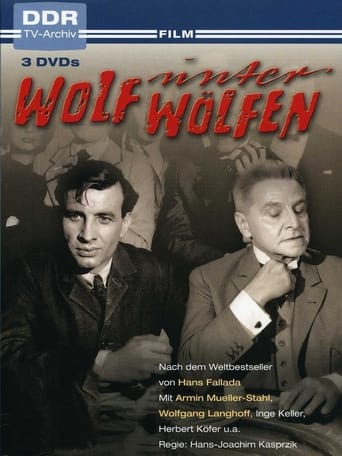
8.0The living conditions during the period of inflation in the early 1920s are depicted in a fascinating way. Behind a shiny façade, ordinary people struggle for bare survival. Opposite them stand landowners and former military personnel with their complacency, ignorance, and emptiness! The title character, Wolfgang Pagel—a cadet officer, unemployed and a gambler out of desperation—loses everything on the night before his wedding and sets out in search of money in the inflation-ridden Berlin of the 1920s.
Wolf Among Wolves
1965
 7.0
7.0The chronicle of a farming family from the village of Barnekow in the Mark Brandenburg region spanning three generations: After repeatedly failing to make their farm on marshy land a success, the Wardins finally find professional and personal happiness after World War II thanks to the 1945 land reform in the Soviet occupation zone during the GDR era of "developed socialism."
Die Frauen der Wardins
1974
 7.2
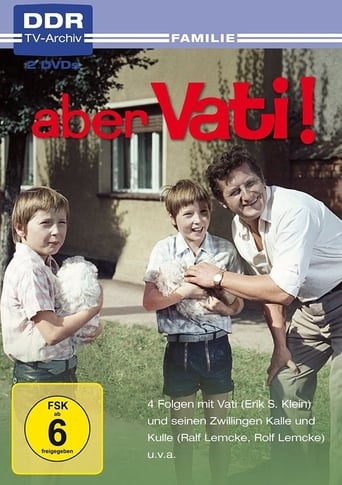
7.2No synopsis available yet.
Aber Vati!
1974
 NR
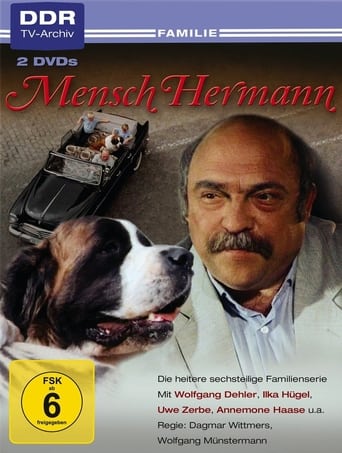
NRNo synopsis available yet.
Mensch Hermann
1987
 NR
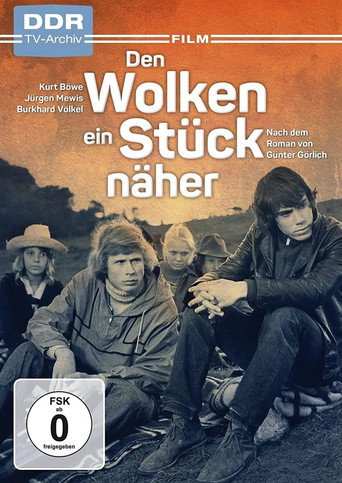
NRAfter his family moves from Potsdam to East Berlin, 15-year-old Klaus initially has difficulties at his new school, especially with the popular Heinz. With the help of class teacher Magnus, Klaus and Heinz settle their differences and become friends. When Magnus dies unexpectedly, his class is taken over by young Anne Morgenstern. Klaus and other classmates manage to overcome their initial dislike of the young teacher, but Heinz remains steadfast in his rejection and tries to force her replacement.
Den Wolken ein Stück näher
1973
 9.0
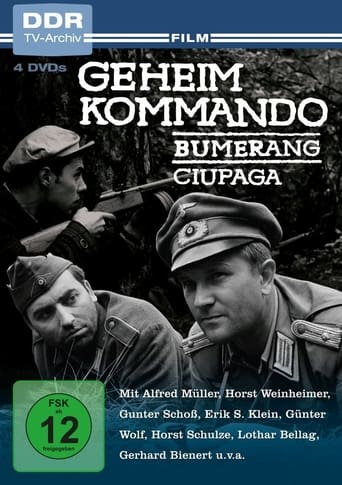
9.0No synopsis available yet.
Geheimkommando Bumerang
1966