
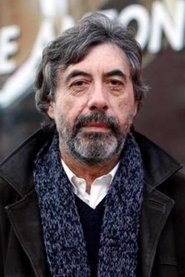
Directing
Claudio Caligari
Born — Died
1948-02-07 — 2015-05-26
Place of birth
Arona, Italy
Known for
Directing
Credits
11 titles
Italian director and screenwriter. Born in Arona, Piedmont, Caligari began his career as a documentarist, often collaborating with Franco Barbero; his first work was Perché droga (1975).He made his feature film debut in 1983, with the drug-centered drama Toxic Love, which won the De Sica Award at the 40th Venice International Film Festival. Only fifteen years later he directed another work, the neo-noir The Scent of the Night. He completed the editing of his third and last film, Non essere cattivo, a few days before his death for a tumor. (wikipedia)
Known for
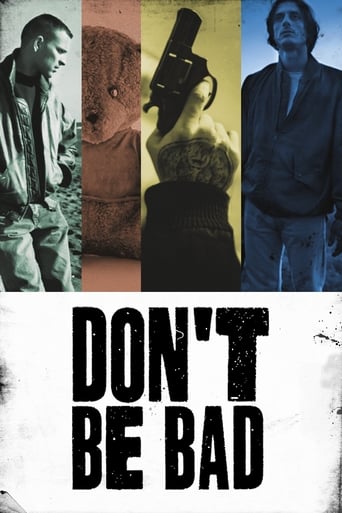 7.8
A story set in the 90s and in the outskirts of Rome to Ostia. A world where money, luxury cars, night clubs, cocaine and synthetic drugs are easy to run. A world in which Vittorio and Cesare, in their early twenties, act in search of their success.
Don't Be Bad
2015
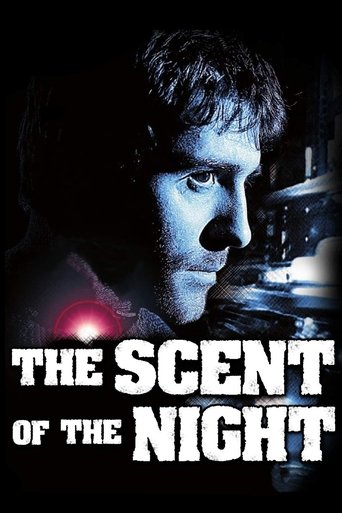 7.3
A former policeman turns full-time robber and goes on a downward spiral of crime in 1970s Rome.
The Scent of the Night
1998
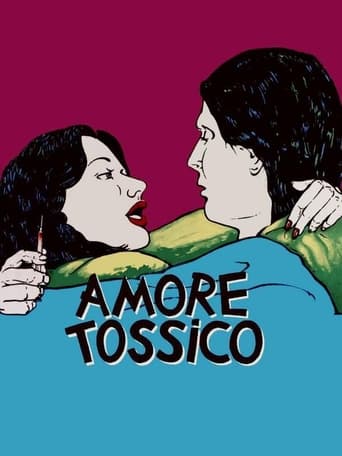 7.3
The alienating and repetitive life of a group of heroin junkies in 1980s Rome.
Toxic Love
1983
This documentary intends to contribute to the analysis of the drugs problem, by studying a huge district in a peripheral area of a large city: the Mirafiori South suburb of Turin, a vast ghetto where 15.000 people live in huge 9/10-storey buildings without any social services.
Perché droga
1976
For a long time, psychoanalysis failed to make inroads into Italy. Idealism, Catholicism and fascism each regarded it as a pseudo-science, while Marxism saw it as a bourgeois ideology. It was only after 1968 that the situation gradually began to change: numerous groups were founded who took their bearings from Lacan, such as the Milan collective Semiotica e psicoanalisi, who organized an international conference on the subject of madness in 1976.
La follia della rivoluzione
1978
Divided into three parts (two documentary and one fictional), the film explores the early stages of the 1977 movement, between demonstrations and heated assemblies at the Circoli del Proletariato Giovanile of the State University of Milan. The daily difficulties and the search for redemption are told without rhetoric, but with a raw reflection on social marginalization.
La parte bassa
1978
Behind the camera
7.8A story set in the 90s and in the outskirts of Rome to Ostia. A world where money, luxury cars, night clubs, cocaine and synthetic drugs are easy to run. A world in which Vittorio and Cesare, in their early twenties, act in search of their success.
Don't Be Bad
2015
7.8A story set in the 90s and in the outskirts of Rome to Ostia. A world where money, luxury cars, night clubs, cocaine and synthetic drugs are easy to run. A world in which Vittorio and Cesare, in their early twenties, act in search of their success.
Don't Be Bad
2015
7.3A former policeman turns full-time robber and goes on a downward spiral of crime in 1970s Rome.
The Scent of the Night
1998
7.3A former policeman turns full-time robber and goes on a downward spiral of crime in 1970s Rome.
The Scent of the Night
1998
7.3The alienating and repetitive life of a group of heroin junkies in 1980s Rome.
Toxic Love
1983
7.3The alienating and repetitive life of a group of heroin junkies in 1980s Rome.
Toxic Love
1983
7.3The alienating and repetitive life of a group of heroin junkies in 1980s Rome.
Toxic Love
1983
This documentary intends to contribute to the analysis of the drugs problem, by studying a huge district in a peripheral area of a large city: the Mirafiori South suburb of Turin, a vast ghetto where 15.000 people live in huge 9/10-storey buildings without any social services.
Perché droga
1976
For a long time, psychoanalysis failed to make inroads into Italy. Idealism, Catholicism and fascism each regarded it as a pseudo-science, while Marxism saw it as a bourgeois ideology. It was only after 1968 that the situation gradually began to change: numerous groups were founded who took their bearings from Lacan, such as the Milan collective Semiotica e psicoanalisi, who organized an international conference on the subject of madness in 1976.
La follia della rivoluzione
1978
Divided into three parts (two documentary and one fictional), the film explores the early stages of the 1977 movement, between demonstrations and heated assemblies at the Circoli del Proletariato Giovanile of the State University of Milan. The daily difficulties and the search for redemption are told without rhetoric, but with a raw reflection on social marginalization.
La parte bassa
1978