
Directing
Shinkichi Noda
Born — Died
1916-01-28 — 1993-11-22
Known for
Directing
Credits
42 titles
Known for
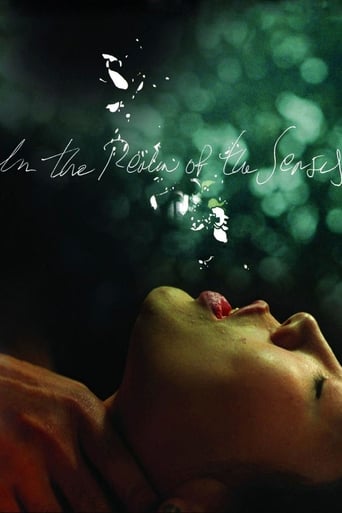 6.6
6.6A passionate telling of the story of Sada Abe, a woman whose affair with her master led to an obsessive and ultimately destructive sexual relationship.
In the Realm of the Senses
1976
 7.1
7.1A mysterious video has been linked to a number of deaths, and when an inquisitive journalist finds the tape and views it herself, she sets in motion a chain of events that puts her own life in danger.
Ring
1998
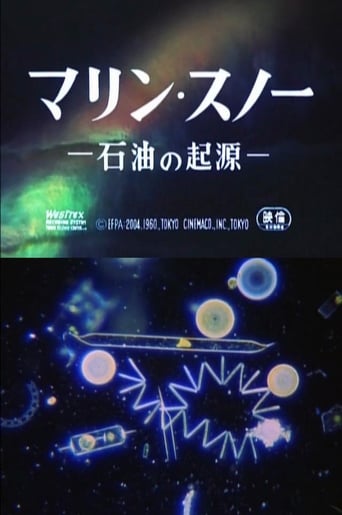 NR
NRThis film takes us into the microscopic world of the plankton that mass in the oceans. Their bodies ultimately turn to marine snow and accumulate on the ocean floor where, across vast time spans, they transform into crude oil.
Marine Snow: The Origin of Oil
1960
A documentary depicting the the impoverished fishing village in Honshu's northernmost region as they struggle in the face of modernization.
Forgotten Land
1958
 NR
NRA documentary focusing on the things and animals necessary for the Olympics in Tokyo in 1964.
Nippon Express Carries the Olympics to Tokyo
1964
No synopsis available yet.
生れかわる客車
1953
Film credits
Behind the camera
NRThis film takes us into the microscopic world of the plankton that mass in the oceans. Their bodies ultimately turn to marine snow and accumulate on the ocean floor where, across vast time spans, they transform into crude oil.
Marine Snow: The Origin of Oil
1960
A documentary depicting the the impoverished fishing village in Honshu's northernmost region as they struggle in the face of modernization.
Forgotten Land
1958
NRA documentary focusing on the things and animals necessary for the Olympics in Tokyo in 1964.
Nippon Express Carries the Olympics to Tokyo
1964
NRA documentary focusing on the things and animals necessary for the Olympics in Tokyo in 1964.
Nippon Express Carries the Olympics to Tokyo
1964
No synopsis available yet.
生れかわる客車
1953
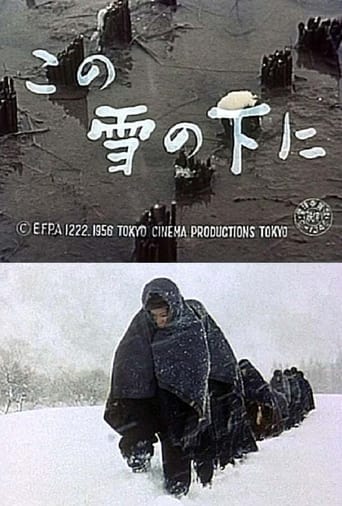 NR
NRDepiction of the harsh life in a rural town in Yamagata.
Country Life under Snow
1956
On the nights of the 14th, 15th, and 16th of August, the obon festival takes over the streets of the Niino community of Nagano Prefecture. At its conclusion, a practitioner of shugendo, a syncretic tradition combining elements of Buddhism and Shinto, serves as priest to send off the spirits of ancestors past that have journeyed back for Obon as well as the new spirits of those deceased within the past year. The spirits ride the flames of faceted lanterns that are lit and drift off into the eastern sky.
Good Road for the Living and the Dead: Niino Bon Odori, Festival to Send Off the Gods
1991
During the marathon event at the 1964 Tokyo Olympics, a surprise incident occurred when a man jumped onto the course from the side of the road and tried to run alongside athlete Abebe Bikila, who was coming up Koshu-kaido Avenue far in the lead of the other runners. Noda happened to be at the scene shooting footage for Carrying the Olympics and later reprinted this short bit of film editing it into an experimental work in which the shot repeats 19 times.
The Loneliness of Two Long Distance Runners
1966
Noda’s team shot this film for Kanagawa News Film Association in 1972 as a document of annual rites practiced at Goryo Shrine in Kamakura. The footage was ultimately withheld from public view due to concerns about problems of discrimination at the origins of the masked procession festival. Noda obtained the footage from the NewsFilm Association and completed a version for private use in 1987.
The Procession of Weird and Wonderful Masks
1988
Located in the northeastern corner of Aichi Prefecture, Tomiyama Village has suffered from a shrinking population since the construction of Sakuma Dam left much of the village submerged (in 2005 Tomiyama was incorporated into Toyone Village). This film documents the mikagura festival, a tradition practiced in this region since the 15th century that combines the Shinto performing arts of yudate and kagura in praying for rebirth and purification.
The Mikagura Festival of Tomiyama Village
1985
The Kashima Dance is performed in the area of Kanagawa Prefecture extending from Odawara City along the western shore of Sagami Bay. This film documents a dedication of the dance on the grounds of Yoshihama’s Soga Shrine performed in August by twenty-five people. The film also records the Sasara women’s dance which the women’s association and the elders of Minami Ashigara City in the west of Kanagawa Prefecture revived after a fifty-year hiatus
Yoshihama’s Kashima Dance, Ashigara’s Sasara Dance
1971
Documentary by Noda Shinkichi
Work in Retail
1951
This film documents a snow festival with a history dating to the 13th century held at Izu Shrine in the Niino community of Anan-cho, a small town located in the Shimoina District of Nagano Prefecture. The winter snow that falls during the festival is thought to herald the abundant life force of spring. Noda completed this film over a five-year period beginning in 1974, visiting the festival each year with a small staff and editing the footage as he shot.
Snow as Flowers: Niino’s Snow Festival
1980
Film directed by Noda Shinkichi
農村住宅改善 Renovating Farm Houses
1941
A passenger train derailment occurred on August 17, 1949. In the aftermath, it was suspected that Communist sympathizers were responsible and people involved in an ongoing labor dispute were rounded up and put on trial. Starting from the premise that unjust verdicts were handed down in both the initial trial and on appeal, this film sets out to investigate the truth.
The Matsukawa Incident: Seeing the Truth Through the Wall
1954
The farming villages that exist throughout Tohoku are known for their rice production but struggle with cold-weather crop damage. Many who rely on the single crop this land produces end up leaving their villages to earn money. At the same time, innovative work has progressed with im- proved adaptation of rice beds to the environment. The film also features people who have cleared land for dairy farming and regions where large-scale land reclamation projects have been undertaken.
The New Japanese Geography Film Series: Villages of the Northeast
1959
First film in the festival trilogy
Festivals in Tohoku Part 1
1956
This PR film for Nippon Express features location footage of modernized port facilities from Hokkaido and Honshu to Shikoku and Kyushu and of the process of loading cargo onto ships.
Tying Land and Sea
1960
Nippon Rayon has produced clothing of assorted colors, designs, and materials. Their nylon products are not limited to fashion but extend to all aspects of life. The film features shots of models wearing vibrant outfits as well as products being manufactured on the factory floor.
Nichiray a la carte
1963
Second film in the festival trilogy
Festivals in Tohoku Part 2
—
The Tone River flows from the Mikuni Mountains through the Kanto Plain. The film follows its path from its source to Choshi and into the Pacific Ocean, documenting the lifestyles and industries along its banks and the history of its management.
The New Japanese Geography Film Series: Tone River
1955
This film documents a large-scale event organized by the Utagoe (Singing Voice) working class choral and musical movement that took place over the course of three days in Tokyo on November 27, 1954 at Kyoritsu Auditorium and Tokyo Metropolitan Gymnasium. Tens of thousands of people from factories and farming villages across Japan take part. Folk songs from different local regions of Japan are sung and laborer choruses perform. Choruses and songs and dances from Korea and China are heard. The finale is a mass choral performance of “The Unforgivable Atom Bomb.”
The Unforgivable Atom Bomb: The Singing Voice of 1954 Japan
1954
Located on Kanagawa Prefecture’s Miura Peninsula, Kikuna bustles with beachgoers in the summer. In October, the Miura Shirayama Shrine holds an annual festival, the Ameya dance, which has a history extending to the late Edo Period. Young men dressed in female garb perform dances including the shiramatsu konaya, komori, and godanme. The film emphasizes the wild aspect of these performing arts birthed by struggling farmers and fishermen.
Miura Kikuna’s Ameya Dance
1972
A folk festival with a three-hundred-year history held at Suwa Shrine in Toya in Sagamihara City’s Midori Ward, Kanagawa Prefecture. Within the shrine grounds, a father, mother, and child lion line up and dance to the sound of flutes and singing. As a prayer dance that retains a simplicity passed down since the 17th century, it is unique in Japan.
The Lion Dance of Toya
1972
Sarushima Island lies off the coast of Yokosuka Port. In the late Edo Period the island was outfitted with artillery and in the Meiji period a fort was constructed by the Army. After Japan’s defeat in the war, it was opened as a sea park and young people began to make it a destination. Noda visited it to shoot in black and white in 1968, and in color in 1983. In excluding human figures from the screen and filming ruins and graffiti in their materiality, he experiments at creating a visual poem.
Sarushima Island with a Fort: Ruins and Graffiti
1987
Third film in the festival trilogy
Festivals in Tohoku Part 3
1957
This film documents painter Mizutani Isao’s creative process as he prepares for his solo exhibition “Between Ten Spiritual Worlds:Flies and the Dinner Table.” Mizutani’s method involves painting the surface of his canvases with water-soluble acrylics, then applying India ink and water and freezing them naturally. No sound was recorded for the film, which was projected silent with Mizutani himself narrating over the images.
Mizutani Isao’s Wanderings through Ten Spiritual Worlds
1984
In Yamakita, a town in the Ashigarakami District of Kanagawa Prefecture, there is a nenbutsu chanting practice associated with the Noanji Soto Zen temple that has a history of approximately 600 years. The nenbutsu is chanted as men rotate a large strand of 302 prayer beads affixed around a pulley. This is followed by a lion dance (shishimai) that proceeds around all the houses of the village as a purification ritual.
A Million Prayers for Amitabha Buddha and the Lion Dance of Yozuku
1971
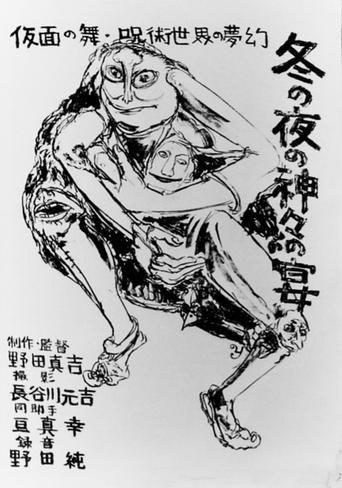 NR
NRThe shimotsuki festival has been passed down over the centuries in the community of Shimoguri, located in Kamimura in Nagano Prefecture’s Shimoina District. The population once staged a revolt against the oppression of the Toyama clan who governed the region. Disease spread in the aftermath and was thought to be the work of the slain clan. The festival was initiated to clear their resentment. The masks of dead spirits dance amid clouds of steam from boiling water.
The Feast of the Gods on a Winter’s Night: Toyama’s Shimotsuki Festival
1970
The Yokohama and Kawasaki factory district, industrial heart of Japan. In 1953, a Kanagawa Prefecture May Day (International Workers’ Day) took place here, spreading links of solidarity among workers. Workers criticize the Korean War-era transformation of Japan into an American military base and protest remilitarization. A new print will be screened.
The Workers of Keihin 1953
1953
A documentary about the iconoclastic painter Yamashita Kikuji that depicts the 1969 Tomurai-ten (Funeral Exhibition) of then-recent work by Yamashita and his late older brother Taniguchi Kunbi, the living space he shared with his wife and his pet owls, and scenes of the artist at work.
Collapsed Swamp, or Painter Yamashita Kikuji
1976
This film presents a contemporary Tokaido completely transformed from the scenery famously portrayed by Utagawa Hiroshige in the Edo Period: a landscape traversed by rail tracks and busy with cars coming and going. Heading west from Tokyo, we encounter the traditional industries that developed in the cities and localities along the highway, as well as the mechanical industries that arrived with modernization. The journey continues to Kyoto and Osaka
The New Japanese Geography Film Series: Tokaido, Yesterday and Today
1958
This film documents the surging mass movement against ratification of the new U.S.-Japan Security Treaty in June of 1960. The National Diet Building is surrounded for days by demonstrators shouting, “Down with Kishi!” (then Prime Minister) and “Dissolve the Diet!” Workers also strike in protest of the treaty. Fierce clashing between riot police and demonstrators results in casualties.
June 1960: Rage Against the Security Treaty
1960
In the mountains of the Chubu region, farmers grow legumes, buckwheat, and millet. Silk cultivation and forestry are also important sources of income. Paper production has flourished since the Meiji Period, and precision-instrument factories have been built for assembling lenses and timepiec- es. The natural environment is harsh but beautiful, and a local tourist industry has also developed.
The New Japanese Geography Film Series: The Roofs of Honshu
1957
For four hundred years, the Honmoku Shrine in Yokohama’s Naka Ward has hosted the Oumanagashi Horse Running Festival to ward off evil. The day before the festival, ouma horse figures made from sedge grass and placed on boards are passed overhead by shrine parishioners dressed in formal costume until they enter the shrine. On the day of the festival, the ouma are paraded through the streets, then transferred to festival boats, floated out, and abandoned to the sea.
The Horse-running Ritual of Honmoku Shrine
1973
Film by Noda Shinkichi
Technique of Foundry: The Cupola Operation
1954
This film documents the Sagicho Fire Festival, which takes place in the eight communities constituting Oiso, a town located in the warm climate along Kanagawa Prefecture’s Sagami Bay. It begins at the year’s end with an event in which children take the lead. With the new year, an okariya shelter is constructed in town for the dosojin guardian god. Then, saito bonfire structures are burned on the beach and young men perform a tug of war in the water.
Sagicho in Oiso
1972
The film consists of fragmentary images, of water flowing in stone-paved gutters, narrow alleys and the rooftops of buildings, afternoon and night views of the city glimpsed through a car window, the fishing harbor and the ruins of a church destroyed by the atomic bomb.
A Town Not Yet Seen
1963
Documentary directed by Noda Shinkichi
The Girl of the Valley
1949
Documentary by Noda Shinkichi
The Locomotive Kid
1950