
Directing
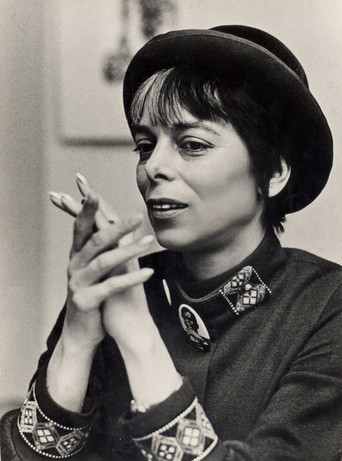
Shirley Clarke
Born — Died
1919-10-02 — 1997-09-23
Place of birth
New York City, New York, USA
Known for
Directing
Credits
61 titles
A major figure of the American avant garde, Shirley Brimberg Clarke (1919-1997) was born into privilege as the daughter of Polish-Jewish immigrants who made their fortune in manufacturing. Rebelling against a repressive bourgeois upbringing, Clarke turned first to dance, and later film and video, to express her distinctive vision of the world. Moving freely across genres and media throughout her career (and often within a single work), Clarke’s cinema explores the porous boundaries between narrative and documentary filmmaking, and film and other media, such as painting, dance, performance and video. Her 1960s features The Connection (1961), The Cool World (1963) and Portrait of Jason (1967)…
Known for
 8.0
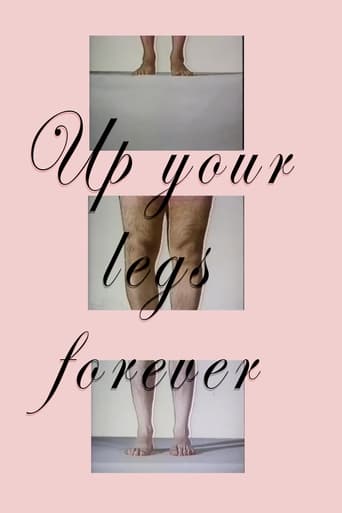
8.0The film consists of continuous panning shots up a series of 367 human legs.
Up Your Legs Forever
1971
 7.3
7.3Also known as Walden, Jonas Mekas’s first diary film is a six-reel chronicle of his life in 1960s New York, interweaving moments with family, friends, lovers, and artistic idols. Blending everyday encounters with portraits of the avant-garde art scene, it forms an epic, personal meditation on community, creativity, and the passage of time.
Diaries, Notes, and Sketches
1968
 5.9
5.9Three actors in Hollywood live and love together. A director comes from New York to make a movie about actors and Hollywood.
Lions Love
1969
 7.0
7.0Jonas Mekas assembles 160 portraits, appearances, and fleeting sketches of underground and independent filmmakers captured between 1955 and 1996. Fast-paced and archival in spirit, the film celebrates the avant-garde as its own “nation of cinema,” a vital community existing outside the dominance of commercial film.
Birth of a Nation
1997
 8.4
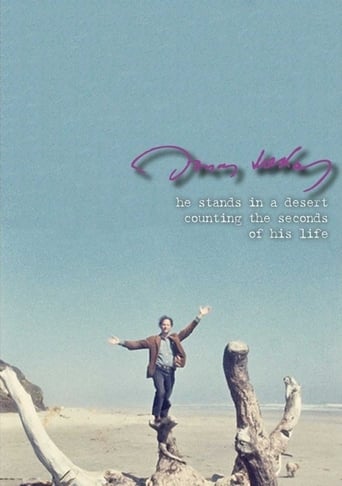
8.4A film collage tracing the story of the lives, loves, and deaths within the artistic community surrounding Jonas Mekas.
He Stands in a Desert Counting the Seconds of His Life
1986
 6.5
6.5Shirley Clarke's frenetic documentary about multi-talented musician Ornette Coleman.
Ornette: Made in America
1986
Film credits
2010s · 1 titles
1990s · 3 titles
7.0Jonas Mekas assembles 160 portraits, appearances, and fleeting sketches of underground and independent filmmakers captured between 1955 and 1996. Fast-paced and archival in spirit, the film celebrates the avant-garde as its own “nation of cinema,” a vital community existing outside the dominance of commercial film.
Birth of a Nation
1997
 2.6
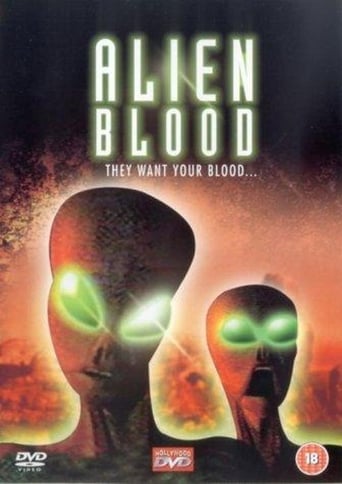
2.6Spoof science fiction. An alien mother and her child are pursued across England by a bunch of incompetent government agents and take refuge in a house full of vampires. Homage back to the camp tone of British directors of the 1970's such as Ken Russell, (The Lair Of The White Worm), Robert Fuest, (Dr Phibes Rises Again), and Joe McGrath, (The Magic Christian). Distributed by Troma in the U.S., it contains violence, nudity and exploding bagpipes.
Alien Blood
1999
 5.3
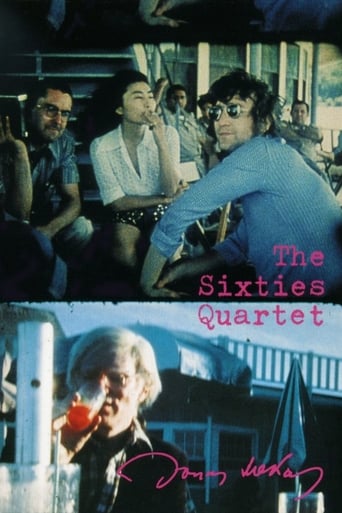
5.3On October 9, 1972, the Everson Museum of Art in Syracuse hosted an exhibition of John Lennon and Yoko Ono’s work, designed by Fluxus artist George Maciunas. That same day, friends including Ringo Starr, Allen Ginsberg, and Paul Krassner gathered to celebrate Lennon’s birthday. Jonas Mekas’s film records the event in both image and sound, capturing the spirit of the moment and the community around Lennon and Ono.
Happy Birthday to John
1997
1980s · 4 titles
8.4A film collage tracing the story of the lives, loves, and deaths within the artistic community surrounding Jonas Mekas.
He Stands in a Desert Counting the Seconds of His Life
1986
 NR
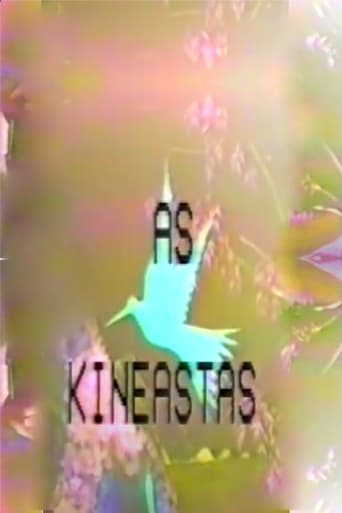
NRBased on interviews with 15 women, including directors, producers and film actresses, a journey around the world is made, seeing the wars waged by each one against economic and political repression, bombs, police dogs, censors, etc. Images from England, New York, Brazil, South Africa.
As Kineastas
1986
UCLA Student Film, Preserved by the Wisconsin Center for Film and Theater Research. Interviewees sit in the Modnar Machine and reflect on contemporary life, from war, to television, identity, self-perception, with abstractions in sound and visuals creating a feedback loop.
The Modnar Machine
1980
A "film poem" that focuses on the Beat poetry scene of the late 1950s.
The Beats: An Existential Comedy
1980
1970s · 3 titles
8.0The film consists of continuous panning shots up a series of 367 human legs.
Up Your Legs Forever
1971
 7.5
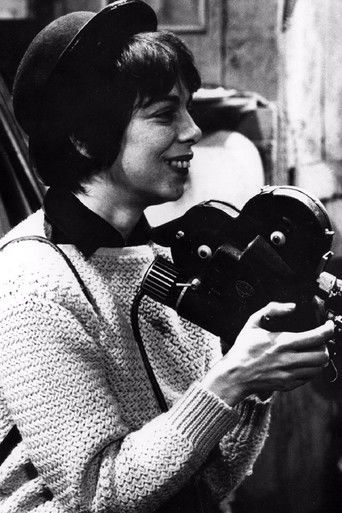
7.5Documentary about filmmaker Shirley Clarke which originally aired on the French television series “Cinéastes de notre temps”.
Rome Is Burning: Portrait of Shirley Clarke
1970
 NR
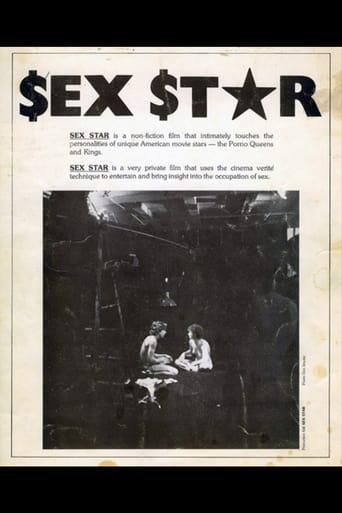
NRSex star gives an explosive behind the scenes view of the people who make sexual fantasies come true on the silver screen. Sex Stars is the first feature documentary made by Lech Kowalski.
Sex Stars
1976
1960s · 6 titles
7.3Also known as Walden, Jonas Mekas’s first diary film is a six-reel chronicle of his life in 1960s New York, interweaving moments with family, friends, lovers, and artistic idols. Blending everyday encounters with portraits of the avant-garde art scene, it forms an epic, personal meditation on community, creativity, and the passage of time.
Diaries, Notes, and Sketches
1968
5.9Three actors in Hollywood live and love together. A director comes from New York to make a movie about actors and Hollywood.
Lions Love
1969
 10.0
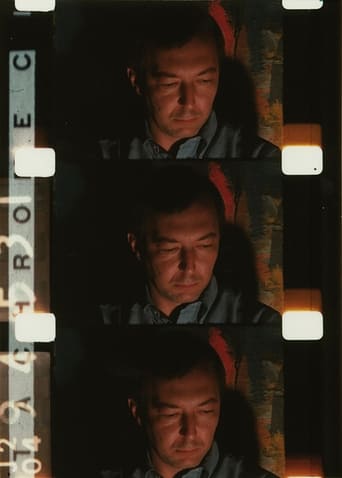
10.0In March and April of 1966, Markopoulos created this filmic portrait of writers and artists from his New York circle, including Parker Tyler, W. H. Auden, Jasper Johns, Susan Sontag, Storm De Hirsch, Jonas Mekas, Allen Ginsberg, and George and Mike Kuchar, most observed in their homes or studios. Filmed in vibrant color, Galaxie pulses with life. It is a masterpiece of in-camera composition and editing, and stands as a vibrant response to Andy Warhol's contemporary Screen Tests. Preserved by the Academy Film Archive in 2001.
Galaxie
1966
 NR
NR"The whole film are non-art portraits of people in which they do what they want with this hat – and therefore, act or stand in front of my camera. It’s only love: therefore it can’t harm you". Joyce Wieland.
Bill's Hat
1967
 6.6
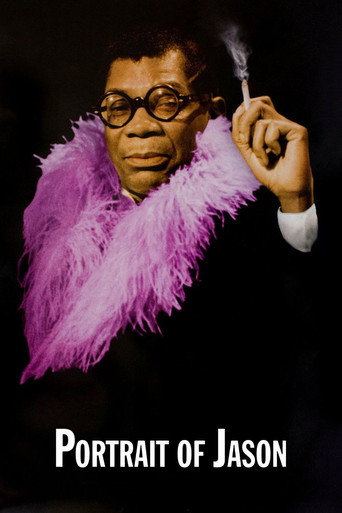
6.6Interview with Jason Holliday aka Aaron Payne. House-boy, would-be cabaret performer, and self-proclaimed hustler giving one man's gin-soaked, pill-popped view of what it was like to be black and gay in 1960s United States.
Portrait of Jason
1967
 NR
NRA rare behind-the-scenes view of the exploding New York “underground” in the late sixities, a turbulent time and place that was to change American culture forever. A German TV crew, led by journalist Gideon Bachmann, explores the epicenter of the sixties revolution in art, music, poetry and film and interviews the main players in the “New American Cinema,” that was born on the streets of New York. Against a backdrop of cultural upheaval in all of the arts and growing political agitation against the Vietnam War, Bachman interviews the most prominent figures in “underground film,” including Jonas Mekas, Shirley Clarke, the Kuchar Brothers and Bruce Connor, and visits the most notorious location in the New York art world of the era - Andy Warhol’s Factory - to conduct an interview with the genius of Pop Art himself.
Underground New York
1968
1940s · 2 titles
Behind the camera
6.5Shirley Clarke's frenetic documentary about multi-talented musician Ornette Coleman.
Ornette: Made in America
1986
Yoko & John Party hold. Recycled with Paul Ryan's video tape. This is interesting beacuse of your showing Paul Ryan's tape. 1st part is home movie tape stuff at a party for John & Yoko.
Yoko and John Party
1971
A Visual Diary is a look at a private moment in one's life. A narrative form without utilizing a story line. The collaboration incorporates naturalistic non-verbal theater and dance techniques with photographs providing the environment.
A Visual Diary
1980
 6.0
6.0First shown on January 30, 1967, FOR LIFE AGAINST THE WAR was an open-call, collective statement from American independent filmmakers disparate in style and sensibility but united by their opposition to the Vietnam War. Part of the protest festival Week of the Angry Arts, the epic compilation film incorporated minute-long segments which were sent from many corners of the country, spliced together and projected. The original presentation of the works was more of an open forum with no curation or selection, and in 2000 Anthology Film Archives preserved a print featuring around 40 films from over 60 submissions.
For Life, Against the War
1967
 6.5
6.5Eight drug addicts are waiting for their connection in a New York apartment while a two-man documentary team films the proceedings. Things go out of control as the men grow increasingly nervous and the cameraman keeps recording.
The Connection
1962
A performance piece written by Sam Shepard, enacted by Joseph Chaikin and directed by Shirley Clarke, a dying man reflects on his life while delivering his own last rites.
Tongues
1982
 5.5
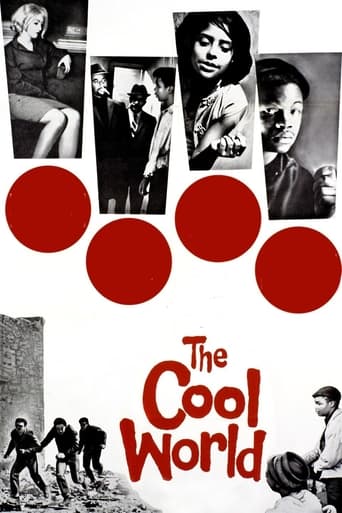
5.5A fifteen-year-old boy wants to buy a gun from an adult racketeer named Priest, in order to become president of the gang to which he belongs, and to return them to active "bopping" (gang fighting) which has declined in Harlem.
The Cool World
1964
5.5A fifteen-year-old boy wants to buy a gun from an adult racketeer named Priest, in order to become president of the gang to which he belongs, and to return them to active "bopping" (gang fighting) which has declined in Harlem.
The Cool World
1964
April 19 nite of Ricky visit but not of Ricky. 1. Jose Soltero & his assistant Alicia from Argentina. I do teaching, they tape. 2. Harry arrives and Sandy. She & I tape. 3. Harry does his Eurthmy(?) thing & gets hungry (medium rare quickly). Best part is we're double taping (Me on other camera) I talk about Kenneth Anger's curse. Good.
Ricky Leacock Visit, evening, April 19, 1971
1971
6.6Interview with Jason Holliday aka Aaron Payne. House-boy, would-be cabaret performer, and self-proclaimed hustler giving one man's gin-soaked, pill-popped view of what it was like to be black and gay in 1960s United States.
Portrait of Jason
1967
6.6Interview with Jason Holliday aka Aaron Payne. House-boy, would-be cabaret performer, and self-proclaimed hustler giving one man's gin-soaked, pill-popped view of what it was like to be black and gay in 1960s United States.
Portrait of Jason
1967
 9.0
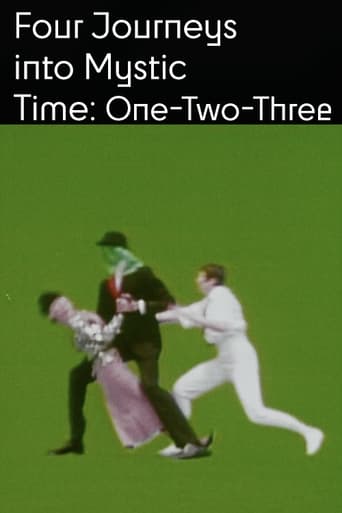
9.0An abstract work featuring three dancers, the performers interact with large screens as well as each other. Included in Shirley Clarke’s Four Journeys Into Mystic Time, costuming and color play an integral role in this piece.
Four Journeys Into Mystic Time: One Two Three
1978
 6.5
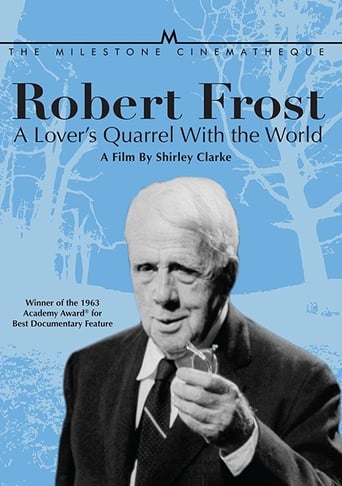
6.5The acclaimed poet is examined in this film completed just prior to his death at age 88, with his speaking engagements at Amherst and Sarah Lawrence Colleges intercut with studies of his work, as well as with scenes of his life in rural Vermont and personal reminiscences about his career. He is also seen receiving an award from President Kennedy and touring an aircraft carrier. Preserved by the Academy Film Archive in partnership with UCLA Film & Television Archive in 2006.
Robert Frost: A Lover's Quarrel with the World
1963
1. Viva's first day out when baby is two weeks old - we get arrested. 2. Show "video" process in my living room to French critics who want to interview me (lots of wiggly camera) Demo feedback have usual video wires mess up. They are making an audio cassette to give to Godard for me. Toby comes by to work on wires. This is a good tape of Shirley to show where she's at and her style.
The Arrest
1971
 9.0
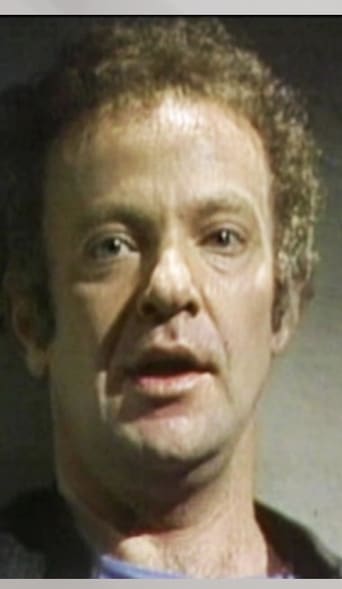
9.0A prelude to Tongues (1982) which languishes over love and its effect on people.
Savage/Love
1981
In this short, magical film experiment, Shirley Clarke interprets the musical universe of jazz giant Ornette Coleman in best Afrofuturist tradition. With breathless echo effects, superimpositions and artificial light reflections, younger versions of Coleman lose themselves in slot machines, turn gravel into glass marbles and vanish into video-animated supernatural light.
Ornette Coleman: A Jazz Video Game
1984
Jonas Mekas visit. Harry comes by before Ricky visit. 1. 12 p.m. April 15th -- Jonas dares to come by but won't talk. I tape him not with set up -- (as I planned) but with camera in my arms I sneak a few shots. 2. Ricky visit RED 1.
Ricky Leacock Visit, April 15, 1971
1971
 7.2
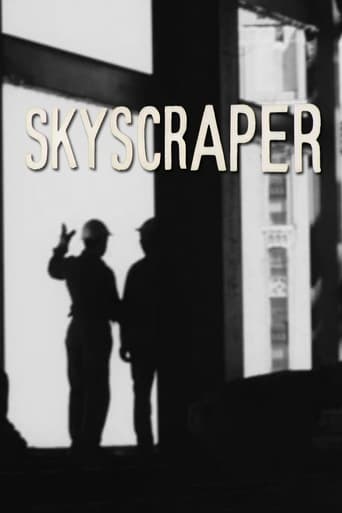
7.2Nominated for an Academy Award, this live-action short film playfully chronicles the construction of the Tishman Building at 666 Fifth Avenue in New York City.
Skyscraper
1959
7.2Nominated for an Academy Award, this live-action short film playfully chronicles the construction of the Tishman Building at 666 Fifth Avenue in New York City.
Skyscraper
1959
A visual protest of America’s involvement in the Vietnam War.
Butterfly
1967
 4.2
4.2A highly edited work complimenting an exhibit on Persian art in the Los Angeles Museum of Art.
24 Frames per Second
1977
 NR
NRA pair of performers wearing bodysuits dance and balance together in this short film for director Shirley Clarke’s Four Journeys Into Mystic Time.
Four Journeys Into Mystic Time: Mysterium
1978
 8.0
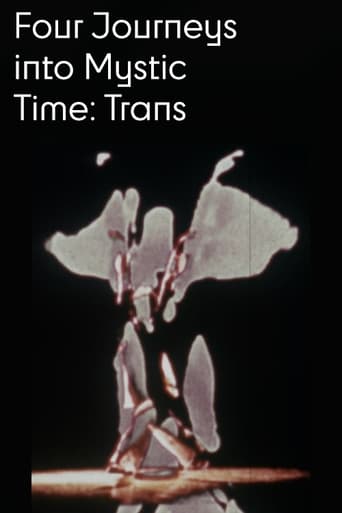
8.0Part of the larger filmic Four Journeys Into Mystic Time, in this work director Shirley Clarke makes use of a dancer’s body not only as the primary performer, but also as a canvas on which to paint projected images. Further enhanced by editing and effective use of shadows, the film is a transformative experience.
Four Journeys Into Mystic Time: Trans
1978
 6.0
6.0New York City’s bridges are reimagined through montage, superimposition, and vivid color, transforming industrial architecture into rhythmic visual abstraction. Accompanied by a jazz score by Teo Macero, the film renders the urban landscape musical, kinetic, and alive (an alternate version of the film features an electronic score by Louis and Bebe Barron).
Bridges-Go-Round 2
1958
6.0New York City’s bridges are reimagined through montage, superimposition, and vivid color, transforming industrial architecture into rhythmic visual abstraction. Accompanied by a jazz score by Teo Macero, the film renders the urban landscape musical, kinetic, and alive (an alternate version of the film features an electronic score by Louis and Bebe Barron).
Bridges-Go-Round 2
1958
 6.9
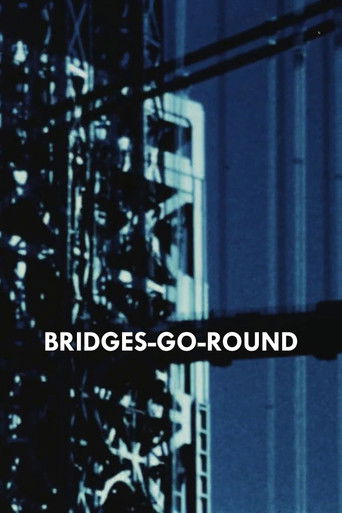
6.9New York City’s bridges dissolve into shifting abstractions through montage, superimposition, and color. Set to an electronic score by Louis and Bebe Barron, the film transforms familiar urban structures into an uncanny, alien landscape (an alternate version of the film features a jazz score by Teo Macero).
Bridges-Go-Round 1
1958
6.9New York City’s bridges dissolve into shifting abstractions through montage, superimposition, and color. Set to an electronic score by Louis and Bebe Barron, the film transforms familiar urban structures into an uncanny, alien landscape (an alternate version of the film features a jazz score by Teo Macero).
Bridges-Go-Round 1
1958
 NR
NRLeft to viewer interpretation, this beautiful dance piece displays a spiritual or religious initiation. A short work, this film was released as part of Shirley Clarke’s Four Journeys Into Mystic Time.
Four Journeys Into Mystic Time: Initiation
1978
 10.0
10.0A collection of twenty short films, averaging 2-3 minutes, by various filmmakers depicting American life, intended to be shown in a continuous loop at the American Pavilion of the 1958 Brussels World’s Fair. Some releases of the film include ten extra minutes of rough cuts.
Brussels Loops
1958
'In Paris Parks' outtakes reveal a little more of Shirley Clarke's filmmaking process.
Outtakes for 'In Paris Parks'
2016
 NR
NRAn astonishing Holy Grail-like glimpse of choreographer/dancer Anna Sokolow's famed 'A Short Lecture and Demonstration on the Evolution of Ragtime as Presented by Jelly Roll Morton' (1952), from Shirley Clarke's 'Home Movies #20'.
A Short Lecture and Demonstration on the Evolution of Ragtime as Presented by Jelly Roll Morton
2016
 7.0
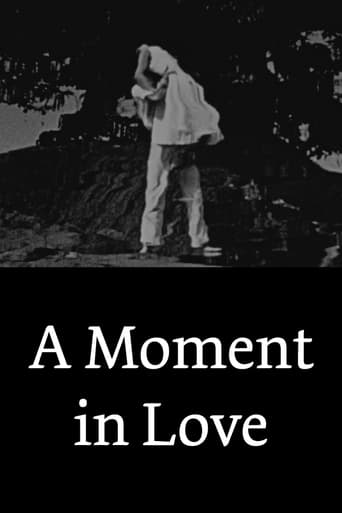
7.0A couple in love interacts across a multitude of environments.
A Moment in Love
1956
 NR
NRNo synopsis available yet.
Home Movies #15 Shirley with Camera
1950
1. Carl Lee on the Joe Franklin Show 2. Lions & Vultures in Africa.
Carl Lee on Joe Franklin Show
1973
 7.0
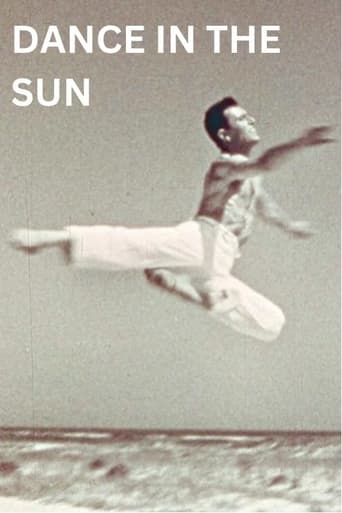
7.0Choreographer Daniel Nagrin performs in a studio and in the sun.
Dance in the Sun
1953
In 1954, Shirley Clarke created 'In Paris Parks', a short film starring her ten-year-old daughter Wendy Clarke. In 2013, the Wisconsin Center for Film & Theater Research loaned the outtakes of this film to Milestone. Much to everybody's surprise, one of the reels revealed that Clarke had shot another film during that trip to France that she never told anybody about and never finished. This is the unfinished film. No soundtrack existed for this film so one has been commissioned by Milestone.
This Is Not 'In Paris Parks'
2016
Last Ricky tape as I try to pre-answer questions for MOMA show. Then we all tape (bogart) meaning we hand camera around. Ricky et. al. watch the "Arrest" tape.
Ricky Leacock Visit, April 17, 1971
1971
In August 1955, director Shirley Clarke and choreographer Anne Sokolow embarked on a dance film about mime. It evolved two years later into 'The Rose and the Players', inspired by Pablo Picasso's 'Family of Saltimbanques'. 'The Rose and the Players' was never completed. Sections of this work were turned into 'A Moment in Love' featuring Paul Sanasardo and Carmela Gutierrez. Their tests can be seen at the end.
Rose and the Players – Part 2
2016
Morris at Ornette's art show opening.
Morris at Ornette's Art Show
1972
 NR
NRHome Movies #20: Dance Tests dates from 1953 and shows Shirley Clarke working on her film technique before she shot her first "official" film later that year--'Dance in the Sun' starring the dancer Daniel Nagrin.
Home Movies #20: Dance Tests
2016