
Acting
Fritz Ernst Fechner
Born — Died
1921-07-25 — 2005-12-19
Place of birth
Berlin, Germany
Known for
Acting
Credits
14 titles
Known for
 6.2
6.2Polizeiruf 110 is a long-running German language detective television series. The first episode was broadcast 27 June 1971 in the German Democratic Republic, and after the dissolution of Fernsehen der DDR the series was picked up by ARD. It was originally created as a counterpart to the West German series Tatort, and quickly became a public favorite.
Polizeiruf 110
1971
 6.0
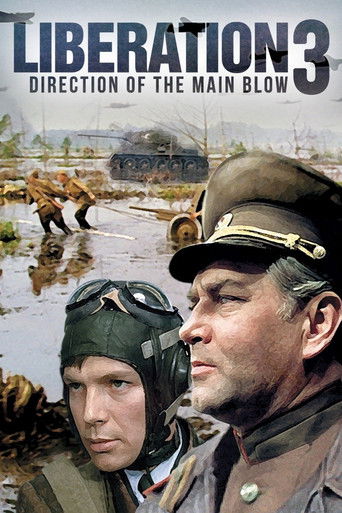
6.0This five part epic war drama gives a dramatized detailed account of Soviet Union's war against Nazi Germany during world war two. Each of the five parts represents a separate major eastern front campaign.
Liberation - Part 3 : Direction of the Main Blow
1971
 7.6
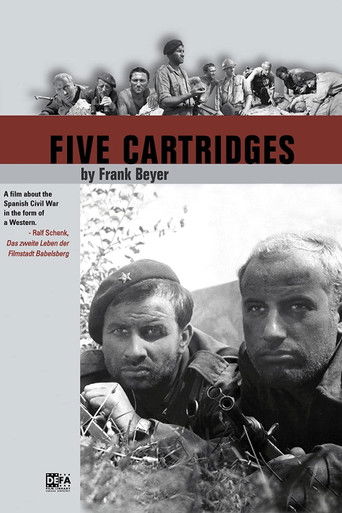
7.6During the Spanish Civil War (1936-1939), five International Brigade soldiers of different nationalities are given a crucial assignment as their commander lies dying: they are to smuggle top-secret information across enemy lines.
Five Cartridges
1960
 NR
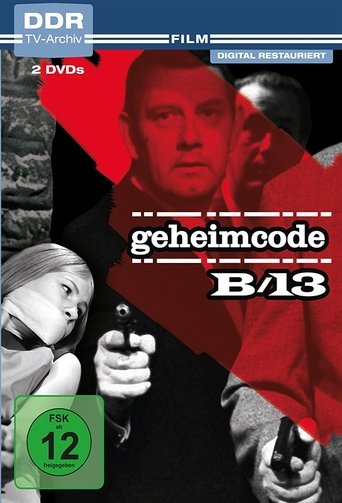
NRColonel Maratka and Major Kalasz, employees of the Czechoslovakian defense forces, are facing a difficult task. They must complete a mission that is important for the security of their country. The Prague headquarters of the state security service had previously received information from the GDR that West German military intelligence had apparently succeeded in deciphering the secret code B/13 used in the field of missile armament.
Geheimcode B/13
1967
 7.0
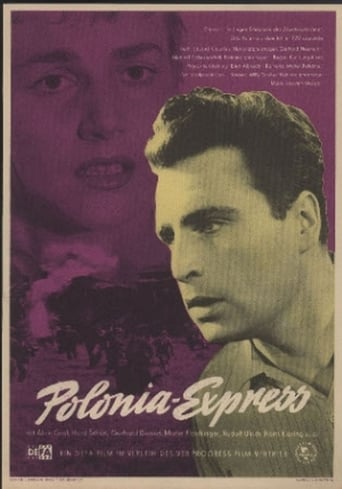
7.0Railway employee Fritz Marr is not regarded well by his superiors. It is the year 1920, and trains regularly pass the railway hub of Erfurt to the East to secretly transport weapons for the fight against the young Soviet Union. Marr knows about this and wants to mobilise other workers to stop these illegal deliveries. To muzzle him, Marr is relocated to a remote rail work construction site.
Polonia-Express
1957
 7.0
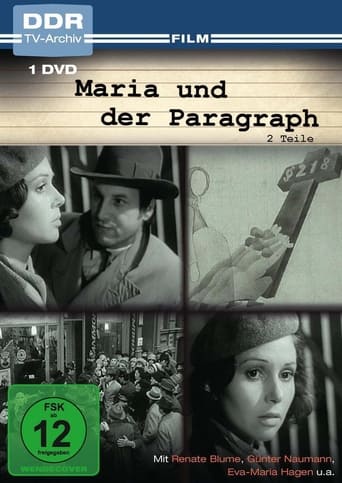
7.0Maria is a record saleswoman by profession. She is lucky to have a job, because the year is 1930 and a major economic crisis has hit the world, accompanied by an army of unemployed people, especially in Germany. Maria is aware of her good fortune; in order to secure it, she has to do without many things. What business owner would employ an unmarried woman with a child in times like these? When Maria became pregnant, she, like many other women, had to become "active" and do something about this "misfortune". So she seeks "help" from a female doctor, trusting in her youth and hoping for better times when family happiness could come true for her.
Maria und der Paragraph
1974
Film credits
1970s · 3 titles
6.0This five part epic war drama gives a dramatized detailed account of Soviet Union's war against Nazi Germany during world war two. Each of the five parts represents a separate major eastern front campaign.
Liberation - Part 3 : Direction of the Main Blow
1971
7.0Maria is a record saleswoman by profession. She is lucky to have a job, because the year is 1930 and a major economic crisis has hit the world, accompanied by an army of unemployed people, especially in Germany. Maria is aware of her good fortune; in order to secure it, she has to do without many things. What business owner would employ an unmarried woman with a child in times like these? When Maria became pregnant, she, like many other women, had to become "active" and do something about this "misfortune". So she seeks "help" from a female doctor, trusting in her youth and hoping for better times when family happiness could come true for her.
Maria und der Paragraph
1974
 9.0
9.0Josef Neumann has always been an outsider to society, and at the age of 30, he has already lived an adventurous life when he comes to the GDR. He was raised as a foundling by nuns, made an apprenticeship as a construction worker, went to the Foreign Legion, and was a seaman and a tramp. Now, he is working at the Warnow shipyard. Brigadier Bruno has a lot of sympathy and patience with the unconventional Josef, but Josef cannot fall in line with strict orders and again and again acts against the rules.
Zum Beispiel Josef
1974
1960s · 4 titles
7.6During the Spanish Civil War (1936-1939), five International Brigade soldiers of different nationalities are given a crucial assignment as their commander lies dying: they are to smuggle top-secret information across enemy lines.
Five Cartridges
1960
 8.0
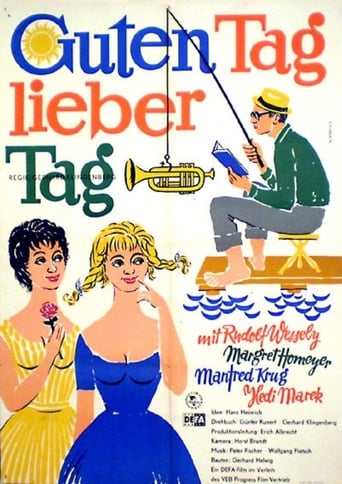
8.0Engineer Strebel′s apprentices think of nothing else but music and dancing, although they should really concentrate on their marks. Consequently, Strebel is anything but delighted with his pupil. To top it all, a TV show becomes interested in a performance by Strebel′s apprentices. To calm down their teacher, Jutta Fröhlich, who has already cast an eye on Strebel, makes him an offer: When they better their marks, Strebel would permit them to make a performance on television.
Guten Tag, lieber Tag
1961
 6.9
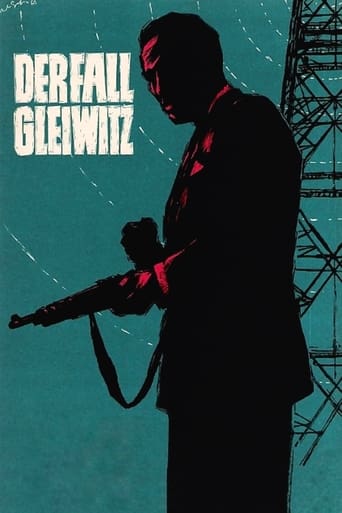
6.9To justify their invasion of Poland at the start of WWII, Nazi high command hatches a secret plan: six Polish men from an SS training camp are sent on a special mission to the town of Gleiwitz, to fake a Polish raid on Germany. The ‘provoked’ Germans will thus launch a ‘counterattack’ on Poland.
The Gleiwitz Case
1961
No synopsis available yet.
Die Rosenholzmöbel
1969
1950s · 5 titles
7.0Railway employee Fritz Marr is not regarded well by his superiors. It is the year 1920, and trains regularly pass the railway hub of Erfurt to the East to secretly transport weapons for the fight against the young Soviet Union. Marr knows about this and wants to mobilise other workers to stop these illegal deliveries. To muzzle him, Marr is relocated to a remote rail work construction site.
Polonia-Express
1957
 5.8
5.8In 1955, Michael Vierkant, a Jew who had emigrated during the Nazi era, returns from abroad to the Federal Republic of Germany to obtain the conviction of Korn, the former informer responsible for the murder of his sister. Korn is back in office; Michael's efforts remain unsuccessful. There is a direct confrontation between the two, and Michael shoots Korn in self-defense. He flees and is hidden by the young, reclusive artist Marie Jäger, but is then caught by the police and charged with premeditated murder. The case is taken out of the hands of the criminal investigation department by the Office for the Protection of the Constitution, which constructs an act of political revenge on behalf of the communists. Michael manages to escape from prison. Marie and her friends organize a press conference at which Michael reveals the connections. The trial is postponed.
Der Prozeß wird vertagt
1958
 NR
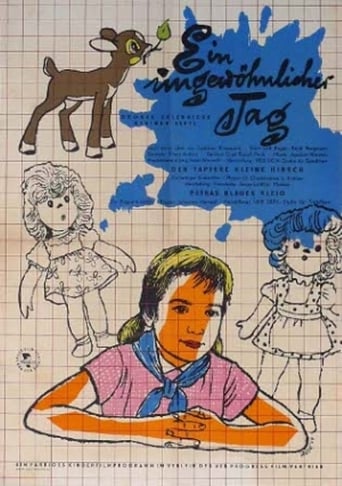
NRThis unusual day was preceded by little Maja's laziness. She didn't feel like doing any schoolwork. When she came to school the next day, the teacher didn't feel like teaching her. Everyone else she wants something from is not in the mood either. Maja begins to wonder whether this strange behavior could have something to do with her "listlessness" yesterday. And she comes to the conclusion that it is not right not to do your homework, as everyone has a duty to fulfill in their place.
An Unusual Day
1959
 7.0
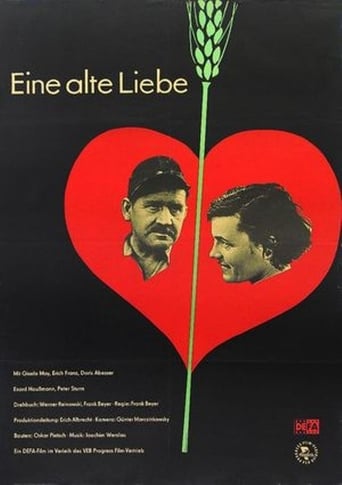
7.0Frieda and August Walkowiak celebrate their 30th wedding anniversary. However, the marriage has been in crisis for some time. August wants to spend his old age in peace, while Frieda has no intention of giving up her position as LPG chairman. The problems in the countryside are huge, collectivization is not progressing fast enough, even comrade Heinrich Rantsch is clinging to his individual farm. Frieda fights for progress, even in her private life, because not only her burden but also her higher position is a thorn in her husband's side. During the wedding anniversary celebrations, Frieda is called to the LPG. This is the cause of the family quarrel that has been in the air for a long time. August demands her resignation. In vain - and so he moves in with Rantsch. Their daughter Helga also leaves the house because of the tensions. Frieda collapses. When she is in hospital, August comes to his senses.
An Old Love
1959
 9.0
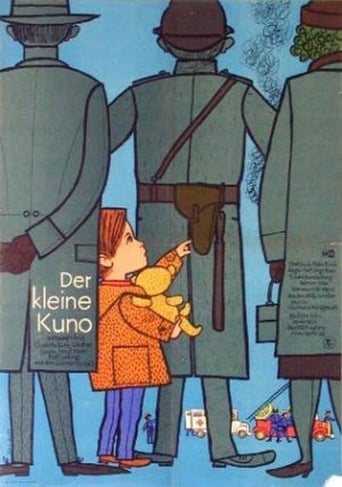
9.0What do grown-ups actually do at night? Little Kuno has been asking himself this question a lot lately. One day, the curious six-year-old decides to get to the bottom of it and sneaks outside his house at night. He wanders around the streets aimlessly and experiences some very exciting things.
Der kleine Kuno
1959
Series credits
6.2Polizeiruf 110 is a long-running German language detective television series. The first episode was broadcast 27 June 1971 in the German Democratic Republic, and after the dissolution of Fernsehen der DDR the series was picked up by ARD. It was originally created as a counterpart to the West German series Tatort, and quickly became a public favorite.
Polizeiruf 110
1971
NRColonel Maratka and Major Kalasz, employees of the Czechoslovakian defense forces, are facing a difficult task. They must complete a mission that is important for the security of their country. The Prague headquarters of the state security service had previously received information from the GDR that West German military intelligence had apparently succeeded in deciphering the secret code B/13 used in the field of missile armament.
Geheimcode B/13
1967