
Known for
 7.4
7.4As a young couple stops and rests in a small village inn, the man is abducted by Death and sequestered behind a huge doorless, windowless wall. The woman poisons herself in order to join him and is met by Death, who gives her three opportunities to prove that love is stronger than death, thereby freeing her beloved from his fate.
Destiny
1921
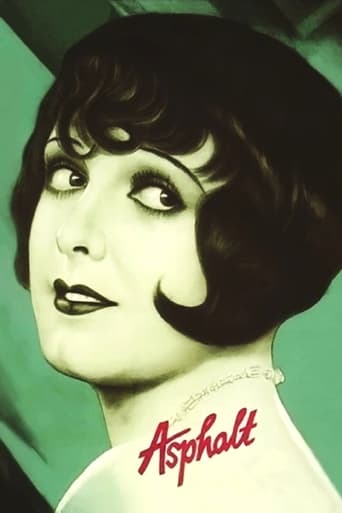 7.3
7.3Starring Betty Amann in her most famous leading role, Joe May's Asphalt is a luxuriously produced German Expressionist classic where tragic liaisons and fatal encounters are shaped alongside the constant roar of Berlin traffic.
Asphalt
1929
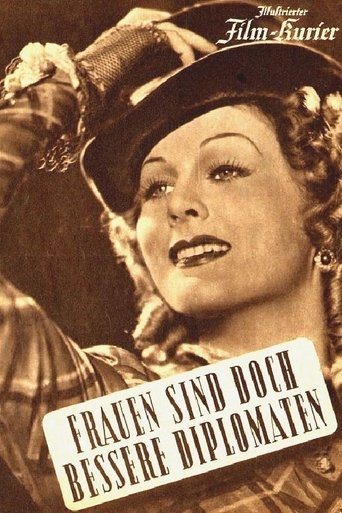 6.2
6.2A seductive dancer (Marika Rökk) helps her uncle to fight against the closing of his casino. Through her feminine charm she achieves diplomatic success.
Women Are Better Diplomats
1941
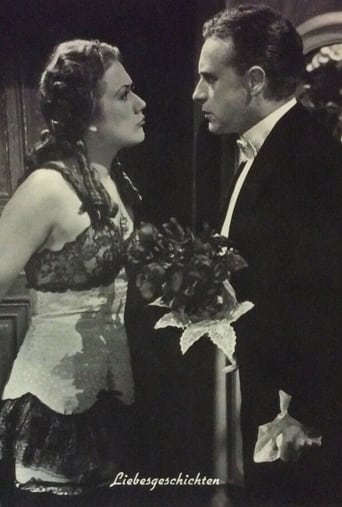 7.0
7.0Berlin, 1890: Werner Ludtke is only nine years old, but this son of a shoemaker is already in love with his playmate, Felicitas von Graefe. At first, her father just laughs about this infatuation; but as the children start to grow up, the class-conscious gentlemen doesn’t find this crush all too swell. Werner’s mother has a solution: her son must join the Army and go far away from Felicitas.
Liebesgeschichten
1943
 8.0
8.0Opera singer Maria Seydlitz has just left her fiancé because he put her between the choice of husband or profession when she receives a telegram from New York: an unknown person hires her for a large fee at the theater Maria accepts the offer... The film is based on the novel of the same name by Hans Rudolf Berndorff. The film was shot from July to September 1936 on the Neubabelsberg outdoor area and on the passenger ship "Bremen“. He experienced on the 15th. Its premiere in January 1937 in Berlin's Gloria-Palast.
Duet
1937
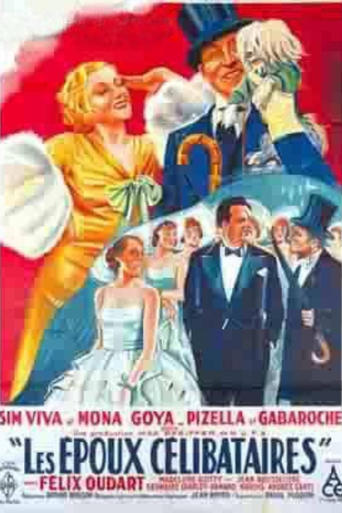 7.0
7.0A mix-up between a young lord and a music hall singer gives rise to multiple complications that begin on board an ocean liner, continue in the salons of the English aristocracy and end in the wings of a spectacular revue, and in the film studios.
Les époux célibataires
1935
Film credits
Behind the camera
7.3Starring Betty Amann in her most famous leading role, Joe May's Asphalt is a luxuriously produced German Expressionist classic where tragic liaisons and fatal encounters are shaped alongside the constant roar of Berlin traffic.
Asphalt
1929
6.2A seductive dancer (Marika Rökk) helps her uncle to fight against the closing of his casino. Through her feminine charm she achieves diplomatic success.
Women Are Better Diplomats
1941
7.0Berlin, 1890: Werner Ludtke is only nine years old, but this son of a shoemaker is already in love with his playmate, Felicitas von Graefe. At first, her father just laughs about this infatuation; but as the children start to grow up, the class-conscious gentlemen doesn’t find this crush all too swell. Werner’s mother has a solution: her son must join the Army and go far away from Felicitas.
Liebesgeschichten
1943
8.0Opera singer Maria Seydlitz has just left her fiancé because he put her between the choice of husband or profession when she receives a telegram from New York: an unknown person hires her for a large fee at the theater Maria accepts the offer... The film is based on the novel of the same name by Hans Rudolf Berndorff. The film was shot from July to September 1936 on the Neubabelsberg outdoor area and on the passenger ship "Bremen“. He experienced on the 15th. Its premiere in January 1937 in Berlin's Gloria-Palast.
Duet
1937
7.0A mix-up between a young lord and a music hall singer gives rise to multiple complications that begin on board an ocean liner, continue in the salons of the English aristocracy and end in the wings of a spectacular revue, and in the film studios.
Les époux célibataires
1935
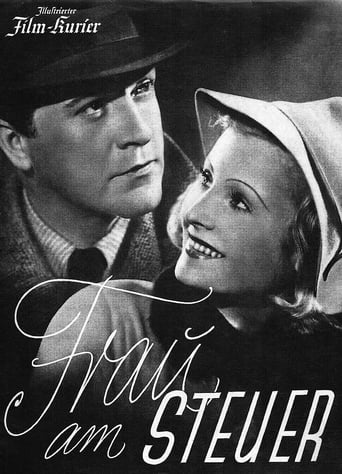 9.0
9.0Maria Kelemen is a secretary in the office of a bank in Budapest. Her boss, director Borden, courts her, albeit she is engaged to Paul (about which she has remained silent). On the day of the wedding, Paul becomes unemployed and takes on the role of a house-husband. During a visit at Borden’s, Maria introduces Paul as her brother, which incites raging jealousy in the latter.
Woman at the Wheel
1939
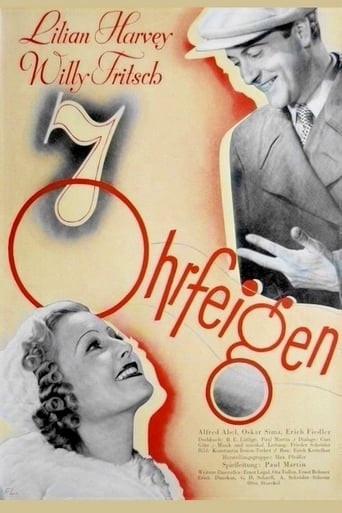 6.5
6.5William MacPhab loses seven-pounds in the stock market and decides to slap the man who was responsible for the stock manipulation that caused him to lose his money. Astor Terbanks, the stock-market manipulator is surprised the next day when he gets soundly slapped by MacPhab, and the latter promises to deliver one more a day for the next six days. Terbank's daughter, Daisy, is amused by the procedure and is attracted to MacPhab.
Seven Slaps
1937
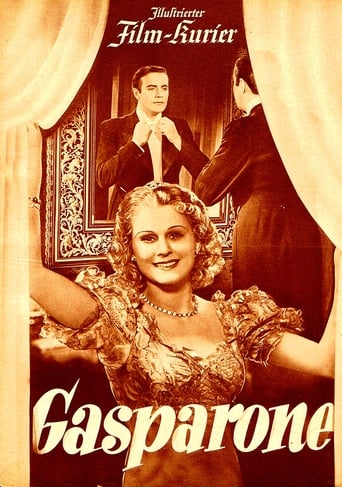 5.6
5.6In the fantasy state of Olivia, the robber chief Gasparone is up to all sorts of mischief. But Prefect Nasoni is not only worried about him, his son Sindulfo is also causing him headaches. He is supposed to marry Countess Ambrat, but loves Ita, the niece of Massaccio, a somewhat obscure existence. Then the elegant Erminio appears, and the countess makes eyes at him. Confusion after confusion until Massaccio is unmasked as Gasparone. Erminio turns out to be a civil servant who was set on Gasparone and now gets his beautiful countess. Sindulfo is the last to embrace his Ita.
Gasparone
1937
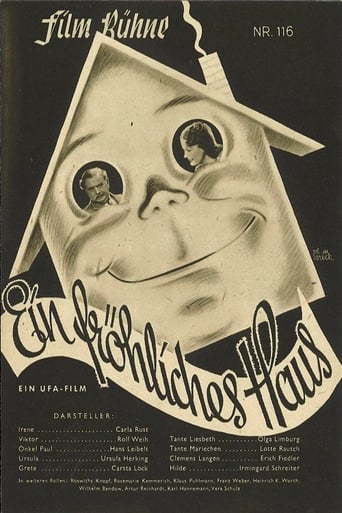 10.0
10.0Viktor Werneberg is a widowed swimming instructor with three children, who meets the sophisticated Irene Müller advice column in a newspaper. Although the two strike up a bond he is concerned that his chaotic household, including a lazy uncle Paul and an domineering housekeeper Grete, will put Irene off.
A Cheerful House
1944
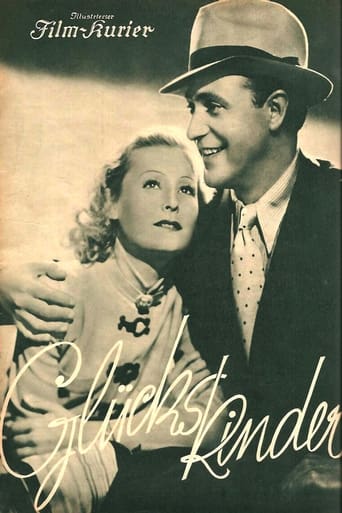 6.9
6.9After completing work on the British musical Invitation to the Waltz, Lillian Harvey returned to her adopted country of Germany to star in the comedy-with-music Glueckskinder (Children of Fortune). Harvey plays Ann Garden, an unemployed actress who ends up in night court on a loitering charge. Here she meets Gil Taylor (Willy Fritsch), a struggling songwriter temporarily employed as a court reporter. Hoping to keep her out of jail, Gil impulsively tells the judge that he's engaged to Ann -- whereupon the judge, equally impulsively, marries the couple on the spot! After this inauspicious start, Ann and Gil embark upon a rocky (but tuneful) whirlwind romance.
Lucky Kids
1936
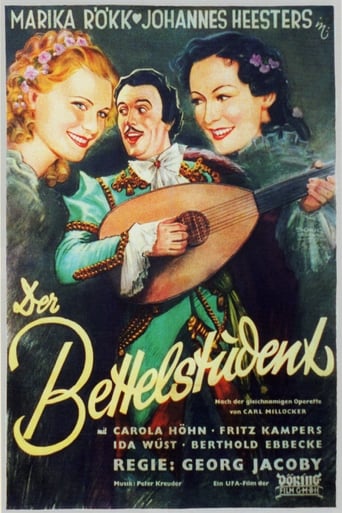 6.0
6.0To take a revenge on countess Laura, who slapped him at his proposal, the Governor of the occupied Poland gets her fall in love with a poor student, and exposes him during wedding banquet.
The Beggar Student
1936
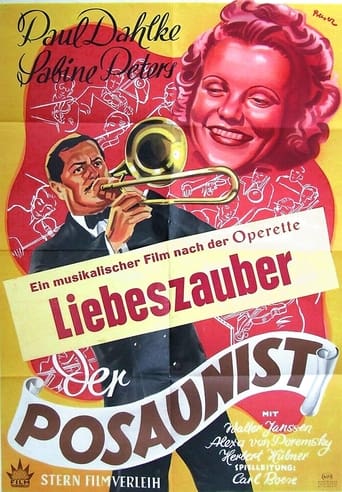 5.8
5.8The Trombonist is a 1949 comedy film directed by Carl Boese and starring Paul Dahlke, Sabine Peters and Ludwig Körner.
The Trombonist
1949