
Directing
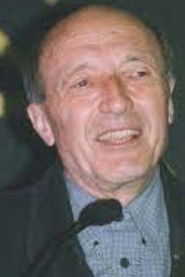
René Bonnière
Born
1928-03-10 (98)
Place of birth
Lyon, France
Known for
Directing
Credits
29 titles
Known for
 6.6
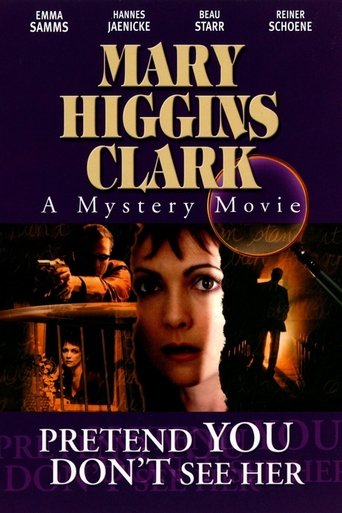
6.6An estate agent is forced into witness protection soon after selling the apartment of a girl who died in suspicious circumstances. However, when the deceased girl's mother is also found dead, all signs point to a murderer on the loose, and it becomes apparent the agent's new identity may not protect her from the killer.
Pretend You Don't See Her
2002
 5.2
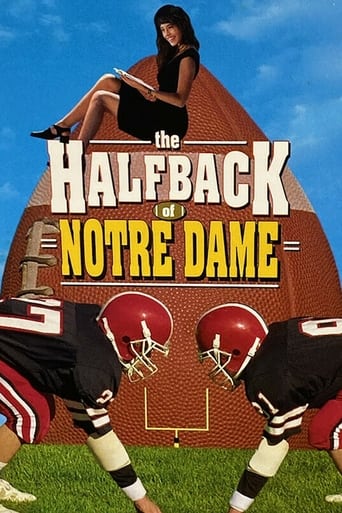
5.2A high school halfback must choose between the gridiron dreams of his football coach father, and his own dream of becoming a musician.
The Halfback of Notre Dame
1996
 4.4
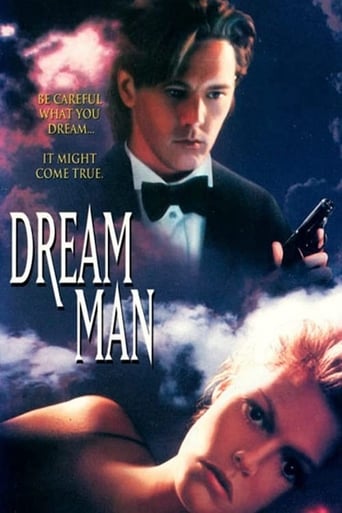
4.4Kris is a homicide cop with psychic abilities. She works to prove that the prime suspect in her latest case (the much younger husband of the millionaire victim) is innocent. But are her visions true, or planned by someone who knows what she can see?
Dream Man
1995
 3.8
3.8Under hypnosis, a mental patient admits to several recent murders. He also offers a strange defense when he claims that he is the reincarnation of a 19th century man who was wrongly executed.
Haven't We Met Before?
2002
 7.0
7.0Did Cartier dream of making a country from this land of a million birds? In his records of his exploration he certainly marvelled at seeing the great auks that have since disappeared from Isle aux Ouaiseaulx, the razor-bills and gannets that are gone from Blanc-Sablon, and the kittiwakes from Anticosti, all the winged creatures of all the islands which he described as being "as full of birds as a meadow is of grass". And that's not even counting the countless snow geese.
The Land of Jacques Cartier
1963
 9.0
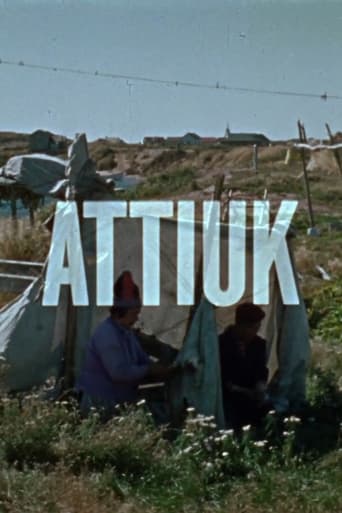
9.0The people of Unamenshipu (La Romaine), an Innu community in the Côte-Nord region of Quebec, are seen but not heard in this richly detailed documentary about the rituals surrounding an Innu caribou hunt. Released in 1960, it’s one of 13 titles in Au Pays de Neufve-France, a series of poetic documentary shorts about life along the St. Lawrence River. Off-camera narration, written by Pierre Perrault, frames the Innu participants through an ethnographic lens. Co-directed by René Bonnière and Perrault, a founding figure of Quebec’s direct cinema movement.
Attiuk
1963
Behind the camera
6.6An estate agent is forced into witness protection soon after selling the apartment of a girl who died in suspicious circumstances. However, when the deceased girl's mother is also found dead, all signs point to a murderer on the loose, and it becomes apparent the agent's new identity may not protect her from the killer.
Pretend You Don't See Her
2002
5.2A high school halfback must choose between the gridiron dreams of his football coach father, and his own dream of becoming a musician.
The Halfback of Notre Dame
1996
4.4Kris is a homicide cop with psychic abilities. She works to prove that the prime suspect in her latest case (the much younger husband of the millionaire victim) is innocent. But are her visions true, or planned by someone who knows what she can see?
Dream Man
1995
3.8Under hypnosis, a mental patient admits to several recent murders. He also offers a strange defense when he claims that he is the reincarnation of a 19th century man who was wrongly executed.
Haven't We Met Before?
2002
7.0Did Cartier dream of making a country from this land of a million birds? In his records of his exploration he certainly marvelled at seeing the great auks that have since disappeared from Isle aux Ouaiseaulx, the razor-bills and gannets that are gone from Blanc-Sablon, and the kittiwakes from Anticosti, all the winged creatures of all the islands which he described as being "as full of birds as a meadow is of grass". And that's not even counting the countless snow geese.
The Land of Jacques Cartier
1963
9.0The people of Unamenshipu (La Romaine), an Innu community in the Côte-Nord region of Quebec, are seen but not heard in this richly detailed documentary about the rituals surrounding an Innu caribou hunt. Released in 1960, it’s one of 13 titles in Au Pays de Neufve-France, a series of poetic documentary shorts about life along the St. Lawrence River. Off-camera narration, written by Pierre Perrault, frames the Innu participants through an ethnographic lens. Co-directed by René Bonnière and Perrault, a founding figure of Quebec’s direct cinema movement.
Attiuk
1963
 5.0
5.0Hat and Eddie despise Courtney, the teacher's pet, and constantly try to scare her. They eventually decide to trick her into thinking the local "mud monster" legend is true, but, in the process, get much more than they bargained for.
Goosebumps: You Can't Scare Me!
1996
 7.0
7.0A mouse from the streets and a church mouse try to help a priest and an organist save Christmas by composing a Christmas carol.
Johann's Gift to Christmas
1992
 10.0
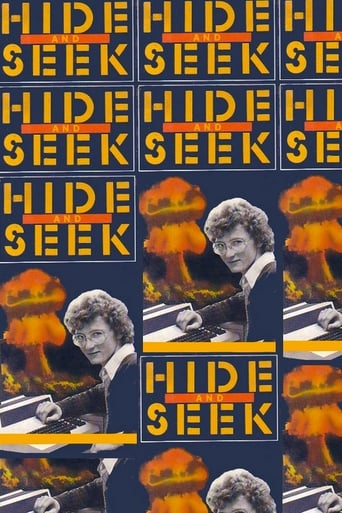
10.0In this adaptation of the 1977 sci-fi novel, "The Adolescence of P-1," a high school whiz kid's computer program accidentally hooks into the mainframe computer of a nuclear power plant.
Hide and Seek
1984
 8.0
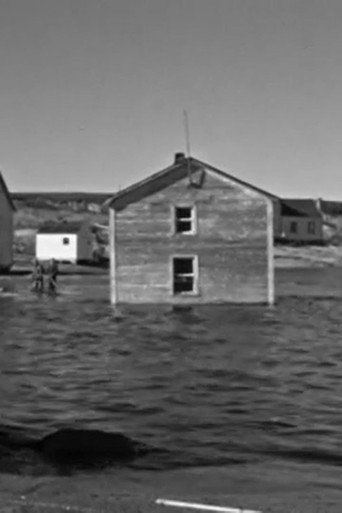
8.0Shows Tête-à-la-Baleine, Québec, a village with a double life--one on the North Shore mainland during winter months, the other on mossy islands of the Gulf to which the entire population moves for summer fishing.
Whalehead
1963
 6.5
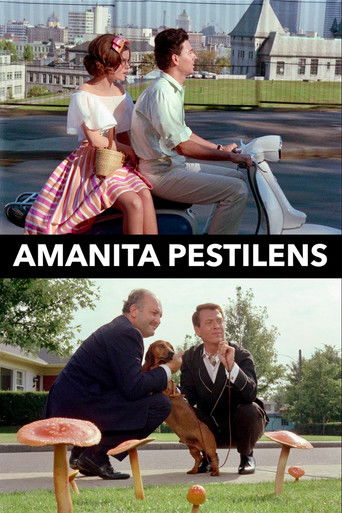
6.5A man obsessed with his award-winning lawn goes to great lengths to keep it looking great when mushrooms suddenly start appearing all over the yard.
Amanita Pestilens
1973
 6.3
6.3When terminally unpopular Samantha meets a strange woman who offers to grant her three wishes, she soon finds herself in deep trouble.
Goosebumps: Be Careful What You Wish For...
1996
 10.0
10.0Towards the end of her father Henry the VIII's reign, a young Elizabeth quarrels with half-sister Mary Tudor and worries that her beloved stepmother Catherine Parr will face the same fate as Henry's other wives, including Elizabeth's mother Anne Boleyn. Based on the similarly titled children's book, "The Royal Diaries: Elizabeth I: Red Rose of the House of Tudor, England, 1544".
The Royal Diaries: Elizabeth I - Red Rose of the House of Tudor
2000
On the North Shore of the St. Lawrence, the Otis family hunts for white whales and seals with rusty old rifles in hand-crafted boats. This is the traditional method of the Basque whalers who frequented the coast in the 16th century.
White-Whale Hunters of Anse-Aux-Basques
1960
 NR
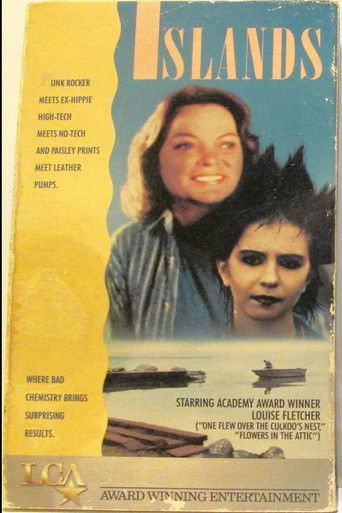
NRA troubled teenager is sent to a summer cabin to help a woman, who turns out being her actual birth mother.
Islands
1984
This early work from Pierre Perrault, made in collaboration with René Bonnière, chronicles summer activities in the Innu communities of Unamenshipu (La Romaine) and Pakuashipi. Shot by noted cinematographer Michel Thomas-d’Hoste, it documents the construction of a traditional canoe, fishing along the Coucouchou River, a procession marking the Christian feast of the Assumption, and the departure of children for residential schools—an event presented here in an uncritical light. Perrault’s narration, delivered by an anonymous male voice, underscores the film’s outsider gaze on its Indigenous subjects. The film is from Au Pays de Neufve-France (1960), a series produced by Crawley Films, an important early Canadian producer of documentary films.
Ka Ke Ki Ku
1960
Three communities at the foot of the Charlevoix cliffs, Petite-Rivière, île-aux-Coudres and Les Éboulements, practise the myriad trades of the sea. Its men are sailors, stevedores, longshoremen for the coasting trade. In winter, they becomes caulkers, carpenters and timer-cutters who will build a new vessel if required, or repair, caulk and paint the over 150 wooden schooners that ply the St. Lawrence River.
On the Sea
1960
 NR
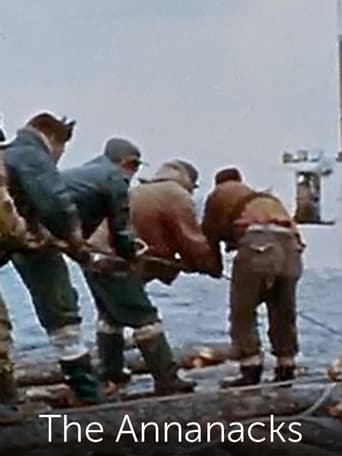
NRThis short documentary depicts the formation in 1959 of the first successful co-operative in an Inuit community in Northern Québec. The film describes how, with other Inuit of the George River community, the Annanacks formed a joint venture that included a sawmill, a fish-freezing plant and a small boat-building industry.
The Annanacks
1964
NRThis short documentary depicts the formation in 1959 of the first successful co-operative in an Inuit community in Northern Québec. The film describes how, with other Inuit of the George River community, the Annanacks formed a joint venture that included a sawmill, a fish-freezing plant and a small boat-building industry.
The Annanacks
1964
Man's need to create beauty, to interpret the world around him in image and color, has found expression in many forms, from the days of primitive culture to the present. This film surveys the work of Canadian craftsmen in many fields, showing how the changing Canadian scene has been their constant inspiration and how business enterprise today is increasingly using the skills of the artisan to enhance the decor of building interiors.
Craftsmen of Canada
1957
 8.0
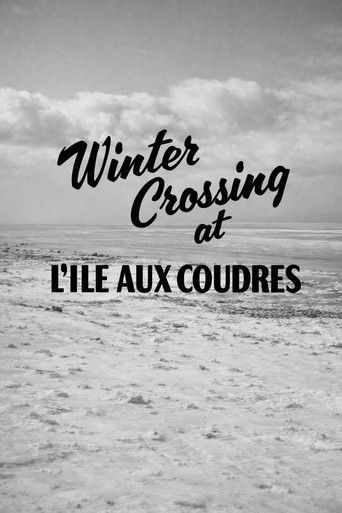
8.0On an island the road ends where it begins, at the wharf. The wharf is the link to the rest of the world, until winter cuts it off. But the islanders know the winter sea and its movements. They judge the ice by its colours, avoiding the open channels, fighting through the slushy fragil ice, catching their footing on the chunk ice, and running all-out across the solid ice to the North Shore.
Winter Crossing at L'Isle-Aux-Coudres
1960
The building of a goélette, the wooden coastal freighter of the St. Lawrence River. Although ships of steel may replace these sturdy wooden vessels, the Jean Richard, shown in construction in this film, is still one ship built with all the old pride in craftsmanship.
The Jean Richard
1963
In a valley on the North Shore of the St. Lawrence, the seasons unfold with their chores and pleasures: children gathering roses for honey, an old uncle's wine, pressing apple cider, three brothers shelling broads beans, their flails beating time, grandmother's spinning wheel, the old stone mill, the rushing rivulets of spring, a silvery catch of capelin washed up on shore by the May Moon.
Turlutte
1960
When Cartier wintered at Cap Rouge near Québec City in 1641, he claimed to have detected diamonds in the surrounding hills. Was he so very wrong? Three centuries later, 15,000 men have come to excavate the iron mountains of the Canadian tundra where the rust of those diamonds still sparkles.
Canadian Diamonds
1960
 4.4
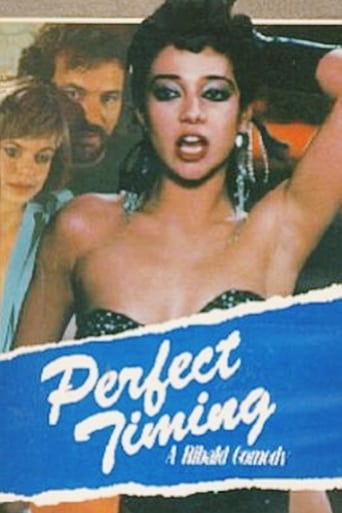
4.4Perfect Timing is the story of Harry Crane, an infamous photographer whose sublime and evocative images single-handedly reshaped and rebuilt the boudoir and fitness industries. But, having made his mark, allowed the artist within to be released. Creatively and artistically, Harry has moved on; his work now consisting of portraits and interpreting rock wall fractals. Of course that meant leaving the professional schlock of commercial advertising behind him. Sounds good. Except there's that pesky issue of money. And Harry and his buds are quickly burning through large quantities of it. Bottom line - he's nearly broke and faces eviction.
Perfect Timing
1986
A virtual prisoner of the winter snows that block its roads, the village of St.Hilarion, to justify its name, revels in the joys of the jig and the "turlutte", the lilting songs that tell the humorous tale, ever new and yet essentially always the same, about the sorry fate of the one who gives into temptation.
Soirée at St. Hilarion
1960
No synopsis available yet.
La Pitoune
1960
Life in a north-shore village where everybody's name is Robertson and where everyone hunts for seal. In December the seals come in great herds from Greenland, and for two weeks in this peaceful village it's all hands to the lines.
Winter Sealing at La Tabatière
1963
A young labor organizer leaves Ottawa for New Brunswick to settle a strike of five garage workers.
Labor of Love
1984