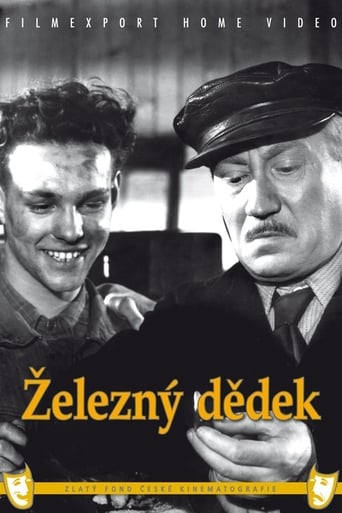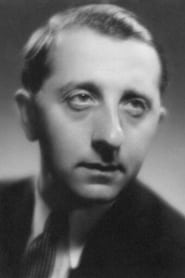
Known for
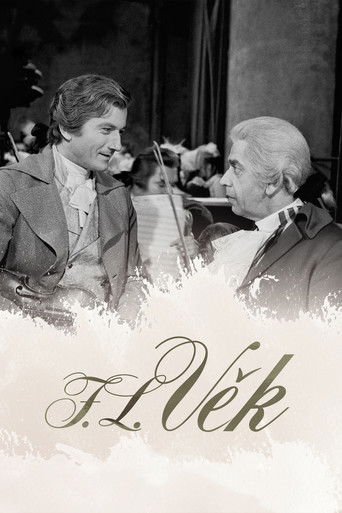 7.0
7.0No synopsis available yet.
F. L. Věk
1971
 NR
NRNo synopsis available yet.
Nejmladší z rodu Hamrů
1975
 7.0
7.0No synopsis available yet.
Klapzubova jedenáctka
1968
 6.4
6.4Set in Prague during the years leading up to World War II, this family saga tells the story of a cobbler named Vincenc Bursik (Vladimir Mensik), who uproots his clan from the country to the city, only to suffer the loss of his wife and the failure of his shoe business within months. When his daughter moves away to go live with a wealthy businessman as his mistress, Vincenc is left to take care of his two sons, who spend their days in a secret garden vying for the affections of a teenage girl.
Love Between the Raindrops
1980
No synopsis available yet.
Jak se vám líbí
1955
 6.7
6.7For the Novák and Bartáček families, money is king, and they'll do just about anything to get it. While René Novák pitches his parents a lucrative scheme to swindle as many people with the last name Novák in the country as possible, the Bartáček clan decides to pretend to be much poorer than they really are in order to siphon some dollars from an American relative. And it doesn't take long before these separate scams start to intertwine.
Co je doma to se počítá, pánové...
1980
Film credits
1980s · 6 titles
6.4Set in Prague during the years leading up to World War II, this family saga tells the story of a cobbler named Vincenc Bursik (Vladimir Mensik), who uproots his clan from the country to the city, only to suffer the loss of his wife and the failure of his shoe business within months. When his daughter moves away to go live with a wealthy businessman as his mistress, Vincenc is left to take care of his two sons, who spend their days in a secret garden vying for the affections of a teenage girl.
Love Between the Raindrops
1980
6.7For the Novák and Bartáček families, money is king, and they'll do just about anything to get it. While René Novák pitches his parents a lucrative scheme to swindle as many people with the last name Novák in the country as possible, the Bartáček clan decides to pretend to be much poorer than they really are in order to siphon some dollars from an American relative. And it doesn't take long before these separate scams start to intertwine.
Co je doma to se počítá, pánové...
1980
 7.4
7.4This satirical comedy depicts the fate of two con artists who constantly encounter sharper and more experienced rivals. In their quest for easy profits, they often change several jobs and come up with a variety of original tricks and thievery. Each time, however, someone else profits from their ideas. And when they seek revenge on their crooked rivals, they end up back where they started - behind bars...
Příště budeme chytřejší, staroušku!
1982
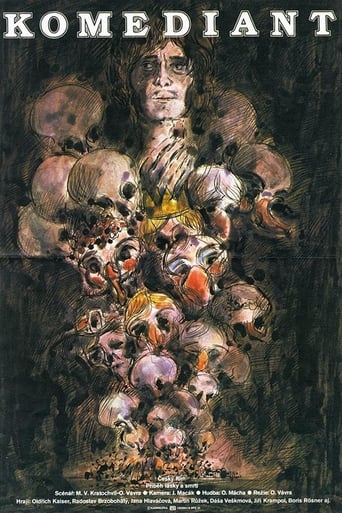 6.0
6.0Saxony, devastated by the Thirty Years' War, is led by the comedy troupe of the principal Fortunato. The student Vavrinec has fled Bohemia and greatly values the text of Shakespeare's tragedy Romeo and Juliet, which he has acquired on his wanderings around the world.
Komediant
1984
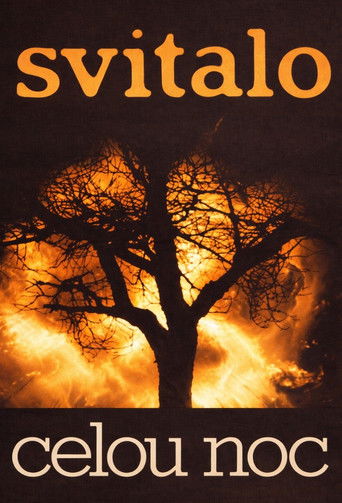 9.0
9.0The Czech film Svítalo All Night was made to commemorate the 35th anniversary of the liberation of Czechoslovakia by the Soviet Army and is dedicated to all those who fought and gave their lives in Prague in the May Uprising of 1945. Behind the historical events, the creators see mainly their simple, unassuming participants. Thus, we are presented with a number of apt portraits, whether it is the central hero Dr. Soukup and nurse Daniela on the side of the fighting Czechs, or a captain and a simple private in a Red Army unit coming to the aid of the fighting Prague, or an old, war-weary German major, who only realises the senselessness of the war at the sight of a fanatical, cynical lieutenant for whom Nazi ideology represents the meaning of life.
Svítalo celou noc
1980
Former sailor Kotrba, nicknamed the Admiral, has one dream, to take his own ship to sea. He's been building it for five years and now it's finished, but he still needs money to buy an engine. He asks for financial support from his friend Pošmurný. But he uses the excuse of his daughter's wedding. He has money set aside for a dowry, so he cannot lend his friend anything. Then Kotrba gets lucky - he wins a voucher for goods worth 10,000. But there's a hitch. He can only redeem the voucher for goods at the local unity, where he has become the 100,000th visitor. But Admiral Kotrba is foxy about it. Let's see what he comes up with!
Výhra admirála Kotrby
1981
1970s · 10 titles
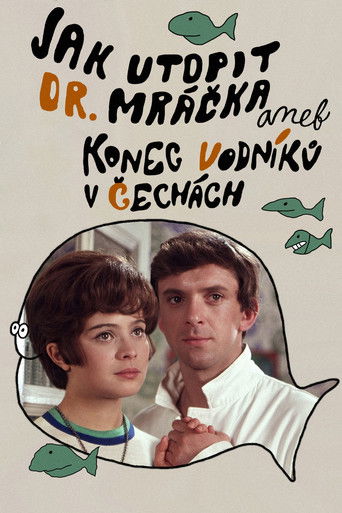 6.6
6.6There are still water spirits among us. One group lives in Prague, led by Mr. Wassermann, who is using his wife's family as a servants. All they need is their old house near the river. But the house is to be demolished. They have to stop it. And the only way is to drown Dr. Mrácek, who is responsible for the demolition. But he falls in love with Wassermann's niece Jana. He changes to fish, is mistaken for water spirit from Germany, is drowned and revived again. The other problem is the flour with ears... and so on...
How to Drown Dr. Mracek, the Lawyer
1975
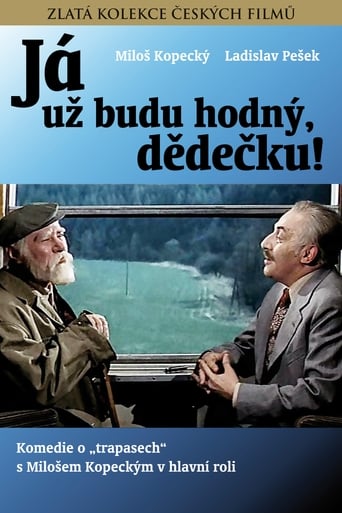 5.8
5.8To the intolerant and bloody-minded Prague actor Bergner (Milos Kopecký) is the lead in Moliere's Misanthrope which he is studying now as tailor-made. On top of that he is malicious and he advises to the new actress Helenka (Dagmar Havlová) in such a way that she upsets the theatre director. If Bergner accuses somebody of a mischief and he is wrong, he never apologizes. When he almost crashes an older elegant lady by his car on the zebra crossing, instead of an apology he calls her an old ballet dancer... But in Brno's TV he takes part in a discussion on manners and he gives himself as an example of good manners and grace. In the train he meets a magic old man (Ladislav Pesek) who warns him and admonishes him to change his behavior. After he arrives to Prague the old man's threat comes true.
I'll Be Good, Old Man!
1979
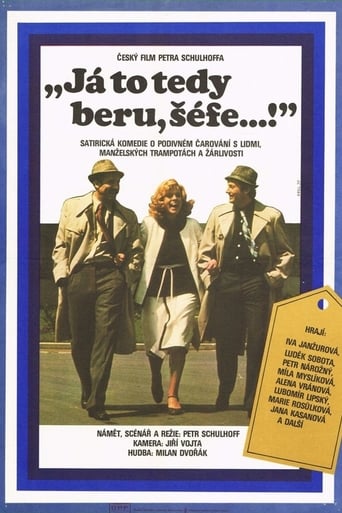 5.8
5.8Láda Pitras (Ludek Sobota) and Oto Vacák (Petr Nározný) founded in the company Pragokov a Research department of recruitment of labor. For recruitment of workers in professions sought after both recruiters worked out an effective, often almost illegal methods. They followed secretly for instance the welder Niederle and managed to record his lovesick courting to his colleague Anicka. The fear of his jealous wife made him to join Pragokov.
'Okay, Boss...!'
1978
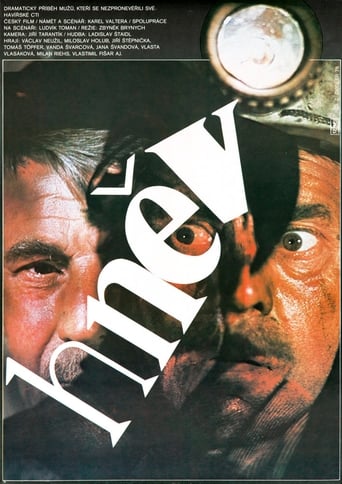 5.5
5.5Sunday in September 1977, a celebration of the Miners Day. The old Hepnar is sitting at the cemetery and is recalling events from ten years ago. That time the representative of the ministry Barvír announced at the miners meeting that mining in the mines would decrease. He reasoned this decision by the fact the deposits of coal are almost used up. The boss of the mine and most of the miners protested. Barvír did not take their critical objections into account. He announced at the communist district meeting the closure of the business as the mine according to new economic principles did not prosper.
Hněv
1978
The merging of reality with legend, the image of reality (Ruthenian Verkhovyna in the 1920s) and its reflection in people's minds - this is what characterizes the story of the modern Transcarpathian bandit Nikola Šuhaj, who "took from the rich and gave to the poor". Ivan Olbracht's novel from the 1930s, one of the artistic peaks of modern Czech prose, is a dramatic story about a war deserter, his love for the beautiful Eržica, a story about revenge for wrongs, persecution, betrayal and death. Šuhaj's fate merged with legends in people's memory. By combining elements of the past and the present, document and myth, the story turned into a ballad about how eternal and strong the human dream of freedom and happiness is.
Nikola Šuhaj loupežník
1978
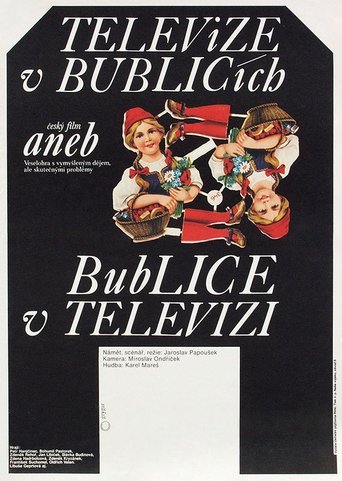 8.0
8.0The news that the television is going to make a film about the cooperative's leisure activities leads the locals to extraordinary social and sporting activity, but the only result is a chain of endless confusions, misunderstandings and disasters...
Televize v Bublicích aneb Bublice v televizi
1974
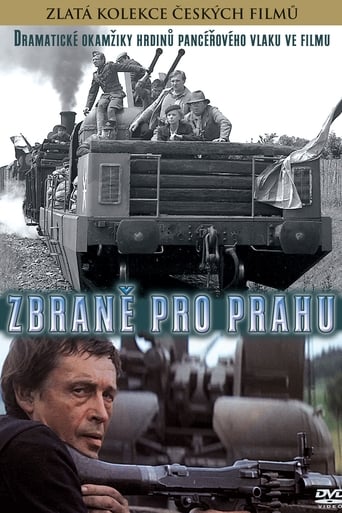 6.0
6.0In May 1945, Czech revolutionaries used several armoured trains in the fighting - partly captured, partly assembled from whatever the railway brought. One of them was commanded by the shunter Jan Chýň, who managed to bring weapons from the ammunition depot in Libčice to help the fighting in Prague.
Zbraně pro Prahu
1975
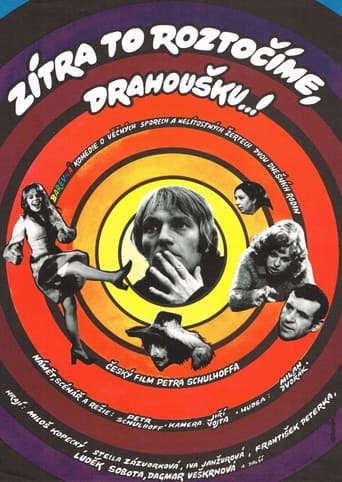 8.1
8.1Mr. Novak tells a lie to his neighbor Mrs. Bartackova that her husband is unfaithful to her and that is how it all started.
We'll Kick Up a Fuss Tomorrow, Darling...
1976
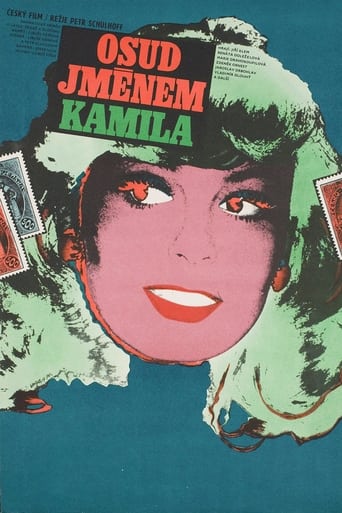 4.2
4.2Tomáš, an unscrupulous Prague taxi driver who is involved in stealing antiques and smuggling them abroad, lives with his devoted mistress, but he is always thinking of his destined love, Kamila, who has emigrated to Switzerland. It is for her that he plans a robbery of a rare stamp, which he convinces his naive brothers to commit. The seemingly simple theft goes wrong and almost ends in the death of an innocent man. The planned escape across the border, in which a slick Swiss businessman plays a key role, also fails...
Osud jménem Kamila
1974
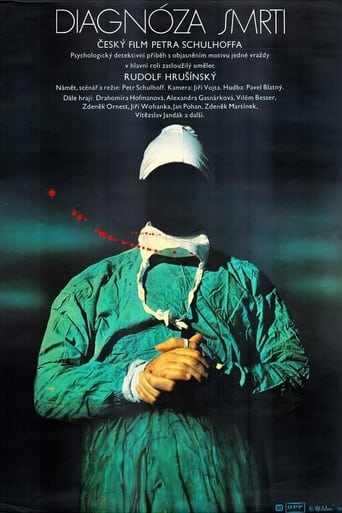 5.2
5.2Two seriously injured patients are brought to the hospital at almost the same time: truck driver Honza Linhart, who had an accident, and a young woman found unconscious in a forest by a man picking mushrooms. The woman is identified as Katerina Marková, the divorced mother of a young girl. Major Kalas (Rudolf Hrusínský) suspects that she is a victim of mugging since a bloodstained small ax has been found near the site of the crime and, according to witnesses, Ms Marková was missing her watch and a bracelet, from which a gemstone has also been discovered. Linhart has lost his only kidney in the accident; in order to live a normal life again, he will need a kidney transplant from the mugged woman if she dies.
Diagnóza smrti
1979
1960s · 5 titles
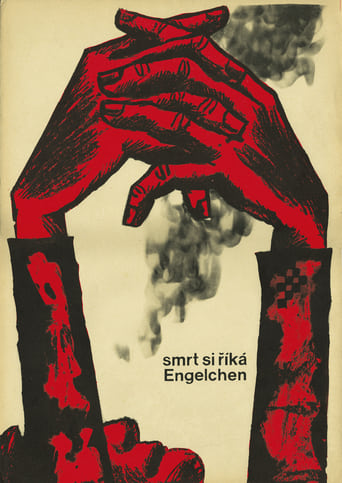 6.4
6.4Pavel is a Czech partisan fighter in the waning days of the war. Just as peace is declared, Pavel is shot in the spine and sent to the hospital emergency ward. As he fades in and out of consciousness, he recalls the events that led to his participation in the underground. Holding German occupation commander Engelchen responsible for all the horrors and deprivations heaped upon his comrades, Pavel is kept alive by the possibility of recovering and exacting vengeance upon the Nazi officer - no matter how long it takes.
Death Is Called Engelchen
1963
Together with a group of temporary workers, a group of experienced labourers is building a land reclamation system to turn the South Bohemian marshes into a "Seventh Continent" of fertile soil.
Sedmý kontinent
1961
 6.0
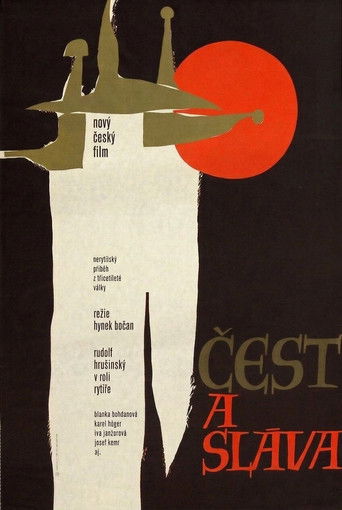
6.0In 1647, the impoverished noble Václav Rynda shelters an imperial commissioner-only to learn the visitors are French agents plotting a Bohemian revolt against the Habsburgs.
Honor and Glory
1969
 8.5
8.5“And what did you do at school today?” In Pavel Hobl’s Czech fairytale, when Pepik and Honzik learn that school has been canceled they embark on an amazing odyssey around Prague that has them directing traffic, following the lead of a talking dog, breaking the spell an evil sorcerer has placed on a group of local musicians, rollerskating through a museum, and winning a magical car race. (University of Chicago Doc Films)
Do You Keep a Lion at Home?
1964
No synopsis available yet.
Postavy mimo hru
1960
1950s · 11 titles
No synopsis available yet.
Jak se vám líbí
1955
A socialist drama from the time of the February coup. The owner of the brickyard will use several workers before February in order to subvert worker solidarity and continue to do his black business. However, the vigilance of a young, aware worker prevents him from doing so.
Dva ohně
1950
 5.3
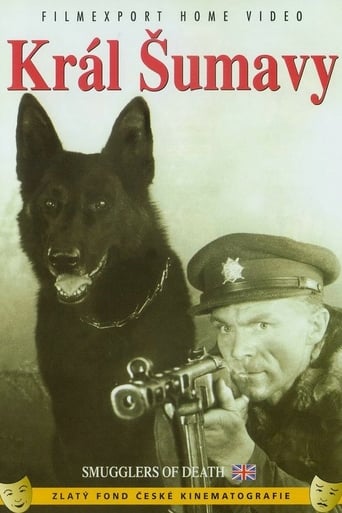
5.3A movie about Czechoslovak border guards trying to arrest the famous escapee called "King of the Sumava".
King of the Sumava
1959
A construction comedy about the labor struggle of two groups of workers in a Prague factory. The old group is led by the grinder Karhan, while the young group is led by his son. The struggle between the two groups leads to the emergence of socialist competition and cooperation, in which the old share their experience with the young, and the young share their new ideas.
Karhanova parta
1951
The Counter-Reformation period: Myslivec Machovec is forced by representatives of the Jesuit order to flee his home for his religious beliefs. His teenage children Helenka and Tomáš do not give up the faith and traditions of the Czech Brethren despite the increasing pressure.
Temno
1951
 10.0
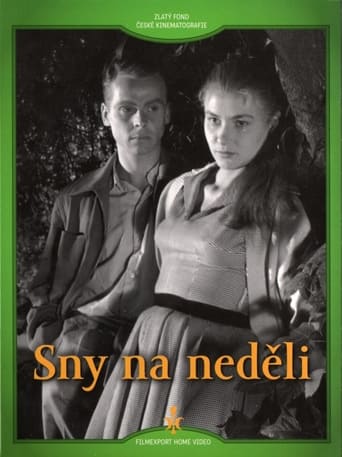
10.0In the pulmonary sanatorium, patients live out their small fates. But not everyone takes a responsible approach to their illness. For example, a young student falls in love, the lovers even take a secret flight, but the young man's condition deteriorates dramatically because of it.
Sny na neděli
1959
No synopsis available yet.
Poprask na laguně
1955
 6.3
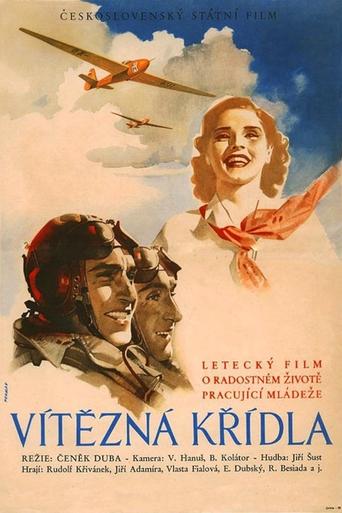
6.3Many of the young workers at an aircraft factory near Prague are members of an aviation club. On the one hand, there is the responsible Franta, who is highly regarded by his colleagues due to his understanding nature. Opposite him is the talented aircraft designer Ruda, who is also an excellent pilot, but also hotheaded, undisciplined and condescending towards his colleagues. He starts flirting with the glass grinder Lída, although he knows that she is Franta's girl friend. A conflict is not long in coming. When Franta's glider crashes due to a suspected mistake by Ruda, Ruda is banned for a certain period of time. This is fatal, because both young men were actually supposed to represent Czechoslovakia at the upcoming international gliding championships in Poland.
Victorious Wings
1951
An ideologically-oriented film set in a prestigious medical sanatorium - a young doctor sympathizes with the poor people of the area, helping workers and their sick children.
Případ dr. Kováře
1950
No synopsis available yet.
Pára nad hrncem
1950
A detective drama set just before the unification of our physical education system. Criminal investigators investigate the murder of a football club official, bribery, and manipulation of match results.
V trestném území
1951