
Acting
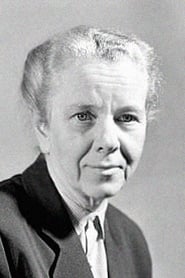
Mathilde Danegger
Born — Died
1903-08-02 — 1988-07-27
Place of birth
Wien, Austria
Known for
Acting
Credits
40 titles
Known for
 6.2
6.2Polizeiruf 110 is a long-running German language detective television series. The first episode was broadcast 27 June 1971 in the German Democratic Republic, and after the dissolution of Fernsehen der DDR the series was picked up by ARD. It was originally created as a counterpart to the West German series Tatort, and quickly became a public favorite.
Polizeiruf 110
1971
 3.8
3.8Der Staatsanwalt hat das Wort was an East German television series.
Der Staatsanwalt hat das Wort
1965
 7.0
7.0No synopsis available yet.
Hans Beimler, Kamerad
1969
 10.0
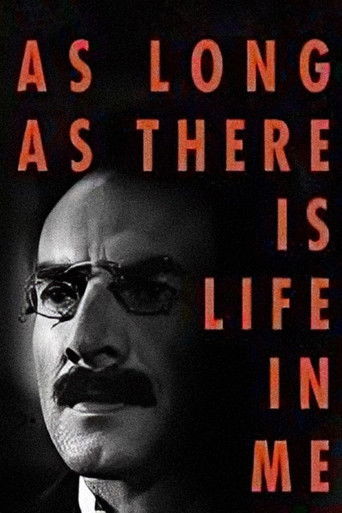
10.0This is part one of a two-part biopic about Karl Liebknecht. In 1914, Germany is arming itself for war. Karl Liebknecht, left-wing revolutionary Social Democrat, workers’ leader and a virulent antimilitarist, is one among 110 SPD members of Parliament who vote against approving war loans. From then on, he is considered un-German and a traitor to the fatherland, and his own party’s leadership turns against him. Despite threats, Liebknecht speaks up against the war and writes the manifesto “The Main Enemy Is at Home.” Even when he is arrested and charged with treason, he does not surrender.
As Long as There’s Life in Me
1965
 NR
NRThe artists Käthe Kollwitz, Otto Dix and Otto Nagel used different forms of expression, but had the same goal: fight against war, against exploitation and for the liberation of oppressed people.
Kämpfende Kunst
1959
 6.1
6.1The titular Marie-Louise is a young French lass who is evacuated to Switzerland when her country is overrun by the Nazis. Suffering a nervous breakdown, she is given comfort and shelter by a wealthy family. Unfortunately, living in the lap of luxury makes Marie-Louise hesitant to return home to her mother and war torn home. Eventually the girl comes to her senses, but it isn't easy.
Marie-Louise
1944
Film credits
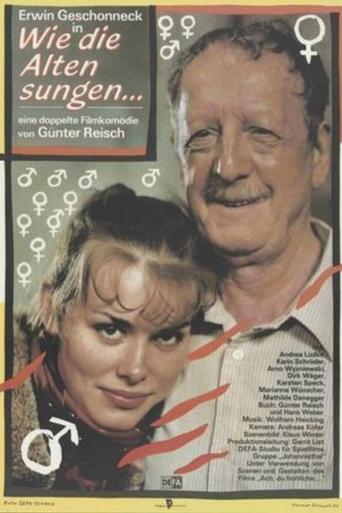
1970s · 3 titles
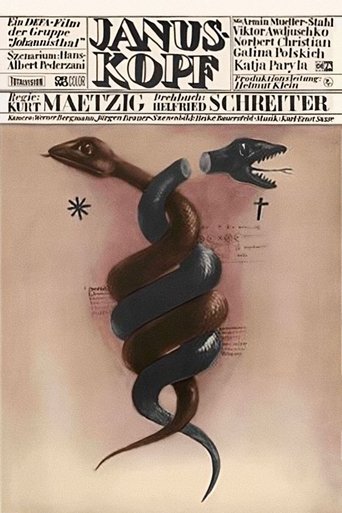 9.0
9.0World-famous geneticist Professor Hülsenbeck is a man of integrity who refuses to mix science and political gain. When his findings are being used to harm humanity, he immigrates to the USA in 1933 in protest against Nazi racial politics.
Janus Head
1972
A working-class son who became orphaned in the war is brought up by his foster father to become an upright citizen. Now, after graduating from a teacher training college, he is faced with the task of preparing young people for life.
Folge einem Stern
1970
In the spring of 1969, a young man from a small town arrives at the partner company in Berlin, where he falls in love with red-haired Rita. A love story about "everyday heroes," in which director Egon Günther continues his idiosyncratic formal experiments with actress Jutta Hoffmann, which he began in "Junge Frau von 1914" (Young Woman of 1914).
Anlauf
1971
1960s · 16 titles
10.0This is part one of a two-part biopic about Karl Liebknecht. In 1914, Germany is arming itself for war. Karl Liebknecht, left-wing revolutionary Social Democrat, workers’ leader and a virulent antimilitarist, is one among 110 SPD members of Parliament who vote against approving war loans. From then on, he is considered un-German and a traitor to the fatherland, and his own party’s leadership turns against him. Despite threats, Liebknecht speaks up against the war and writes the manifesto “The Main Enemy Is at Home.” Even when he is arrested and charged with treason, he does not surrender.
As Long as There’s Life in Me
1965
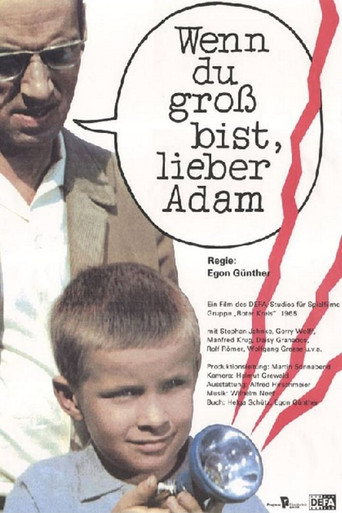 5.3
5.3Adam receives a flashlight with special powers: every liar it shines on flies into the air. Production was cancelled in 1965/66 due to the film's political content. Only in 1989/90 could the director reconstruct the film, where missing sounds and images are replaced with script inserts.
When You’re Grown Up, Dear Adam
1966
No synopsis available yet.
Professor Mamlock
1960
 5.8
5.8Kasper Mai, an export merchant and comrade with a “clean” record, discovers he is the prince of Hohenlohe-Liebenstein. His royal grandmother designates him as the heir to her estate. A private trip to her reveals that she does not want a NATO airbase built on her land. The GDR and his grandmother thus find a common interest, and a clever lawyer from the East works against other family members looking to settle their debts with the estate money.
Seine Hoheit – Genosse Prinz
1969
 6.3
6.3The communist and resistance fighter Lorenz Reger, who after the war put all his efforts in the creation of a socialist German state, learns that he has only a short time left to live. Nevertheless, he wants to take on one last difficult new task: He wants to restructure a large firm which has run deep into the red numbers. In a short amount of time, Reger manages to establish mutual trust between the employees and the new management. Furthermore, he motivates the employees with his personal interest for their concerns.
Time to Live
1969
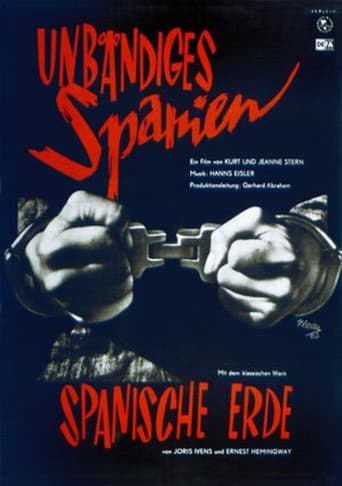 NR
NRDocumentary film about the Spanish Civil War.
Unbändiges Spanien
1962
 7.0
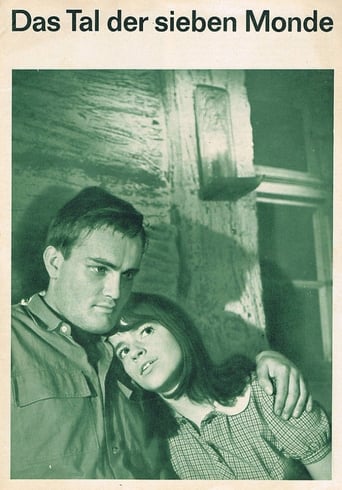
7.0Based on the novel of the same name by Harry Turk. 1944. In occupied Poland, a railway line is being built to transport lead ore to Germany. The Valley of Seven Moons is restless, with construction materials disappearing and people vanishing. The occupiers feel uneasy on foreign soil. Despite increased security, partisans carry out one act of sabotage after another, hindering construction in every way possible. The German Rudek and the Jewish girl Martina, who at first stand aside from any struggle, join the partisan detachment.
Das Tal der sieben Monde
1967
 5.8
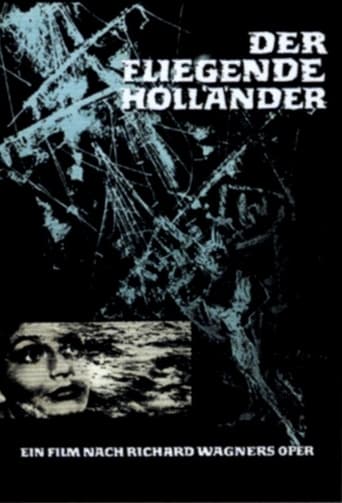
5.8In order to escape her narrow and restrictive life, Senta, the daughter of a rich shipowner, seeks refuge in her fantasies and dreams. In this realm of imagination, a bold and restless sea captain appears to her—the Flying Dutchman—who is cursed to wander the seas forever. In her obsessive dreams, Senta frees this man through her love for him.
The Flying Dutchman
1964
 5.7
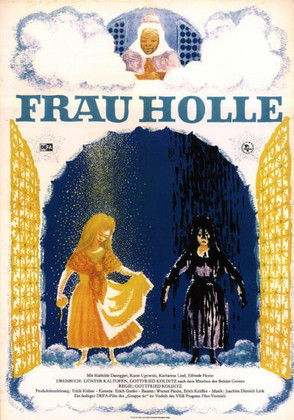
5.7Once upon a time, there was a diligent girl who found her way to Mother Hulda in the heavens. There, she faithfully carried out all manner of chores: she took the bread from the oven, shook the apples from the tree, and when she made Mother Hulda's bed, snow fell upon the earth. As a reward for her faithful service, she was showered with pure gold and henceforth known as "Goldmarie." Her lazy and envious sister then followed her to Mother Hulda, hoping for the same reward. But because she neglected all her duties and was sulky and idle, pitch rained down upon her instead. And from that day on, everyone could see: she was truly "Pitchmarie."
Mother Hulda
1963
 6.8
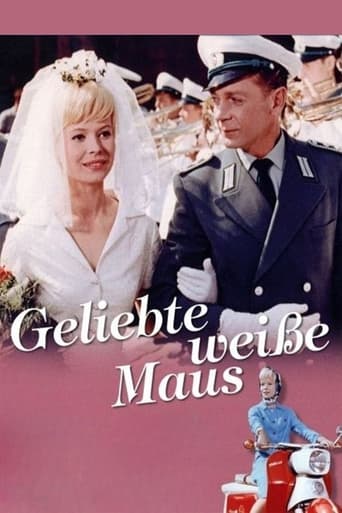
6.8„White mouse“ Fritz controls the traffic on Dresden’s Körner Square. Helene, who crosses the junction on her motor scooter every day, has taken a shine to Fritz a long while ago. Although Fritz yields right-of-way to her remarkably often, the two have not spoken to each other. In order to finally get to know him better, Helene deliberately performs a traffic violation. Her plan is working: She is ordered to take road safety education lessons from Fritz and they get closer. New problems arise in the shape of Mrs. Messmer who must pay a monetary fine. She feels discriminated against by Fritz and complains about him to his supervisor.
The Small White Mouse
1964
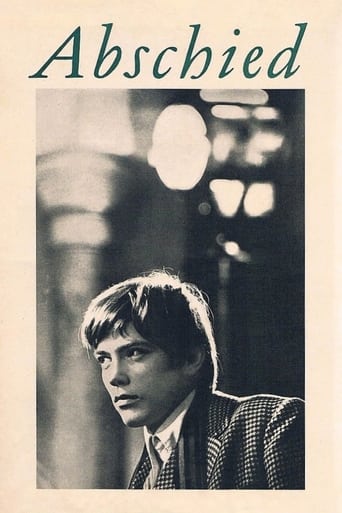 6.6
6.6In August of 1914, amidst the public ecstasy surrounding the impending war, Hans Gastl, the young son of a Munich bürger, makes a decision: he will not take part in this war. This resolution signifies a turning point in his life; a farewell to his class and his family.
Farewell
1968
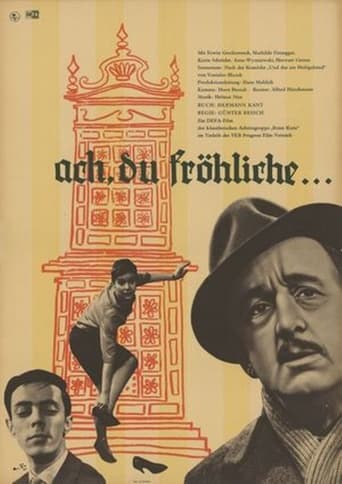 5.5
5.5It was supposed to be a cozy Christmas evening with the family. Labor Director Walter Lörke was particularly looking forward to it. But then his daughter Anne surprised him with her future son-in-law Thomas Ostermann. And that's not all: Lörke is to become a grandfather. This doesn't suit him at all, especially as the young man clearly shows his critical attitude towards the state whose ideals Lörke has fought for all his life. An argument ensues - on Christmas Eve. Lörke leaves the apartment in a rage. But he is driven by unrest: He wants to know what kind of person his future son-in-law is and why he has such a negative attitude towards the state. It turns out that Thomas has had bitter experiences with the opportunistic attitudes of many adults and that, although he was the best student in his class, he was not admitted to university because of his critical opinions.
Ach, du fröhliche
1962
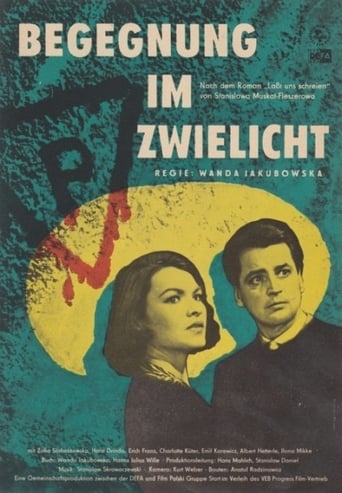 8.0
8.0A pianist from Poland visits a town in West Germany and starts to remember details about her life during the war.
Meetings In The Dark
1960
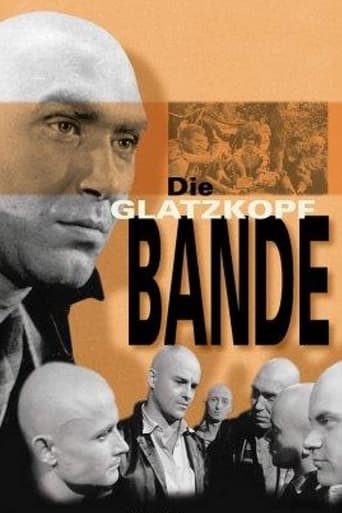 6.2
6.2August 1961. The former Foreign Legionnaire, King, has collected a gang of hooligans, with whom he creates mischief in the GDR. After some careless work on a construction site, an event during which two people lose their lives, they move to a campsite on the Baltic Sea. With sputtering mopeds, loud radios, and occasional outbursts, the gang makes the vacationers' lives living hell. Unfortunately for them, Lieutenant Czernik discovers the connection between them and the accident at the construction site. To stop them from fleeing to West Berlin, Lieutenant Czernik and the police need to arrest them, one at a time, with King as the last.
The Baldheaded Gang
1963
 5.6
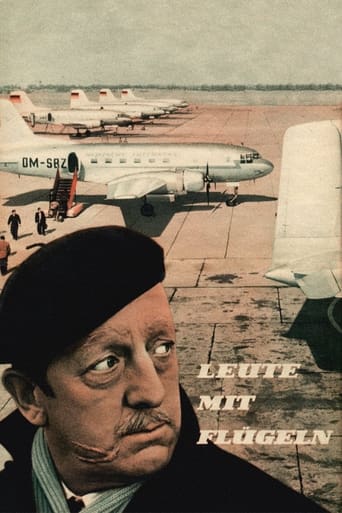
5.6This film continues the story of radio operator Ludwig Bartuschek from “The Sailor’s Song”. Near the end of the Weimar Republic, Bartuschek (Erwin Geschonneck) is working as a mechanic in the Sperber airplane plant. Director Dehringer offers him the opportunity to train as an airplane constructor if he is willing to give up his communist beliefs under oath. Bartuschek will not allow himself to be bought and instead joins the underground resistance movement.
People with Wings
1960
 6.5
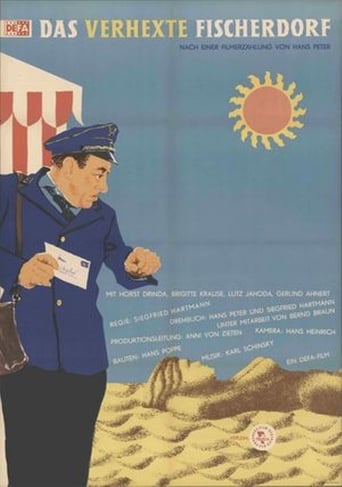
6.5Mauritius Halbermann, nicknamed "Mauts", works as an advertising manager for Gravo-Druck, a state-owned print company. Mauts, a man obsessed with his work, incessantly percolates with marvelous ideas - and now that he has once again come up with another brilliant idea, he naturally wants to present his proposal to his boss. As it happens, his supervisor along with his entire family and some of Mauts's colleagues - including Lore who Mauts secretly fancies - have gone on a holiday trip.
Das verhexte Fischerdorf
1962
1950s · 4 titles
NRThe artists Käthe Kollwitz, Otto Dix and Otto Nagel used different forms of expression, but had the same goal: fight against war, against exploitation and for the liberation of oppressed people.
Kämpfende Kunst
1959
 8.0
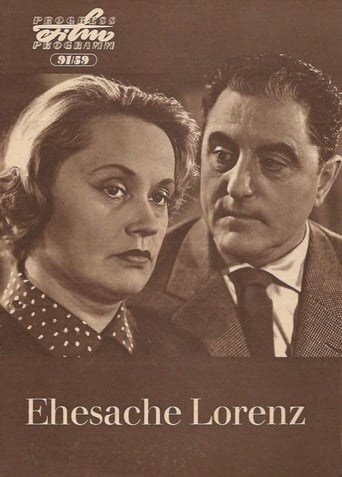
8.0Trude and Willi Lorenz have had an exemplary marriage for 24 years. Their daughter Gitta takes them as a role model for herself and her fiancé Peter. But appearances are deceptive. Willi cheats on his wife with the young secretary Helga. He is a department manager in a heavy engineering company and travels a lot on business. Trude also has a busy working day as a divorce judge. Obviously, family life has been neglected as a result, and now Trude herself is facing a problem that is very familiar to her from her job. An alderwoman has drawn her attention to her husband's infidelity, and a visit from Helga, who demands that she give up her husband, forces her to make a decision. Willi Lorenz has cheated on both women. In a discussion, he finally confesses to Trude and their life together. The fact that it doesn't come to the "Lorenz divorce case" is also thanks to the sincere, compassionate driver Schliffke, who tactfully opens the eyes of his boss Lorenz and the young Helga.
Ehesache Lorenz
1959
 NR
NRA historical GDR review of the events of the November Revolution in Germany in 1918.
Uns mahnt ein November
1958
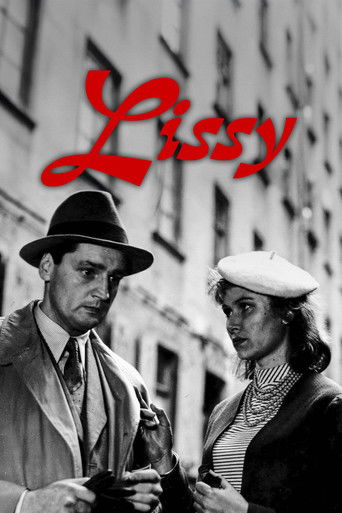 6.7
6.7In 1930s Berlin, a woman’s life unravels as her unemployed husband succumbs to Nazi propaganda and joins the Storm Troopers, while her brother's anti-Nazi stance leads to his death, prompting her to confront her beliefs and make a risky choice.
Lissy
1957
1940s · 6 titles
6.1The titular Marie-Louise is a young French lass who is evacuated to Switzerland when her country is overrun by the Nazis. Suffering a nervous breakdown, she is given comfort and shelter by a wealthy family. Unfortunately, living in the lap of luxury makes Marie-Louise hesitant to return home to her mother and war torn home. Eventually the girl comes to her senses, but it isn't easy.
Marie-Louise
1944
 10.0
10.0The story takes place in Mythikon, a small village on Lake Zurich in the 17th century. The pastor of a rural Zurich community is so obsessed with hunting that his passion threatens to cost him his office and dignity. Now, help is sought from the famous general and cousin of the pastor, who is supposed to set things right with a clever plan.
Der Schuss von der Kanzel
1942
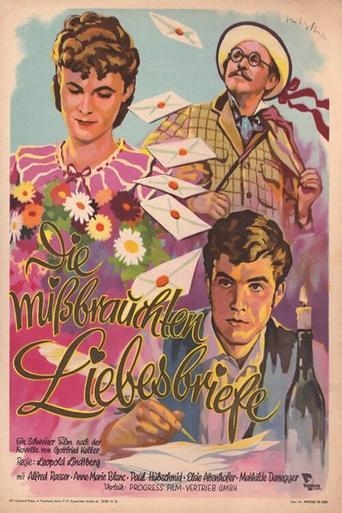 7.0
7.0While on a longer business trip, a wannabe poet urges his beautiful but more simple wife to answer his overly swollen love letters. With no idea how to respond she forwards the letters to a new young school teacher to use his answers instead...
The Abused Love Letters
1940
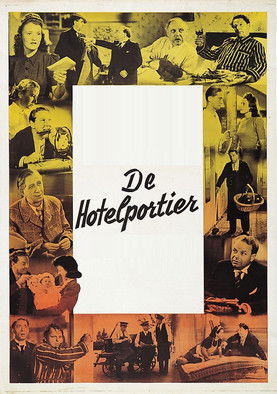 NR
NRA wealthy man buys a hotel that is not very profitable. To check that everything is in order, he gets himself hired as a hotel porter without revealing his identity.
De Hotelportier
1941
The film tells the story of Verena Stadler, a young woman who lives in a small Swiss village. Her mother, Katharina Waser-Stadler, is a strong and independent woman who supports Verena in her development. Verena falls in love with Wilhelm Waser, a man from her community, which leads to conflicts and challenges that they must overcome together.
Verena Stadler
1940
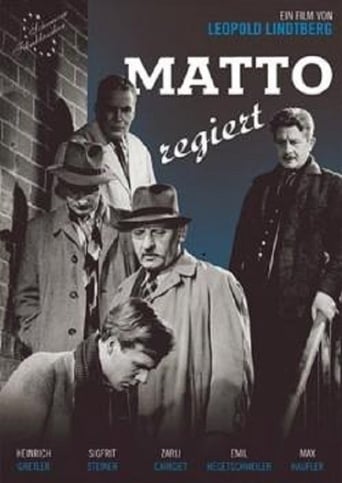 6.2
6.2If any one man is responsible for the rejuvenation of the postwar Swiss film industry, that man was director Leopold Lindtberg. Matto Regiert (Madness Rules) was co-adapted for the screen by Lindtberg from a novel by Friedrich Glauser. Heinrich Gretler stars as Police Constable Studer, the hero of several of Glauser's most popular works. This time, Studer must solve the murder of the director of an insane asylum -- and it's not (surprise, surprise) the most likely suspect, manic-depressive patient Herbert Caplaun. For box-office purposes, Matto Regiert stresses a romantic subplot involving Caplaun and nurse Irma Wasem.
Madness Rules
1947
1930s · 3 titles
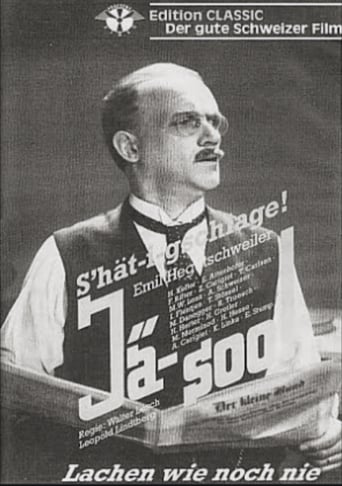 10.0
10.0Provincial shop owner Jakob Stäubli and his wife Frieda are looking forward to celebrating Christmas together with their daughter Nelly. But Nelly doesn't come. She prefers to celebrate in the city in the company of her new boyfriend André, a "better gentleman." The saddened Stäublis decide to sell their shop and move to Zurich as well. As they explore the city together after the move, the two country bumpkins find themselves in all sorts of turbulent situations. Father Stäubli is also exposed to erotic temptations when his daughter's lover sends a woman after him to get money out of him.
Jä-soo!
1935
The story revolves around the confusion that arises when a supposed gold discovery in Valais divides the village community. The plot combines elements of a cultural film about old customs in the Lötschental valley with a naive storyline that achieves a strangely powerful effect through its simple realism.
Wie d'Warret würkt
1933
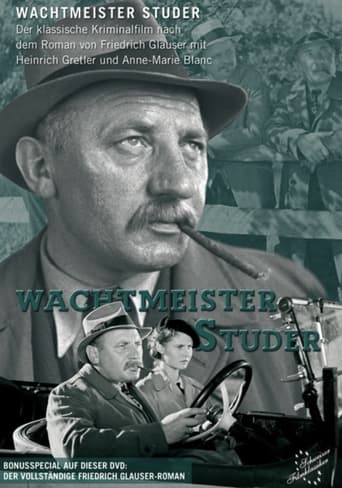 7.0
7.0A policeman is not convinced that the prime suspect in a murder case is realty guilty and so decides to reinvestigate the case, despite the lack of co-operation from locals.
Sergeant Studer
1939
1920s · 2 titles
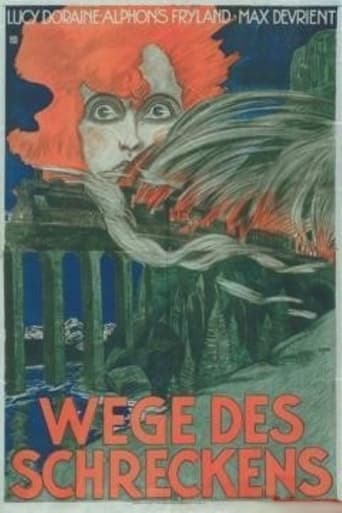 5.2
5.2A young poor girl falls in love with a rich heir.
Labyrinth of Horror
1921
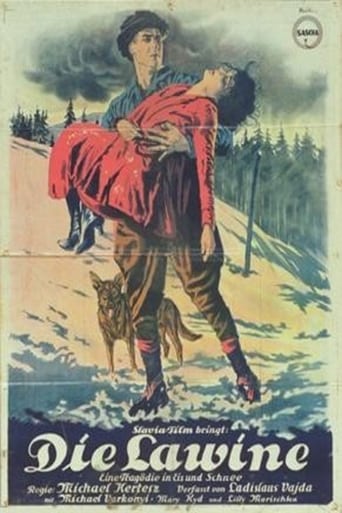 6.1
6.1At the urging of his dying aunt, a young man of limited means forgoes marriage into comfortable society. He becomes husband to an unwed mother and father to a child. Their meager existence is threatened, however, when the woman he left at the altar reenters his life.
Avalanche
1923
Series credits
6.2Polizeiruf 110 is a long-running German language detective television series. The first episode was broadcast 27 June 1971 in the German Democratic Republic, and after the dissolution of Fernsehen der DDR the series was picked up by ARD. It was originally created as a counterpart to the West German series Tatort, and quickly became a public favorite.
Polizeiruf 110
1971
6.2Polizeiruf 110 is a long-running German language detective television series. The first episode was broadcast 27 June 1971 in the German Democratic Republic, and after the dissolution of Fernsehen der DDR the series was picked up by ARD. It was originally created as a counterpart to the West German series Tatort, and quickly became a public favorite.
Polizeiruf 110
1971
6.2Polizeiruf 110 is a long-running German language detective television series. The first episode was broadcast 27 June 1971 in the German Democratic Republic, and after the dissolution of Fernsehen der DDR the series was picked up by ARD. It was originally created as a counterpart to the West German series Tatort, and quickly became a public favorite.
Polizeiruf 110
1971
3.8Der Staatsanwalt hat das Wort was an East German television series.
Der Staatsanwalt hat das Wort
1965
7.0No synopsis available yet.
Hans Beimler, Kamerad
1969