

Acting
Ossi Oswalda
Born — Died
1897-01-31 — 1947-03-07
Place of birth
Berlin, Germany
Known for
Acting
Credits
44 titles
Ossi Oswalda (born Oswalda Amalie Anna Stäglich, 2 February 1897 – 7 March 1947) was a German actress, who mostly appeared in silent films. She was given the nickname 'The German Mary Pickford' due to her popularity at the time. Oswalda trained as a ballerina and became a dancer for a theater in Berlin. She made her film debut in Richard Oswald's Nächte des Grauens (Night of Horrors) before being discovered by the actor and screenwriter Hanns Kräly, who in turn recommended her to director Ernst Lubitsch. During her early career, she starred in several films by Lubitsch, including The Merry Jail, I Don't Want to Be a Man, The Oyster Princess and The Doll. Her popularity at the time earned h…
Known for
 6.8
6.8A pampered American oyster tycoon decides to buy a husband for his daughter, but things don’t go quite as planned. Along the way there are mishaps, misunderstandings and a foxtrot sequence that must be seen to be believed.
The Oyster Princess
1919
 6.4
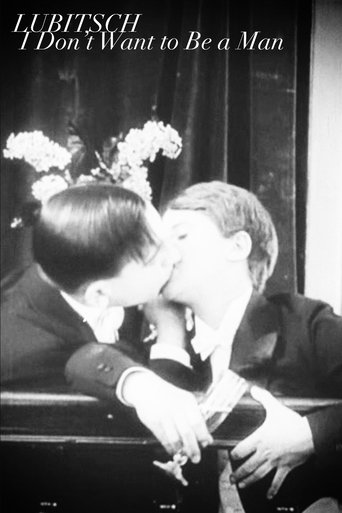
6.4A teenage tomboy, tired of being bossed around by her strict guardian, impersonates a man so she can have more fun. She quickly discovers that being the opposite sex isn’t as easy as she had hoped for. What ensues is a gender-bending comedy decades ahead of its time.
I Don't Want to Be a Man
1918
Es zogen drei Burschen (1928) is a German silent comedy film directed by Carl Wilhelm. Also known by its alternative German title Drei Seelen und ein Gedanke, the movie is a lighthearted farce famously featuring an early-career performance by the legendary actor Hans Albers.
Es zogen drei Burschen
1928
 8.0
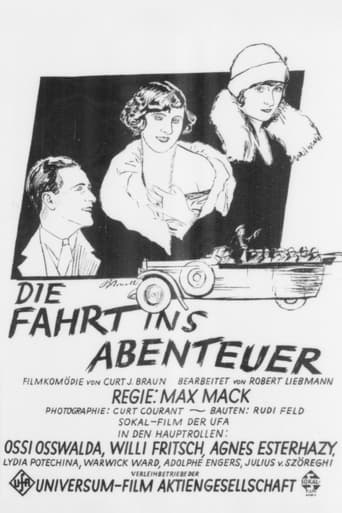
8.0No synopsis available yet.
Die Fahrt ins Abenteuer
1926
 9.0
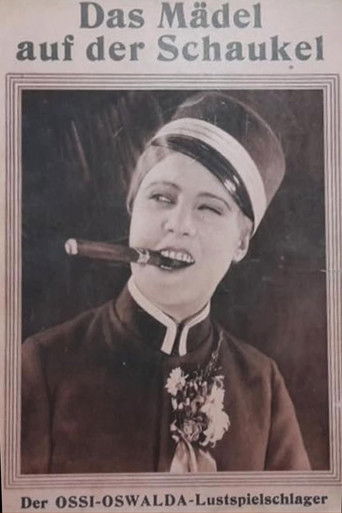
9.0The Girl on a Swing is a 1926 German silent film directed by Felix Basch and starring Ossi Oswalda, Harry Liedtke, and Lotte Lorring.
The Girl on a Swing
1927
The Girl with a Patron (German: Das Mädchen mit der Protektion) is a 1925 German silent comedy film directed by Max Mack and starring Ossi Oswalda, Willy Fritsch, and Nora Gregor. It was one of a number of popular comedies released by UFA during the era alongside its more prestigious art films.
The Girl with a Patron
1925
Film credits
1990s · 1 titles
1930s · 2 titles

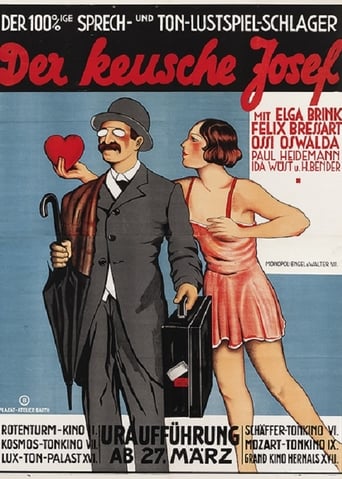
1920s · 24 titles
Es zogen drei Burschen (1928) is a German silent comedy film directed by Carl Wilhelm. Also known by its alternative German title Drei Seelen und ein Gedanke, the movie is a lighthearted farce famously featuring an early-career performance by the legendary actor Hans Albers.
Es zogen drei Burschen
1928
8.0No synopsis available yet.
Die Fahrt ins Abenteuer
1926
9.0The Girl on a Swing is a 1926 German silent film directed by Felix Basch and starring Ossi Oswalda, Harry Liedtke, and Lotte Lorring.
The Girl on a Swing
1927
The Girl with a Patron (German: Das Mädchen mit der Protektion) is a 1925 German silent comedy film directed by Max Mack and starring Ossi Oswalda, Willy Fritsch, and Nora Gregor. It was one of a number of popular comedies released by UFA during the era alongside its more prestigious art films.
The Girl with a Patron
1925
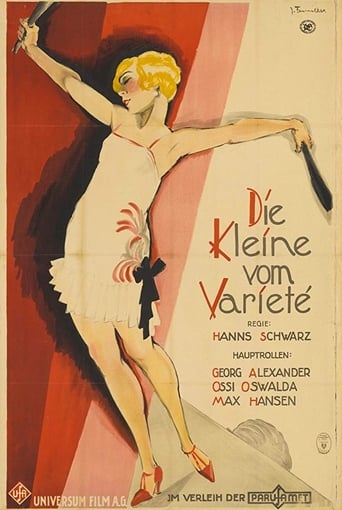 7.0
7.0Peter Verdy falls in love with Lola (Ossi Oswalda) who is mistaken for a boy when she appears in stage regalia before a rich uncle who has other marriage plans for his nephew. The tangle ensuing is finally sorted out with excellent results all round.
Die Kleine vom Varieté
1926
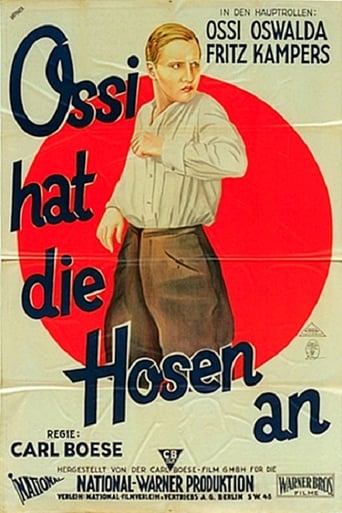 8.0
8.0A girl posing as a knight's male valet is vamped by his fiancée
Sir or Madame
1928
No synopsis available yet.
Die vierte von rechts
1929
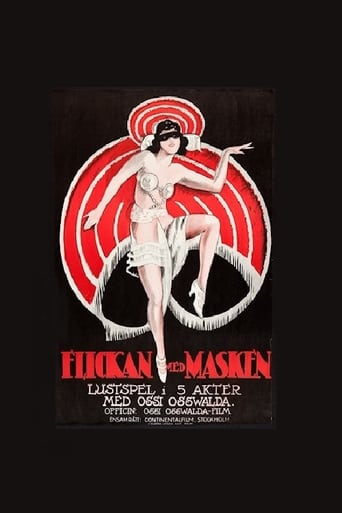 7.0
7.0No synopsis available yet.
Das Mädel mit der Maske
1922
Silent romantic comedy set on a train.
Express Train of Love
1925
No synopsis available yet.
Ein Weihnachtsfilm für Große
1924
 8.0
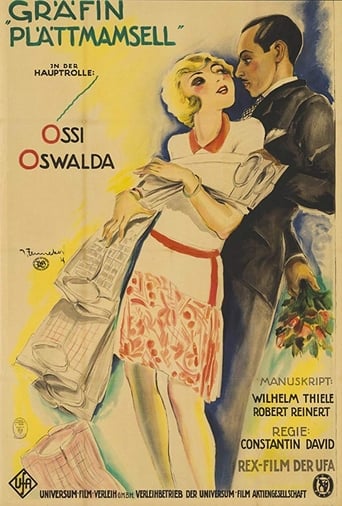
8.0The fun-loving laundress Mieze spends a romantic evening with the womanizer and fashion designer Max, who, however, wants nothing to do with her the next day. This only changes when Mieze appears to be the daughter of a count and "Countess Radebeul" moves into the elegant Hotel Bristol. After all sorts of complications and embarrassments, the countess turns out to be a misunderstanding, and Mieze and Max find each other after all.
Gräfin Plättmamsell
1926
No synopsis available yet.
Der Dieb im Schlafcoupée
1929
 7.0
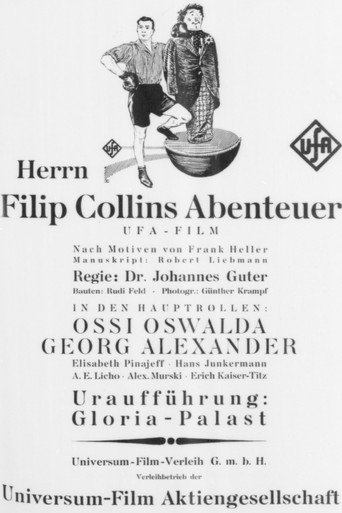
7.0No synopsis available yet.
Herrn Filip Collins Abenteuer
1926
A millionaire daughter is to be married to a man unknown to her. To get to know him, she slips into men's clothes, sticks on a mustache and is hired as a chauffeur.
Amor am Steuer
1921
 8.0
8.0No synopsis available yet.
A Crazy Night
1927
In the summer of 1920, the staff of the Rembrandt Theatre in Amsterdam went on strike, which was especially unfortunate for the management of the theatre, since they had invited the German film stars Ossi Oswalda, Marga Köhler, and Victor Janson to the Dutch premiere of their film Wohnungsnot (Ernst Lubitsch, 1920). For this special occasion, there were even two extra segments shot with Ossi Oswalda playing the lead role. In one of those films, we see how Oswalda, dressed in traditional Volendam costume, cheerfully makes contact with the local inhabitants. But not every Volendammer seems charmed by the advances of the German diva. Because of the strike, the film could only be screened one time in the presence of the three stars.
Amsterdam Artists from the Film 'Housing Shortage' on a Trip to Volendam
1920
 10.0
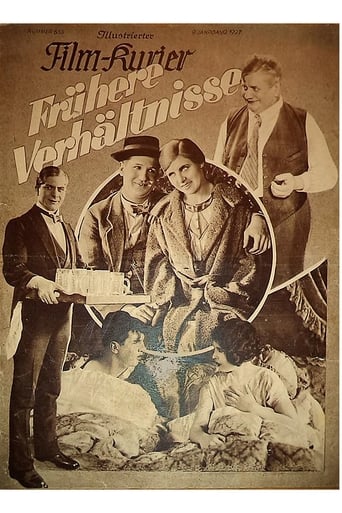
10.0No synopsis available yet.
Frühere Verhältnisse
1927
The plot of the lost film is divided into two acts. Ossi Oswalda and Victor Janson play two apartment seekers, while Marga Köhler is a landlady. The housing shortage is treated in sketch form and "in a joking manner [...] the real housing calamity", whereby "humorous aspects" are wrested from the "tragedy." Lubitsch and Kräly used a sketch in the film that they had written especially for Ossi Oswalda.
The Housing Shortage
1920
 10.0
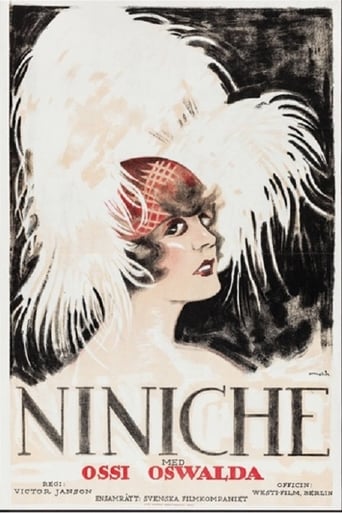
10.0No synopsis available yet.
Niniche
1925
Eddie Polo appears in this short showing his dexterity with a horse and lasso.
Eddy Polo mit Pferd und Lasso
1928
 10.0
10.0No synopsis available yet.
Colibri
1924
German silent film directed by Erich Schönfelder.
Kakadu und Kiebitz
1920
No synopsis available yet.
Schatz, mach' Kasse
1926
No synopsis available yet.
Hundemamachen
1920
1910s · 16 titles
6.8A pampered American oyster tycoon decides to buy a husband for his daughter, but things don’t go quite as planned. Along the way there are mishaps, misunderstandings and a foxtrot sequence that must be seen to be believed.
The Oyster Princess
1919
6.4A teenage tomboy, tired of being bossed around by her strict guardian, impersonates a man so she can have more fun. She quickly discovers that being the opposite sex isn’t as easy as she had hoped for. What ensues is a gender-bending comedy decades ahead of its time.
I Don't Want to Be a Man
1918
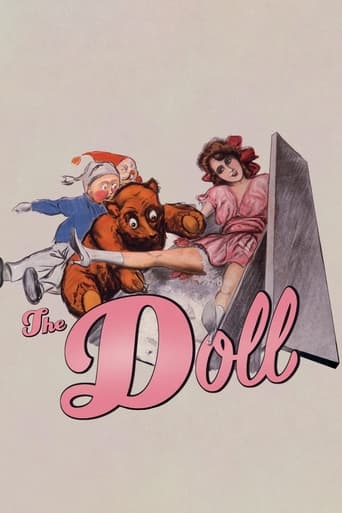 7.4
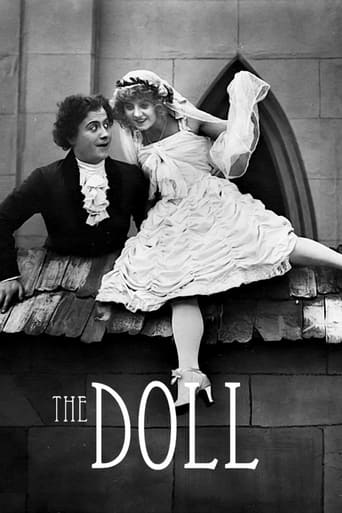
7.4The misadventures of an effete young man who must get married in order to inherit a fortune. He opts to purchase a remarkably lifelike doll and marry it instead, not realizing that the doll is actually the dollmaker’s flesh-and-blood daughter in disguise.
The Doll
1919
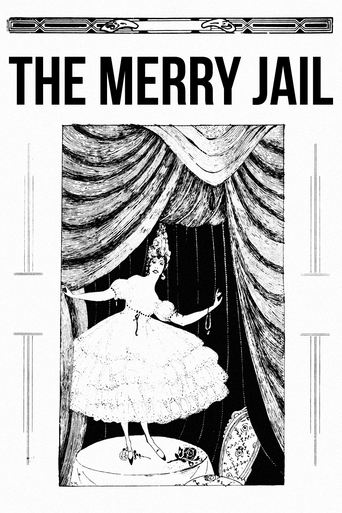 6.4
6.4A neglected wife disguises herself in order to lure her wastrel husband into a compromising position.
The Merry Jail
1917
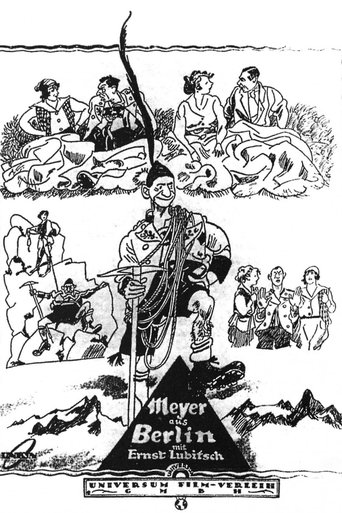 6.5
6.5Sally Meyer, a young Berliner, persuades his Doctor to convince his wife that he is ill, so that he is able to take a holiday in the Austrian Alps.
Meyer from Berlin
1919
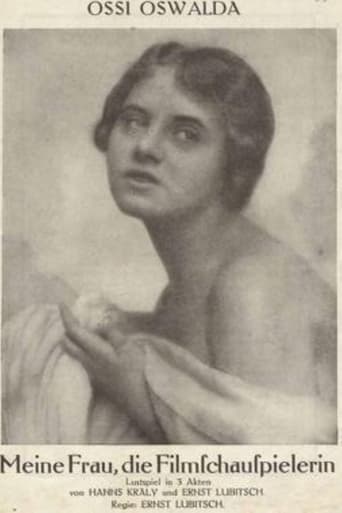 7.0
7.0While making a movie in the Alps, the female star falls in love with a nobleman.
My Wife, the Movie Star
1919
Directed by Ernst Lubitsch. Lubitsch plays a book shop employee who falls in love with Jannings' daughter.
When Four Do the Same
1917
The new artistic director Dr. Fersen is appointed at the princely court theater in Dillingen. He is not only attractive, but also a bachelor, which delights the local women. But even the men of the town suddenly show an affinity for the theater, as a new prima ballerina has been hired in the form of the dancer Ossi. Prince Adolf himself is delighted with Ossi and never misses one of her performances. The envious are not long in coming, especially the president of the Dillingen Women's Association is suspicious of the current events. This is hardly surprising, as an unwritten law in Dillingen states that the theater's prima ballerina must be married. This suits Ossi and Dr. Fersen, as the two have been seeing each other in secret for some time. The marriage is quickly arranged. The only downer for the couple is that the Dillinger's interest in art has suddenly disappeared. Lost.
The Ballet Girl
1918
 5.7
5.7Sally Pinkus is an German-Jewish boy who takes a job as a shoe store clerk after being expelled from school for goofing around. Soon fired for trying to court the owner's daughter, Pinkus lands another job in a more 'upmarket' shoe salon, only to be fired again, before charming a rich benefactress to fund his ultimate dream: Pinkus' Shoe Palace.
Pinkus's Shoe Palace
1916
 NR
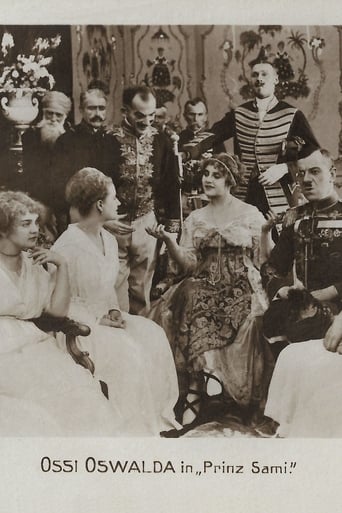
NRPrince Sami comes from Nigeria and is an uncivilized "nature boy." He is sent to the highly civilized court of Duchess Maria of Arragon, where he initially causes chaos. In the end, however, he becomes the duchess's husband.
Prinz Sami
1918
Sally comes from a small town to Berlin, where he begins an apprenticeship with his uncle. He helps his uncle with the bread production and dreams of becoming a famous tenor. One day he is discovered. A group of wealthy gentlemen form a limited company and finance Sally's singing lessons. The day comes when Sally is finally allowed to sing Lohengrin in the opera. His success is prevented by his greatest rival and envy, who sprinkles itching powder on his costume shortly before the performance. Sally returns to his uncle's company, where he finds solace with his cousin.
The Tenor, Inc.
1916
An extremely jealous artist slips into a monkey costume and kills all those men who come too close to his wife, another artist.
A Night of Horror
1917
 9.0
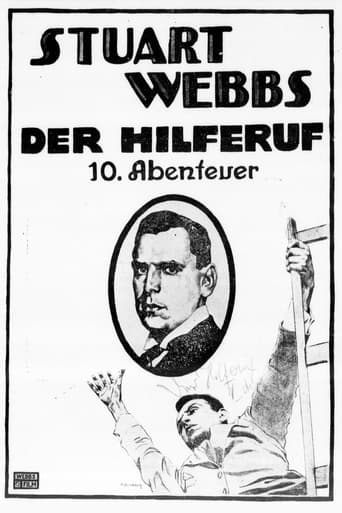
9.0No synopsis available yet.
Der Hilferuf
1916
The Swabian journeyman watchmaker Christoph Bühler is in love with Lorle, the daughter of his boss. One day, the factory owner Ferdinand Hausegger woos Bühler away, whereupon the young man seems to forget the Swabian girl. Only after four years does he propose to her, but the marriage is not under a good star. While Christoph, who has long since moved away from the Swabian province with his wife, makes a career for himself, he neglects his Lorle more and more and soon seems ashamed of her simple origins. Feeling unloved and misunderstood, Lorle finally leaves him and returns to her familiar home in the Black Forest. Only now does Christoph realize what he has in his wife. He is transferred and becomes the manager of a Hausegger branch in the Black Forest. Now nothing stands in the way of reconciliation.
The Swabian Maiden
1919
 NR
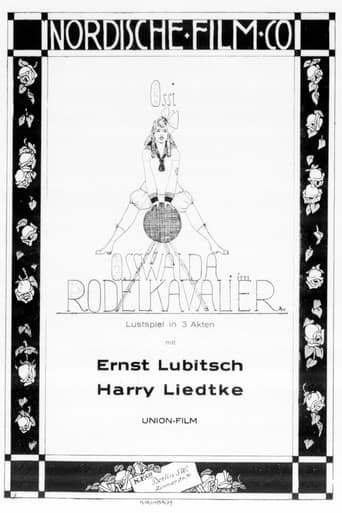
NRA young woman is forced by her father to marry a man she doesn't love and flees before the marriage takes place. In a small village she falls in love with a young man, but her father disapproves of the match.
The Toboggan Cavalier
1918
 NR
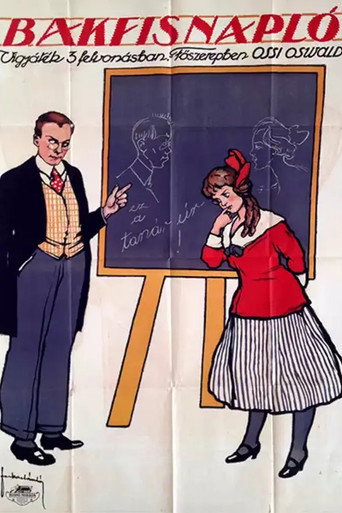
NRDirected by Ernst Lubitsch.
Ossis Tagebuch
1917