
Writing
William Smock
Known for
Writing
Credits
3 titles
Known for
 10.0
« How much wood would a woodchuck chuck if a woodchuck could chuck wood ? » A tongue twister is a sentence with much alliterations and is complicated to pronounce. A tongue twister must be spoken quickly and repeated a few times. Langage breaks down between and meaning. This film is a linguistic game between sound and meaning and a portrait of the linguistic reality of Berkeley. Many American people recite tongue twisters in diffrent languages and/or in English as second language : German, Englsih, Arabic, Armenian, Assyrian, Mandarin, Korean, Croatian, Spanish, French, Hebrew, Japonese, Farsi, Portuguese, Tagalog, Vietnamese.
Tongue Twisters
2011
 9.0
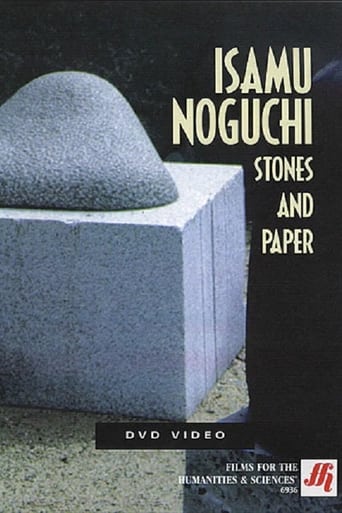
Isamu Noguchi was a sculptor, designer, architect, and craftsman. Throughout his life he struggled to see, alter, and recreate his natural surroundings. His gardens and fountains were transformations meant to bring out the beauty their locations had always possessed.
Isamu Noguchi: Stones and Paper
1997
 7.0
This documentary, narrated by Academy Award winner Linda Hunt and directed by Jed Riffe, tells the story of how the discovery of a 9,000-year-old skeleton on the banks of the Columbia River near Kennewick, Washington, reignited the conflict between anthropologists and Native peoples over the control of human remains found on ancestral Indigenous lands.
Who Owns the Past?
2000
Film credits
Behind the camera
9.0Isamu Noguchi was a sculptor, designer, architect, and craftsman. Throughout his life he struggled to see, alter, and recreate his natural surroundings. His gardens and fountains were transformations meant to bring out the beauty their locations had always possessed.
Isamu Noguchi: Stones and Paper
1997
7.0This documentary, narrated by Academy Award winner Linda Hunt and directed by Jed Riffe, tells the story of how the discovery of a 9,000-year-old skeleton on the banks of the Columbia River near Kennewick, Washington, reignited the conflict between anthropologists and Native peoples over the control of human remains found on ancestral Indigenous lands.
Who Owns the Past?
2000