Acting
Chang Hoon
Born
1919-01-01 (107)
Known for
Acting
Credits
39 titles
Known for
 6.2
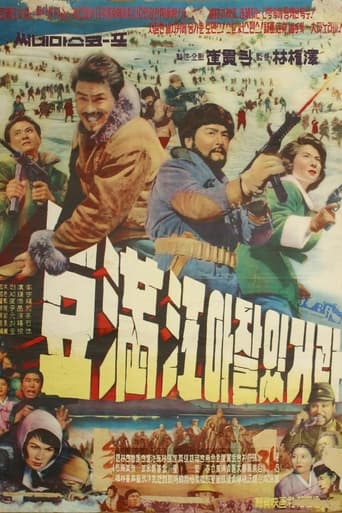
6.2Patriotic university student Youngwoo and his friends, led by their teacher Lee Sung, along with a British friend bid farewell to their families and become freedom fighters in Manchuria fighting against the Japanese occupation around the Tumen River.
Farewell to the Duman River
1962
 7.3
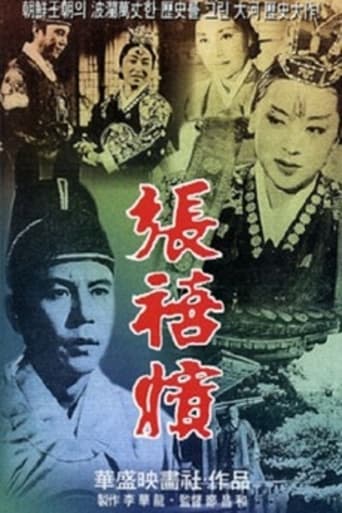
7.3King Sukjong exalts a greedy concubine to the status of Bin, which is next to that of the Queen. The new Bin, who is now called Jang Hui-bin, drives out the Queen through a coup and takes her place. But thanks to loyal court officials, the King finds out what has been going on. He demotes Jang to Bin again and reinstates his Queen. Jang, now vindictive, conspires with her mother to kill the queen and reclaim her place. But the conspiracy is brought to light, and Jang is executed.
Lady Jang
1961
 9.5
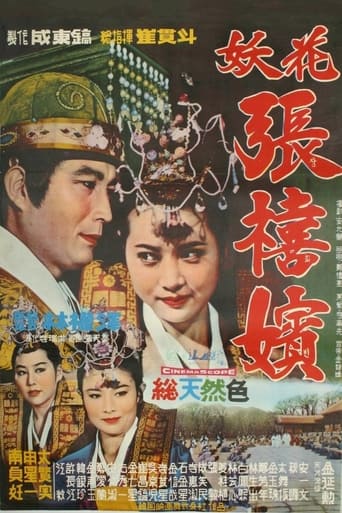
9.5King Sukjong assigns Jang Ok-nan, a court lady, as a concubine overnight. Jang plots to drive the current Queen into exile.
Femme Fatale, Jang Hee Bin
1968
 7.0
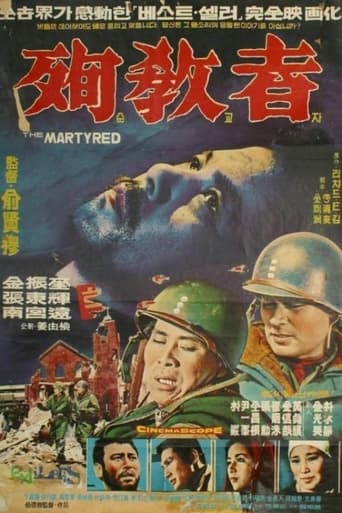
7.0Out of fourteen ministers taken away by the communist troop, only two come back alive. The mystery behind their survival is at the issue here. Told through one of the survivor's testimony, depicts images of men troubled between the war and the religion. Although laden with anti-Communist notions from the 60's military regime.
The Martyrs
1965
 8.6
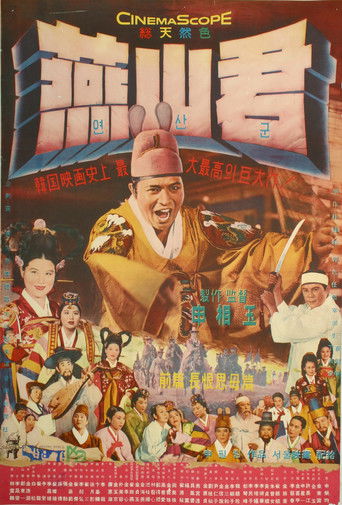
8.6A historical drama about Prince Yeon-san of Joseon as a prince trying to restore the status of his mother, the deposed and executed Queen Yun.
Prince Yeonsan
1961
 7.0
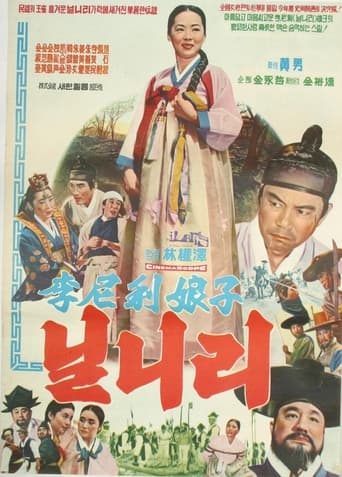
7.0No synopsis available yet.
Nilliri
1966
Film credits
1970s · 8 titles
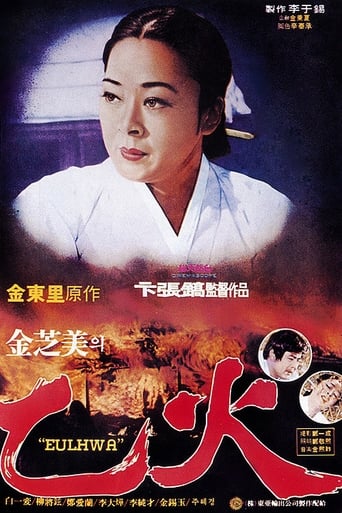 9.0
9.0Eul-hwa discovers that she has a talent for shamanism. She sends her son away to be raised by monks while she delves into shamanistic rituals and spells. Eventually she becomes a powerful shaman. However, with Christianity taking hold in Korea, Eul-hwa finds her way of life threatened and herself at odds with her religious son.
Eulhwa
1979
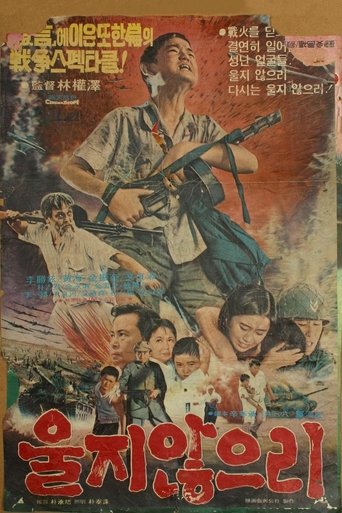 7.0
7.0No synopsis available yet.
I Won't Cry
1974
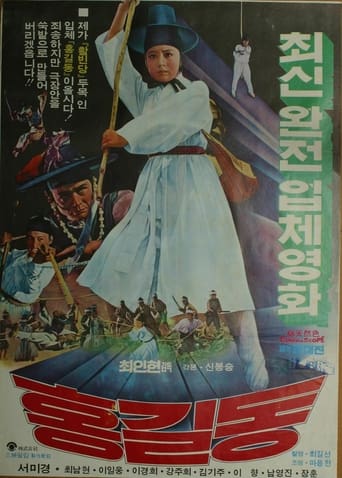 8.0
8.0No synopsis available yet.
Hong Kil-Dong
1976
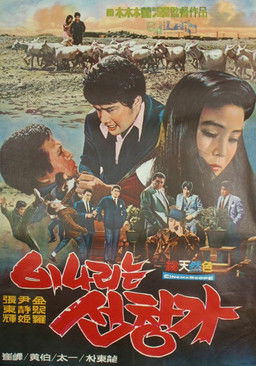 9.0
9.0In 1946, Tae-woong, a man nicknamed "The Bear" who dominated the streets of Busan with his fists, have returned after twenty years. Tae-woong is still haunted by his former love, Yeonsuk, and is confused when he meets Jung-hee, who looks exactly like Yeonsuk. Meanwhile, Dal-ji, a former subordinate of Tae-woong's, schemes to get rid of him.
Rain Outside the Porthole
1970
Young-Shik, a playboy, loves Ok-Ju, a business owner's daughter on purpose. One day he is bashed and taken to a mountain villa while he is taking a walk near a hotel. The villa's owner Jin-Ho was a vet doctor but now he leads a life with anatomizing animals after he is injured in his leg. One day a woman who wears wedding veil comes to Young-Shik and asks him to go back to his first love Mi-Ra. As the mysterious woman faces with Ok-Ju, she kills Ok-Ju. On his departure day, Young-Shik goes to Jin-Ho and hears from him the woman in veil is Mi-Ra who is troubled with her burnt scald of face and committed suicide letting him go. He trembles in sufferings.
Hwannyeo
1974
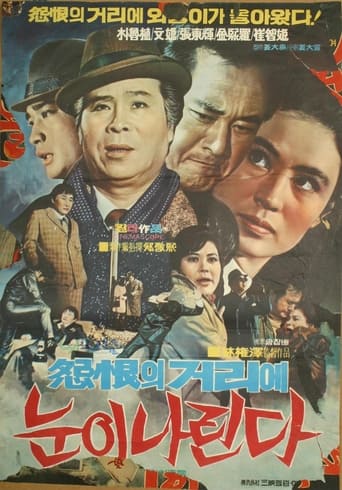 NR
NRNo synopsis available yet.
Snowing on Grudge Street
1971
No synopsis available yet.
No More Sorrow
1978
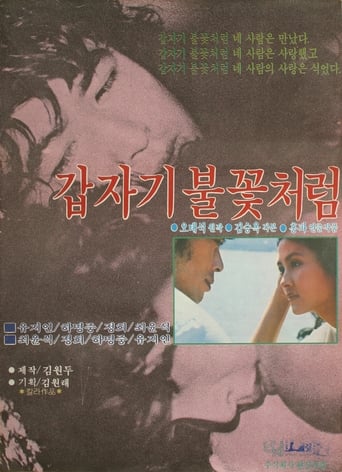 NR
NRDae Bin and Hyung Joo go on a TV date program and meet Na Yeong and Jung Ae, respectively. Hyung Joo loves Jung Ae but hesitates between the two women. Dae Bin goes for Jung Ae and Hyung Joo ends up at Na Yeong's apartment. After Dae Bin and Jung Ae's engagement Jung Ae finds Hyung Joo and spends the night in his room. They take a trip to Nami island resortand got in a boat accident which killed her and left Hyung Joo paralyzed. Later, Dae Bin marries Na Yeong but she doesn't trust his love. Finally, Hyung Joo regains consciousness to confess that he loved Jung Ae. Na Yeong returns to her husband.
Sudden Flame
1979
1960s · 26 titles
6.2Patriotic university student Youngwoo and his friends, led by their teacher Lee Sung, along with a British friend bid farewell to their families and become freedom fighters in Manchuria fighting against the Japanese occupation around the Tumen River.
Farewell to the Duman River
1962
7.3King Sukjong exalts a greedy concubine to the status of Bin, which is next to that of the Queen. The new Bin, who is now called Jang Hui-bin, drives out the Queen through a coup and takes her place. But thanks to loyal court officials, the King finds out what has been going on. He demotes Jang to Bin again and reinstates his Queen. Jang, now vindictive, conspires with her mother to kill the queen and reclaim her place. But the conspiracy is brought to light, and Jang is executed.
Lady Jang
1961
9.5King Sukjong assigns Jang Ok-nan, a court lady, as a concubine overnight. Jang plots to drive the current Queen into exile.
Femme Fatale, Jang Hee Bin
1968
7.0Out of fourteen ministers taken away by the communist troop, only two come back alive. The mystery behind their survival is at the issue here. Told through one of the survivor's testimony, depicts images of men troubled between the war and the religion. Although laden with anti-Communist notions from the 60's military regime.
The Martyrs
1965
8.6A historical drama about Prince Yeon-san of Joseon as a prince trying to restore the status of his mother, the deposed and executed Queen Yun.
Prince Yeonsan
1961
7.0No synopsis available yet.
Nilliri
1966
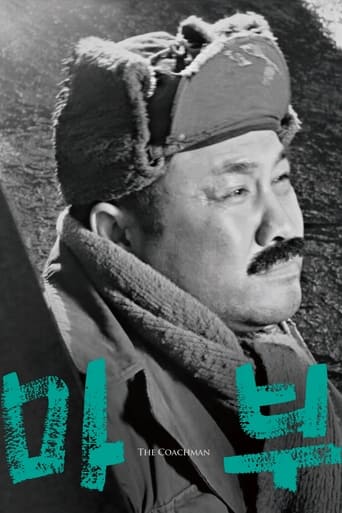 6.5
6.5A man tries to raise his two sons and two daughters under some of the most adverse conditions known to man. The father operates a horse-drawn cart, but in a city that is modernizing after the destruction of the Korean War, automobiles are making carts obsolete. The children are experiencing difficulties as well. The eldest son has flunked the bar exam twice and is not hopeful of passing it a third time to become a lawyer. The eldest daughter is mute and married to an abusive husband. The younger daughter tries to pose as a rich university student to move up in life. The youngest son has a penchant for petty theft.
The Coachman
1961
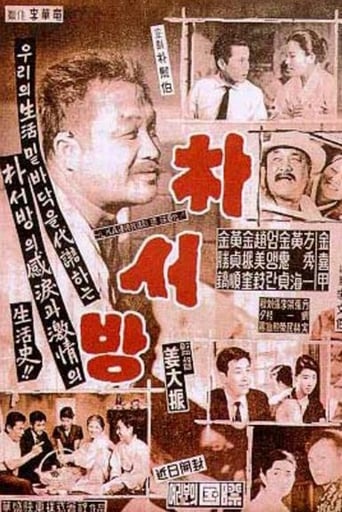 5.6
5.6Mr. Park raises his children by repairing charcoal pits. Although ignorant and stubborn, Mr. Park has a good heart. He is displeased, however, with his eldest daughter, Yong-sun (Jo Mi-ryeong), because of her close relationship with Jae-cheon (Hwang hae), who is a scamp in his eyes. He is also unsatisfied with his second daughter, Myeong-sun (Eom Aeng-ran), for liking Ju-sik (Bang Su-il). Only his eldest son, Yong-beom (Kim Jin-gyu), is the apple of his eye, as he approves of his son's wife, Jeom-rye (Kim Hye-jeong). When Yong-beom is sent to a foreign branch office, Mr. Park is against it at first but approves of it, as he knows what it means for his son's future. Eventually, too, he begins to approve of his two daughters' relationships.
Mr. Park
1960
 9.0
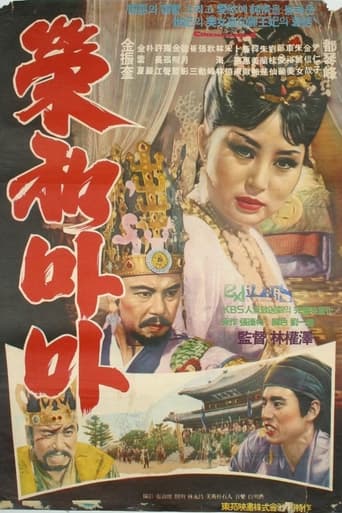
9.0At the close of the reign of Sin the Great in Goguryeo (B.C.37-A.D.668), royalist Uso is executed by a false incrimination made by a treacherous retainer Yangsin and his sister Jangssi. His daughter becomes a royal concubine of King Nammu, and called Her Majesty Yeonghwa. She revenges herself on the party of Yangsin. After the king passes away, she makes his brother Yeonu accede to the throne and has the whole country under her thumb. But she has no child. When the king begets a son from another woman, she dies of jealousy at last.
Her Majesty Yeonghwa
1964
 6.2
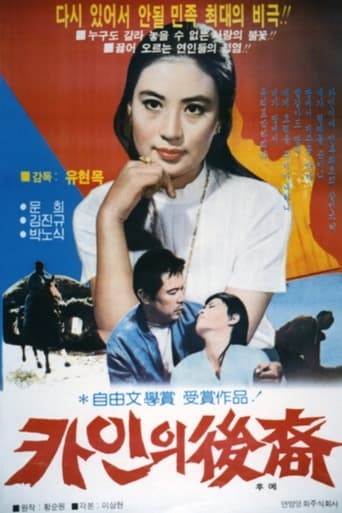
6.2Shortly after Korea gained independence from Japan (1945), North Koreans decide to extort civilians' property in the name of revolutionalizing its land and settle class struggles for proletariats. The film depicts an anti North-Korean concept, detailing the country's situation after the independence. South Korea's submission for the Academy Award for Best Foreign Language Film in 1968.
Descendants of Cain
1968
 NR
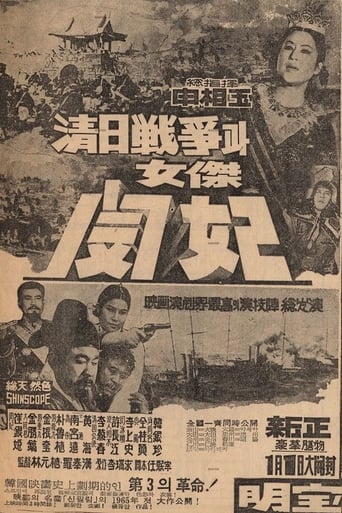
NRQueen Min makes regent Prince Daewon withdraw from ruling with the help of the Min Seung-ho Party.
The Sino-Japanese War and Queen Min the Heroine
1965
 5.5
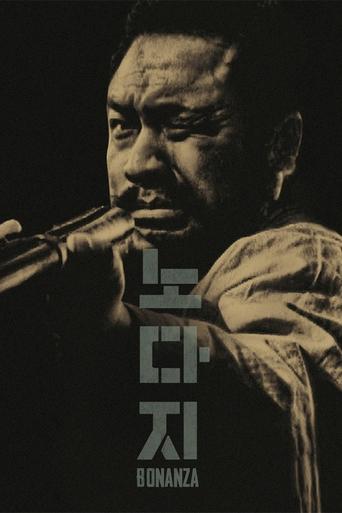
5.5A young sailor arrives in Busan Harbour; an outrageous-looking, woolly bear of a man appears in downtown Busan with a shotgun over one shoulder, a heavy knapsack thrown over the other; a tough-looking young woman joins her friend in robbing a naïve fat man in a suit. The strands of character and story will slowly converge, well after the audience, tuned to the coincidences and mistaken identities of melodrama, has recognised that these three have a shared history and are fated to meet and reconcile.
Bonanza
1961
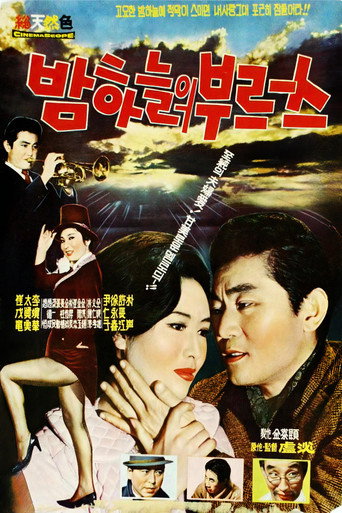 NR
NRSingers Han Sang-soo (Choi Moo-ryong) and Cha Yoo-mi (Lee Bin-hwa) are called "Wonang-sae duo" and enjoy the highest popularity. However, unlike Yumi, who loves Sang-soo deeply, Sang-soo considers her relationship with Yumi to be a friendship and marries her sister, Kyung-hee (Tae-reality), a pianist at the club. When Sang-soo marries Kyung-hee, Yumi, who is greatly hurt, leaves for France alone, and Sang-soo turns into a solo artist, but becomes a singer who travels to the countryside due to his lack of popularity and becomes a singer on stage.
Night Blues
1966
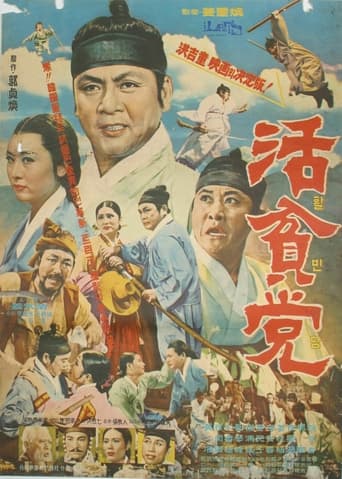 NR
NRNo synopsis available yet.
Hwalbindang
1965
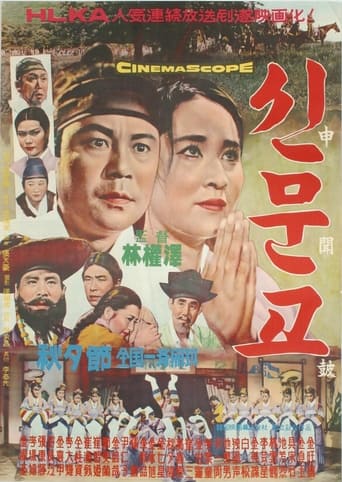 7.0
7.0No synopsis available yet.
Sinmungo
1963
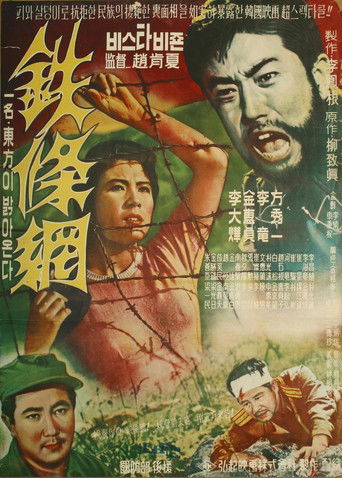 7.0
7.0No synopsis available yet.
Entanglements
1960
 9.0
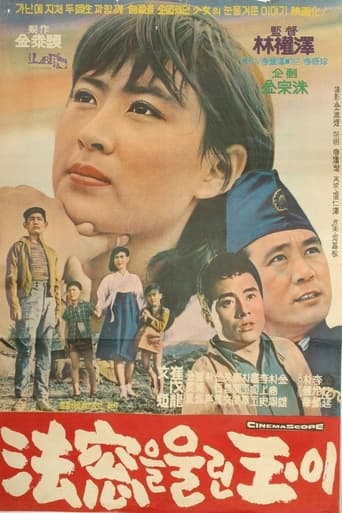
9.0After her father, failed at stock investment and was shocked to death, a girl enters a textile factory and supports her family. But living on her small salary and repaying her father's debt is too difficult for her. In the end, she tries to kill herself together with her young brother. But only her brother dies, and she, who survives, stands at the bar guilty of patricide. She deserves the death penalty, but the court takes into consideration her circumstances and is generous enough to open up a new road for her to start again. A real-life story.
Ok-i Makes a Judge Cry
1966
 6.0
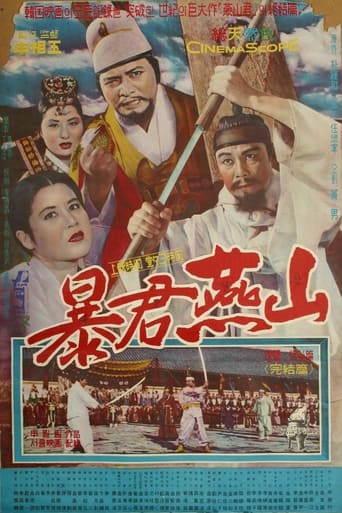
6.0Prince Yeonsan-gun turns into a tyrant out of grief for his mother's death. He orders beheadings of all the officials who displease him or who advised the previous king to depose the queen. He becomes crueler by the day. But in 10th year of his reign, he is kicked out of the throne and dies a tragic death.
Tyrant Yeonsan
1962
 7.3
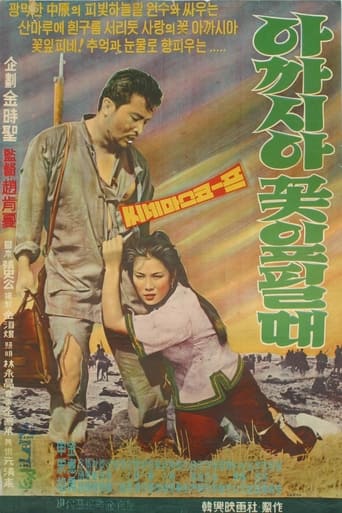
7.3A man assists a woman in danger, but through her actions, she unintentionally causes his death. Everyone in the village knows that she visits his tomb every spring, but no one knows the details of her story.
When Acacias Bloom
1962
 NR
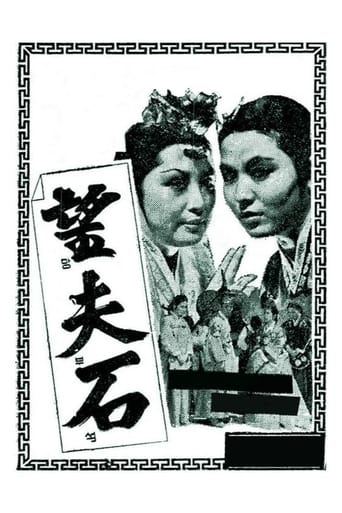
NRHis own father had hated Crown Prince Sado. The king finally orders to kill him by locking him up in a rice-chest. After his death, his wife Hong goes with her son to her parents' house to live there. Some high officials in the court constantly try to harm Sado's son because they don't want him to become king. But Hong's wisdom saved her son, who grows up to become the 22nd king of the Joseon Dynasty (1392-1910).
For My Husband
1963
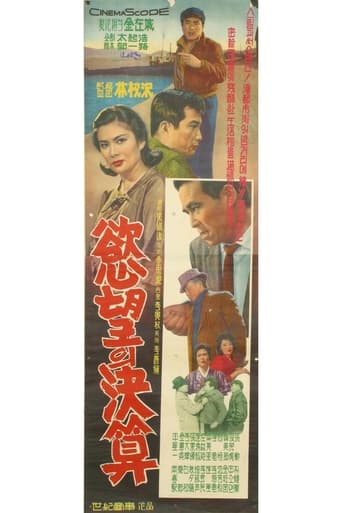 8.0
8.0No synopsis available yet.
The Result of the Ambition
1964
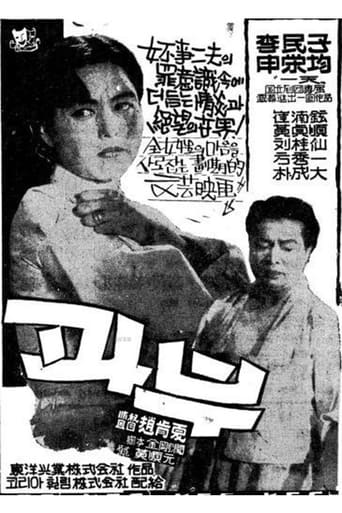 8.0
8.0No synopsis available yet.
A Widow
1960
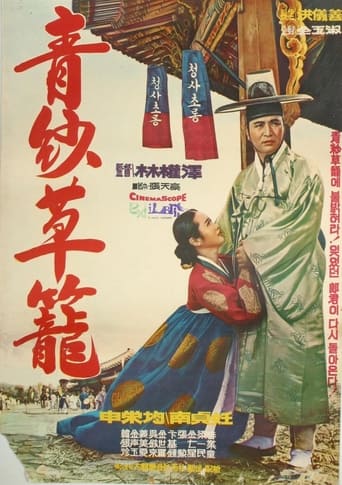 9.0
9.0No synopsis available yet.
A Red-and-blue Gauze Lantern
1967
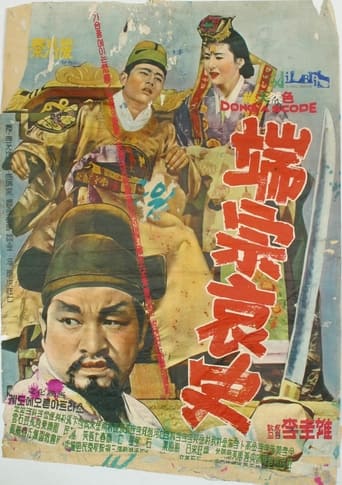 10.0
10.0No synopsis available yet.
A Sad Story of Danjong
1963
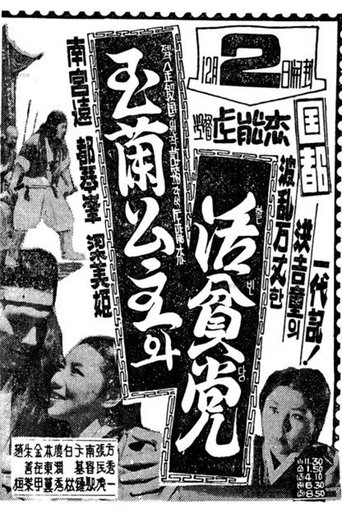 7.0
7.0No synopsis available yet.
Princess Ok-ran and Hwalbindang
1960
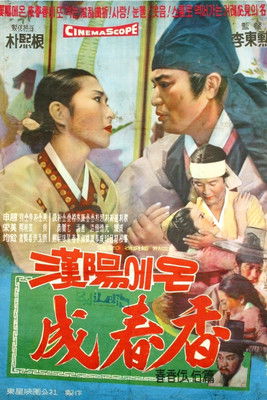 NR
NRNo synopsis available yet.
한양에서 온 성춘향
1963
1950s · 4 titles
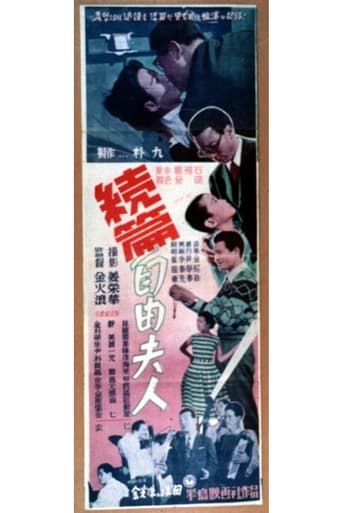 NR
NRNo synopsis available yet.
A Lady of Freedom
1957
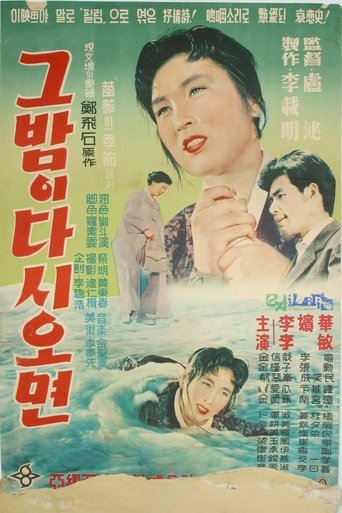 NR
NRNo synopsis available yet.
When the Night Comes Again
1958
 6.3
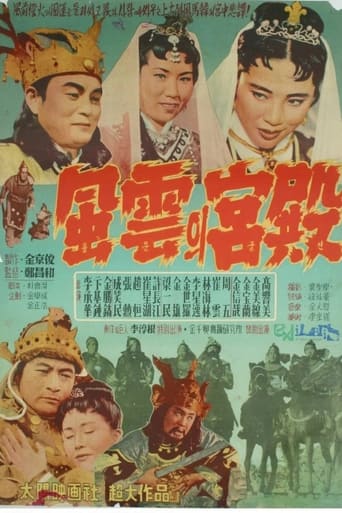
6.3A nobleman bribes a maidservant to gain access to the palace and poison the crown prince. Another noble, loyal to the royal family, learns the of the plot and must learn the identity of the would-be assassin before he can succeed in throwing the country into chaos.
Palace of Ambition
1957
 6.3
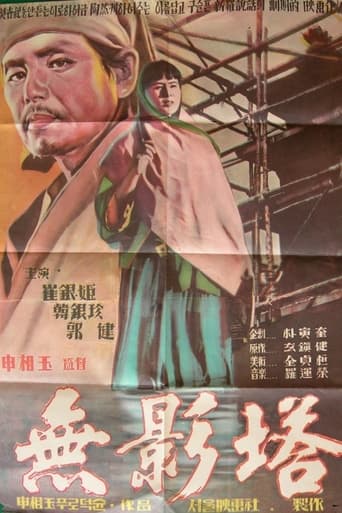
6.3On the eighth of April of King Gyoeng-deok's 10th year of the reign of the Unified Silla Period, Guseulagi, a daughter of Yu Jong, joins the king's parade to Bulguksa Temple, where she meets a stonemason named Asadal from Buyeo. Having a crush on him, she visits Sakyamuni Pagoda, a masonic site; only to find that Asadal had broken down from exhaustion. While she takes care of him, her love for him grows. But Asadal misses his wife who is waiting for him in Buyeo. Meanwhile, Geum Seong who has a crush on Guseulagi, asks his father, Geum Ji, to propose on behalf of him. But Yu Jong is so dissatisfied with Geum Ji because he is a treacherous subject, that he turns down the proposal, instead of hurrying up his daughter's marriage with Gyeongsin, a faithful subject. Asanyeo who has been waiting for her husband Asadal in Buyeo goes to Bulguksa Temple after her father-in-law had died.
The Shadowless Pagoda
1957