
Directing
Bill Brand
Born
1949-03-27 (77)
Place of birth
Rochester, New York, USA
Known for
Directing
Credits
43 titles
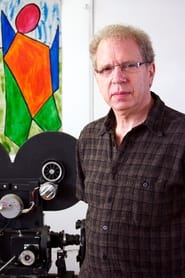
Bill Brand is a multi-disciplinary artist whose films, public artwork, installations, paintings and works-on-paper have exhibited worldwide in museums, galleries microcinemas and on television. His 1980 Masstransiscope, an animated mural installed in the New York City subway, is in the MTA Arts and Design permanent collection. Bill Brand’s artwork has been featured at Museum of Modern Art, Whitney Museum, Smithsonian American Art Museum, National Gallery of Art, Anthology Film Archive and Shanghai Duolun Museum of Modern Art. He is represented by Galerie Arnaud Lefebvre, Paris and Court Tree Gallery, Brooklyn. His films have been presented at major film festivals including the Berlin Film …
Known for
 7.0
7.0Jonas Mekas assembles 160 portraits, appearances, and fleeting sketches of underground and independent filmmakers captured between 1955 and 1996. Fast-paced and archival in spirit, the film celebrates the avant-garde as its own “nation of cinema,” a vital community existing outside the dominance of commercial film.
Birth of a Nation
1997
 NR
NRHome movies shot on Super 8mm by W+B Hein over 10 years.
Home Movies 1971-81
1985
 10.0
10.0Made at S.U.N.Y. at Binghamton as a class exercise, filmmaker Saul Levine performs with students who each try to mimic his previously recorded phrase and then try to imitate each other imitating the recording.
Cartoons: Before the Fact
1974
 8.8
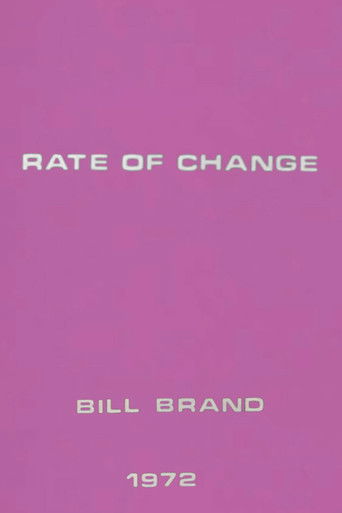
8.8This film has no literal subject, no frames, only slow continuously shifting colours, cycling around the perimeter of the spectrum. The changes are so slow as to be unseen, yet they alter our perception of colour. Part of a trilogy (Acts of Light), which develops a study of pure colour, based on the notion that film is essentially change and not motion.
Rate of Change
1972
 3.0
3.0Sound Strip / Film Strip is Paul Sharits' first "Locational" work, made in collaboration with Bill Brand. The piece was commissioned for the 1972 opening exhibition of the Contemporary Arts Museum, Houston,Texas. “...Sound Strip / Film Strip consists of four film loops simultaneously projected sideways so that the four images abut one another horizontally. Sharits made each loop by filming colored surfaces, scratching the film, projecting it so that the sprocket holes showed on the screen; he then filmed that projection, scratched the result, and projects that as the final object. The resulting image is a continuous flicker of various color ranges with both actual and ‘virtual’ scratches and sprocket holes running horizontally (normally vertically) across the screen. Thus, Sharits is working with filmic abstraction which employs no image save for that inherent in the medium itself....”
Sound Strip/Film Strip
1972
 NR
NRThis is an impressionistic portrayal of the 1982 folk festival at Tracy and Eloise Schwarz’s farm in Central Pennsylvania. The festival, dedicated that year to the legendary Elizabeth Cotton, includes Bluegrass, Old Timey, Cajun, Country, and Gospel music. In contrast to the easygoing atmosphere of the festival, the film is a frenetic swirl of elaborately collaged shapes derived from traditional Pennsylvania Dutch designs. While sometimes the music seems to animate the image, at others the image itself becomes visual music on its own, eliciting ephemeral and sometimes forlorn emotions. The film offers an unusual meeting of a folk tradition and the avant garde, implying a fundamental connection between the two.
Tracy's Family Folk Festival
1983
Film credits
Behind the camera
10.0Made at S.U.N.Y. at Binghamton as a class exercise, filmmaker Saul Levine performs with students who each try to mimic his previously recorded phrase and then try to imitate each other imitating the recording.
Cartoons: Before the Fact
1974
8.8This film has no literal subject, no frames, only slow continuously shifting colours, cycling around the perimeter of the spectrum. The changes are so slow as to be unseen, yet they alter our perception of colour. Part of a trilogy (Acts of Light), which develops a study of pure colour, based on the notion that film is essentially change and not motion.
Rate of Change
1972
3.0Sound Strip / Film Strip is Paul Sharits' first "Locational" work, made in collaboration with Bill Brand. The piece was commissioned for the 1972 opening exhibition of the Contemporary Arts Museum, Houston,Texas. “...Sound Strip / Film Strip consists of four film loops simultaneously projected sideways so that the four images abut one another horizontally. Sharits made each loop by filming colored surfaces, scratching the film, projecting it so that the sprocket holes showed on the screen; he then filmed that projection, scratched the result, and projects that as the final object. The resulting image is a continuous flicker of various color ranges with both actual and ‘virtual’ scratches and sprocket holes running horizontally (normally vertically) across the screen. Thus, Sharits is working with filmic abstraction which employs no image save for that inherent in the medium itself....”
Sound Strip/Film Strip
1972
NRThis is an impressionistic portrayal of the 1982 folk festival at Tracy and Eloise Schwarz’s farm in Central Pennsylvania. The festival, dedicated that year to the legendary Elizabeth Cotton, includes Bluegrass, Old Timey, Cajun, Country, and Gospel music. In contrast to the easygoing atmosphere of the festival, the film is a frenetic swirl of elaborately collaged shapes derived from traditional Pennsylvania Dutch designs. While sometimes the music seems to animate the image, at others the image itself becomes visual music on its own, eliciting ephemeral and sometimes forlorn emotions. The film offers an unusual meeting of a folk tradition and the avant garde, implying a fundamental connection between the two.
Tracy's Family Folk Festival
1983
 8.0
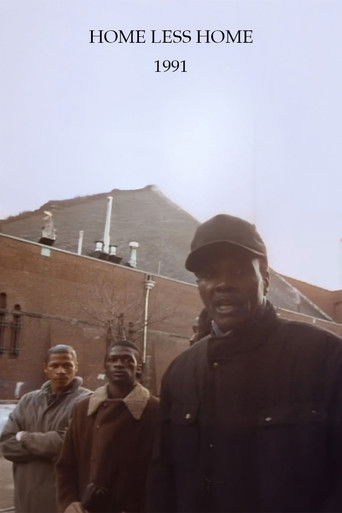
8.0People who are homeless reveal homelessness from their own experiences dispelling common misconceptions and prejudices. Told as a personal journey, the film gives a broad analysis of the causes and conditions of homelessness while it analyzes news, TV reports and historical images of poverty. This film presents new ways to look at homelessness, displacing the debate from questions of charity to ones of social justice.
Home Less Home
1991
8.0People who are homeless reveal homelessness from their own experiences dispelling common misconceptions and prejudices. Told as a personal journey, the film gives a broad analysis of the causes and conditions of homelessness while it analyzes news, TV reports and historical images of poverty. This film presents new ways to look at homelessness, displacing the debate from questions of charity to ones of social justice.
Home Less Home
1991
 10.0
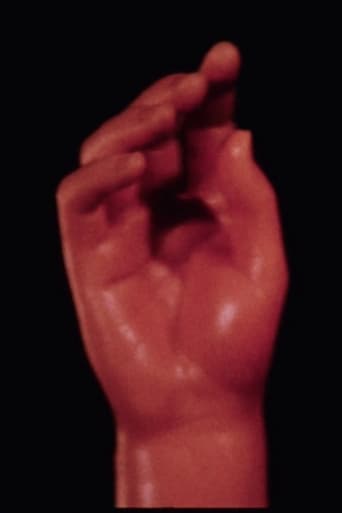
10.0The Central Finger (16mm, silent, 5 1/2 minutes, 1974).
Cartoons: The Central Finger
1974
 10.0
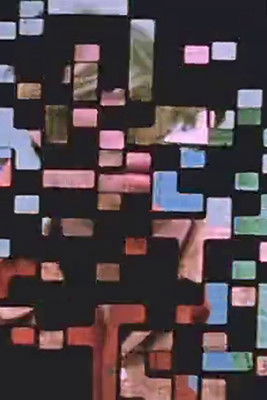
10.0This film is a scrambled narrative that illustrates, in soap opera fashion, life of artists in Lower Manhattan and at the same time dramatizes questions about the nature of filmic representation. Split decision is a boxing term used when the judges divide their votes in finding a winner. In this case the fight is between the two heroes of the film who are seen intermittently in a bar, negotiating a pick-up, and at home, breaking up in a domestic quarrel. The fight is also in the telling, between modes of conventional representation and modes of radical representation - between conventional continuity editing, and abstraction created through computer generated grids. The film features an appearance by Carolee Schneemann and digital imaging from before the era of personal computers.
Split Decision
1979
 10.0
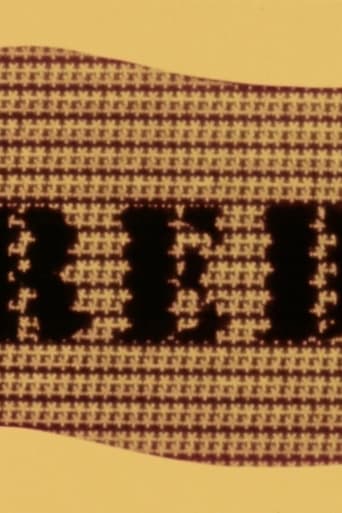
10.0New York State Primaries shows stenciled lettering that dissolve between the words, “red,” “blue,” and “green” but don’t create secondary colors. The film is a response to Saul Levine’s 1972 NOTE: CHICAGO REDS AND BLUES.
Cartoons: New York State Primaries
1975
 NR
NRTOUCH TONE PHONE FILM scrambles the system by which film represents time and motion. In the film, a phone rings and a woman gets up to answer it. Although the event is recorded on film, we only see it as a sliding strip.
Touch Tone Phone Film
1973
 NR
NRA woman wakes up, gets dressed, makes breakfast and walks down the street. This daily ritual becomes extraordinary seen in a trance-like structure of continuous lap dissolves and continuous spectral color shifts.
Always Open/Never Closed
1971
 10.0
10.0Flickering flames viewed through air vents of a wood burning pot belly stove resemble the shutter of a film projector.
Cartoons: The Autobiography of Benjamin Franklin
1974
 NR
NRMountain landscapes, Manhattan cityscapes and images from magazine covers and television news are fragmented through optical printing with computer generated mattes. Intercut with a found documentary about family life in Malaysia, the film becomes an essay on reading. Watching the film is like an accelerated game of Concentration with glimpses of the image appearing inside swirling grids. The juxtaposition of the gridded sequences to the conventionally assembled Malaysian footage formulates an inquiry into the nature and meaning of the "document" in cinema.
Works in the Field
1978
 10.0
10.0Skinside Out features paint on skin, carried out in an expressionist mode on both of the filmmakers' bodies. The emphasis is on the pleasure of looking -- at the edge of repulsion -- and the implications of making public an essentially private gesture. The film posits painting as a gendered, bodily act, whose location shifts continually within a context that's always changing. Images filmed in the studio are juxtaposed with footage of a construction barge along the Hudson. By examining both in relation to surface, the work paradoxically looks for what lies within, while questioning who and where we take ourselves to be.
Skinside Out
2002
 NR
NRDEMOLITION OF A WALL takes six frames of the falling wall from the 1896 Lumiere film and reorders these six frames in all their permutations. With a score for piano that follows a similar pattern the film resembles change ringing, a musical form developed in England in the 17th century where the tuned bells of a church tower are rung in a series of mathematical patterns called "changes". Here, we see 718 additional variations on the original "theme".
Demolition of a Wall
1973
 NR
NRI'M A PILOT LIKE YOU was shot July, 1999 inside and outside 20 North Moore Street where John and Carolyn Kennedy lived. Ruth Hardinger, a sculptor, is a 1st floor resident in this building and was unwittingly trapped by the media frenzy and the public attention that unfolded on the sidewalk in front of the building after the Kennedy plane crashed off Martha's Vineyard. Bill Brand, a nearby neighbor and experimental filmmaker, collaborated to make a video that gives a unique view from inside the building, looking back at the spectacle created by the public and the media. It shows what it felt like to be on the other side of the story.
I'm a Pilot Like You
1999
 10.0
10.0An Angry Dog is a hand-held animation made from a Cracker Jack toy.
Cartoons: An Angry Dog
1974
 10.0
10.0In It Dawn Down an ordinary take-up reel spins to make colorful and delicate patterns even though the film is black and white.
Cartoons: It Dawn Down
1974
 NR
NRMy Father's Leg is a self-portrait where I imagine the disease and pain that caused my father's death twenty-five years earlier. Having become older than he at his death, I found, in images of my own body complex feelings of love, guilt, grief and regret.
Suite: My Father's Leg
1998
 NR
NRORNITHOLOGY 4 was displayed in 2016 in "Peephole Cinema - Kintoscopic Records," a showcase of contemporary media artists evoking the proto- and early cinema experiences of the peep show. This rendition at Union Docs in Brooklyn was programmed by Dan Streible.
Ornithology 4
2015
 7.5
7.5This is my digital/analog contribution to “Xochimilco Treasure Hunting” in Mexico City on the final day of "HAZLO TU MISMO," Do-it-Yourself Independent Analog Film Laboratory Encounter, Sept. 9, 2018.
Huevos a la mexicana
2018
 NR
NRChuck's Will's Widow is a eulogy for my father and mother whose ashes are spread in the Adirondack mountain woods where the film is shot. Visualized through a field of swirling shapes, the fragmented landscapes weave an emotional fabric containing inexplicable personifications and associations.
Chuck's Will's Widow
1982
 10.0
10.0West Virginia industrial landscapes are collaged on an optical printer through a series of jagged shapes that transform the photographed scenes into a semi-abstract kinetic field. The technique developed by Brand in his earlier films, extends the already complex visual idiom by inlaying social, sexual, personal and political subject matter. Woven into the fabric of the film is the story of Fred Carter, a retired coal miner and black lung activist who was framed by the Federal Government in its effort to undercut the black lung movement and to stop his bid for president of the United Mine Workers Association. His story is told through fragments of documentary interviews and by a poet whose narrative forms a counter theme within the film. The film’s thematic content and formal visualizations sit in precarious balance.
Coalfields
1984
 10.0
10.0Still at Work, a self-portrait of the artist in his places of work: the studio in Lower Manhattan and Sarah Lawrence College, the school where he taught. The film animates a still photograph through a grid of random dots.
Cartoons: Still at Work
1975
 NR
NRI filmed two Shanghai artists, Zhuang Yin and Zhao Bo, who took me to their favorite places. Yin chose a small grove of trees – an urban oasis surrounded by building construction. Bo chose a busy street market for plants and pets. With ink on xuan paper I made abstract shapes that I animated and composited into videos from the orchard and market.
Orchard-Market
2016
 NR
NRA claymation and abstract object animation consisting of organic shapes and crocheted afghan squares synchronized to an original guitar duet by classmates Ray Goldstein and Nick Katzman. This is Bill Brand's first 16mm film completed in 1969 while a student at Antioch College.
Organic Afghan
1969
 NR
NRThis film chronicles an artistic and personal quest through an assortment of in-camera and optical printing experiments. Shutter effects and swarming dots fragment the filmic surface so the picture oscillates between abstraction and recognition. The soundtrack quotes excerpts from anthropologist Franz Boas’ 1930 text about a Kwakiutl Indian shaman. The story serves as a metaphor for the struggle of the artist practicing a new visual language. In the Boas text, a man relates his learning the ways of a shaman. Doubting the magic in shamanistic practice, he strives to understand traditional methods in order to discover the truth. Though he learns the secrets of his teachers and finds only tricks, he nonetheless becomes a powerful and famous shaman himself. This film is about the desire to master the magic of the image while following a path of doubt and skepticism.
The Trail to Koskimo: His First Hunt
1976
 10.0
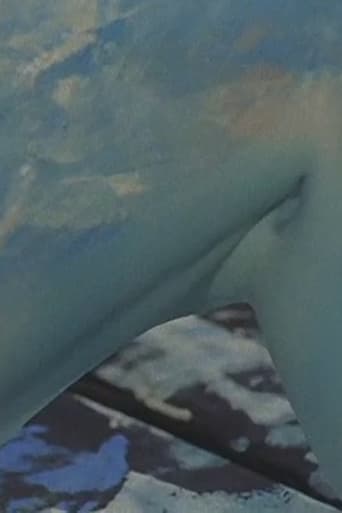
10.0Katy Martin paints directly on her skin, and uses her whole body to make marks with the paint. Bill Brand frames the action and its trace, in the process, linking painting and cinema. Swan's Island explores gesture in painting, and how it relates to the hand held camera. The film creates abstractions from the glistening blue paint that in turn evoke a seascape or a distant, yet intimate place. In its choreography, Swan's Island is a duet. The painted figure occupies space, and the camera describes that space. The person filming and the person filmed are moving as one, and yet they are separate, each an island. Seeing and being seen are inextricably bound with emotions of love and loss, longing and a sense of place.
Swan’s Island
2005
 NR
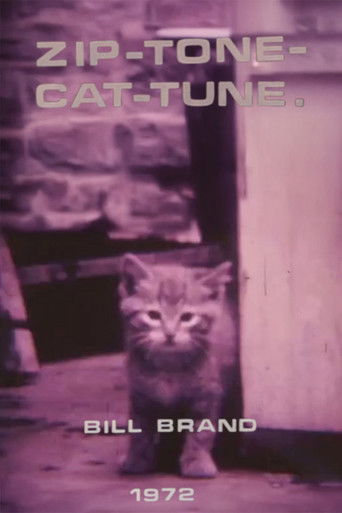
NRA simple home movie of a cat is reprocessed through a 'Zip-a-tone' dot pattern making a complex of layers. In combination with freeze frames, positive and negative, and color motion, this work attempts to visually construct a system of overlays like those in Baroque musical composition.
Zip-Tone-Cat-Tune
1972
 10.0
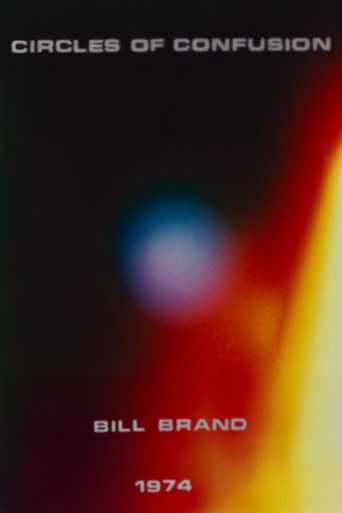
10.0In this film, circles of colored light (red, green, blue) pulsate and flicker as they move around the frame. Where they intersect, they display a variety of secondary colors. The term, circles of confusion belongs to the physics of the lenses. Here it has to do with the focus of light. Here it refers to the focus of mental and emotional energies as an irrational system for composing a film.
Circles of Confusion
1974
 NR
NRAn old tree sits on a mound in an Ohio farm field. The filming of the tree and the metrical editing of the film is organized around the tree's natural elements: water, earth, root ends, roots, trunk, limbs, branches, leaves and sun.
Tree
1970
 NR
NRSICÓMORO is a meditation on travel and home revealed through ornate doors and architectural details in Ciudad Vieja, Montevideo, Uruguay. The text by Carolina Noblega takes the form of a letter to a friend.
Sicómoro
2011
 NR
NRRampla Juniors Fútbol Club is a local team from el Cerro, Montevideo that has served as the heart of this Uruguayan working class neighborhood since 1914! Neither about the game nor the team, the film instead is a poetic evocation of the ritualized pleasure and dedication of the fans and the spectacular landscape of their time worn stadium.
Rampla Juniors
2011
 10.0
10.0Susie's Ghost is about the mystery of the marks we make and leave behind. The “Susie” in the title refers to a sibling but the "ghost" refers more generally to lingering feelings of loss. The cinematography and performance both express a tentative presence and diffuse sense of disappearance. Is she looking for something? Is she really there? We shot with aging 16mm film in my downtown Manhattan neighborhood, just before construction mania obliterated the last traces of the manufacturing district I’d moved into years earlier.
Susie's Ghost
2011
 NR
NRPart of the SUITE series. Here, my body is explicitly a screen on which I project my father’s photographs of the family to articulate my position of difference within the family experience of illness and death. —Bill Brand
Suite: Interior Outpost
2003
 NR
NRThis double portrait cinematically projects my sister's wound onto my own body and psyche. Shortly after she received a living donor kidney from a friend, I filmed the scar that resulted from removing both her damaged organs. This video projects that image of her two-week-old scar onto my own body, visualizing my complex feelings of knowing I have been spared the gene that caused her disease. In the video, I find, on my own body, the scars I imagine we share.
Suite: Double Nephrectomy
1998
This is a portrait of my wife, the artist Katy Martin in her studio painting directly on her own body while imagining a wild animal. While not centered on the theme of family disease like the other four videos, this piece does also explore the body as a site of beauty and abjection.
Suite: Gazelle
1998
 NR
NRAlso a double portrait, this video is an inside-out variation on DOUBLE NEPHRECTOMY. Here, the video uses projected light to penetrate my own body picturing my sister in her trade as an acupuncturist. While she treats me through burning herbs (moxibustion) and acupuncture needling, the video imagines the body as landscape. The contradiction between her commitment to an ancient healing practice and her dependence for survival on modern high technology medicine is an implicit subtext of the video.
Suite: Moxibustion
1999
 NR
NR4K video, silent, 8 1/2 minutes. (continuous loop)
Ornithology 6
2021
 10.0
10.0Consisting of a 300-foot-long painting made on reflective material, Masstransiscope is a public artwork visible from the subway tunnels of the Manhattan-bound B and Q lines. It is in a special enclosure with 228 narrow slits and fluorescent lights. To someone passing by, it looks like an animated movie.
Masstransiscope
1980