
Acting
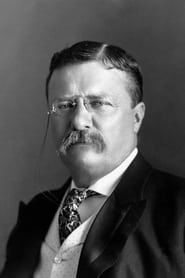
Theodore Roosevelt
Born — Died
1858-10-27 — 1919-01-06
Place of birth
New York City, New York, USA
Known for
Acting
Credits
64 titles
Theodore Roosevelt Jr. (October 27, 1858 – January 6, 1919), also known as Teddy or T. R., was the 26th president of the United States, serving from 1901 to 1909. Roosevelt previously was involved in New York politics, including serving as the state's 33rd governor for two years. He served as the 25th vice president under President William McKinley for six months in 1901, assuming the presidency after McKinley's assassination. As president, Roosevelt emerged as a leader of the Republican Party and became a driving force for anti-trust and Progressive policies.
Known for
 6.5
6.5TV's most-watched history series brings to life the compelling stories from our past that inform our understanding of the world today.
American Experience
1988
 8.3
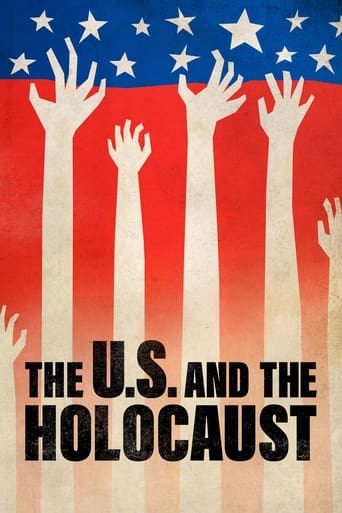
8.3Americans consider themselves a 'nation of immigrants', but as the catastrophe of the Holocaust unfolds in Europe, the U.S. prove unwilling to open its doors to more than a fraction of the hundreds of thousands of desperate refuge seekers. Through riveting firsthand testimony of witnesses and survivors who as children endured persecution, violence and flight as their families tried to escape Hitler, this three-part documentary series delves deeply into the tragic human consequences of public indifference, bureaucratic red tape and restrictive quota laws in America. Did the nation fail to live up to its ideals? This is a history to be reckoned with.
The U.S. and the Holocaust
2022
 5.3
5.3Blending in-depth interviews, rare archival footage, and cinematic recreations, this docuseries on the lives of America's most iconic First Ladies is a bold revision of each woman's traditional portrayal, revealing how they were impacted during their time in the White House, and how their achievements fundamentally shaped American and global history.
First Ladies
2020
 7.8
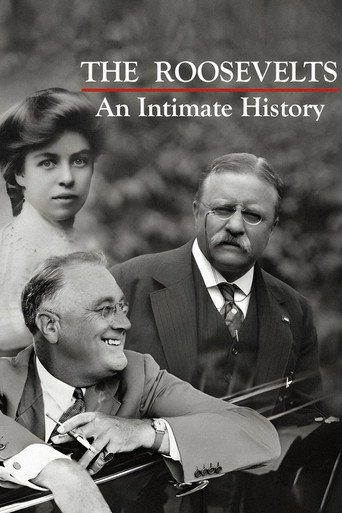
7.8Chronicles the lives of Theodore, Franklin and Eleanor Roosevelt, three members of the most prominent and influential family in American politics. It is the first time in a major documentary television series that their individual stories have been interwoven into a single narrative. This seven-part, fourteen hour film follows the Roosevelts for more than a century, from Theodore’s birth in 1858 to Eleanor’s death in 1962.
The Roosevelts: An Intimate History
2014
 10.0
10.0A historical perspective to understand Neoliberalism and to understand why this ideology today so profoundly influences the choices of our governments and our lives.
Laissez-faire
2015
 8.1
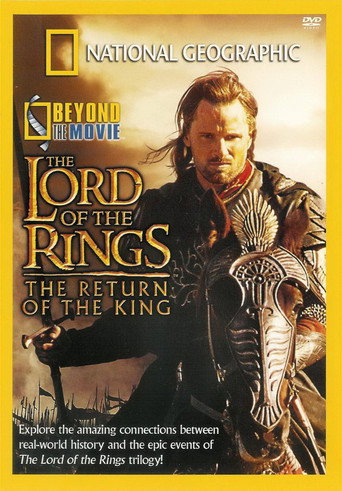
8.1Documentary exploring the parallels between 'The Return of the King' and real events and people in history.
Beyond the Movie: The Return of the King
2003
Film credits
2000s · 2 titles
8.1Documentary exploring the parallels between 'The Return of the King' and real events and people in history.
Beyond the Movie: The Return of the King
2003
 4.3
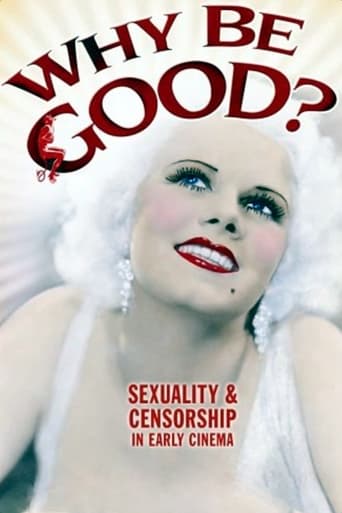
4.3Before the G, PG and R ratings system there was the Production Code, and before that there was, well, nothing. This eye-opening documentary examines the rampant sexuality of early Hollywood through movie clips and reminiscences by stars of the era. Gloria Swanson, Mary Pickford, Marlene Dietrich and others relate tales of the artistic freedom that led to the draconian Production Code, which governed content from 1934 to 1968. Diane Lane narrates.
Why Be Good?: Sexuality & Censorship in Early Cinema
2007
1980s · 3 titles
 NR
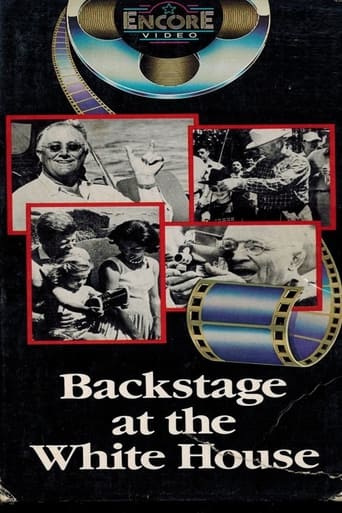
NRThis unique glimpse into the private lives of our Presidents and their families showcases some of the most significant personal moments they have experienced. These instances have not only resonated with our emotions but have also elicited joy, creating lasting memories that highlight the humanity of these influential leaders.
Backstage at the White House
1985
The story behind the creation of Mount Rushmore National Memorial.
Mount Rushmore: The Shrine
1986
 8.0
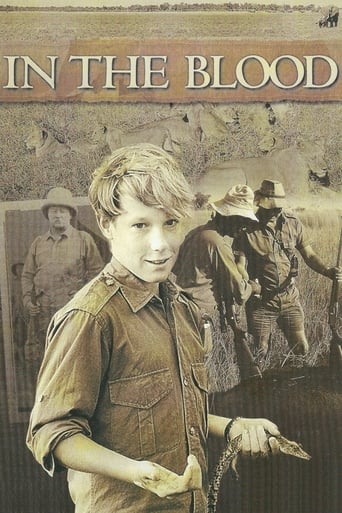
8.0Film starring Tyssen Butler, Robin Hurt, Theodore Roosevelt, R.L. Wilson, Webster Kalipswa, Ray Stanley
In The Blood
1989
1960s · 1 titles
1950s · 1 titles
1940s · 4 titles
 7.5
7.5Part of John Nesbitt's Passing Parade series, this short shows how three seemingly unimportant things can affect people. The first is how the number 7 affects a student accused of theft charges. The second segment shows that a person's doodles can reveal personality traits. The final segment shows why certain items are on men's suits, such as lapels.
Trifles of Importance
1940
A Washington Parade reel....
The Archives
1940
 7.5
7.5In this John Nesbitt's Passing Parade short, a look is taken at the problems of film preservation efforts in the 1930s and early 1940s.
The Film That Was Lost
1942
 7.3
7.3This John Nesbitt's Passing Parade series short highlights the film preservation efforts of the Museum of Modern Art in New York. Several scenes from early newsreels are shown.
Forgotten Treasure
1943
1930s · 2 titles
 6.0
6.0Cowboys from Texas is a 1939 American Western "Three Mesquiteers" B-movie directed by George Sherman.Texas has opened up land for homesteaders. Clay Allison wants their land and has his men led by Plummer try to start a range war between them and the ranchers. With each side suspecting the other of their problems, the Mesquiteers realize someone else is responsible. Stony suspects Plummer and fakes leaving the Mesquiteers to join Plummer's gang hoping to find out who it is.
Cowboys from Texas
1939
“A retrospect of European events during the past forty years, composed from early documentary material, and including one of the earliest extant specimens of news-reel film dating from 1897.” - The [London] Film Society, 1936.
Gentlemen in Storm and Gentlemen in Crown
1934
1920s · 2 titles
 NR
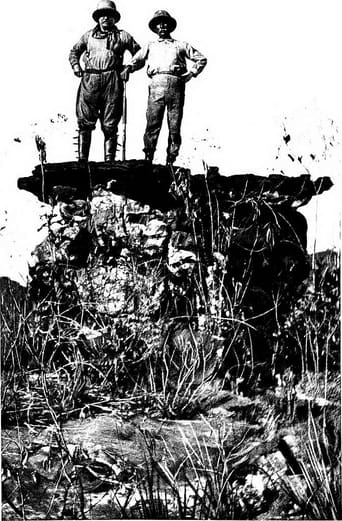
NRA filmed record of former president Theodore Roosevelt's and Cândido Rondon's 1913-14 expedition to the then uncharted Rio da Dúvida, later renamed the Roosevelt River.
The River of Doubt
1928
 NR
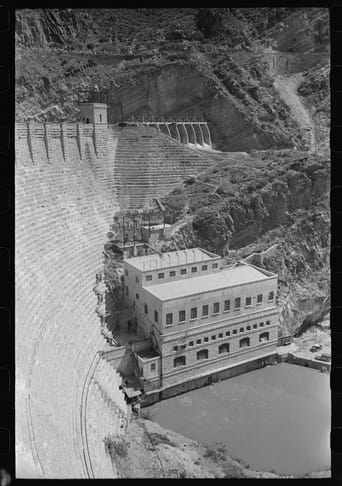
NRFilm depicts TR's commitment to the reclamation of desert land and his belief that natural resources exist for the public benefit.
The Roosevelt Dam
1928
1910s · 27 titles
 NR
NRWhen the nation of Ruthania declares war on the United States, an army of enemy soldiers invades the U.S. and captures New York. But the American forces have prepared adequately for such an event, and hidden booby traps, trick fortifications, and remote-controlled bombs...
Womanhood, the Glory of the Nation
1917
Film is the opening of the second New York State suffrage campaign on Sept. 8, 1917 at Sagamore Hill. The first campaign, beginning in 1913, was unsuccessful; the woman suffrage amendment was rejected by the voters in 1915. On Nov. 6, 1917, the suffrage amendment to the New York State Constitution was approved by the voters. The suffragists invited to Sagamore Hill were headed by Mrs. Norman deR. Whitehouse, State Chairman of the New York State Woman Suffrage Party. Sequence of TR talking to three women: the woman in the dark hat and coat is Mrs. Ogden Mills Reid; the woman dressed in furs next to TR is Mrs. Whitehouse; and the tall woman in the light hat and jacket is Mrs. James Lees Laidlaw.
Women suffragettes visit TR at Sagamore [1917]
1917
 7.0
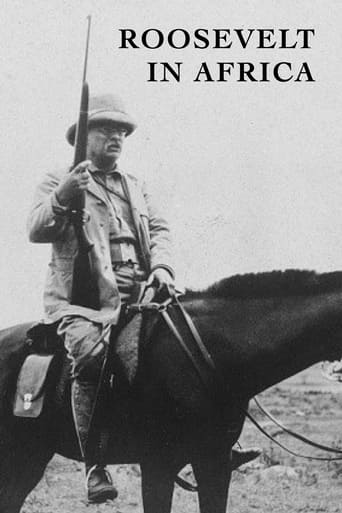
7.0Silent documentary about the Smithsonian–Roosevelt African Expedition, featuring Theodore Roosevelt in the wilds of East Africa, in parts of what are now Kenya and Uganda.
Roosevelt in Africa
1910
 NR
NROn August 20, 1913, Theodore Roosevelt, numerous visitors, and Hopi Indians observe the performance of the ritual Hopi snake-dance at Walpi, Arizona, on the Hopi Reservation.
Hopi Indians Dance for Theodore Roosevelt at Walpi, Arizona, 1913
1913
On May 27, 1916, groups of men, the 7th Regiment Band, and several children march on the road from the Oyster Bay railroad station to Sagamore Hill to demonstrate their support of TR for the 1916 Presidential nomination. Views of TR addressing the large crowd assembled on the lawn of Sagamore Hill. The rally was organized by the Roosevelt Non-Partisan League of New York City.
TR speaking to a group of men from the porch at Sagamore Hill, 1916
1916
On June 18, 1910, Theodore Roosevelt returned to New York City after a fifteen-month tour abroad, having travelled through Africa and western Europe. An elaborate city celebration drawing a million people marked his homecoming. Aboard the ocean liner Kaiserin Auguste Victoria ex-President and Mrs. Roosevelt were met by a revenue cutter, the Manhattan, carrying the Roosevelt children. TR then went aboard a larger cutter, the Androscoggin, and officially became a guest of the city. After boating up the Hudson River along the New Jersey shore to West Fifty-Ninth St., the Androscoggin moved back along the Manhattan shore to Battery Park, followed by a water parade of almost one hundred vessels. TR was greeted by Mayor William J. Gaynor at the Park, where both briefly spoke to an assembled crowd, with notables seated on a flag-draped stand expanded for the occasion to hold 600 people.
TR's return to New York, 1910. [No. 1]
1910
Shots of TR and Leonard Wood on March 20, 1917, at the 5th Annual International Flower Show, Grand Central Palace in New York City. Medium-close view of TR and Wood standing together and talking, facing camera; TR, seated, poses for photographer, with Wood and an unidentified man standing behind him.
TR and Leonard Wood at the New York flower show, 1917
1917
Documentary short starring Theodore Roosevelt.
Colonel Theodore Roosevelt's Expedition Into the Wilds
1918
Short showing Theodore Roosevelt with his Rough Rider Friends.
Theodore Roosevelt with Rough Rider Friends
1913
In Billings, Montana, on October 5, 1918, to speak on behalf of the Liberty Loan and to denounce the Nonpartisan League of Farmers for its pacifist orientation, TR appears in a touring car greeting Billings citizens. Long shot of TR doffing his hat and shaking hands from a parked car in downtown Billings; after he is seated, car moves through crowded, flag-draped street
TR at Billings, Montana [1918]
1918
On Oct. 23, 1916, Theodore Roosevelt campaigns for Republican presidential nominee Charles Evans Hughes and assails the Wilson administration in Albuquerque, N.M. A young woman rides on horseback carrying a bouquet of flowers. There is an auto parade. Roosevelt passes by in an open touring car. Seated next to him is a man who appears to be Albert B. Fall, one of New Mexico's first U.S. Senators (1912-1921) and later secretary of the interior until exposure of his involvement in the Teapot Dome scandal.
TR in New Mexico, 1916
1916
Unrelated segments of Quentin, Archie, and TR at various times and locations. Medium close view of Quentin wearing a WWI uniform standing by a wooden shed in Mineola, New York, May 1917; long shot of Archie in uniform astride a horse possibly in 1917; Archie in uniform, with a cane, standing by a building possibly in 1918; medium shot of TR speaking from the porch at Sagamore Hill; close shot of TR sitting at the 5th Annual International Flower Show in the Grand Central Palace, New York City on March 20, 1917; long shot of crowds and TR in a motorcade probably during 1917, location unknown; TR speaking from a flag-decked platform possibly in 1917; and TR with an unidentified man standing and talking on outside steps of a house, identified by interior title as in Washington, D.C.
Scenes of TR and his sons Quentin and Archie, 1917-1918 [2]
1917
Views of TR, wearing a mourning armband for his son Quentin, delivering a speech from a covered platform to a large crowd gathered in an open area of what appears to be a factory and surrounding area; close-up of TR, prepared text in hand, speaking to the camera.
TR speaking in St. Paul, Minnesota, 1918
1918
On Sept. 28, 1918, Theodore Roosevelt is the principal speaker at the opening of the fourth Liberty Loan campaign in Oriole Baseball Park, Baltimore, Maryland. Wearing a mourning armband for his son, Quentin, Roosevelt walks across the field with Liberty Loan officials, including a man who appears to be Phillips L. Goldsborough, chairman of the Liberty Loan Committee for Maryland and former governor of the state. Roosevelt pauses and speaks with Cardinal James Gibbons. On the speaker's platform, Roosevelt is cheered by the crowd. Among the notables behind him on the platform are Cardinal Gibbons, a man who appears to be Governor Emerson C. Harrington of Maryland, Mrs. Thomas J. Preston, who was the wife of former President Grover Cleveland, and her husband, Dr. Thomas J. Preston, with the dark mustache. Roosevelt addresses the crowd. There are long and close-up shots of the crowd.
TR in Baltimore during Liberty Loan drive, 1918
1918
As part of a western campaign tour, TR speaks to crowds and firms up Progressive Party structure in the area of Fargo, North Dakota, September 6, 1912. Several views from varying distances of TR greeting and speaking to crowds from rear of train; TR addressing large crowd from a decorated platform, apparently in a stadium; TR speaking from rear of train to Indian men, women, and children assembled on open plains; several long shots of crowds; medium-close silhouette of TR and three men conversing, one of whom appears to be George E. Roosevelt, TR's cousin and campaign secretary in the 1912 election.
TR at Fargo, N.D., during Progressive campaign, 1912 [1]
1912
Upon returning to the United States after an extended tour abroad, Theodore Roosevelt is welcomed with elaborate festivities in New York City on June 18, 1910. There are views of Roosevelt and Cornelius Vanderbilt, the chairman of the welcoming committee, walking toward the Battery Park platform, with photographers lining their approach. Mayor William J. Gaynor greets Roosevelt at the base of the Battery platform, with the spectators' stand visible in the background. There is a side view of Roosevelt and Gaynor on the platform.
TR speaking at the Battery, 1910
1910
TR addresses a group of men and women at the opening of the second New York State suffrage campaign on Sept. 8, 1917 at Sagamore Hill. Film includes a side view of TR and a frontal view shot from the rear of the crowd. A woman and a man appear on the porch behind TR; immediately in front of the porch, a man who may be a reporter, takes notes.
TR speaking to a group of suffragettes from the porch at Sagamore Hill [1917]
1917
Two segments of TR during a midwestern speaking tour in support of military preparedness. On September 27, 1917, TR visited the officers' training camp at Fort Sheridan, Illinois. Views of troops marching past a reviewing stand for inspection by TR and several civilian and military personnel; identified on the platform with TR are Captain Georges Etienne Bertrand (wearing beret), a visiting Frenchman who instructed the trainees in trench warfare, and Colonel James A. Ryan, commanding officer of Fort Sheridan; TR addresses the troops after the review. The second segment shows scenes from a parade staged in TR's honor in Chicago on April 28, 1917. Views of men on horseback who appear to be mounted police, sailors and cavalry; view of TR standing and waving his hat in an open touring car; identified in the car with TR are Arthur Meeker and Samuel Insull, Chicago businessmen who are members of the welcoming committee, and other unidentified men.
TR reviews and addresses troops [Fort Sheridan, Ill.]; TR riding in auto, Chicago, 1917
1917
Three sequences of TR addressing groups from the porch at Sagamore Hill. First sequence is TR speaking to a group of people on Sept. 8, 1917 at the opening of the second New York State suffrage campaign at Sagamore Hill. Second sequence is probably TR encouraging New York District volunteer workers for the third Liberty Loan on Apr. 2, 1918. Final views of TR addressing the large crowd which came to demonstrate support for him for the 1916 Presidential nomination. The May 27, 1916 rally was organized by members of the Roosevelt Non-Partisan League. Interior titles, which appear to be TR quotations, stress the need for loyal American citizens and for judicious American dealings with other nations.
TR speaking at Sagamore Hill [1916-1918]. [No. 1]
1916
TR works at his desk in the New York City office of The Outlook, a small but influential weekly journal of opinion for which he became a special contributing editor early in 1909.
TR seated at his desk in the Outlook office [1914?]
1914
 5.5
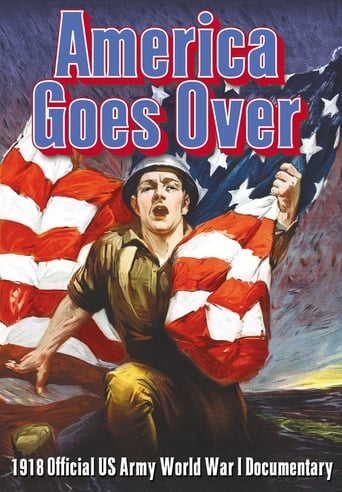
5.5A film produced and distributed by the US Army Signal Corps during World War I to inform and "educate" the US population about the reasons for fighting the war. Featured are scenes with Gen. John Pershing, commander of US forces in Europe, and views of US soldiers in combat and resting up between battles.
America Goes Over
1918
 NR
NRA short documentary about the post presidency life of Theodore Roosevelt.
Theodore Roosevelt's Return from Africa
1910
On April 14, 1917, Archie Roosevelt marries Grace S. Lockwood at the Emmanuel Church in Boston, Massachusetts. Side view of TR entering an automobile with two women, the one following TR may be his wife Edith; TR doffs his hat as he faces camera; view of crowd outside the Emmanuel Church; and long shot of woman holding blanket up, perhaps to shield the bride's entrance into the church. Last two segments appear to be unrelated scenes: medium close shot of TR sitting in a car with an unidentified man and a close up of TR with a man in uniform, both scenes are outside in undetermined locations.
TR attends his son Archie's wedding at Boston, 1917
1917
Roosevelt views a large pro-war parade assembled in his honor in St. Paul, Minn. on Sept. 28, 1917. Long shot of large American flag as it is carried by women through crowd; close shots of officials on platform observing parade, including Roosevelt; Louis W. Hill, parade organizer and civic leader; Joseph A. A. Burnquist, governor of Minnesota (1915-1921); and Vivian R. Irvin, mayor of St. Paul.
TR in St. Paul, Minn. [1917]
1917
At the Panama-California Exposition, San Diego, California, on July 27, 1915, Theodore Roosevelt and Edith Roosevelt speak with officials on the steps of what is probably the United States Government Building. Close view of group smiling and talking.
Theodore Roosevelt at the Panama-California Exposition, 1915
1915
Opening scene of a man, woman, and two children with presents walking up to a house in Oyster Bay, N.Y.; one child enters house, comes back out, then the woman enters; two older girls stand in doorway; TR, carrying a present, walks up to the house; final scene is of TR talking with group as they all pose while a small girl peeks out of the door.
TR calls on neighbors at Christmas, 1917
1917
On Oyster Bay, Theodore Roosevelt rows alone away from shore. In the second sequence, his son Archie and an unidentified boy beach the boat as Theodore Roosevelt looks on.
TR in a rowboat on Oyster Bay, Archie assists with boat to shore, 1914
1914
1900s · 14 titles
![TR's inauguration, 1905. [No. 1] poster](https://image.tmdb.org/t/p/w342/3SmtKQbg3WnBoLsJzM9gMa4Jg1l.jpg) NR
NRVarious shots around Washington, D.C., on Roosevelt's 1905 inauguration, March 4th. View of the Capitol crowds, and the oath of office. Followed by a series different views of the parade, with military bands, Citizens Americus Club, and carriages of politicians. Three film segments totaling 10 minutes, now held at the LoC.
TR's inauguration, 1905. [No. 1]
1905
 4.2
4.2This is a great historical event. Our cameras were stationed in the center of the Esplanade looking toward the Main Approach to the Pan-American Exposition...
Opening of the Pan-American Exposition Showing Vice President Roosevelt Leading the Procession
1901
 7.0
7.0The President is seen standing in front of the Auditorium on a small platform which was built for the occasion. Mrs. Roosevelt is standing at his left, holding the Harvard bunch of carnations in her right hand. Beside the President and Mrs. Roosevelt were Capt. F. W. Wagener, Mayor Smyth, of Charleston, S. C., Governor McSweeney, of South Carolina, Governor Avcock and many other prominent people.
President Roosevelt Reviewing the Troops at Charleston Exposition
1902
TR became the first President in office to visit a foreign country while on an inspection tour of the Panama Canal. On November 15, 1906, there are views of TR and Manuel Amador Guerrero, first President of Panama, and two unidentified men arriving and standing on a platform on the steps of the Cathedral in Panama City; medium shot of two women arriving at the ceremony, woman on the right may be Edith Roosevelt; long shot of President Amador Guerrero delivering welcoming address as dignitaries look on; TR then speaks.
TR speaking in Panama, November 1906
1906
On Mar. 4, 1905, TR is inaugurated in Washington, D.C. with much celebration and fanfare. TR rides in an open landau on Fifteenth St., NW, escorted by mounted Rough Riders; Secret Service men and detectives walk on either side of the carriage; TR tips his hat to the crowd. Sitting beside him is Sen. John C. Spooner of Wis., Chairman of the joint Congressional Committee on Inaugural Ceremonies. Opposite, but not clearly visible, are Sen. Henry Cabot Lodge of Mass. and Rep. John Dalzell of Penn., members of the committee. Second sequence consists of long shots of TR taking the oath of office on a platform erected on the east front of the Capitol; Chief Justice Melville Weston Fuller (1888-1910) administers the Presidential oath of office as Chief Clerk of the Supreme Court James H. McKenney holds the Bible. The platform is decorated with plants and garlands and a large banner with the American eagle on it hangs from the center of the railing.
TR's inaugural ceremony, 1905
1905
 8.0
8.0At the christening and launching, our cameras occupied a most enviable position, being within ten feet of Miss Alice Roosevelt and Prince Henry at the time the bottle was broken. The scene opens by the band of the Royal Yacht "Hohenzollern" marching up the platform. Next a close view is shown of the arrival of President Roosevelt, who shakes hands with Mayor Seth Low, of New York City. Next comes Prince Henry and Miss Alice Roosevelt, accompanied by Colonel Bingham, of the U.S. Army, and Ambassador Count von Holleben, followed closely by Admiral Count Baudissin, of the Hohenzollern, Adjutant General Corbin and representative officers of the United States and German armies and navies. The party immediately proceed to the launching stand, followed by our panoramic cameras, Miss Alice Roosevelt leaning on the arm of Prince Henry of Prussia. A short wait taken up by conversation between Prince Henry, President Roosevelt and his daughter here ensues.
Christening and Launching Kaiser Wilhelm's Yacht 'Meteor'
1902
 7.0
7.0The best and most characteristic picture of the President ever made. The camera is close by so that every feature shows out sharp and distinct. The President is first seen coming on the stand laughing and shaking hands with friends and being wildly cheered by everybody. Then comes the speech. The President is very enthusiastic and is shown at his best. All his well known mannerisms are very apparent. The picture ends with a view of the departure of the President with Mrs. Roosevelt in a carriage. Before the carriage starts the President is held up and interviewed by reporters.
Pres. Roosevelt's Fourth of July Oration
1903
 7.0
7.0We have just received from our operators accompanying President Roosevelt on his great tour of the Pacific Coast, a splendid series of films covering his reception in San Francisco.
President Reviewing School Children
1903
TR became the first President in office to visit a foreign country while on an inspection tour of the Panama Canal. On November 15, 1906, in Panama City there are views of the processional, including a marching band and escorts on horseback, as spectators gather; long shot of TR, accompanied by Manuel Amador Guerrero, first President of Panama, and two unidentified men standing on a platform on the steps of the Cathedral; President Amador Guerrero delivers welcoming address as dignitaries look on; TR then speaks.
TR's arrival in Panama, November 1906. [No. 2]
1906
 6.0
6.0In this picture we show President Roosevelt and Cabinet standing at the station with bare heads, while the casket of President McKinley is being placed in the hearse...
President Roosevelt at the Canton Station
1901
 4.7
4.7We have just received from our operators accompanying President Roosevelt on his great tour of the Pacific Coast, a splendid series of films covering his reception in San Francisco. The weather was all that could be desired, and the films are, therefore, very fine photographically. There are five scenes in all, as follows: 3. President Roosevelt in his carriage, with mounted escort, passing up Market Street. A good picture of the President, and a spirited subject throughout.
The President's Carriage
1903
 7.5
7.5On April 30, 1903, one hundred years to the day after the signing in Paris of the Louisiana Purchase agreement, President Theodore Roosevelt is in St Louis, Missouri, to dedicate the Louisiana Purchase Exposition, which did not open until one year later. In this brief and choppy film, Roosevelt is visible in the center of the front row of a grandstand, which may also be the speaker's platform. He sits, talks to a neighbor, stands as if to salute the crowd, and seems to sit again. He keeps his right hand on the brim of his top hat. Meanwhile, open carriages go in front of the grandstand and stop.
Pres. Roosevelt at the Dedication Ceremonies, St. Louis Exposition
1903
The following is a scene-by-scene description of the film: The camera was positioned on the southeast corner of O'Farrell Street and Van Ness Avenue, and pans from north to west to south, and then back to west. [Frame: 0100] The view is north on Van Ness Avenue toward the approaching band and cavalry. Students of Whittier School are in the foreground. [0604] The band passing at left is led by conductor Paul Steindorff. [0900] Following the band are the Cleveland Grays, a noted black cavalry troop, led by Captain Young, the first black graduate of West Point. [1398] After a cut in the continuity of the film, the President's carriage approaches along the west side of the avenue.
TR in San Francisco, 1903
1903
 6.5
6.5In this picture President Roosevelt is seen crossing the field from the Navy to the Army side between the halves of the game. He is accompanied by Secretary of War Root, Secretary of Navy Long, and other notables.
President Roosevelt at the Army-Navy Game
1901
1890s · 3 titles
 5.0
5.0A splendid picture of the President, coming down the steps of the Treasury Building and walking towards the camera. [Description refers to a re-issued print when Roosevelt had been elected President]
Theodore Roosevelt Leaving the White House
1898
 5.0
5.0Taken during the land parade in honor of Admiral Dewey, just before the turn into 72nd street...
Governor Roosevelt and Staff
1899
 4.0
4.0This picture shows Col. Roosevelt, accompanied by Lieut. Greenway and other prominent officers of the Rough Riders, galloping up to his headquarters, where he dismounts and walks into his tent. This view was taken in the camp with the Rough Riders, and is an excellent picture of Col. Roosevelt in the environment he loves so well.
Col. Theodore Roosevelt and Officers of His Staff
1898
Series credits
6.5TV's most-watched history series brings to life the compelling stories from our past that inform our understanding of the world today.
American Experience
1988
8.3Americans consider themselves a 'nation of immigrants', but as the catastrophe of the Holocaust unfolds in Europe, the U.S. prove unwilling to open its doors to more than a fraction of the hundreds of thousands of desperate refuge seekers. Through riveting firsthand testimony of witnesses and survivors who as children endured persecution, violence and flight as their families tried to escape Hitler, this three-part documentary series delves deeply into the tragic human consequences of public indifference, bureaucratic red tape and restrictive quota laws in America. Did the nation fail to live up to its ideals? This is a history to be reckoned with.
The U.S. and the Holocaust
2022
5.3Blending in-depth interviews, rare archival footage, and cinematic recreations, this docuseries on the lives of America's most iconic First Ladies is a bold revision of each woman's traditional portrayal, revealing how they were impacted during their time in the White House, and how their achievements fundamentally shaped American and global history.
First Ladies
2020
7.8Chronicles the lives of Theodore, Franklin and Eleanor Roosevelt, three members of the most prominent and influential family in American politics. It is the first time in a major documentary television series that their individual stories have been interwoven into a single narrative. This seven-part, fourteen hour film follows the Roosevelts for more than a century, from Theodore’s birth in 1858 to Eleanor’s death in 1962.
The Roosevelts: An Intimate History
2014