
Acting
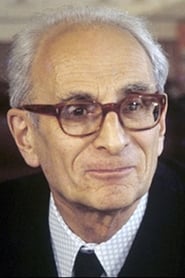
Claude Lévi-Strauss
Born — Died
1908-11-28 — 2009-10-30
Place of birth
Brussels, Belgium
Known for
Acting
Credits
13 titles
Claude Lévi-Strauss (28 November 1908 – 30 October 2009) was a French anthropologist and ethnologist, born in Belgium to French-Jewish parents living in Bruxelles, whose work was key in the development of the theories of structuralism and structural anthropology. He held the chair of Social Anthropology at the Collège de France between 1959 and 1982, was elected a member of the Académie française in 1973 and was a member of the School for Advanced Studies in the Social Sciences in Paris. He received numerous honors from universities and institutions throughout the world. Lévi-Strauss argued that the "savage" mind had the same structures as the "civilized" mind and that human characteristics…
Known for
 8.5
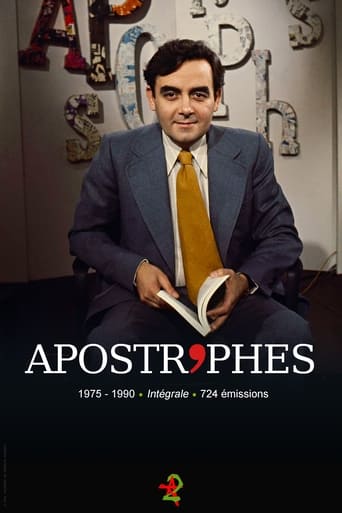
Apostrophes was a live, weekly, literary, prime-time, talk show on French television created and hosted by Bernard Pivot. It ran for fifteen years (724 episodes) from January 10, 1975, to June 22, 1990, and was one of the most watched shows on French television (around 6 million regular viewers). It was broadcast on Friday nights on the channel France 2 (which was called "Antenne 2" from 1975 to 1992). The hourlong show was devoted to books, authors and literature. The format varied between one-on-one interviews with a single author and open discussions between four or five authors.
Apostrophes
1975
 6.4
People in Paris struggle with loneliness and urban isolation. In the center is Raphaële, a successful architect navigating her fragile relationship with her lover Vincent, a journalist grappling with alcoholism.
Somewhere, Someone
1972
No synopsis available yet.
O Brasil, Os Índios e, Finalmente, A USP
1988
 NR
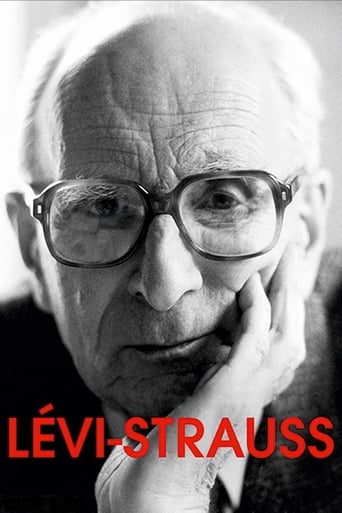
Documentary about one of the greatest French thinkers of the twentieth century, Claude Lévi-Strauss (1908-2009).
The Lévi-Strauss Century
2016
 NR
During the height of the military dictatorship, Jorge Bodanzky documented the construction of the Humboldt University [research station] in Mato Grosso. While flying over the surrounding area—amidst the dense, unbroken forest—he captured an intriguing image: a large maloca (communal indigenous dwelling) where the inhabitants were attempting to strike the plane with arrows. Half a century later, the filmmaker uses this moment as a starting point to revisit—without a script—his long-standing connection to the Amazon and the story behind that image, through an approach that is both spontaneous and intimate.
Um Olhar Inquieto: O Cinema de Jorge Bodanzky
2026
 NR
Shortly after his reception at the French Academy in 1973, Claude Lévi-Strauss confided, in an exceptional interview, to the director Jean-Claude Bringuier. An approach by Claude Lévi-Strauss is a rare film in that it composes both a portrait of the man – a secret if ever there was one – and a fertile exploration of his intellectual work.
Une approche de Claude Lévi-Strauss
1974
Film credits
2010s · 1 titles
1980s · 2 titles
1970s · 3 titles
6.4People in Paris struggle with loneliness and urban isolation. In the center is Raphaële, a successful architect navigating her fragile relationship with her lover Vincent, a journalist grappling with alcoholism.
Somewhere, Someone
1972
NRShortly after his reception at the French Academy in 1973, Claude Lévi-Strauss confided, in an exceptional interview, to the director Jean-Claude Bringuier. An approach by Claude Lévi-Strauss is a rare film in that it composes both a portrait of the man – a secret if ever there was one – and a fertile exploration of his intellectual work.
Une approche de Claude Lévi-Strauss
1974
 7.0
A fascinating look at the meaning behind some Indigenous masks from the North Pacific coast. Expositor and lecturer is Professor Claude Levi-Strauss of Paris, world-renowned anthropologist and authority on the structural analysis of myth.
Behind the Masks
1973
1930s · 1 titles
Series credits
Behind the camera
 NR
A precious visual record of cattle ranching activity in the Mato Grosso hinterlands during the 1930s, seen through the eyes of a pioneering duo with an anthropological and ethnographic perspective.
Cattle Work in the Corral of a Farm in Southern Mato Grosso
1935
 NR
Aspects of the life of the Bororo Indians of the Kejara village. Fire-making, crafts, weaving, hunting, fishing and sunset in the village.
A Vida de uma Aldeia Bororo
1935
 NR
Various aspects of the customs of the Bororo indigenous people. Crafts, dance, games, village layout and funeral ceremonies.
Cerimônias Fúnebres entre os Índios Bororo
1935
 NR
No synopsis available yet.
Aldeia de Nalike
1936