
Directing
Marcos Bonisson
Marcos Bonisson is an artist with a Master degree in Science of Art (UFF) and PhD candidate in Contemporary Studies of the Arts (UFF). He lives and works in the city of Rio de Janeiro. He also holds a degree in Literature (UNESA) and a post-graduate degree in Art and Culture (UCAM). He studied engraving, drawing, cinema and photography at EAV Parque Lage (1977-1981). Participated in the 27th International Biennial of São Paulo in 2006. Published the book Arpoador (Editora Nau, 2011) and the catalog Pulsar (Binocular Publishing House, MAM, 2013). His most recent solo exhibitions were at the Museum of Modern Art in Rio de Janeiro in 2013 and the Maison Européenne de la Photographie (MEP-Paris) in 2015.
Acting credits
 7.5
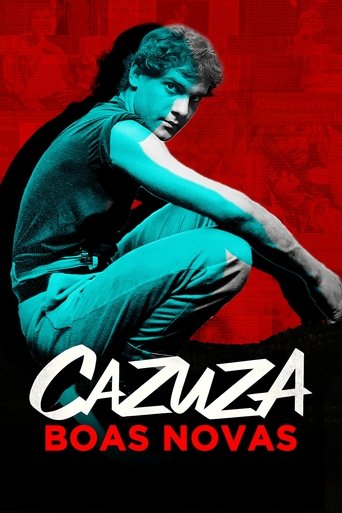
7.5It explores the last two years of Brazilian singer Cazuza's life, from his AIDS diagnosis until his death. Nilo Romero, Cazuza's music producer and the film's director, created a collection of rarely seen and controversial images.
Cazuza: Good News
2025
 7.0
7.0Loosely based on an Oswald de Andrade screenplay, "Perigo Negro" is a segment of anthology film "Oswaldianas" which deals with a uprising soccer player who has his career spoiled by a unscrupulous gambler
Perigo Negro
1992
Behind the camera
 NR
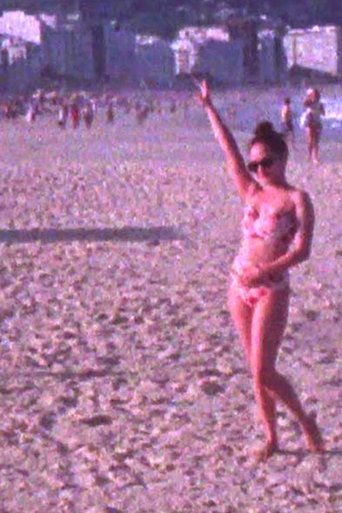
NRFilm set in the neighborhood of Copacabana, elaborated through a collage of current and archive images (Super 8 and digital). An experimental work narrated by the significant speech of the poet Fausto Fawcett, and sonorized by the musician Arnaldo Brandão.
Kopacabana
2019
 NR
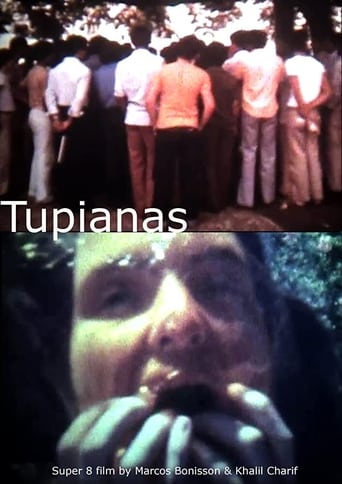
NRSuper 8 filmed in Brazil during the 70's. It's a reflection about the idea of Tupi, by elaborating a non-linear narrative with a collage of "antropofagic images", presenting the body and space as topology of desires, experimenting the choice in life, and language of the essential, instead of the accessory.
Tupianas
2016
 NR
NR"69" is an experimental film made from an extensive Super 8 archive filmed by Edmond Conilh de Beyssac, a French aviator. In context, everything was filmed in March of 1969, on a trip to Brazil. The film was transmuted into the idea of Anarchive, a concept created by the philosopher Erin Manning, activated in a process of audiovisual experimentation.
69
2021