

Acting
Elvira Pagã
Born — Died
1920-09-06 — 2003-05-08
Known for
Acting
Credits
10 titles
Elvira Olivieri Cozzolino (6 September 1920 – 8 May 2003), better known by her stage name Elvira Pagã, was a Brazilian vedette, actress, singer, writer, and painter. She was the first Rio Carnival Queen, the first woman to wear a bikini in public, and one of the first women to undergo cosmetic surgery in Brazil. Talented and controversial, she defied the status quo and challenged prevailing sexism with fearless audacity during the Brazilian military dictatorship and the revolutionary 1960s. In her later years, Pagã withdrew from public life, devoting herself to writing and painting, and eventually died in seclusion. Wikipedia
Known for
 8.0
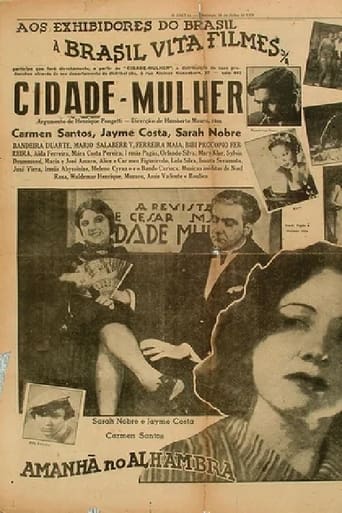
A theater manager about to go bankrupt decides to accept help from his daughter and her boyfriend to save the family's finances, which she does with the sponsorship of a rich man.
Cidade Mulher
1936
 4.0
After a tour of the sights and sounds of the Las Vegas strip, we enter the Club Paradise where we are treated to a night of song, comedy, and dancing.
Vegas Nights
1948
 9.0
No synopsis available yet.
A Echarpe de Seda
1950
 8.0
A wealthy sugar mill owner, widowed and living with his only son, suffers from profound melancholy. To alleviate his suffering, he seeks entertainment in the form of any jerk willing to lend a hand. Among the many candidates his secretary presents to fill the "position", a certain "Penguin", who along with his sister "Picolé" lives on the favela hill under the protection of a kind Portuguese shopkeeper, completely pleases the "sovereign" of sugar. With "Penguin"'s entry into the court as the sugar king's "fool", great transformations take place in the home of the wealthy misanthrope.
The King's Jester
1937
 8.0
No synopsis available yet.
O Dominó Negro
1949
 7.0
Three Argentines who live in Paris and dream of returning to Buenos Aires but lack resources for the passage, find their opportunity when a landowner, a business man and his daughter arrive in Paris. In a game of rigged poker the three anchors obtain the money for the passages from the newcomers; it happens however that the employer has made an embezzlement and will go to jail if he does not return the money. The character represented by Parravicini, who is the true father of his adopted daughter, gives him the money won to solve his problem and the three remain in Paris to see them in an end with the best poetry of Romero crossing a bridge under the mist , silent, once again anchored but with the happy sadness of recovered self-esteem.
Three Argentines in Paris
1938
Film credits

1950s · 1 titles
1940s · 4 titles
4.0After a tour of the sights and sounds of the Las Vegas strip, we enter the Club Paradise where we are treated to a night of song, comedy, and dancing.
Vegas Nights
1948
8.0No synopsis available yet.
O Dominó Negro
1949
 10.0
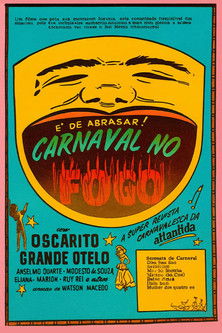
A gang, leaded by the unknown and mysterious Anjo, robs a jewelry and schedules a meeting in the Copacabana Palace Hotel, in Copacabana. The identification would be through a cigarette case with an angel, and the password "- Is everything all right?" Meanwhile, the director Ricardo is preparing a show for the carnival in the hotel with Marina, and they love each other. The janitor Serafim receives a letter from his unknown American brother, who will come to Rio to spend the carnival and meet him, and asks Eliana for a chance in the show, since his brother believes he is an artist. When Ricardo finds the cigarette case lost by Anjo in the entrance of the hotel, he is misidentified by the thieves, and this is the beginning of lots of confusion and fun.
Carnaval no Fogo
1949
 7.0
No synopsis available yet.
Laranja da China
1940
1930s · 4 titles
8.0A theater manager about to go bankrupt decides to accept help from his daughter and her boyfriend to save the family's finances, which she does with the sponsorship of a rich man.
Cidade Mulher
1936
8.0A wealthy sugar mill owner, widowed and living with his only son, suffers from profound melancholy. To alleviate his suffering, he seeks entertainment in the form of any jerk willing to lend a hand. Among the many candidates his secretary presents to fill the "position", a certain "Penguin", who along with his sister "Picolé" lives on the favela hill under the protection of a kind Portuguese shopkeeper, completely pleases the "sovereign" of sugar. With "Penguin"'s entry into the court as the sugar king's "fool", great transformations take place in the home of the wealthy misanthrope.
The King's Jester
1937
7.0Three Argentines who live in Paris and dream of returning to Buenos Aires but lack resources for the passage, find their opportunity when a landowner, a business man and his daughter arrive in Paris. In a game of rigged poker the three anchors obtain the money for the passages from the newcomers; it happens however that the employer has made an embezzlement and will go to jail if he does not return the money. The character represented by Parravicini, who is the true father of his adopted daughter, gives him the money won to solve his problem and the three remain in Paris to see them in an end with the best poetry of Romero crossing a bridge under the mist , silent, once again anchored but with the happy sadness of recovered self-esteem.
Three Argentines in Paris
1938
 6.1
Two authors go look for a business to finance their dream musical.
Alô Alô Carnaval
1936