
Directing
Jun Kurosawa
Place of birth
Japan
Known for
Directing
Credits
40 titles
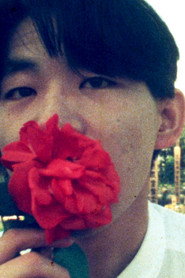
Born in 1964, Jun Kurosawa studied art science at the Tama Art University. While in college, he learned filmmaking by Sakumi Hagiwara. After graduation, he related not only to Japanese experimental film movements but also to the Japanese contemporary art scene. His works contain a wide variety of artistic genres: industrial music, performances, and opera. Since 1989 numerous screenings and awards in Japan and abroad. As an example, solo exhibition metaphysical philosophy of light in Studio Arms [1990], special screening A perfect hospital room in Ebisu East Gallery [1994], and he has in charge of curation at the Ebisu international film festival [1996].
Known for
 7.0
A genius forensic scientist pushes around one of her students while investigating a case.
Joou no Houigaku ~Shikatsushi~
2021
 5.9
Takachi, a young porno star from a small town in Japan is found dead. His death provides the opportunity to show us his true emotions, and how his two best friends in Tokyo remember him. These two travel back to Takachi's town, Kochi, which Takachi himself had visited just prior to dying. In Kochi, all boys seem to be angels.
Looking for an Angel
1999
No synopsis available yet.
BLUE SKY
1987
 7.5
Experimental film in which three girls and one boy lead playful lives. Just as a game, in which the course is determined from beginning to end by certain rules, can be played time and again, their lives are also endless repetition. This eventually results in a loss of a sense of time, for past and future. The four are permanently surrounded by cameras and projectors. In this way we see how photos are repeatedly taken of one of the girls and the boy keeps staring at a film screen. Everything which cannot be repeated is the object of their hatred. One day a woman appears in their lives and wants to die. The four try to involve her in their game, but the opposite happens: the fact that the woman is different disrupts their self-made world. Having playacted a funeral for the woman, they become more and more entangled in their own game.
NEKO-MIMI
1994
 NR
An experimental short film by Japanese filmmaker Jun Kurosawa.
In Heaven
1988
 7.0
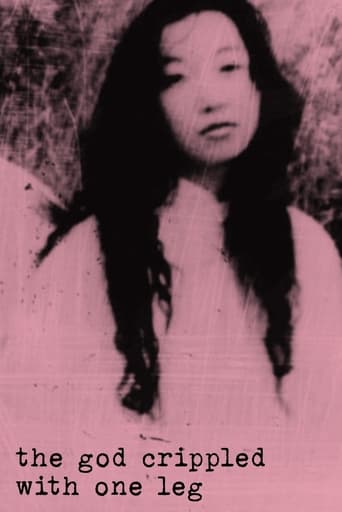
A young woman is left stranded in an abandoned industrial building, bound by 16mm film. Meanwhile, an angel roams a highway.
The God Crippled With One Leg
1994
Behind the camera
7.0A genius forensic scientist pushes around one of her students while investigating a case.
Joou no Houigaku ~Shikatsushi~
2021
5.9Takachi, a young porno star from a small town in Japan is found dead. His death provides the opportunity to show us his true emotions, and how his two best friends in Tokyo remember him. These two travel back to Takachi's town, Kochi, which Takachi himself had visited just prior to dying. In Kochi, all boys seem to be angels.
Looking for an Angel
1999
No synopsis available yet.
BLUE SKY
1987
7.5Experimental film in which three girls and one boy lead playful lives. Just as a game, in which the course is determined from beginning to end by certain rules, can be played time and again, their lives are also endless repetition. This eventually results in a loss of a sense of time, for past and future. The four are permanently surrounded by cameras and projectors. In this way we see how photos are repeatedly taken of one of the girls and the boy keeps staring at a film screen. Everything which cannot be repeated is the object of their hatred. One day a woman appears in their lives and wants to die. The four try to involve her in their game, but the opposite happens: the fact that the woman is different disrupts their self-made world. Having playacted a funeral for the woman, they become more and more entangled in their own game.
NEKO-MIMI
1994
NRAn experimental short film by Japanese filmmaker Jun Kurosawa.
In Heaven
1988
7.0A young woman is left stranded in an abandoned industrial building, bound by 16mm film. Meanwhile, an angel roams a highway.
The God Crippled With One Leg
1994
 5.0
This nonsense short drama was created for the film festival "Very Very Short" at the Tollywood Theatre in Shimokitazawa. At that time, the condition was (1) two minutes, (2) insert a date, and (3) within the film include the word of "Sa-yo-na-ra".
pb
2003
 8.0
No synopsis available yet.
REQUIEM
1989
 NR
No synopsis available yet.
COMPOSITION
1989
 NR
No synopsis available yet.
La Dance Macabre
1989
 5.0
Experimental animation about the memory of childhood. 1 or 2 second paint footage that shot a baby who turned his face is repetitive. In Jun Kurosawa's works, the childishness is one of the most important factors. And it includes malicious in some cases – as Yukio Mishima has said "It is infantilism that all creative womb is".
BYE-BYE
1989
 7.0
An avant-garde short film by Jun Kurosawa.
The Moon in the One Eye
1988
 7.0
No synopsis available yet.
Lenz of Spinoza
1989
No synopsis available yet.
STILL DISTANCE
1988
 6.5
Experimental film about the schizoid man by using double exposure. The title includes a double meaning, that is "now here" being here – and "nowhere" to not be anywhere. In this lyrical work, Jun Kurosawa analyzed himself schizophrenically.
now here
1988
 6.0
No synopsis available yet.
Surface
1989
 6.0
As the filmmaker metaphorically represents the “romanticism as love towards mineral,” they are gathered through the act of shooting (the physical movements on camera) and they are a collection of images being put in the film; these meanings are to be interpreted by the audience.
Parlez-moi d'amour
1989
 8.0
No synopsis available yet.
Tokyo Angel Hospital
1989
No synopsis available yet.
MON AMOUR MON AMI
1988
 7.5
Un Ange Passe (idiom: "used to indicate that one has noticed a long silence, especially a pause in a conversation") is a science fiction about a girl who survived after a nuclear fallout at the end of 20th century. She tries to communicate with others by using a future gadget, but she misunderstands the contacts from others as a delusion and makes an imaginary character in her mind.
Un ange passe
1995
7.5Un Ange Passe (idiom: "used to indicate that one has noticed a long silence, especially a pause in a conversation") is a science fiction about a girl who survived after a nuclear fallout at the end of 20th century. She tries to communicate with others by using a future gadget, but she misunderstands the contacts from others as a delusion and makes an imaginary character in her mind.
Un ange passe
1995
 9.0
"This film was originally intended to set up the projector scratching the film and destroying the image. But, I don't know why the work stored in VHS format." [Jun Kurosawa]
THEORY OF ANGEL – Chapter 4 –
1989
 3.5
The view of an amusement park that's shot by a fixed camera changes into an uncanny one by painting directly onto celluloid and strange sounds. It is an attempt to approach the inner world through the common view by private eye of the author himself.
MONOLOGUE IN MY BAD TASTE
1988
No synopsis available yet.
グリーン大佐答えて下さい
1988
 6.0
No synopsis available yet.
SKY’S GONE OUT
1988
 NR
Born in 1964, graduated from Tama Art University with a degree in Fine Arts. During his university days, he formed an indie band with his classmates and was active for several years. He then began filmmaking under the tutelage of Sakumi Hagiwara. In his early works, he created numerous pieces characterized by a "structural style that manipulates light, objects (or the film itself) through frame-by-frame editing." Eventually, his works began to incorporate narrative elements and shifted toward a more analytical exploration of his inner world. In 1994, the premiere screening of "Cat Ears" (1994) at the East Gallery in Ebisu achieved record attendance. Additionally, he has collaborated with performance units and directed the video opera "Satyricon" (2004), consistently exploring boundary-crossing visual expressions.
PROLOGUE #2
1990
 NR
No synopsis available yet.
Wish You Were Summer
1988
 NR
Born in 1964, graduated from Tama Art University with a degree in art. During his college years, he formed an indie band with his classmates and performed for several years before studying under Sakumi Hagiwara and beginning to make films. In his early works, he created numerous pieces using a structural style that manipulated light, objects, and even the film itself through frame-by-frame editing. Eventually, his works began to incorporate narrative elements and shifted toward analyzing his own inner world. In 1994, the premiere screening of "Cat Ears" (1994) at the East Gallery in Ebisu achieved record attendance. Additionally, he has collaborated with performance units and directed the video opera "Satyricon" (2004), consistently exploring boundary-crossing visual expressions.
PROLOGUE
1990
No synopsis available yet.
private film #9
2002
 6.0
No synopsis available yet.
hi ka ri
1988
No synopsis available yet.
ガラス玉遊戯
1985
 6.0
No synopsis available yet.
A Film That Uses a Cheap Wine Glass to Consider Light
1989
No synopsis available yet.
mirror in mirror
2003
No synopsis available yet.
sept 23 2003
2003
No synopsis available yet.
DADA MORE THAN GAGA
1988
 NR
No synopsis available yet.
君と世界との戦いならば世界を支援せよ
1985
 7.0
No synopsis available yet.
fragment # for K.S
2019
No synopsis available yet.
IMAGES
1984
No synopsis available yet.
GOOD-BYE BLUE SKY
1988