
Writing
Peter Rühmkorf
Born — Died
1929-10-25 — 2008-06-08
Place of birth
Dortmund, Germany
Known for
Writing
Credits
6 titles
Known for
No synopsis available yet.
Wortwechsel
1982
No synopsis available yet.
Mein Kriegsende
2005
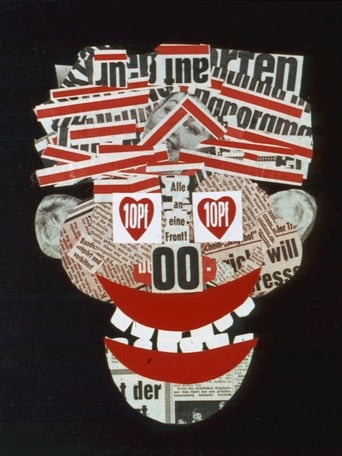
An animated film made from collages. With a film text by poet and left-wing essayist Peter Rühmkorf. A satire on advertising language.
Kleine Unterweisung zum glücklichen Leben
1963
 NR
NRThe grotesque portrayal of an attempt at communication, graphically and rigorously depicted: In the LCB's second production, Peter Rühmkorf and Helmut Herbst bitingly trace a relationship story that is already over before it has begun.
Abends, wenn der Mond scheint
1965
No synopsis available yet.
Ein Mann ohne Ufer
1975
 7.0
7.0The film makes fun of the superficial changes in power in their birthplaces. Herbst's painting depicts a society of excited string toys who first march to the strains of the Kaiser's anthem, whose black, white and red flag dominates the swastika, before being incorporated into the colors of a conglomerate of right-wing newspapers. Black, white, red. Three times, the Germans march organized in columns and ranks: under the colors of the Kaiser, the Führer and Axel Springer.
Schwarz-Weiß-Rot
1964
Series credits
Behind the camera
An animated film made from collages. With a film text by poet and left-wing essayist Peter Rühmkorf. A satire on advertising language.
Kleine Unterweisung zum glücklichen Leben
1963
NRThe grotesque portrayal of an attempt at communication, graphically and rigorously depicted: In the LCB's second production, Peter Rühmkorf and Helmut Herbst bitingly trace a relationship story that is already over before it has begun.
Abends, wenn der Mond scheint
1965
No synopsis available yet.
Ein Mann ohne Ufer
1975
7.0The film makes fun of the superficial changes in power in their birthplaces. Herbst's painting depicts a society of excited string toys who first march to the strains of the Kaiser's anthem, whose black, white and red flag dominates the swastika, before being incorporated into the colors of a conglomerate of right-wing newspapers. Black, white, red. Three times, the Germans march organized in columns and ranks: under the colors of the Kaiser, the Führer and Axel Springer.
Schwarz-Weiß-Rot
1964