

Directing
Kristīne Želve
Born
1970-03-17 (56)
Known for
Directing
Credits
19 titles
Known for
 NR
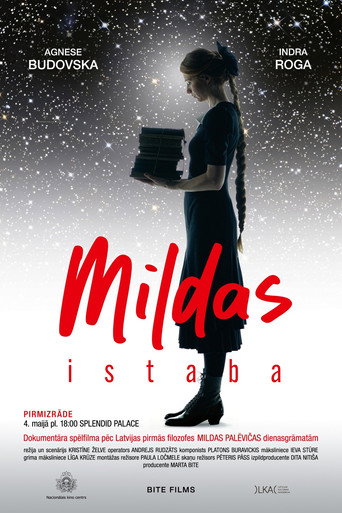
NRA documentary about Milda Palēviča (1889–1972), Latvia’s first female philosopher and a doctoral graduate of the Sorbonne, whose independent spirit and intellectual freedom endured despite the hardships of the Soviet era. Facing personal tragedies, a stifling daily reality, censorship, and the destruction of her academic career, Milda nevertheless preserved her inner world and commitment to thought. Her legacy survives in nine diaries written between 1911 and 1972—an extraordinary chronicle that offers a unique female perspective on the dramatic social, political, and cultural transformations of 20th-century Europe.
Mildas istaba
2026
 8.0
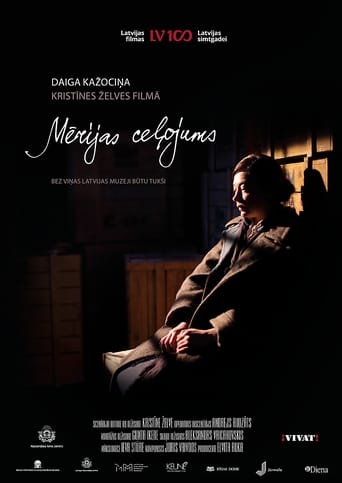
8.0At the end of the Second World War, when the German army retreated from Latvia, it also took along 700 boxes of materials from Latvian museums. If not for a young woman named Mērija Grīnberga, the exhibition halls of many museums in Latvia would be empty today. Grīnberga was the only volunteer who in 1944 went along with the train carrying the treasures of Latvian art in order to return with them back to Riga. The German occupying forces tried to take them away; the Soviet occupation forces brought them back; Mērija completed her duty. As gratitude for her journey, Mērija was sacked from her job at the museum and incessantly viewed with suspicion.
Mērija's Journey
2018
The film "Kino diena" (Cinema Day) is a meeting with two documentary filmmakers and life partners, Ivars and Maija Seleckis, for "the length of a single film screening," reviewing the films they have made together and attempting to articulate the phenomenon of the Riga documentary film school and the essence of the documentary filmmaker's profession, which is difficult to express in words.
Cinema Day
2014
Five blonde women confirm and break stereotypes about blondes and their men. They love, wait, annoy, challenge, surprise – they live next to us – each one different and each with her own blonde story. Mind and emotions, flesh and blood determine the most unexpected actions.
Blondie stāsti
2003
 3.0
3.0It's Latvia on the 20th of September, 2003 - the day of the referendum about joining the European Union. On the day of the referendum, twelve Latvian film directors of different generations portray twelve different characters across the country. Their life stories and environments affect their decision of voting “for” or “against”.
eu
2004
 NR
NRAn omnibus film consisting of ten parts, each directed by a different young director from the Latvian Academy of Culture. The unifying element of the ten shorts is the place where they take place - the airport. A lot can happen there - including a strike by a comet, a malicious attempt to break havoc by passengers, or an exploration of the old airport guard's house where not a lot has changed since the collapse of the Soviet Union. The film consists of the following parts: A Mishap (Nediena) by Arta Biseniece, Blurp (Šļurp) by Aija Bley, Alien Sky (Svešās debesis) by Viesturs Kairišs, 5 Versions (5 versijas) by Dzintars Krūmiņš, Comet (Komēta) by Māra Liniņa, Cleptomania (Kleptomānija) by Andis Mizišs, Alfredo's Poetry (Alfredo dzeja) by Igors Varenieks, Little Hand (Mazā roka) by Ilze Vidauska, Comet 2 (Komēta 2) by Anna Viduleja, and Life No. 2 (Dzīve nr.2) by Kristīne Želve.
Latavio, or Life Nr. 2
1997
Behind the camera
NRA documentary about Milda Palēviča (1889–1972), Latvia’s first female philosopher and a doctoral graduate of the Sorbonne, whose independent spirit and intellectual freedom endured despite the hardships of the Soviet era. Facing personal tragedies, a stifling daily reality, censorship, and the destruction of her academic career, Milda nevertheless preserved her inner world and commitment to thought. Her legacy survives in nine diaries written between 1911 and 1972—an extraordinary chronicle that offers a unique female perspective on the dramatic social, political, and cultural transformations of 20th-century Europe.
Mildas istaba
2026
NRA documentary about Milda Palēviča (1889–1972), Latvia’s first female philosopher and a doctoral graduate of the Sorbonne, whose independent spirit and intellectual freedom endured despite the hardships of the Soviet era. Facing personal tragedies, a stifling daily reality, censorship, and the destruction of her academic career, Milda nevertheless preserved her inner world and commitment to thought. Her legacy survives in nine diaries written between 1911 and 1972—an extraordinary chronicle that offers a unique female perspective on the dramatic social, political, and cultural transformations of 20th-century Europe.
Mildas istaba
2026
8.0At the end of the Second World War, when the German army retreated from Latvia, it also took along 700 boxes of materials from Latvian museums. If not for a young woman named Mērija Grīnberga, the exhibition halls of many museums in Latvia would be empty today. Grīnberga was the only volunteer who in 1944 went along with the train carrying the treasures of Latvian art in order to return with them back to Riga. The German occupying forces tried to take them away; the Soviet occupation forces brought them back; Mērija completed her duty. As gratitude for her journey, Mērija was sacked from her job at the museum and incessantly viewed with suspicion.
Mērija's Journey
2018
8.0At the end of the Second World War, when the German army retreated from Latvia, it also took along 700 boxes of materials from Latvian museums. If not for a young woman named Mērija Grīnberga, the exhibition halls of many museums in Latvia would be empty today. Grīnberga was the only volunteer who in 1944 went along with the train carrying the treasures of Latvian art in order to return with them back to Riga. The German occupying forces tried to take them away; the Soviet occupation forces brought them back; Mērija completed her duty. As gratitude for her journey, Mērija was sacked from her job at the museum and incessantly viewed with suspicion.
Mērija's Journey
2018
The film "Kino diena" (Cinema Day) is a meeting with two documentary filmmakers and life partners, Ivars and Maija Seleckis, for "the length of a single film screening," reviewing the films they have made together and attempting to articulate the phenomenon of the Riga documentary film school and the essence of the documentary filmmaker's profession, which is difficult to express in words.
Cinema Day
2014
Five blonde women confirm and break stereotypes about blondes and their men. They love, wait, annoy, challenge, surprise – they live next to us – each one different and each with her own blonde story. Mind and emotions, flesh and blood determine the most unexpected actions.
Blondie stāsti
2003
Five blonde women confirm and break stereotypes about blondes and their men. They love, wait, annoy, challenge, surprise – they live next to us – each one different and each with her own blonde story. Mind and emotions, flesh and blood determine the most unexpected actions.
Blondie stāsti
2003
3.0It's Latvia on the 20th of September, 2003 - the day of the referendum about joining the European Union. On the day of the referendum, twelve Latvian film directors of different generations portray twelve different characters across the country. Their life stories and environments affect their decision of voting “for” or “against”.
eu
2004
3.0It's Latvia on the 20th of September, 2003 - the day of the referendum about joining the European Union. On the day of the referendum, twelve Latvian film directors of different generations portray twelve different characters across the country. Their life stories and environments affect their decision of voting “for” or “against”.
eu
2004
NRAn omnibus film consisting of ten parts, each directed by a different young director from the Latvian Academy of Culture. The unifying element of the ten shorts is the place where they take place - the airport. A lot can happen there - including a strike by a comet, a malicious attempt to break havoc by passengers, or an exploration of the old airport guard's house where not a lot has changed since the collapse of the Soviet Union. The film consists of the following parts: A Mishap (Nediena) by Arta Biseniece, Blurp (Šļurp) by Aija Bley, Alien Sky (Svešās debesis) by Viesturs Kairišs, 5 Versions (5 versijas) by Dzintars Krūmiņš, Comet (Komēta) by Māra Liniņa, Cleptomania (Kleptomānija) by Andis Mizišs, Alfredo's Poetry (Alfredo dzeja) by Igors Varenieks, Little Hand (Mazā roka) by Ilze Vidauska, Comet 2 (Komēta 2) by Anna Viduleja, and Life No. 2 (Dzīve nr.2) by Kristīne Želve.
Latavio, or Life Nr. 2
1997
 NR
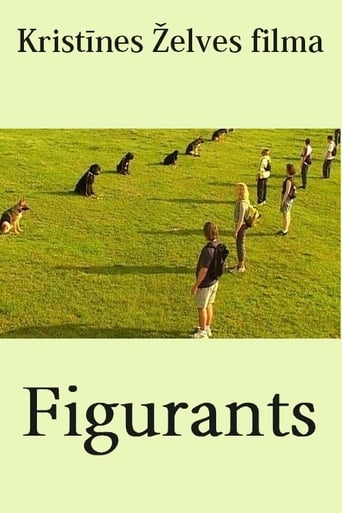
NRA decoy is an assistant to a dog trainer whose task is to be both a provocateur and a victim. Dogs and their owners have different attitudes towards the decoy's task.
Figurants
2005
NRA decoy is an assistant to a dog trainer whose task is to be both a provocateur and a victim. Dogs and their owners have different attitudes towards the decoy's task.
Figurants
2005
About the love and recognition of the people. In the year of Vaira Vīķe-Freiberga's 80th birthday, LTV film - "Always the President".
Vienmēr prezidente
2017
How did Hardijs Lediņš' unique personality develop? This TV documentary explores how, during the bleakest period of Soviet stagnation, when Western contemporary art trends and ideas were carefully hidden behind the Iron Curtain, Ledins' colorful, avant-garde and surreal ideas could emerge and be realized.
Manā mežā nav neviens
2015
“Being a composer means sharing joy and love for the possibility of harmony, at least in music,” says Pēteris Vasks, who celebrates his 70th birthday in 2016. He lives two parallel lives: one with the music that is born in his head, and the other – an everyday life, like any of us. The film crew takes a look at the composer's life from the creation of a piece of music to its premiere. It tells of the inspiration that the composer draws from the wonderful nature of Latvia, his childhood in a pastor's family during the Soviet era, and his inexhaustible joy of life. "The world must remain in balance so that we do not all fall into the abyss. The evil, aggressive and brutal, and that which is created by the power of love, faith and conviction... The less time I have left, the more I have to focus on the main thing – the affirmation of love."
Musica Serena. Komponists Pēteris Vasks
2016
“Being a composer means sharing joy and love for the possibility of harmony, at least in music,” says Pēteris Vasks, who celebrates his 70th birthday in 2016. He lives two parallel lives: one with the music that is born in his head, and the other – an everyday life, like any of us. The film crew takes a look at the composer's life from the creation of a piece of music to its premiere. It tells of the inspiration that the composer draws from the wonderful nature of Latvia, his childhood in a pastor's family during the Soviet era, and his inexhaustible joy of life. "The world must remain in balance so that we do not all fall into the abyss. The evil, aggressive and brutal, and that which is created by the power of love, faith and conviction... The less time I have left, the more I have to focus on the main thing – the affirmation of love."
Musica Serena. Komponists Pēteris Vasks
2016
 NR
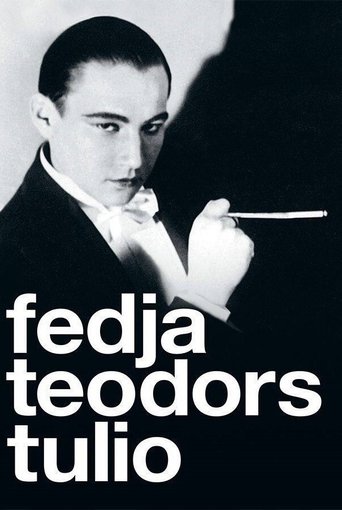
NRIt’s discovered by chance that legendary Finnish film director Teuvo Tulio came from a remote village in Latvia near the Russian border. During his childhood he was known by the Russian nickname, Fedya. The local authorities immediately place a memorial stone in his honour, but the local peasants are confused and even angry about the unwanted publicity and guests. They have neither heard of Teuvo Tulio, nor seen his films...
Fedya. Theodor. Tulio
2011
NRIt’s discovered by chance that legendary Finnish film director Teuvo Tulio came from a remote village in Latvia near the Russian border. During his childhood he was known by the Russian nickname, Fedya. The local authorities immediately place a memorial stone in his honour, but the local peasants are confused and even angry about the unwanted publicity and guests. They have neither heard of Teuvo Tulio, nor seen his films...
Fedya. Theodor. Tulio
2011
NRIt’s discovered by chance that legendary Finnish film director Teuvo Tulio came from a remote village in Latvia near the Russian border. During his childhood he was known by the Russian nickname, Fedya. The local authorities immediately place a memorial stone in his honour, but the local peasants are confused and even angry about the unwanted publicity and guests. They have neither heard of Teuvo Tulio, nor seen his films...
Fedya. Theodor. Tulio
2011