
Acting
Werner Riemann
Born
1934-01-01 (92)
Known for
Acting
Credits
15 titles
Known for
 10.0
No synopsis available yet.
Schlaflose Tage
1991
The play tells the story of the chronic drunkard and landowner Puntila. When he is drunk, he is virtually free of himself; he develops immense strength in these phases and can really be a human being. Then he wants to fraternize with his chauffeur Matti, wants to give him a forest and a sawmill, and even wants to give him his daughter as his wife. Puntila could accomplish many, many more good deeds in his frenzy, but when he returns to a sober state, Puntila reveals himself to be the "black sheep" of his capitalist class and an insignificant person. His classmate reads him the riot act and shows him the limits of this species, which Puntila can never break. GDR television showed the play in a production by the Berliner Ensemble.
Herr Puntila und sein Knecht Matti
1979
 6.6
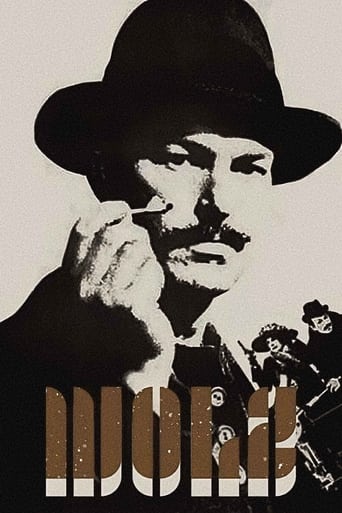
Soldier Ignaz Wolz returns from WWI with an immeasurable hatred of capitalist war profiteers. He decides to start his own revolution, but tries to stay away from the organized class struggle. He steals from the rich men and divides the wealth among the poor. One day, Wolz is arrested and sentenced to life in prison; seven years later he is released due to mass protests. More than ever, it is hard for him to fit in. He severs ties with his former companions, who reject his ideas, and leaves Germany.
Wolz – Life and Transfiguration of a German Anarchist
1973
No synopsis available yet.
Das Märchen vom goldenen Schützen
1963
 9.0
Russian soldier Grisha escapes from a German prisoner-of-war camp in the spring of 1917. He is caught and is to be shot as a spy. This decision is controversial. The dispute continues. Grisha is executed on the orders of the army high command.
Der Streit um den Sergeanten Grischa
1968
Victory and demise of the first proletarian dictatorship in the history of mankind, about the struggling, bleeding workers of Paris who enthusiastically defend their historical initiative. The little Cabet family from Rue Pigalle and their friends let the spectator participate in the action.
Die Tage der Commune
1966
Film credits
1990s · 3 titles

1980s · 2 titles
 6.5
In the 1770s, Swiss farmer Johann Heinrich Pestalozzi established a school for poor orphaned children in the Aargau. Up to total exhaustion he sacrificed himself for his pedagogical theories. Five years later, the project of the idealistic educator failed after bloody attacks of the French. In retrospect, the disappointed Pestalozzi experiences the last few months with "his" children.
Pestalozzi's Mountain
1989
Shortly after the end of World War II, young carpenter Achim is sent to a remote farm to do some repair work. Three women from different generations administer the farm on their own: Daughter, mother, and grandmother. There are no men around since grandmother Hanna has lost her husband in World War I, and mother Gertrud’s husband died in World War II. Although daughter Heidi is old enough to marry, she is neither engaged nor married. Thus, hardworking, yet shy Achim is the only man around.
Weiberwirtschaft
1984
1970s · 6 titles
The play tells the story of the chronic drunkard and landowner Puntila. When he is drunk, he is virtually free of himself; he develops immense strength in these phases and can really be a human being. Then he wants to fraternize with his chauffeur Matti, wants to give him a forest and a sawmill, and even wants to give him his daughter as his wife. Puntila could accomplish many, many more good deeds in his frenzy, but when he returns to a sober state, Puntila reveals himself to be the "black sheep" of his capitalist class and an insignificant person. His classmate reads him the riot act and shows him the limits of this species, which Puntila can never break. GDR television showed the play in a production by the Berliner Ensemble.
Herr Puntila und sein Knecht Matti
1979
6.6Soldier Ignaz Wolz returns from WWI with an immeasurable hatred of capitalist war profiteers. He decides to start his own revolution, but tries to stay away from the organized class struggle. He steals from the rich men and divides the wealth among the poor. One day, Wolz is arrested and sentenced to life in prison; seven years later he is released due to mass protests. More than ever, it is hard for him to fit in. He severs ties with his former companions, who reject his ideas, and leaves Germany.
Wolz – Life and Transfiguration of a German Anarchist
1973
 5.4
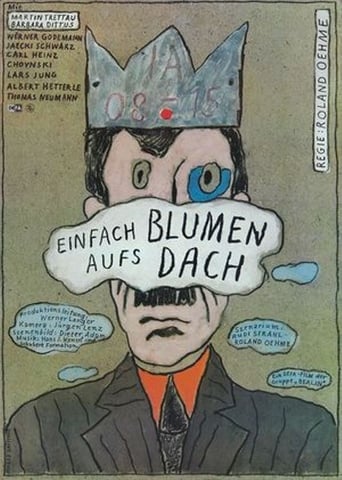
Mechanic Hannes Blaschke and his wife Maxi, who works as a bus driver, have just become happy parents of twins. Now they have a serious transportation problem: Their Trabant is far too small for the grown family that furthermore includes two sons and a dog. Thanks to the support of a state secretary and of his brigade, Hannes acquires a Tschaika – a limousine that is normally restricted to representational purposes – for a small price. Whereas Maxi views the state carriage only as a useful means of transportation, Hannes enjoys the unusual pre-emption he is receiving for the spectacular car. Hannes, who normally is just a humble guy, starts to grate his colleagues with his new affectations. Thus, they teach him an effective lesson: They decorate the state carriage with flowers and thus bring Hannes back down to earth in a humorous way.
Einfach Blumen aufs Dach
1979
At the end of the 19th century, German archaeologist Professor Bohmann is searching for the remains of the legendary island Atlantis. But he is not the only one who is trailing the myth. His adversary, the British scientist Sir Grey claims to have already found Atlantis. In different masks and guises, he sets cunning traps to keep off his adversary from finding Atlantis.
Unterwegs nach Atlantis
1977
 9.0
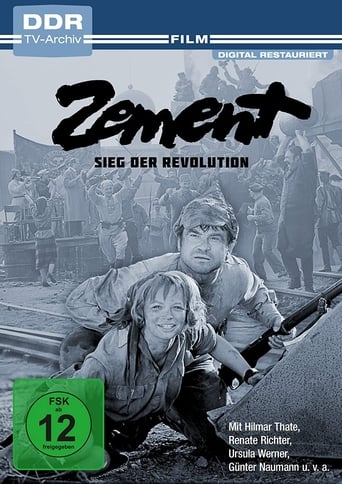
Early 1921: a man is on his way home. Gleb Chumalov, regimental commander, worker and Hero of the Order of the Red Banner, returns to his home town from the Civil War. The victory over the enemies of the Russian people gives him the conviction that a new, better time will dawn overnight. Gleb looks for his comrades from earlier years, but only finds people who are emaciated by their efforts. The cement works where he used to work has been plundered and abandoned. With great effort, Gleb and his comrades try to get the plant up and running again. The struggle seems to begin anew... It is the time after the victory of the “Great October Socialist Revolution“ and the time of building a new society.
Zement
1973
 NR
During the October Revolution in 1917 the Bolshevik Party appointed a woman commissioner of the “Free Anarchist-Revolutionary Section”. This regiment emerged from an anarchist division of the ship of the line “Imperator Paul I.”
Optimistische Tragödie
1971
1960s · 4 titles
No synopsis available yet.
Das Märchen vom goldenen Schützen
1963
9.0Russian soldier Grisha escapes from a German prisoner-of-war camp in the spring of 1917. He is caught and is to be shot as a spy. This decision is controversial. The dispute continues. Grisha is executed on the orders of the army high command.
Der Streit um den Sergeanten Grischa
1968
Victory and demise of the first proletarian dictatorship in the history of mankind, about the struggling, bleeding workers of Paris who enthusiastically defend their historical initiative. The little Cabet family from Rue Pigalle and their friends let the spectator participate in the action.
Die Tage der Commune
1966
 NR
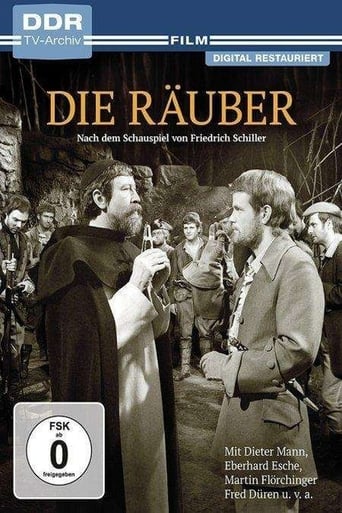
Germany in the 18th century. Two brothers rebel against the narrow confines of the small state and feudal despotism. However, Franz and Karl Moor have very different motives: Franz is interested in satisfying his personal needs, power and wealth, while Karl has a vision of a new, better society. To achieve this, he needs support. He finds it in a gang of robbers, of which he becomes the leader. He soon learns that anarchy can neither rally the masses nor challenge the existing order.
Die Räuber
1967