
Directing
Kumahiko Nishina
Born — Died
1896-01-01 — 1987-04-10
Known for
Directing
Credits
7 titles
Known for
 NR
A state-sponsored film centered on Shinsaku Takasugi’s theories on coastal defense.
Kaikyō no fūunji
1943
 5.6
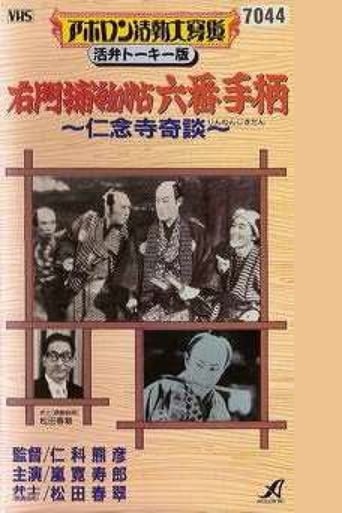
An important silent film survives, Kumahiko Nishina's Umon torimonocho rokuban tegara jinenji kidan (The Samurai Detective, aka The Detective Records of Umon, aka Detective Umon Diary: Exploit Number Six, 1930). Umon on his shining white horse stops a conspiracy against the Shogun. Umon was played by Kanjuro Arashi in this early film, & long after in the post-Occupation jidaigeki revival he reprised the role in Kajiro Yamamoto's Muttsuri Umon torimonocho (1955), helping to launch the renewed interest in such films.
Detective Umon's Diary, Story No. 6
1930
The sincere clown act performed by a master thief who infiltrates a remote island.
The Fugitive
1947
Depicting Katsu Kaishu's youth.
Oedo no asagiri
1942
No synopsis available yet.
Ârakuma daihachi
1926
 5.6
Araki Mataemon was a very strong warrior, and his feud against the samurai Kawai Matagorō is one of the most famous in Japan. Matagoro killed Gendayu, the little brother of Mataemon's brother in law, Watanabe Kazuma. Becoming a murderer out of jealousy for a childhood friend, Matagoro fled in another domain, using friends of his father and his lineage linked to Tokugawa Ieyasu. It was somehow a complicated matter, as it seems at that time, a law from Toyotomi Hideyoshi allowed a little brother taking revenge for his elder brother, but not the reverse. After some years, the lord of Kazuma and Mataemon found a way, and they were allowed to take revenge for the murder. They fought and killed Matagoro and just one other samurai who was helping the culprit. It seems at that time, Kazuma was Mataemon's only assistant.
Araki Mataemon: Master Swordsman
1935
Behind the camera
NRA state-sponsored film centered on Shinsaku Takasugi’s theories on coastal defense.
Kaikyō no fūunji
1943
5.6An important silent film survives, Kumahiko Nishina's Umon torimonocho rokuban tegara jinenji kidan (The Samurai Detective, aka The Detective Records of Umon, aka Detective Umon Diary: Exploit Number Six, 1930). Umon on his shining white horse stops a conspiracy against the Shogun. Umon was played by Kanjuro Arashi in this early film, & long after in the post-Occupation jidaigeki revival he reprised the role in Kajiro Yamamoto's Muttsuri Umon torimonocho (1955), helping to launch the renewed interest in such films.
Detective Umon's Diary, Story No. 6
1930
The sincere clown act performed by a master thief who infiltrates a remote island.
The Fugitive
1947
Depicting Katsu Kaishu's youth.
Oedo no asagiri
1942
No synopsis available yet.
Ârakuma daihachi
1926
5.6Araki Mataemon was a very strong warrior, and his feud against the samurai Kawai Matagorō is one of the most famous in Japan. Matagoro killed Gendayu, the little brother of Mataemon's brother in law, Watanabe Kazuma. Becoming a murderer out of jealousy for a childhood friend, Matagoro fled in another domain, using friends of his father and his lineage linked to Tokugawa Ieyasu. It was somehow a complicated matter, as it seems at that time, a law from Toyotomi Hideyoshi allowed a little brother taking revenge for his elder brother, but not the reverse. After some years, the lord of Kazuma and Mataemon found a way, and they were allowed to take revenge for the murder. They fought and killed Matagoro and just one other samurai who was helping the culprit. It seems at that time, Kazuma was Mataemon's only assistant.
Araki Mataemon: Master Swordsman
1935
No synopsis available yet.
Shimizu Jirochô
1931