
Acting
Daphne Heard
Born — Died
1904-08-01 — 1983-06-22
Place of birth
Plymouth, Devon, England, UK
Known for
Acting
Credits
55 titles
Known for
 7.9
The adventures of The Doctor, a time-traveling humanoid alien known as a Time Lord. He explores the universe in his TARDIS, a sentient time-traveling spaceship. Its exterior appears as a blue British police box, which was a common sight in Britain in 1963 when the series first aired. Along with a succession of companions, The Doctor faces a variety of foes while working to save civilizations, help ordinary people, and right many wrongs.
Doctor Who
1963
 6.6
Play for Today is a British television anthology drama series, produced by the BBC and transmitted on BBC1 from 1970 to 1984. During the run, more than three hundred programmes, featuring original television plays, and adaptations of stage plays and novels, were transmitted. The individual episodes were between fifty and a hundred minutes in duration.
Play for Today
1970
 5.2
An anthology series of television plays which aired on BBC1 from October 1964 to May 1970. The plays were usually written for television, although adaptations from other sources also featured.
The Wednesday Play
1964
 5.2
A BBC television anthology series featuring productions of classic and contemporary stage plays usually broadcast on BBC1. Each production featured a different work, often using prominent British stage actors in the leading roles. The series was transmitted from October 1965 to September 1983.
BBC Play of the Month
1965
 7.0
Anthology series of dramatic works.
ITV Saturday Night Theatre
1969
 7.8
Upstairs: the wealthy, aristocratic Bellamys. Downstairs: their loyal and lively servants. For nearly 30 years, they share a fashionable townhouse at 165 Eaton Place in London’s posh Belgravia neighborhood, surviving social change, political upheaval, scandals, and the horrors of the First World War.
Upstairs, Downstairs
1971
Film credits

1970s · 9 titles
 NR
Harvey Whitlow has been back from World War I for a year, and he's been having a hard time making a go of it. Keith Drinkell, as the peddler of farm products (called a "higgler" in England), is married to Jane Carr in a one-hour drama, "The Higgler," on the Masterpiece Theater.
The Higgler
1973
 5.8
After her husband is captured during WWII, homesteader Alice is forced to maintain their land herself. One day, a wandering soldier named Barton stops by the farm and the pair begin a relationship. When the military police pass through the area looking for deserters, Barton is forced to disguise himself as a woman to stay with Alice. But he soon catches the eye of a sergeant posted nearby.
The Triple Echo
1972
 7.0
The present day: just as the Fourth Doctor and Leela arrive in Fetchborough, England, Professor Fendelman prepares to experiment on a fossilized skull which science says should not exist. The skull is actually an artefact of the Fendahl, a god-like being who feeds on the life force of others. It has begun to awaken and kill. Worse yet, others seek to exploit the Fendahl's dreadful power.
Doctor Who: Image of the Fendahl
1977
 4.3
Nearly a thousand miles away from their beloved Moscow, Chekhov's Three Sisters live in virtual exile. Olga , a schoolmistress, attempts to support her siblings and the home that is the sole legacy of their late father.
Three Sisters
1970
 9.0
A luncheon party gathers to celebrate a wealthy unmarried man's birthday; his sister hopes he'll marry Sonya, the daughter of a selfish gout-ridden old professor who makes life Hell for his son George and his young wife, Helen. At the luncheon is Khrushchov, a passionate environmentalist, called "the Wood Demon" by all, in love with Sonya and she with him, but neither will say it. Two weeks later there's a family meeting at the professor's estate; two weeks after that, a supper at the cabin of Dyadin, who's cheerful to all. George, Helen, Sonya, and Khrushchov are each suffocating. Can any of them take action?
The Wood Demon
1974
 NR
Johnny has joined the army because he likes canoeing, but ends up in a war-torn city and is compromised into helping the enemy. However, desertion will not be a solution, and he finds himself more distressed than ever.
The Paradise Run
1976
 4.7
Unnaturally close, jet-setting twins become enmeshed in the Swinging London scene, where their relationship is strained after they befriend a predatory hustler and his girlfriend.
Goodbye Gemini
1970
 5.7
Mr. Hedges, the somewhat naive and idealistc teacher of the rebellious Class 5C, lobbies to have them allowed on the school camping trip despite much precedent to the contrary. Once on the camping trip Mr. Hedges pursues the local barmaid and the class indulge in their usual activities. A small feud with some stereotypical upper class children in red blazers is resolved with a false rape allegation. A case of some stolen money is resolved through Mr. Hedges trusting the class. At the final dance Mr. Hedges is ensnared in the romantic clutches of Miss Cutforth, contrary to his wishes.
Please Sir!
1971
The Thane of Cawdor plots to become King of Scotland.
Macbeth
1970
1960s · 4 titles
 NR
An estate agent arranges to meet a couple for a viewing at a flat.
Vacant Possession
1966
Macbeth, the Thane of Glamis, receives a prophecy from a trio of witches that one day he will become King of Scotland. Consumed by ambition and spurred to action by his wife, Macbeth murders his king and takes the throne for himself.
Macbeth
1966
An adopted child's world falls apart when his mother decides to walk out on her marriage.
Toggle
1968
Television adaptation of Peter Weiss's play about the Frankfurt Auschwitz trials.
The Investigation
1967
Series credits
7.9The adventures of The Doctor, a time-traveling humanoid alien known as a Time Lord. He explores the universe in his TARDIS, a sentient time-traveling spaceship. Its exterior appears as a blue British police box, which was a common sight in Britain in 1963 when the series first aired. Along with a succession of companions, The Doctor faces a variety of foes while working to save civilizations, help ordinary people, and right many wrongs.
Doctor Who
1963
6.6Play for Today is a British television anthology drama series, produced by the BBC and transmitted on BBC1 from 1970 to 1984. During the run, more than three hundred programmes, featuring original television plays, and adaptations of stage plays and novels, were transmitted. The individual episodes were between fifty and a hundred minutes in duration.
Play for Today
1970
5.2An anthology series of television plays which aired on BBC1 from October 1964 to May 1970. The plays were usually written for television, although adaptations from other sources also featured.
The Wednesday Play
1964
5.2An anthology series of television plays which aired on BBC1 from October 1964 to May 1970. The plays were usually written for television, although adaptations from other sources also featured.
The Wednesday Play
1964
5.2A BBC television anthology series featuring productions of classic and contemporary stage plays usually broadcast on BBC1. Each production featured a different work, often using prominent British stage actors in the leading roles. The series was transmitted from October 1965 to September 1983.
BBC Play of the Month
1965
7.0Anthology series of dramatic works.
ITV Saturday Night Theatre
1969
7.0Anthology series of dramatic works.
ITV Saturday Night Theatre
1969
7.8Upstairs: the wealthy, aristocratic Bellamys. Downstairs: their loyal and lively servants. For nearly 30 years, they share a fashionable townhouse at 165 Eaton Place in London’s posh Belgravia neighborhood, surviving social change, political upheaval, scandals, and the horrors of the First World War.
Upstairs, Downstairs
1971
 4.5
Angels is a BBC medical soap-opera which launched on 1st September 1975 and was the blue print for such medical soaps as Casualty, Holby City, plus daytime soap, Doctors. The medical soap focuses on different departments within Heath Green Hospital and was a highly successful continuing drama.
Angels
1975
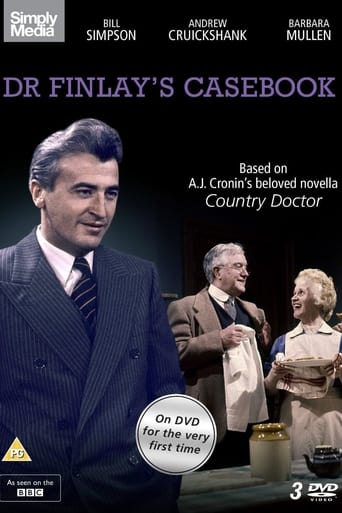 6.7
Dr Finlay's Casebook is a BBC television series that was broadcast from 1962 until 1971. Based on A. J. Cronin's novella Country Doctor, the storylines centred on a general medical practice in the fictional Scottish town of Tannochbrae during the late 1920s.
Dr. Finlay's Casebook
1962
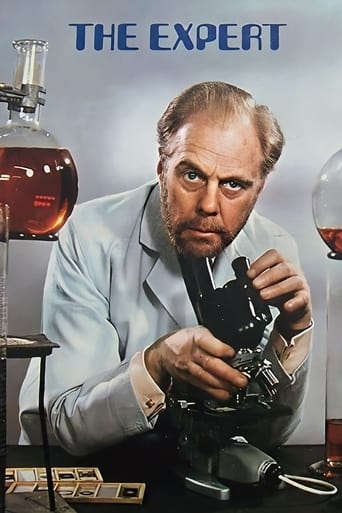 9.0
The Expert is a British television series produced by the BBC between 1968 and 1976. The series starred Marius Goring as Dr. John Hardy, a pathologist working for the Home Office and was essentially a police procedural drama, with Hardy bringing his forensic knowledge to solve various cases. The Expert was created and produced by Gerard Glaister. The series was also one of the first BBC dramas to be made in colour, and throughout its four series had numerous high quality guest appearances by actors such as John Carson, Peter Copley, Rachel Kempson, Peter Vaughan, Clive Swift, Geoffrey Palmer, Peter Barkworth, Jean Marsh, Ray Brooks, George Sewell, Anthony Valentine, Bernard Lee, Lee Montague, Geoffrey Bayldon, Mike Pratt, Edward Fox, André Morell, Brian Blessed, Nigel Stock, Philip Madoc and Warren Clarke.
The Expert
1968
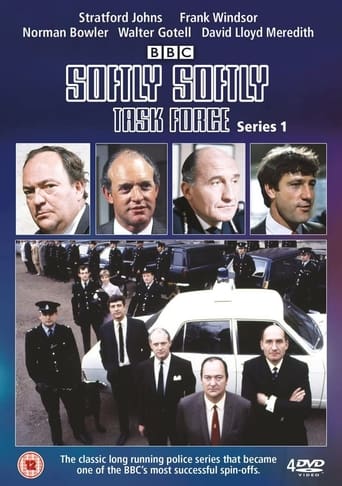 7.5
Softly, Softly is a British television drama series, produced by the BBC and screened on BBC 1 from January 1966. It centred around the work of regional crime squads, plain-clothes CID officers based in the fictional region of Wyvern, supposedly in the Bristol area of England.
Softly, Softly
1966
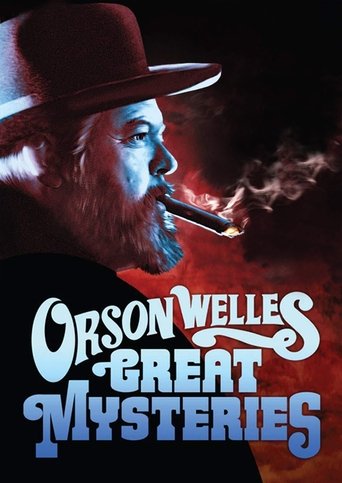 6.8
Orson Welles’ Great Mysteries is a British television anthology series produced by Anglia Television for the ITV network and broadcast between 1973 and 1974. The series presents standalone adaptations of classic mystery, crime, and supernatural stories drawn from literary sources including Dickens, Conan Doyle, Wilkie Collins, Balzac, Maugham, O. Henry, and others. Each episode is framed by original introductory and closing sequences performed by Orson Welles, who serves as the series’ host and sole recurring on-screen presence. These segments, written and directed by Welles (uncredited), function as stylized narrative framing devices rather than dramatic participation in the stories themselves. The dramatic content of each episode is performed by separate casts and directors, with no continuing characters or serialized narrative, establishing the series as a unified television anthology rather than a collection of standalone films.
Orson Welles' Great Mysteries
1973
Thursday Theatre is a British television anthology programme produced by and aired on the BBC from 1964–1965. The productions ranged in duration from 75 to 95 minutes. Out of the 23 episodes, 13 are believed lost, and one is incomplete.
Thursday Theatre
1964
 5.0
Churchill's People is a British anthology series based on A History of the English-Speaking Peoples, Winston Churchill's four-volume history of Britain and its former colonies. 26 episodes were produced by the BBC and initially broadcast from 30 December 1974 to 23 June 1975.
Churchill's People
1974
Story Parade specialized in adaptations of modern novels. It was broadcast on June 5, 1964 and repeated on August 28, 1964. The teleplay was by Terry Nation (who invented "Blake's 7" and the Daleks in Dr. Who), and Elijah Baley was played by the late Peter Cushing. It also starred John Carson John Carson as R. Daneel Olivaw and Kenneth J. Warren. The master tapes of the program were erased, however a few clips from the production have turned up in various documentaries about Isaac Asimov's work.
Story Parade
1964
 7.7
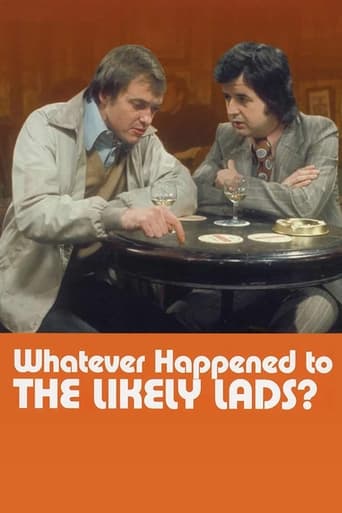
Whatever Happened to the Likely Lads? is a British sitcom which was broadcast between 9 January 1973 and 9 April 1974 on BBC1. It was the colour sequel to the mid-1960s hit The Likely Lads. It was created and written, as was its predecessor, by Dick Clement and Ian La Frenais. There were 26 television episodes over two series; and a subsequent 45-minute Christmas special was aired on 24 December 1974. The cast were reunited in 1975 for a BBC radio adaptation of series 1, transmitted on Radio 4 from July to October that year. In 1976, a feature film spin-off was made. Around the time of its release, however, Rodney Bewes and James Bolam fell out over a misunderstanding involving the press and have not spoken since. This long-suspected situation was finally confirmed by Bewes while promoting his autobiography in 2005. Unlike Bewes, Bolam is consistently reluctant to talk about the show, and has vetoed any attempt to revive his character.
Whatever Happened to the Likely Lads?
1973
 6.3
Ace of Wands is a fantasy-based British children's television show broadcast on ITV between 1970 and 1972, created by Trevor Preston and Pamela Lonsdale and produced by Thames Television. The title, taken from the name of a Tarot card describes the principal character, called "Tarot" who combined stage magic with supernatural powers. Tarot has a pet Owl named Ozymandias, played by Fred Owl. The series ran for two seasons of thirteen episodes and a third season of twenty, with fourteen story arcs, in a similar manner to early Doctor Who. Many, if not all, of the first 26 episodes are believed to have been wiped, although the final season is intact.
Ace of Wands
1970
 8.0
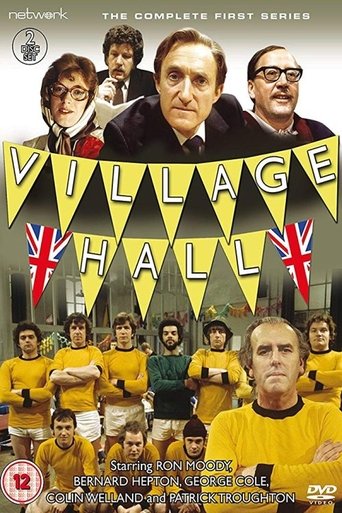
Village Hall is an anthology drama series produced by Granada between 1974–75. It is entirely set in a village hall, with each episode highlighting a different use to which the space is put by locals.
Village Hall
1974
 NR
Anthology series of love stories.
Boy Meets Girl
1967
 5.2
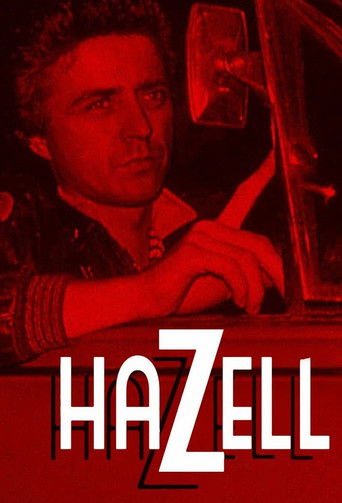
Hazell is a British television drama based on the novel series by Terry Venables and Gordon Williams (collectively known as P.B. Yuill), and starring Nicholas Bell as James Hazell, a 'smart parody' of Philip Marlowe and Sam Spade. The program ran for 2 series, from January 1978 to July 1979.
Hazell
1978
 7.5
In Colne, Lancashire, in the North West of England, Nellie and Eli Pledge may be siblings, but their personalities are polar opposites. If not for inheritance, they would never even think of becoming business partners for five years.
Nearest and Dearest
1968
 7.0
Following the love-hate relationship between upper-class Audrey Forbes-Hamilton and Richard DeVere, the nouveau riche businessman who buys her manor house when she can no longer afford to keep it.
To the Manor Born
1979
 6.5
Murder Most English: A Flaxborough Chronicle (often referred to simply as Murder Most English) is a seven-part British detective miniseries based on Colin Watson's Flaxborough novel series. While Martin Lisemore receives billing on all episodes, he died midway through filming, and was replaced by Bill Sellars, who refused credit. Flaxborough, near the sea, near the countryside, seems such a nice town, so quiet, so charming. But underneath its placid surface, all kinds of scandalous things go on.
Murder Most English: A Flaxborough Chronicle
1977
Blackmail, in all its meanings and forms, was the central theme of the episodes comprising this series.
Blackmail
1965
 4.6
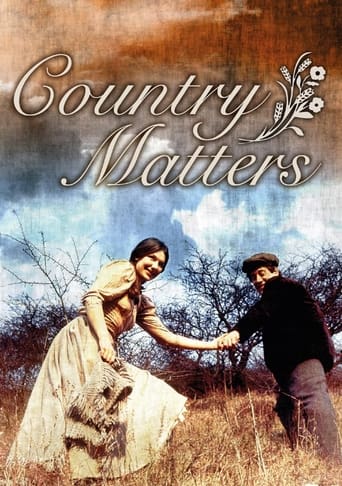
An anthology series adapted from plays and short stories by A.E Coppard and H.E. Bates, depicting English country life and rural romance at the turn of the 20th-century. It presents unsentimental stories of human relationships and raw emotions – heartfelt passions, crippling frustrations, unspoken love and destructive jealousy.
Country Matters
1972
 6.0
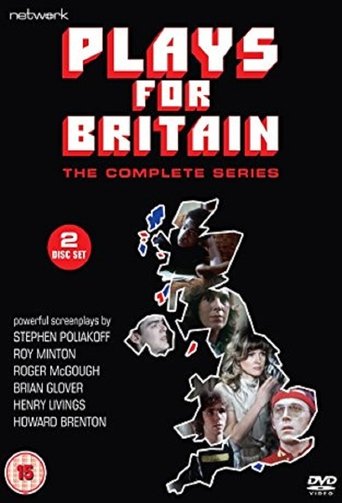
An anthology series of six contemporary plays from writers at relatively early stages in their careers.
Plays for Britain
1976
 7.0
Nicholas Nickleby, a young boy in search of a better life, struggles to save his family and friends from the abusive exploitation of his coldheartedly grasping uncle.
Nicholas Nickleby
1968
 6.0
16-year-old Terry Connor uncovers a secret government plot involving mind control and espionage at a Ministry of Defence facility near his Outward Bound camp.
The Jensen Code
1973
 6.2
Once a successful playwright, George Maple is now procrastinating, lacking self-confidence and suffering from writer's block. He is seen at home with his supportive wife Mabel, son Wilfred and daughter Kate. They're frequently visited by neighbour Tom Lawrence, a confident, suave and successful playwright, and cleaner Mrs Field.
Don't Forget to Write!
1977
Mike Upchat is an unsuccessful novelist who lives out of a railway station locker - he has the gift of the Gab and changes his life story every episode to impress different women - basically he reinvents himself to score.
The Upchat Line
1977
Westway is a British television series made by HTV for ITV in 1976. The series dealt with the lives of three families living together in a commune in Bristol, and explored issues of self-sufficiency also addressed by BBC series of the period such as The Good Life and Survivors.
Westway
1976
Forward thinking anthology of dramas about the emerging problems of a city.
City '68
1967
 5.0
Jude the Obscure is a British television serial directed by Hugh David and dramatised by Harry Green, based on Thomas Hardy's 1895 novel of the same name. Born into poverty, young Jude Fawley refuses to accept his lot in life. As his dreams are shattered one by one, his life gradually descends into tragedy.
Jude the Obscure
1971
George Moore's story of the kitchen-maid who was dismissed from a late-Victorian horse-racing household because she was going to have a baby by the footman.
Esther Waters
1964
Wild, Wild Women was a British sitcom that aired on BBC from 1968 to 1969. Made in black-and-white, it starred Barbara Windsor and was written by Ronald Wolfe and Ronald Chesney.
Wild, Wild Women
1968
 9.5
Set in the early 1840s, this is the original BBC miniseries of Elizabeth Gaskell's classic tale of a fictional Victorian country village in which the genteel ladies of Cranford struggle to face an uncertain future with dignity and 19th Century decorum.
Cranford
1972
Horace had a learning disability, and he used to like "fish n chips for tea." It was arguably the first mainstream UK TV serial that had a person with a learning disability as the protagonist.
Horace
1982