
Directing
Yann Beauvais
Born
1953-01-01 (73)
Place of birth
France
Known for
Directing
Credits
49 titles
Born in France in 1953. As a teacher in the United States, he became conscious of the need to lead a "cultural battle". Filmmaker and film critic, he organizes experimental cinema events in France and other countries. After his film and philosophy studies, he became very influenced by contemporary art (Russian formalism and minimal structuralism) and learned music, as well as by his friendship with Paul Sharits. He strives to find a balance between formalism and lyricism. He himself explains that the common denominator between all his films is that they are all constructed according to the principle : "fragility" - "disappearance" - "disintegration". In 1982 he co-founds Light Cone with Mile…
Known for
"It is above all a portrait of Miles McKane. Making a portrait, shooting a portrait are all modes of perpetuating/appropriating a person's image. Could a cinematographic portrait escape this rule?" -YB
Miles
1983
 NR
NRExperimental short film
Des rives
1998
 NR
NRStudy of the Mont Sainte Victoire.
, d’ailleurs
2006
An activist piece dealing with the Palestinians' right to exist. Gaza, March-April 2018.
basta
2018
 NR
NRA single-screen version of the Portraits / Mirrors multi-projection. Featuring portraits of: Aloual, Gaël Badaud, Raphaël Bassan, Yann Beauvais, Jean-Michel Bouhours, Gérard Courant, Berndt Deprez, Bertrand Gadenne, Mythia Kolésar, Christian Lebrat, Stéphane Marti, Pascal Martin, Michel Nedjar, Dominique Noguez, Vivian Ostrovsky, Bernard Roué, Martine Rousset, Alain Sayag, Unglee, and Catherine Zbinden.
Portraits / Mirrors
1984
Initial situation: models were invited to participate in their portrait by the contribution of personal objects and a great freedom of expression before the camera. This initial situation was conceived by Catherine Rebois. Graffon: I propose to film in a fragmented way these sessions of pose. Participants agree to be filmed at the same time they are photographed. Deliberately sharpened shift between an initial situation in its own duration and its filmic recording. The sequence of photographic shooting sessions is shattered.
Portraiture
1993
Film credits
2000s · 3 titles
 NR
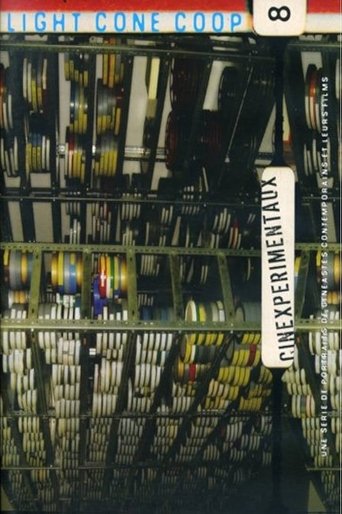
NRCinexpérimentaux is a series of documentaries on experimental filmmakers, produced and directed by Michel Amarger and Frédérique Devaux. N°8 is dedicated to the most important European cooperative Light Cone created in 1982 in Paris.
Cinexpérimentaux #8: Cooperative Light Cone
2008
No synopsis available yet.
Pourquoi "Light Cone" ?
2008
The winter Place Sqaure. Two cameras spinning, at the sound of musicians from an orchestra tuning their instrument.
Spin
2008
1990s · 2 titles
Initial situation: models were invited to participate in their portrait by the contribution of personal objects and a great freedom of expression before the camera. This initial situation was conceived by Catherine Rebois. Graffon: I propose to film in a fragmented way these sessions of pose. Participants agree to be filmed at the same time they are photographed. Deliberately sharpened shift between an initial situation in its own duration and its filmic recording. The sequence of photographic shooting sessions is shattered.
Portraiture
1993
 NR
NRA film about my relationship to New York since 1962. It deals with the distance between a memory and the image of this memory, a distance one always tries to abolish. In this personal film we see the images of a city from a close distance, with autobiographic fragments on the soundtrack. The distance of recollection. The trace of this distance shapes the memory as much as the places, haunted by so many stories, so that our marks will blow up in a crash. A crash leading to a collapse in a vortex of affects.
New York Long Distance
1994
1980s · 2 titles
NRA single-screen version of the Portraits / Mirrors multi-projection. Featuring portraits of: Aloual, Gaël Badaud, Raphaël Bassan, Yann Beauvais, Jean-Michel Bouhours, Gérard Courant, Berndt Deprez, Bertrand Gadenne, Mythia Kolésar, Christian Lebrat, Stéphane Marti, Pascal Martin, Michel Nedjar, Dominique Noguez, Vivian Ostrovsky, Bernard Roué, Martine Rousset, Alain Sayag, Unglee, and Catherine Zbinden.
Portraits / Mirrors
1984
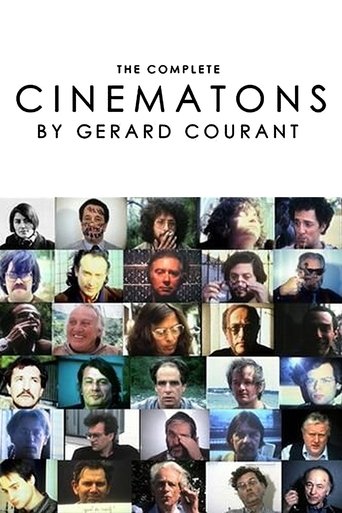
Reel 33 of Gérard Courant’s on-going Cinematon series.
Cinématon XXXIII
1984
Behind the camera
"It is above all a portrait of Miles McKane. Making a portrait, shooting a portrait are all modes of perpetuating/appropriating a person's image. Could a cinematographic portrait escape this rule?" -YB
Miles
1983
NRExperimental short film
Des rives
1998
NRStudy of the Mont Sainte Victoire.
, d’ailleurs
2006
An activist piece dealing with the Palestinians' right to exist. Gaza, March-April 2018.
basta
2018
No synopsis available yet.
Fugue chromatique
1977
DERRUBADA NÃO! is a film essay deploying a reflection via an experiment whose objective is to measure the impact of an artistic gesture that crystallizes a set of questions relating to what can be defined as belonging: an ethnic group, a history, a language, a culture..
Derrubada não!
2019
 NR
NRThis film is a series of shot or found sequences (about, of cities that I frequent) which, in the editing, display a fluidity and continuity eluding narration. The sequences are shaped by the editing according to various arrangements which respect the film possible direction: passage from one place to another, from one moment to another. To pass, bridging one point to another, is to transform oneself, become other. The film employs certain leitmotivs which relauch the flow and facilitate diverse transformations of scattered sensations. This film, although renewing lyricism, does not deny formalism which it uses in another manner, while taking into account the meaning/possible meanings produced through linking images and their evocative passage.
Divers-epars
1987
“How should we describe a work such as TU, SEMPRE by Yann Beauvais? Visually, it consists of roughly 40 minutes of videotext in movement and arrest, largely white text varying in size on a black background, interspersed with a small number of images; its audio is a dirge of drone music by Thomas Köner punctuated by voice-overs by several individuals, sometimes one at a time, sometimes several at once. Text appears in French, English and Italian and voice-overs are in French and English. It is a work of immense complexity and depth and this is but the beginning of a possible description.” –Keith Sanborn
Tu, Sempre
2001
 NR
NRNo synopsis available yet.
Spetsai
1989
 NR
NR"...the Arc de Triomphe. Among many variations offered, we have selected about thirty which were cut vertically, horizontally and diagonally. The film, very dense, compact, tries to shape perception by means of specific cinematographic treatments which accumulate contradictory, divergent and paradoxical information." -YB
Enjeux
1984
 NR
NRResult of a slow decomposition of 16mm prints of QUATR'UN in Recife. One set was scanned frame by frame and cropped to include the perforations. Dissolution of the frame and mimetic representation in time.
DKR 4395
2023
 1.0
1.0Trap for the voyeur, his expectations are thwarted each time, disappointed and yet he always hopes...
Homovie
1977
RR uses musical models as a paradigm. The central part of each section of the film is based on a transcription of a Bach composition for two voices. The two screens underscore this paradigm insofar as one is always the simultaneous reflection of the visual development of the other, regardless of the position of the reels (left or right): a visual representation of the inversion technique of a theme that is often used in music. The use of mirroring deliberately side-steps the question of the reality of representation. It no longer has any importance, now that we’re in the domain of the reflected image, of imitation. The two images reflect one another in a constant back and forth, mimicking to a certain extent the development of the (fake) pans that comprise the film. The pans metaphorically evoke, if only superficially, the keyboard.
RR
1985
 NR
NRRemarks on the recent war in Lebanon.
Hezraelah
2006
 NR
NRThis film considers the subject of HIV and AIDS from a variety of different viewpoints. On the one hand using textual material in both English and French which appears on screen at different speeds and rhythms, and on the other, articulated by the appearance of human voice on the sound track. It is a story of a person confronted with a civilization which promotes death as a way of life.
Still Life
1997
 NR
NRFilmed in August 1997, in the New South Wales, then left to decay for several years in other tropical climates, before being scanned and finally edited in Recife in 2023. A fog partially covering a tropical forest. When I seized these elements twenty years later, the question of the existence of this same forest arises.
EVANESCENT NSW
2023
The riots in France in June and July 23, following the murder of Nahel Merzouk by a police officer at point-blank range, are reminiscent of those in 2005, and once again demonstrate the systemic racism of the French state. Scenes plundered from various news sources. The music is of Brazilian and French origin.
enough
2023
 NR
NRVO/ID juxtaposes two separate texts, one in French and the other in English. The texts question art and experimental cinema, the role of the market in shaping aesthetic criteria, and current politics... In each of the texts, words common to the other language appear, creating an indeterminacy of the word to this or that speech. This indeterminacy is increased by the many word games created between the two languages. This results in a double reading: vertical and horizontal, favoured by the word for word. The exposure time of each word depends on the rhythmic of each language, but their appearance in white or black is not subject to it. Faced with these texts, two sounds intervene and otherwise disturb the concentration required by the projected texts. The horizontal reading of both speeches is often in clear contradiction with their meaning. This third visual discourse is playful, brittle, mocking the seriousness of the discourse(s).
VO/ID
1986
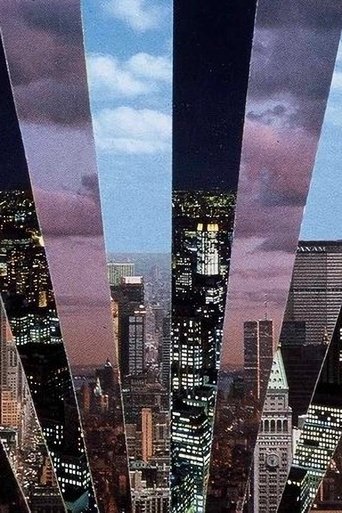
In Éliclipse, postcard images of Parisian landmarks are cut into vertical bands; every other stripe of the image is replaced with a corresponding stripe from another postcard image, resulting in the blend of the figuration of the two images
Éliclipse
1982
 NR
NRIn December 2008, before the new elected President of United States become the President, Israel lauches an attack over Gaza, under the pretext of rockets fallen on its territory. This cease-fire rupture answered an attack of Israel which had killed six combatants on November 4th 2008. One cannot thus speak about self defence as Israel prevailed itself about it, but well rather of a war against Gaza. Like Richard Falk says it: “This approach aiming at punishing Gaza was intrinsically criminal: it violates laws of the war and led to crimes against humanity." The film works several types of images and sounds to recover on Internet by confronting them with some tapes of texts.
WARONGAZA
2009
“Reading Rimbaud today means to relate his experiences, his desires, to ours – it means that we see a strong connection between his quest and what is today at stake in gay issues. Selecting pieces of poems and letters I have tried to give back a kind of emergency that I sense within his poetry.” –Yann Beauvais
Est Absent
2004
 NR
NRSince October 7, 2023, Israel has been waging war in retaliation for Operation Al Aqsa. The scale of this war and the massacres being carried out are taking on proportions that make it a genocide that does not speak its name. Drawing on a variety of sources, the film aims to question these acts, which refuse to be called into question.
Néantir
2024
Rioting in different countries is confronted within the discourse of some politicians perpetuating the same old colonialisms and responses to a world they don’t understand any longer.
Schismes
2014
Amoroso takes up the question of memory concomitant with the filmed diary. A memory of Rome, a memory of Tivoli but also a memory of Kenneth Anger's Tivoli, this sequence could be a tribute or a snub.
Amoroso
1986
No synopsis available yet.
According to...
1980
With QUATRE UN we are in the presence of four images (from the film R) each of which reflects the adjacent one, horizontally and vertically. The notions of the development of a theme, of inversion, of mirror and retrograde inversion thus seem deployed, as if some of the figures of musical discourse were suddenly proposed visually. Moreover, the device of this installation makes the beams of the projectors cross two by two in order to constitute an image in the center of a given space. Two projectors, one above the other, face two others separated by a double-sided screen.
Quatr'un
1991
 NR
NRDisjet uses the movement of an anonymous figure in isolated environments to examine metaphysical journeys through the landscapes of the mind.
Disjet
1982
Extract taken from the longer diary dealing with United States in the summer of '78.
Wanderer
1978
The winter Place Sqaure. Two cameras spinning, at the sound of musicians from an orchestra tuning their instrument.
Spin
2008
 5.5
5.5R is a very simple film, flickering and panning which in its silence induces a fugue of rhythms. The center part of the film is a transcription of one of J.S. Bach ’s Invention.
R
1976
 NR
NR"Take the path >>>>Still Life>>>> Hezraellah >>>>> of a curfew>>>>> exonerating affection" – Edson Barrus
Affection Exonerate
2008
 NR
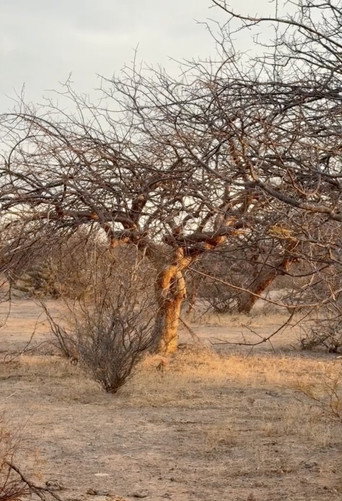
NRFor around fifteen years, I have been filming a forest of imburana de cambão trees that has been progressively disappearing, located on the border between the states of Bahia and Pernambuco. The visual saturation created through image overlaps and the division of the screen into three parts fosters the emergence of a particular rhythm, in which pulsating texts impose other forms of escape.The gradual disappearance of this forest echoes texts evoking the consequences of climate change, while also inscribing fire and logging as human acts contributing to this impoverishment.The basis of this film was the installation of the same name presented as part of an exhibition at the Frans Krajcberg Space in 2025. The film is denser. The imburanas de cambão burst into flames as the sertão turns into desert.
Salitre No More!
2026
NRFor around fifteen years, I have been filming a forest of imburana de cambão trees that has been progressively disappearing, located on the border between the states of Bahia and Pernambuco. The visual saturation created through image overlaps and the division of the screen into three parts fosters the emergence of a particular rhythm, in which pulsating texts impose other forms of escape.The gradual disappearance of this forest echoes texts evoking the consequences of climate change, while also inscribing fire and logging as human acts contributing to this impoverishment.The basis of this film was the installation of the same name presented as part of an exhibition at the Frans Krajcberg Space in 2025. The film is denser. The imburanas de cambão burst into flames as the sertão turns into desert.
Salitre No More!
2026
 NR
NRA pile of cuties. Fashion and its code somehow shaken.
Tas de beaux gosses
1989
Artist Dona Ana makes clay figures, "carrancas", in a studio on the outskirts of Petrolina, in northeastern Brazil.
Da Galpão da Dona Ana a Carrancas em Petrolina
2003
Artist Dona Ana makes clay figures, "carrancas", in a studio on the outskirts of Petrolina, in northeastern Brazil.
Da Galpão da Dona Ana a Carrancas em Petrolina
2003
A condensation of my philosophy master that I had written between 1974 and 1975. My first film as text.
VOI/S/C/I IMAGE
1975
The is the first filmed diary made by Yann Beauvais.
Très rare film
1978
A found footage film about the war. A film which inscribed his refusal of the manipulation of the media coverage of the last holy war of the American and their allies. No image of that war which was also a media propagandist war. An evocation against the stupidity of war in seven parts.
Soft Collisions Dream of a Good Soldier
1991
NRA film about my relationship to New York since 1962. It deals with the distance between a memory and the image of this memory, a distance one always tries to abolish. In this personal film we see the images of a city from a close distance, with autobiographic fragments on the soundtrack. The distance of recollection. The trace of this distance shapes the memory as much as the places, haunted by so many stories, so that our marks will blow up in a crash. A crash leading to a collapse in a vortex of affects.
New York Long Distance
1994