
Acting
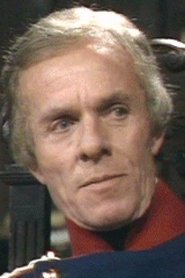
Basil Henson
Born — Died
1918-07-31 — 1990-12-19
Place of birth
London, England, UK
Known for
Acting
Credits
62 titles
Known for
 5.7
5.7Crown Court is an afternoon television courtroom drama produced by Granada Television for the ITV network that ran from 1972, when the Crown Court system replaced Assize courts and Quarter sessions in the legal system of England and Wales, to 1984.
Crown Court
1972
 5.2
5.2An anthology series of television plays which aired on BBC1 from October 1964 to May 1970. The plays were usually written for television, although adaptations from other sources also featured.
The Wednesday Play
1964
 4.8
4.8No Hiding Place is a British television series that was produced at Wembley Studios by Associated-Rediffusion for the ITV network between 16 September 1959 and 22 June 1967. It was the sequel to the series Murder Bag and Crime Sheet, all starring Raymond Francis as Detective Superintendent, later Detective Chief Superintendent Tom Lockhart.
No Hiding Place
1959
 7.2
7.2Theatre 625 is a British television drama anthology series, produced by the BBC and transmitted on BBC2 from 1964 to 1968. It was one of the first regular programmes in the line-up of the channel, and the title referred to its production and transmission being in the higher-definition 625-line format, which only BBC2 used at the time.
Theatre 625
1964
 6.5
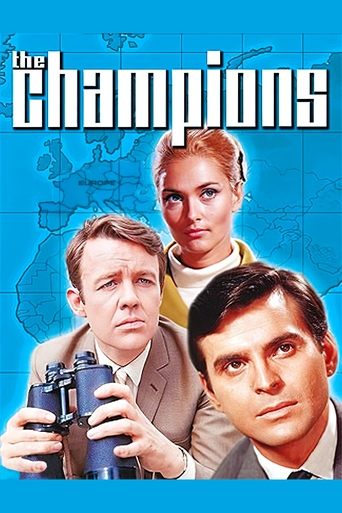
6.5After a plane carrying three Agents crashes in the Himalayas, they are rescued by an advanced civilisation secretly living in Tibet who grant them enhanced versions of the ordinary five senses, and intellectual and physical abilities.
The Champions
1968
 7.0
7.0Thriller is a British television series, originally broadcast in the UK from 1973 to 1976. It is an anthology series: each episode has a self-contained story and its own cast. As the title suggests, each story is a thriller of some variety, from tales of the supernatural to down-to-earth whodunits.
Thriller
1973
Film credits
1970s · 7 titles
 6.6
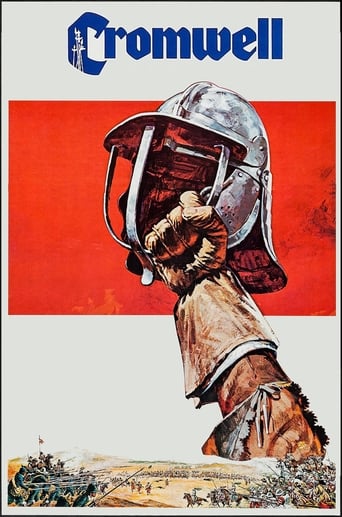
6.6Disgusted with the policies of King Charles I, Oliver Cromwell plans to take his family to the New World. But on the eve of their departure, Cromwell is drawn into the tangled web of religion and politics that will result in the English Civil War.
Cromwell
1970
 5.4
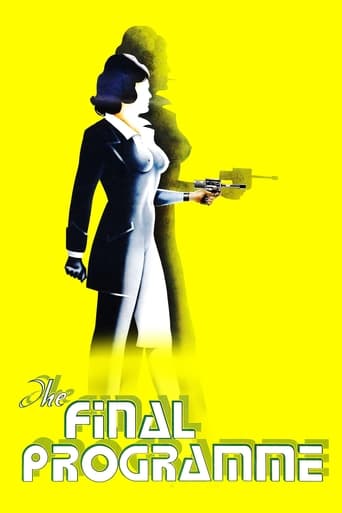
5.4Returning from Lapland, where he buried his father, a renowned scientist, Jerry Cornelius, comes back to London with the firm intention of taking revenge on his brother Frank and snatching his beloved sister Catherine from his clutches. Since the recent gigantic global conflagration, things have changed considerably. If he wanted to, Jerry could easily get hold of napalm to blow up Frank's hideout. But he prefers to join forces with the disturbing Mrs Brunner, who, with the help of three scientists – Smiles, Lucas and Powys – is trying to recover a mysterious microfilm left to Frank by his father...
The Final Programme
1973
 6.7
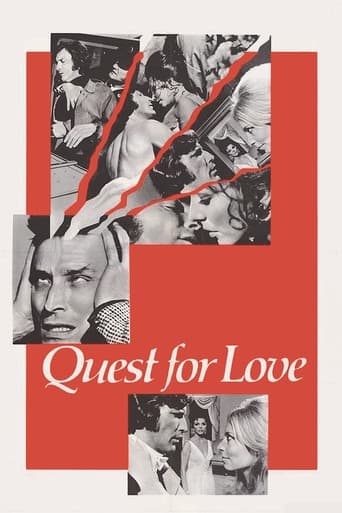
6.7After a scientific experiment goes horribly wrong during a demonstration, a scientist finds himself trapped in an alternate reality that bears some similarities to our own, but also has some striking differences. In this other reality the Second World War had never occurred, mankind had not yet traveled into Space and Mt. Everest had not yet been conquered, just to name a few things. Also in this other reality he is no longer a scientist but rather a well known author. After a personal tragedy in this alternate world, he finds himself back in his own world and desperately trying to locate the woman he fell in love with in the other world. Little does she know, however, that her life depends on him finding her.
Quest for Love
1971
 6.5
6.5American businessman Brad Hunter and his wife Suzy are visiting England for the first time. Meeting a business contact, Brad introduces his wife as "Theresa." But it seems to be more than an innocent slip of the tongue. Brad begins behaving strangely and knows more about specific locations in London than he would as a first time visitor. Suzy hires private detective Matthew Earp to look into the reasons behind her husbands sudden change in personality. This aired on British TV as part of the "Thriller" series (under the title "An Echo of Theresa") but was issued as a featured on home video in the U.S. as "Anatomy of Terror."
An Echo of Theresa
1973
Battalion Commander of the Third Wiltshire Light Infantry is Colonel Keyser. On recent evidence, he is either a psychopathic personality or something very close to it. He could turn out to be the best battalion commander in the division. As the Allies prepare for invasion in 1944, will his reputed psychopathic personality be a good or bad thing, when leading his men into D-Day?
The Breaking of Colonel Keyser
1972
 8.0
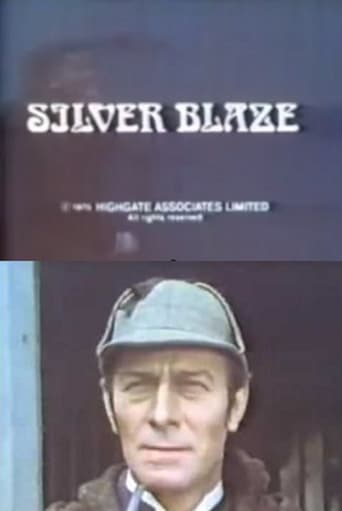
8.01977 adaptation of Conan Doyle's The Adventure of Silver Blaze
Silver Blaze
1977
Anna can't seem to help ending up with the wrong partner in a line of disastrous affairs. Her hope now lies with a young man from the pop music scene.
The Dolly Scene
1970
1960s · 13 titles
 6.7
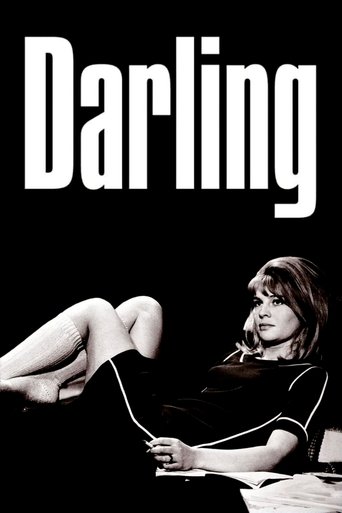
6.7Diana, a beautiful but shallow and easily distracted model and failed actress, toys with the affections of several men while attempting to gain fame and fortune in Swinging London.
Darling
1965
 10.0
10.0A young local girl is murdered by a mentally disturbed youth, but the villagers blame a stranger, an Italian traveling showman and his bear, rather than see the rot in their own camp.
A Beast with Two Backs
1968
 NR
NRA stranger calls at the home of divorcée Anna Preston, asking to collect some of her ex-husband's belongings. Anna agrees, but is suspicious, and tries to contact her 'ex' at the space-research establishment where he worked. But none of his colleagues can tell her where he is and the authorities block all her efforts to find out. Anna grows more convinced that he is in danger, but the truth is more horrifying than even she can imagine.
Frankenstein Mark 2
1966
 5.2
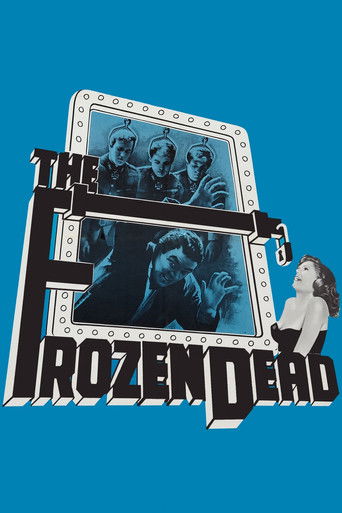
5.2A crazed scientist keeps the heads of Nazi war criminals alive until he can find appropriate bodies on which to attach them so he can revive the Third Reich.
The Frozen Dead
1966
 6.1
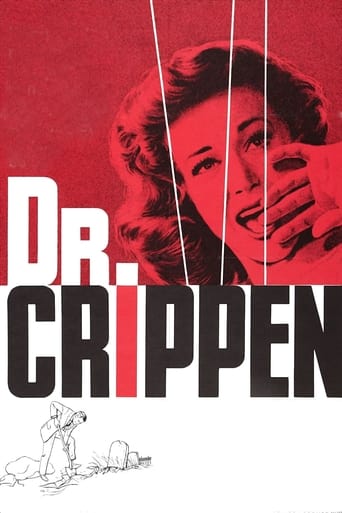
6.1A British physician stands trial for murdering his wife after he and his mistress are captured while fleeing to Canada.
Dr. Crippen
1963
 NR
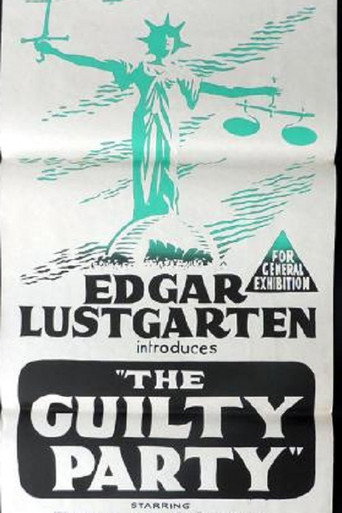
NRThe Sinclairs seem to be living in the lap of luxury, but their lifestyle is funded by a morass of debt.
The Guilty Party
1962
Rejected now by both family and friends, Max has only three weeks left in which to find a solution to his problems.
Never Mind How We Got Here, Where Are We?
1968
 NR
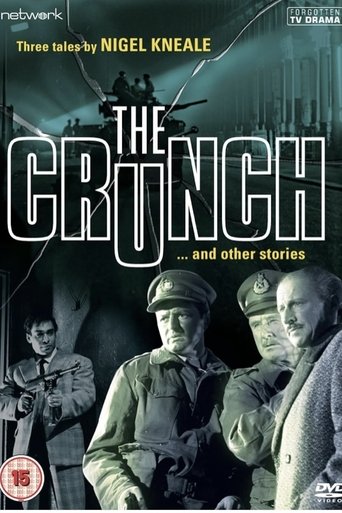
NRPhilip quickly comes to regret volunteering to be a witness in a murder trial.
Drama '63: A Well Dressed Man
1963
 6.3
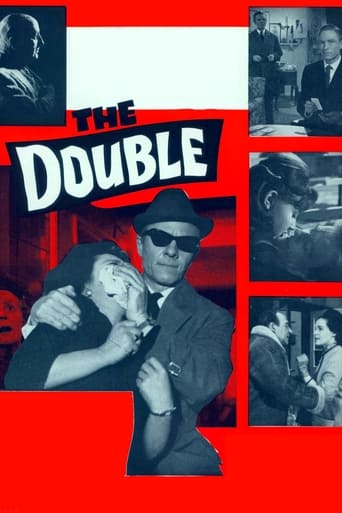
6.3A man who has been left for dead by the impostor who takes his place returns to bring him to justice.
The Double
1963
 NR
NRAn adulterous couple turn to murder, only to discover that a petty crook and blackmailer has already had his eye upon them.
Change Partners
1965
The Prime Minister heads a cabinet divided on the question of either using force against an African state, or referring the matter to the United Nations.
Number Ten
1968
Television adaptation of Peter Weiss's play about the Frankfurt Auschwitz trials.
The Investigation
1967
Adaptation of J. B. Priestley’s play.
Johnson Over Jordan
1965
Series credits
5.7Crown Court is an afternoon television courtroom drama produced by Granada Television for the ITV network that ran from 1972, when the Crown Court system replaced Assize courts and Quarter sessions in the legal system of England and Wales, to 1984.
Crown Court
1972
5.7Crown Court is an afternoon television courtroom drama produced by Granada Television for the ITV network that ran from 1972, when the Crown Court system replaced Assize courts and Quarter sessions in the legal system of England and Wales, to 1984.
Crown Court
1972
5.7Crown Court is an afternoon television courtroom drama produced by Granada Television for the ITV network that ran from 1972, when the Crown Court system replaced Assize courts and Quarter sessions in the legal system of England and Wales, to 1984.
Crown Court
1972
5.7Crown Court is an afternoon television courtroom drama produced by Granada Television for the ITV network that ran from 1972, when the Crown Court system replaced Assize courts and Quarter sessions in the legal system of England and Wales, to 1984.
Crown Court
1972
5.2An anthology series of television plays which aired on BBC1 from October 1964 to May 1970. The plays were usually written for television, although adaptations from other sources also featured.
The Wednesday Play
1964
5.2An anthology series of television plays which aired on BBC1 from October 1964 to May 1970. The plays were usually written for television, although adaptations from other sources also featured.
The Wednesday Play
1964
5.2An anthology series of television plays which aired on BBC1 from October 1964 to May 1970. The plays were usually written for television, although adaptations from other sources also featured.
The Wednesday Play
1964
4.8No Hiding Place is a British television series that was produced at Wembley Studios by Associated-Rediffusion for the ITV network between 16 September 1959 and 22 June 1967. It was the sequel to the series Murder Bag and Crime Sheet, all starring Raymond Francis as Detective Superintendent, later Detective Chief Superintendent Tom Lockhart.
No Hiding Place
1959
7.2Theatre 625 is a British television drama anthology series, produced by the BBC and transmitted on BBC2 from 1964 to 1968. It was one of the first regular programmes in the line-up of the channel, and the title referred to its production and transmission being in the higher-definition 625-line format, which only BBC2 used at the time.
Theatre 625
1964
6.5After a plane carrying three Agents crashes in the Himalayas, they are rescued by an advanced civilisation secretly living in Tibet who grant them enhanced versions of the ordinary five senses, and intellectual and physical abilities.
The Champions
1968
7.0Thriller is a British television series, originally broadcast in the UK from 1973 to 1976. It is an anthology series: each episode has a self-contained story and its own cast. As the title suggests, each story is a thriller of some variety, from tales of the supernatural to down-to-earth whodunits.
Thriller
1973
 9.0
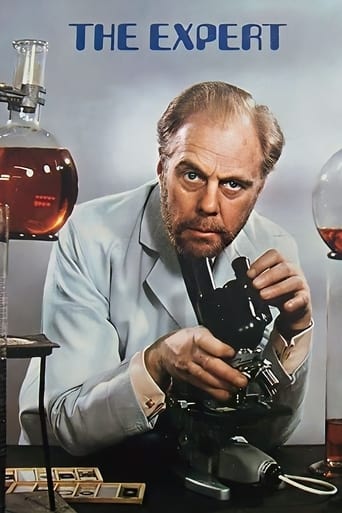
9.0The Expert is a British television series produced by the BBC between 1968 and 1976. The series starred Marius Goring as Dr. John Hardy, a pathologist working for the Home Office and was essentially a police procedural drama, with Hardy bringing his forensic knowledge to solve various cases. The Expert was created and produced by Gerard Glaister. The series was also one of the first BBC dramas to be made in colour, and throughout its four series had numerous high quality guest appearances by actors such as John Carson, Peter Copley, Rachel Kempson, Peter Vaughan, Clive Swift, Geoffrey Palmer, Peter Barkworth, Jean Marsh, Ray Brooks, George Sewell, Anthony Valentine, Bernard Lee, Lee Montague, Geoffrey Bayldon, Mike Pratt, Edward Fox, André Morell, Brian Blessed, Nigel Stock, Philip Madoc and Warren Clarke.
The Expert
1968
 6.3
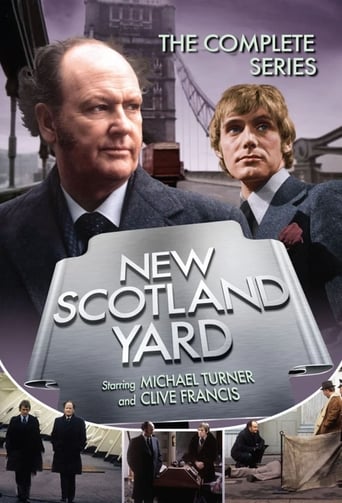
6.3New Scotland Yard is a police drama series produced by London Weekend Television for ITV from 1972 and 1974. It features the activities of two officers from the Criminal Investigations Department in the Metropolitan Police force headquarters at New Scotland Yard, as they dealt with the assorted villains of the day.
New Scotland Yard
1972
 8.3
8.3Owner Basil Fawlty, his wife Sybil, a chambermaid Polly, and Spanish waiter Manuel attempt to run their hotel amidst farcical situations and an array of demanding guests.
Fawlty Towers
1975
 7.3
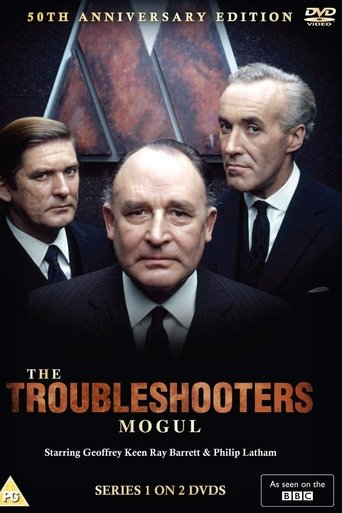
7.3The Troubleshooters is a British television series made by the BBC between 1965 and 1972, created by John Elliot. During its run, the series made the transition from black and white to colour transmissions. The series was based around an international oil company – the "Mogul" of the title. The first series was mostly concerned with the internal politics within the Mogul organisation, with episodes revolving around industrial espionage, internal fraud and negligence almost leading to an accident on a North Sea oil rig.
The Troubleshooters
1965
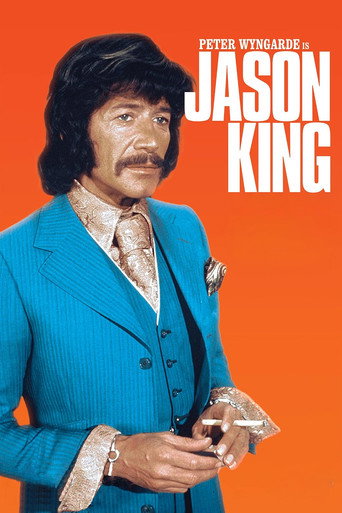 7.8
7.8Jason King - a suavely sophisticated former secret agent turned novelist - travels the world searching for material to fill his books, encountering an endless parade of glamorous women, exotic locales, menacing villains and daring intrigue! Before Austin Powers swung into action, Jason King set the standard for the hip crime-fighting international playboy!
Jason King
1971
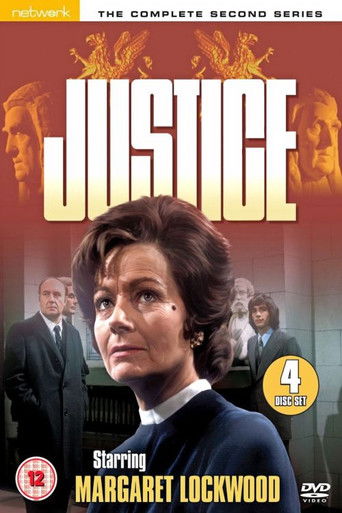 7.3
7.3Justice is a British drama television series which originally aired on ITV in 39 hour-long episodes between 8 August 1971 and 16 October 1974. Margaret Lockwood stars as Harriet Peterson a female barrister in the North of England. It was made by Yorkshire Television and was based loosely on Justice Is a Woman, an episode of ITV Playhouse broadcast in 1969 in which Lockwood had previously also played a barrister. The theme music was Crown Imperial by William Walton.
Justice
1971
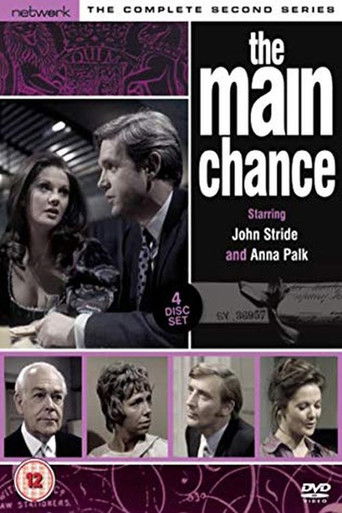 8.2
8.2The Main Chance was a British television series which first aired on ITV between 1969,1970,1972 and 1975. A drama, it depicts the sudden transformation in the life of solicitor David Main who relocates from London to Leeds.
The Main Chance
1969
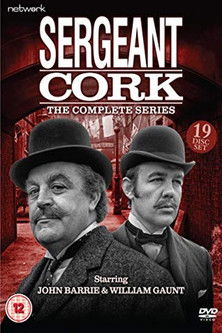 7.2
7.2Sergeant Cork is a British detective television series which first aired between 1963 and 1968 on ITV. It was a police procedural show that followed the efforts of two police officers and their battle against crime in Victorian London. In all 66 hour-long episodes were aired during the five-year run, although the last episode was not broadcast until January 1968, 16 months after the others. Journalist Tom Sutcliffe has credited it as a first example of the use of the Victorian-era policeman in a television crime series. A 1969 review in The Age opined that rather than suspense, the strengths of the series were its "excellent period settings and wonderfully thick pea-soupers" which "add up to splendid evocative stuff", as well as the performance of star John Barrie. At no time during the whole series is Sergeant Cork's first name given.
Sergeant Cork
1963
Thursday Theatre is a British television anthology programme produced by and aired on the BBC from 1964–1965. The productions ranged in duration from 75 to 95 minutes. Out of the 23 episodes, 13 are believed lost, and one is incomplete.
Thursday Theatre
1964
 5.8
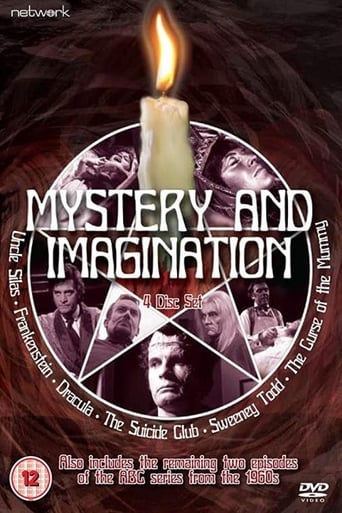
5.8Mystery and Imagination is a British television anthology of classic horror and supernatural dramas. Five series were broadcast from 1966 to 1970 on ITV and produced by ABC and Thames Television.
Mystery and Imagination
1966
Story Parade specialized in adaptations of modern novels. It was broadcast on June 5, 1964 and repeated on August 28, 1964. The teleplay was by Terry Nation (who invented "Blake's 7" and the Daleks in Dr. Who), and Elijah Baley was played by the late Peter Cushing. It also starred John Carson John Carson as R. Daneel Olivaw and Kenneth J. Warren. The master tapes of the program were erased, however a few clips from the production have turned up in various documentaries about Isaac Asimov's work.
Story Parade
1964
 7.5
7.518 short plays written especially for TV, an opportunity for up-and-coming directors such as floor manager Alan Clarke, who ended up doing 10 of the episodes. Some top ranking performers were attracted to the series.
Half Hour Story
1967
Anthology of self-contained dramas that aired from 1977 to 1978.
The Sunday Drama
1977
 7.0
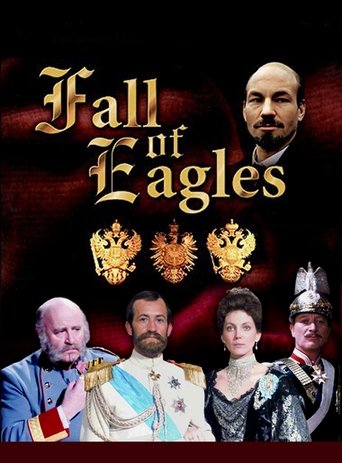
7.0"Fall of Eagles" is a 13-part British television drama aired by the BBC in 1974. The series portrays historical events from 1848 to 1918, dealing with the collapse of the ruling dynasties of Austria-Hungary (the Habsburgs), Germany (the Hohenzollerns) and Russia (the Romanovs).
Fall of Eagles
1974
 6.7
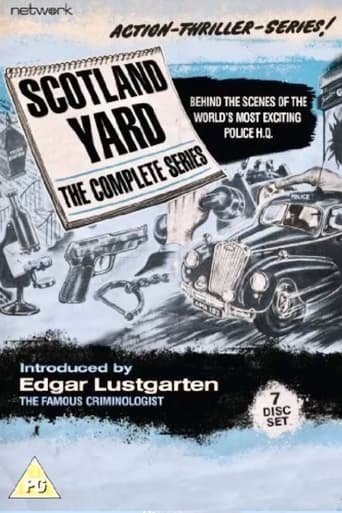
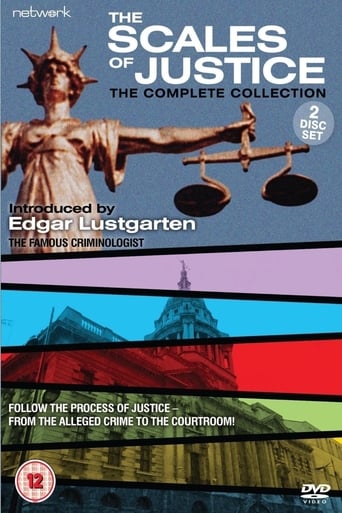
6.7The Scales of Justice is a series of thirteen British cinema featurettes produced from 1962 to 1967 for Anglo-Amalgamated at Merton Park Studios in London. The first nine were made in black and white, and the last four in colour. The finale, Payment in Kind, was Merton Park's final production. Episodes were based on criminal cases, and each film was introduced by criminologist Edgar Lustgarten. The series derives its title from the symbolic scales held by the statue of Justice, situated above the dome of London's Central Criminal Court, The Old Bailey. The opening narration describes her as having "in her right hand, the Sword of Power and Retribution, and in her left – The Scales of Justice".
The Scales of Justice
1962
 8.0
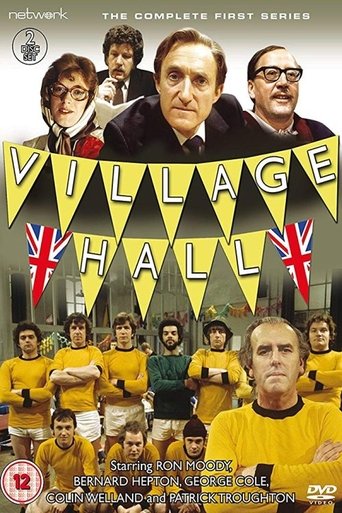
8.0Village Hall is an anthology drama series produced by Granada between 1974–75. It is entirely set in a village hall, with each episode highlighting a different use to which the space is put by locals.
Village Hall
1974
 7.1
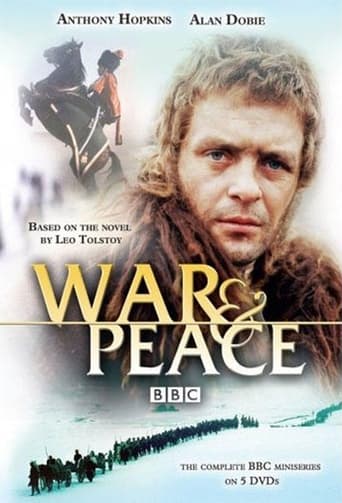
7.1The love story of young Countess Natasha Rostova and Count Pierre Bezukhov is interwoven with the Great Patriotic War of 1812 against Napoleon's invading army.
War & Peace
1972
7.1The love story of young Countess Natasha Rostova and Count Pierre Bezukhov is interwoven with the Great Patriotic War of 1812 against Napoleon's invading army.
War & Peace
1972
 7.7
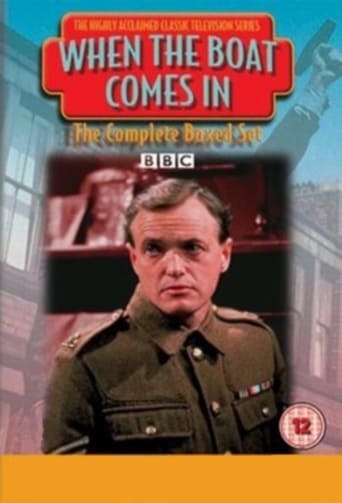
7.7When the Boat Comes In is a British television period drama produced by the BBC between 8 January 1976 and 21 April 1981. Taking place between 1919 to 1937, Jack Ford is a veteran of The Great War who returns to his poverty-stricken (fictional) town of Gallowshield in the North East of England. It dramatises the interwar political struggles of the 1920s and 1930s, and explores the impact of national and international politics upon Ford and those around him.
When the Boat Comes In
1976
 7.2
7.2Following the death of the sitting Labour Party Member of Parliament, Bill Brand is selected as Labour candidate for a Lancashire textile constituency.
Bill Brand
1976
 7.0
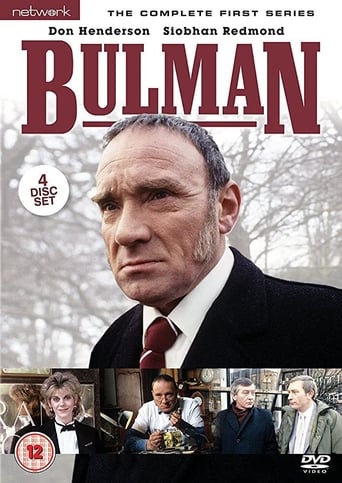
7.0Bulman is a 1985–87 police procedural created and principally written by Murray Smith. Produced by Granada Television for ITV, it is the second and final spin-off from The XYY Man (1976–78), and following Strangers (1978–82). Don Henderson reprises his iconic role as former DCI George Bulman, ostensibly retired from and repairing old clocks but active as a private investigator, with Lucy McGinty as his assistant. The duo are frequently drawn into the clandestine world of the secret service through the machinations of security chief Bill Dugdale or Bulman's former superior Jack Lambie.
Bulman
1985
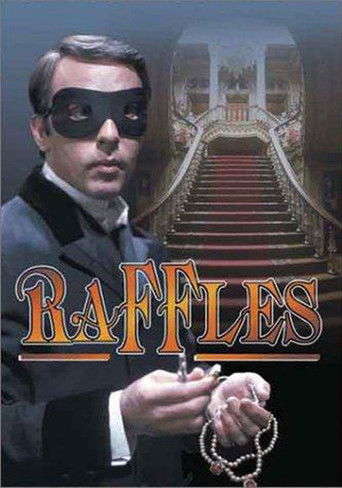 8.4
8.4Raffles was a 1977 television adaptation of the A. J. Raffles stories by Ernest William Hornung. The series was produced by Yorkshire Television and written by Philip Mackie. The episodes were largely faithful adaptations of the stories in the books, though occasionally two stories would be merged to create one. In Victorian-era London, gentleman thief A. J. Raffles, a renowned cricketer, and his friend, the eager but naive Bunny Manders, test their skills in relieving the wealthy of their valuables whilst avoiding detection, especially from the persistent Inspector Mackenzie.
Raffles
1977
An anthology of six standalone plays presented relationships either beginning or ending in love – but the outcome was not always marriage (or happiness). A second series of five episodes aired in 1986.
Love and Marriage
1984
A series of short plays, all originally published as short stories in the 1920s.
Ten from the Twenties
1975
 6.0
6.0Armchair Theatre is a British television drama anthology series of single plays that ran on the ITV network from 1956 to 1974. It was originally produced by Associated British Corporation, and later by Thames Television from mid-1968.
Armchair Theatre
1956
6.0Armchair Theatre is a British television drama anthology series of single plays that ran on the ITV network from 1956 to 1974. It was originally produced by Associated British Corporation, and later by Thames Television from mid-1968.
Armchair Theatre
1956
A glimpse into the offices of (fictitious) daily newspaper – The Globe – on Fleet Street, which at that time was the centre of the British newspaper industry.
Front Page Story
1965
 5.0
5.0Intertwining tales of love, greed, and secret identities in 1860s London.
Our Mutual Friend
1958
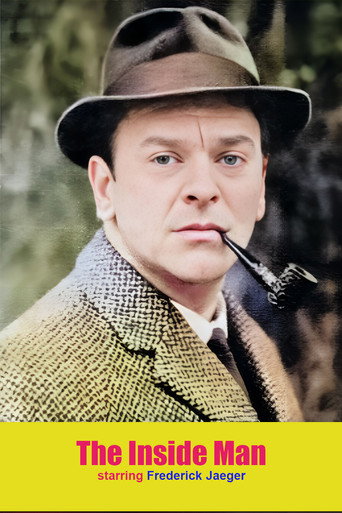 NR
NRThe Inside Man, produced by Derek Granger and David Cunliffe, offers more of a reimagining than a direct replacement of its predecessor's concept. The series features Frederick Jaeger as Dr. James Austen, a psychiatrist and criminologist who alternates between working for Basil Henson's character, Dawnay, from "the Department," and taking on cases from private clients. Petra Davies plays Sarah Worth, Austen's dependable 'girl Friday.' In the third episode, *Crosscheck*, Robin Ellis joins the cast as Michael Barnett, a spy whom the Department insists Austen should approve. However, every detail about Barnett is an obvious fabrication, adding layers of intrigue to the storyline.
The Inside Man
1969