
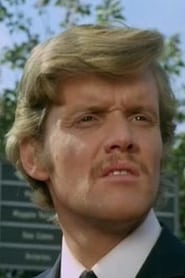
Acting
Michael Standing
Born
1939-06-19 (87)
Place of birth
London, England, UK
Known for
Acting
Credits
25 titles
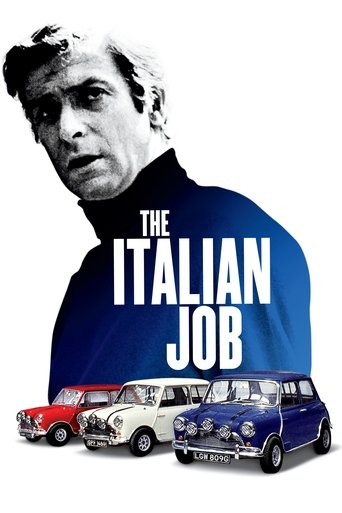
Michael Standing is a British film and television actor and writer, best known for his role in the feature film _The Italian Job_ and the infamous scene in which Michael Caine tells him "You're only supposed to blow the bloody doors off!" He also starred in both versions of _Up The Junction_ (TV play and film) albeit as different characters, and _Poor Cow_. His last role was in the 1990 movie _Aftershock_. As a writer, Standing penned a 1967 Wednesday Play entitled _Another Day, Another Dollar_ and episodes of _Marked Personal_ in 1973-74. He emigrated to America and married Sherri Spillane, ex-wife of novelist Mickey Spillane.
Known for
 7.4
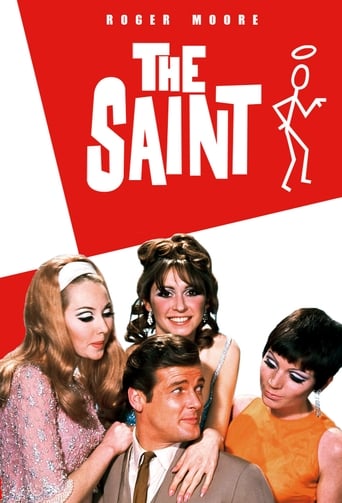
Simon Templar is The Saint, a handsome, sophisticated, debonair, modern-day Robin Hood who recovers ill-gotten wealth and redistributes it to those in need.
The Saint
1962
 5.2
An anthology series of television plays which aired on BBC1 from October 1964 to May 1970. The plays were usually written for television, although adaptations from other sources also featured.
The Wednesday Play
1964
 4.2
An anthology of short plays shown on BBC Television between 1965 and 1973, used in part at least as a training ground for new writers, on account of its short length, and which therefore attracted many writers who later became well known.
Thirty-Minute Theatre
1965
 6.5
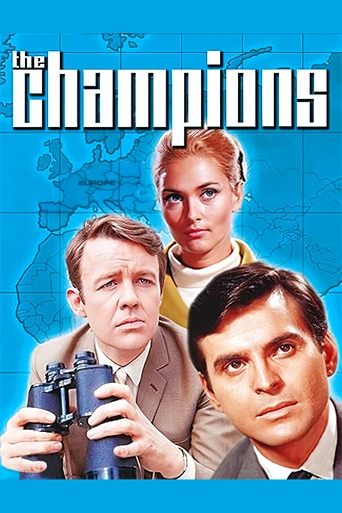
After a plane carrying three Agents crashes in the Himalayas, they are rescued by an advanced civilisation secretly living in Tibet who grant them enhanced versions of the ordinary five senses, and intellectual and physical abilities.
The Champions
1968
 6.9
Charlie's got a 'job' to do. Having just left prison he finds one of his friends has attempted a high-risk job in Torino, Italy, right under the nose of the mafia. Charlie's friend doesn't get very far, so Charlie takes over the 'job'. Using three Mini Coopers, a couple of Jaguars, and a bus, he hopes to bring Torino to a standstill, steal a fortune in gold and escape in the chaos.
The Italian Job
1969
Story Parade specialized in adaptations of modern novels. It was broadcast on June 5, 1964 and repeated on August 28, 1964. The teleplay was by Terry Nation (who invented "Blake's 7" and the Daleks in Dr. Who), and Elijah Baley was played by the late Peter Cushing. It also starred John Carson John Carson as R. Daneel Olivaw and Kenneth J. Warren. The master tapes of the program were erased, however a few clips from the production have turned up in various documentaries about Isaac Asimov's work.
Story Parade
1964
Film credits
1990s · 1 titles

1970s · 2 titles
 7.0
This compelling emotional drama stars Carol White as a young single mother who finds herself caught between two people – a local priest and a folk singer – each of whom wants to convert her to his own worldview. An elegy to a younger generation looking for something to believe in, Made co-stars hugely influential folk-rock musician Roy Harper in his screen debut. Produced by Joseph Janni – who previously made the astonishingly successful Poor Cow with White – directed by The Long Good Friday's John Mackenzie and featuring new songs specially composed by Harper.
Made
1972
Mary Abbott is a schoolteacher whose husband has to go away for the night on business. After returning home from a party she has an unexpected caller.
The Loving Lesson
1971
1960s · 6 titles
6.9Charlie's got a 'job' to do. Having just left prison he finds one of his friends has attempted a high-risk job in Torino, Italy, right under the nose of the mafia. Charlie's friend doesn't get very far, so Charlie takes over the 'job'. Using three Mini Coopers, a couple of Jaguars, and a bus, he hopes to bring Torino to a standstill, steal a fortune in gold and escape in the chaos.
The Italian Job
1969
 6.4
Joy lives a life filled with bad choices. At a young age, she marries and has a child–with an abusive thief who quickly ends up incarcerated. Left alone, she takes up with the guy's mate, another thief, who seems to give her some happiness but who also ends up locked up. She then takes up with a series of seedy types who offer nothing but momentary pleasure–if that.
Poor Cow
1967
 6.2
A young woman trades her upper-class existence for a new life in an economically depressed suburb of London.
Up the Junction
1968
 7.0
The lives and loves of three young working class women, set in the pubs, terraced houses and factories of Battersea, South London.
Up the Junction
1965
 10.0
A new steward on a large passenger liner finds himself subject to "charges" levied by the senior bar steward.
Another Day, Another Dollar
1967
During the troubles in Ireland an IRA bomb plot is hatched to blow up a British power station. Sean Rogan (Tom Bell) is an IRA bomb expert and escapes from prison to try and stop the destruction.
The Violent Enemy
1967
Series credits
7.4Simon Templar is The Saint, a handsome, sophisticated, debonair, modern-day Robin Hood who recovers ill-gotten wealth and redistributes it to those in need.
The Saint
1962
5.2An anthology series of television plays which aired on BBC1 from October 1964 to May 1970. The plays were usually written for television, although adaptations from other sources also featured.
The Wednesday Play
1964
5.2An anthology series of television plays which aired on BBC1 from October 1964 to May 1970. The plays were usually written for television, although adaptations from other sources also featured.
The Wednesday Play
1964
4.2An anthology of short plays shown on BBC Television between 1965 and 1973, used in part at least as a training ground for new writers, on account of its short length, and which therefore attracted many writers who later became well known.
Thirty-Minute Theatre
1965
6.5After a plane carrying three Agents crashes in the Himalayas, they are rescued by an advanced civilisation secretly living in Tibet who grant them enhanced versions of the ordinary five senses, and intellectual and physical abilities.
The Champions
1968
Story Parade specialized in adaptations of modern novels. It was broadcast on June 5, 1964 and repeated on August 28, 1964. The teleplay was by Terry Nation (who invented "Blake's 7" and the Daleks in Dr. Who), and Elijah Baley was played by the late Peter Cushing. It also starred John Carson John Carson as R. Daneel Olivaw and Kenneth J. Warren. The master tapes of the program were erased, however a few clips from the production have turned up in various documentaries about Isaac Asimov's work.
Story Parade
1964
 7.0
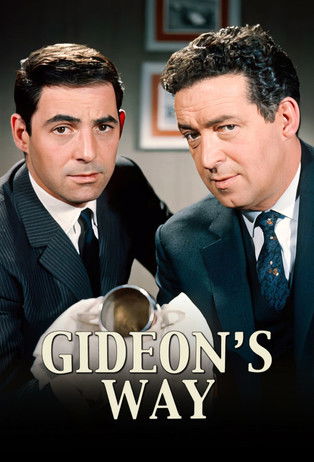
Gideon's Way is a British television crime series made by ITC Entertainment in 1964/65, based on the novels by John Creasey. The series was made at Elstree in twin production with The Saint TV series. It starred Liverpudlian John Gregson in the title role as Commander George Gideon of Scotland Yard, with Alexander Davion as his assistant, Detective Chief Inspector David Keen, Reginald Jessup as Det. Superintendent LeMaitre, Ian Rossiter as Detective Chief Superintendent Joe Bell and Basil Dignam as Commissioner Scott-Marle. The show did not acknowledge any help from Scotland Yard, any other police force or advisor. Daphne Anderson starred as his wife, Kate with Giles Watling as young son, Malcolm, Richard James as older son, Matthew who seemed to have a lot of new girlfriends and Andrea Allan as daughter, Pru. Unusually for police stories, Gideon was shown as a family man at home though urgent phone calls from his bosses tend to disrupt family plans too often. However, he did admit in "State Visit" that his wife had walked out on him for a while years ago when he put the job first and her second. They live in an expensive detached house in Chelsea.
Gideon's Way
1965
 6.3
Ace of Wands is a fantasy-based British children's television show broadcast on ITV between 1970 and 1972, created by Trevor Preston and Pamela Lonsdale and produced by Thames Television. The title, taken from the name of a Tarot card describes the principal character, called "Tarot" who combined stage magic with supernatural powers. Tarot has a pet Owl named Ozymandias, played by Fred Owl. The series ran for two seasons of thirteen episodes and a third season of twenty, with fourteen story arcs, in a similar manner to early Doctor Who. Many, if not all, of the first 26 episodes are believed to have been wiped, although the final season is intact.
Ace of Wands
1970
6.3Ace of Wands is a fantasy-based British children's television show broadcast on ITV between 1970 and 1972, created by Trevor Preston and Pamela Lonsdale and produced by Thames Television. The title, taken from the name of a Tarot card describes the principal character, called "Tarot" who combined stage magic with supernatural powers. Tarot has a pet Owl named Ozymandias, played by Fred Owl. The series ran for two seasons of thirteen episodes and a third season of twenty, with fourteen story arcs, in a similar manner to early Doctor Who. Many, if not all, of the first 26 episodes are believed to have been wiped, although the final season is intact.
Ace of Wands
1970
 NR
London itself takes the starring role in this series of plays from the BBC – a role which varies between hero and villain, enchantress and harpy. The series features extensive location filming, ranging from Soho to the Law Courts, Wembley to the docks. Of the twelve episodes, eleven are believed to be lost.
Londoners
1965
 6.9
Born to human parents, an apparently normal child might at some point between childhood and late adolescence experience a process called 'breaking out' and develop special paranormal abilities. These abilities include psychic powers such as telepathy, telekinesis, and teleportation. However, their psychological make-up prevents them from intentionally killing others.
The Tomorrow People
1973
 10.0
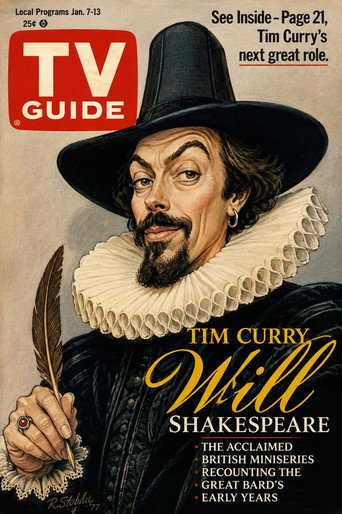
A dramatisation of the life of famed playwright William Shakespeare from 1590 to 1607.
Will Shakespeare
1978
A series of plays, each reflecting an individual dilemma - sometimes serious, occasionally humorous - and each with a happy ending.
Happy Ever After
1969
A quartet of Saturday night plays following the life of indomitable working-class Cockney woman Rosie Carr from the Edwardian era to 1960.
The Four Seasons of Rosie Carr
1964