
Directing
Judith Crawley
Born — Died
1914-04-12 — 1986-09-16
Place of birth
Ottawa, Ontario, Canada
Known for
Directing
Credits
14 titles
Judith Crawley was a Canadian film producer, cinematographer, director, and screenwriter. She is considered to be the first Canadian female filmmaker, and is recognized as being a pioneer for women who work in the film industry. She and her husband Frank Radford "Budge" Crawley co-founded the production company Crawley Films in 1939. Crawley is best known for writing the Academy Award-winning documentary The Man Who Skied Down Everest.
Known for
 6.8
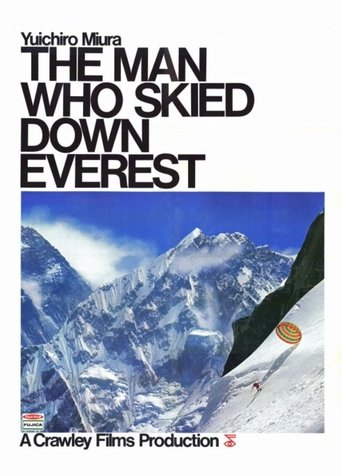
This Oscar-winning documentary tells the story behind Japanese daredevil Yuichiro Miura's 1970 effort to ski down the world's tallest mountain.
The Man Who Skied Down Everest
1975
 4.1
An educational film from 1953 to encourage parents talk to their children about adolescence.
Social-Sex Attitudes in Adolescence
1953
A short documentary sponsored by American Motors.
Brampton Builds a Car
1962
Man's need to create beauty, to interpret the world around him in image and color, has found expression in many forms, from the days of primitive culture to the present. This film surveys the work of Canadian craftsmen in many fields, showing how the changing Canadian scene has been their constant inspiration and how business enterprise today is increasingly using the skills of the artisan to enhance the decor of building interiors.
Craftsmen of Canada
1957
 7.5
A study of the behavior of four and five year old children at home and at nursery school. At four the vacillation between infantile helplessness and vigorous self-assertion is seen, and at five the development of independence and the beginning of cooperation. Parents observe that, unpredictable as their behavior may be, it's fun to help in the development of the fours and the fives.
The Frustrating Fours and the Fascinating Fives
1953
An account of the mining and refining of uranium showing how the development of energy from uranium is providing much of the world’s current needs. The film looks at the manufacturing of the uranium fuel used in CANDU lead reactors and explains the fission process, the fueling of reactors and the management of radioactive waste.
Developing Tomorrow’s Energy
1980
Behind the camera
6.8This Oscar-winning documentary tells the story behind Japanese daredevil Yuichiro Miura's 1970 effort to ski down the world's tallest mountain.
The Man Who Skied Down Everest
1975
4.1An educational film from 1953 to encourage parents talk to their children about adolescence.
Social-Sex Attitudes in Adolescence
1953
A short documentary sponsored by American Motors.
Brampton Builds a Car
1962
Man's need to create beauty, to interpret the world around him in image and color, has found expression in many forms, from the days of primitive culture to the present. This film surveys the work of Canadian craftsmen in many fields, showing how the changing Canadian scene has been their constant inspiration and how business enterprise today is increasingly using the skills of the artisan to enhance the decor of building interiors.
Craftsmen of Canada
1957
7.5A study of the behavior of four and five year old children at home and at nursery school. At four the vacillation between infantile helplessness and vigorous self-assertion is seen, and at five the development of independence and the beginning of cooperation. Parents observe that, unpredictable as their behavior may be, it's fun to help in the development of the fours and the fives.
The Frustrating Fours and the Fascinating Fives
1953
An account of the mining and refining of uranium showing how the development of energy from uranium is providing much of the world’s current needs. The film looks at the manufacturing of the uranium fuel used in CANDU lead reactors and explains the fission process, the fueling of reactors and the management of radioactive waste.
Developing Tomorrow’s Energy
1980
 NR
The film "Making a Mask" demonstrates the process of creating masks using simple materials like newspaper, paste, and clay. It follows a group of children as they mold their faces, apply layers of wet newspaper, and paint their finished masks. The project encourages creativity, allowing each child to design a unique character. The masks are durable and can be used for various occasions, showcasing the fun of crafting.
Making a Mask
1951
A National Film Board public service film detailing the steps to collect and process blood serum donations for transport to Britain during WWII. Interesting for the differences and similarities to modern processes.
Who Sheds His Blood
1941
 8.0
A film showing how apples may be made an attractive part of the menu for many different occasions. Four recipes--apple salad, apple upside-down cake, glazed apples and apple ice cream--are given in detail, and a section is devoted to the choice of apples for different purposes.
Four New Apple Dishes
1940
How a child's emotional development normally keeps pace with his physical growth; the behaviour he exhibits at certain ages. This introductory film ten from one to fifteen years of age and shows the characteristics of each group.
He Acts His Age
1949
 9.0
A study of child behavior at two and three years, showing what to expect and how parents can deal constructively with the problems they present. The film shows a group of active children in playground, nursery school and home, first at age two, and then at three. Destructiveness, tantrums, rivalry with younger children, and unreasonable fears are discussed.
The Terrible Twos and the Trusting Threes
1951
This film examines the problem of children who won't eat, and what can be done about it. Tommy should be hungry, but he just picks at his food. Going back to early babyhood, the film traces in detail, how eating habits are formed, how individual likes and dislikes must be taken into consideration, and that the worst habit of all is the permanent battle over food. After this analysis, Tommy still sits by his well-filled plate. In despair his mother takes him to the doctor, who explains that she is really the problem. She realizes that she has been tense, impatient with Tommy from the start. Now it will take painstaking care to build a new atmosphere of cooperation and friendliness, to learn understanding of Tommy's personal requirements at mealtimes, and all the time.
Why Won't Tommy Eat?
1948
 7.0
The film looks into the meaning of various forms of conduct in children from six to nine years and suggests ways in which parents may guide them through a challenging, often trying phase of development. In a family with three children we observe how the parents cope with often baffling situations
From Sociable Six to Noisy Nine
1954
 NR
Discusses how the emotional and physical development of children from ten to twelve years manifests itself in their behavior, their attitudes toward their parents, their teachers, and each other. Shows the children of one family in various situations in the home, at school, and in group play, and explains that much of their conflicting behavior is actually a normal part of their growing process
From Ten to Twelve
1957