
Directing
Dean Winkler
Acting credits
Behind the camera
 5.0
5.0A boy travels through the world of M.C. Escher.
Infinite Escher
1990
 NR
NRAn NTSC space opera.
Voyage
1981
 NR
NRCreated in 1984 for the opening of the Computer Museum in Boston, Massachusetts. By Dean Winkler and John Sanborn. Music by Jamaaladen Tacuma.
Renaissance
1984
 NR
NRAbstract video art set to the music of Philip Glass.
ACT III
1983
 NR
NRAbstract video art created in 1981. Music by Vibeke Sorensen and Walter Michael. Abstract video art created in 1981 at EUE Video in NYC.
Tempest
1981
 NR
NR"We are powerfully imprisoned by the terms in which we have been conducted to think.” - R. Buckminster Fuller
140 Characters
2017
 7.0
7.0Abstract video art by John Sanborn and Dean Winkler. Dedicated to Ed Emshwiller.
Luminare
1986
7.0Abstract video art by John Sanborn and Dean Winkler. Dedicated to Ed Emshwiller.
Luminare
1986
 NR
NRComputer imagery dances before a techno soundtrack.
Aquarelles
1980
 NR
NRAbstract video art created in 1979. Video and audio by Dean Winkler, Glenn Van Alstyne, Tom Lucke, Elaine Lewis, and Brian Aitchison. Chirp-1 / Quantel was created in two separate effects passes: At the RPI Video Synthesizer Lab an old porno tape (on stock that was donated to us) was processed using an analog Serge modular music synthesizer to sequence the sounds and control the colorization of an analog Hern video synthesizer. The sounds are also inserted into the video, which are the stripes you see, changing with frequency. The tape from the first pass was taken to EUE Video and used to seed an analog feedback loop around a Quantel 5000 digital effects device.
Chirp-1 Quantel
1979
NRAbstract video art created in 1979. Video and audio by Dean Winkler, Glenn Van Alstyne, Tom Lucke, Elaine Lewis, and Brian Aitchison. Chirp-1 / Quantel was created in two separate effects passes: At the RPI Video Synthesizer Lab an old porno tape (on stock that was donated to us) was processed using an analog Serge modular music synthesizer to sequence the sounds and control the colorization of an analog Hern video synthesizer. The sounds are also inserted into the video, which are the stripes you see, changing with frequency. The tape from the first pass was taken to EUE Video and used to seed an analog feedback loop around a Quantel 5000 digital effects device.
Chirp-1 Quantel
1979
 NR
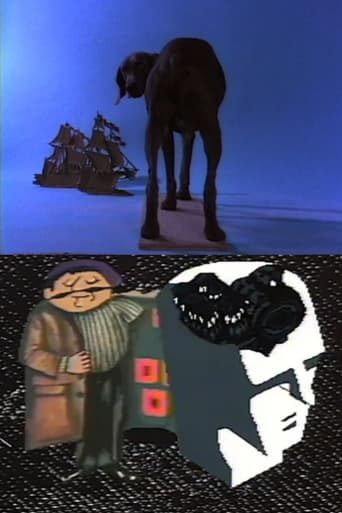
NRVideo art show presented at the 1991 Broadcast Designers Association convention. Includes work from: Robert Ashley, Robert Breer, Peter Callas, Christen Clark, Sumit Das, Ed Emshwiller, John Hart, Jon Klein, Lyonel Kouro, Maureen Nappi, Paul Garin, Amy Greenfield, Nam June Paik, Mark Pellington, M. Rawlings, John Sanborn, Dan Sandin, William Wegman, Dean Winkler. Major contributions include "MAJORCA-fantasia", "Sunstone", "Welcome to My Living Room" and "Neo-Geo: An American Purchase", as well as excerpts from "Perfect Lives".
Frames for Seconds
1991
 NR
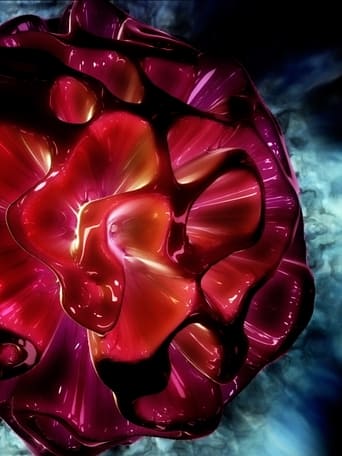
NR"In C, Too" illuminates how close our dreams are to a common reality. Through structured visual improvisational techniques, the work explores how humanity survives because of our imagination and desire to transcend. "In C, Too" is also an origin story, operating in renunciation to mortality, focused on life's essentials - existence, exploration and how entropy ignites evolution.
In C, Too
2024
Part one of the two part abstract video art-piece, with music composed by Philip Glass and performed by the Kronos String Quartet.
Continuum: 1. Initiation
1989
 NR
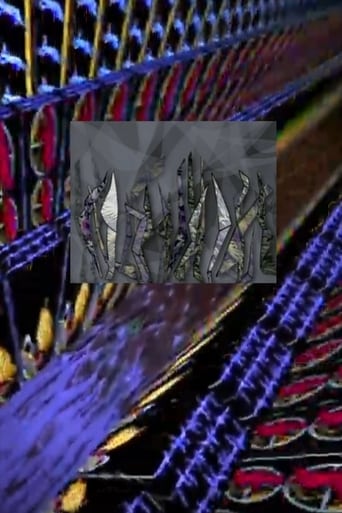
NRAbstract video art with music composed by Philip Glass. Music by the Kronos String Quartet.
Continuum: Parts 1 & 2
1989
 NR
NR"Abstract video art created in 1976. Video by Dean Winkler and Chris Lambiase. Music by Terry Riley. This was created in real time using an RE-4 Rutt/Etra analog video synthesizer. After spending our January college break building the facility that housed the RE-4 and related equipment, we created this tape (with lots of patch cords) the night before we headed back to school." -Dean Winkler
Modulated Horizontal Lines
1976