
Acting
Carl-Erik Creutz
Born — Died
1911-06-14 — 2000-06-05
Place of birth
Padasjoki, Finland
Known for
Acting
Credits
60 titles
Known for
 6.9
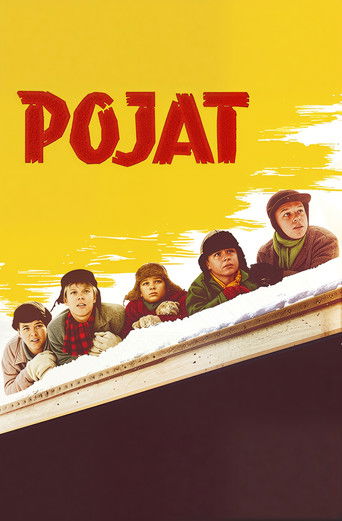
When Continuation War started in Summer 1941, German soldiers arrived to Oulu. With their charm they conquered women and town boys. Finnish boys communicated with them on many levels: had trades, worked as interpreters, rotated business, spied on German love adventures and fought with each other about the favor of soldiers. In autumn 1944, the war was ending. Germans left Oulu by leaving behind fragile relationships, bastard kids and unfinished businesses. The most shocking of all was the faith of young Jake...
The Boys
1962
Ruins of St. Olav's Monastery in Turku, paintings revealed under the plaster. Paintings by artist Nikolai Kaario. Yläne Manor, pictures found in the manor.
Turun kuvariita
1949
 NR
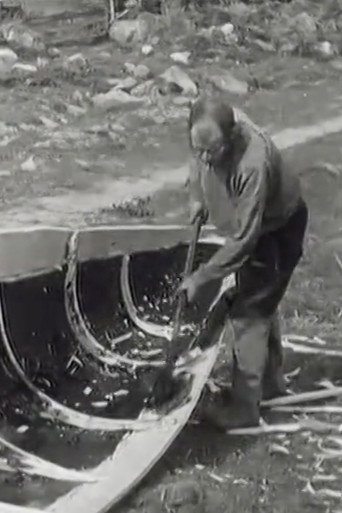
A well-known documentary by Eino Mäkinen (1908-1987), produced by Ethnological Film, describes the ancient process of making ruuh using a Stone Age method by hollowing out aspen logs. This is a 1950 re-release of "Elettiinpä ennenkin - ruuhen synty" (We lived before - the birth of ruuh), narrated by Carl-Erik Creutz. The original version has not survived to this day.
Haaparuuhen synty
1936
Shoes are made from leather purchased with funds donated by Finnish Americans and distributed to children from poor families.
Lahjakengissä koulutielle
1950
French mannequins showcase French fashion and explore Helsinki's attractions.
Pariisia Helsingissä
1948
Helsinki, buildings, parks, statues and monuments.
Helsingin kätköistä
1950
Film credits
1960s · 6 titles
6.9When Continuation War started in Summer 1941, German soldiers arrived to Oulu. With their charm they conquered women and town boys. Finnish boys communicated with them on many levels: had trades, worked as interpreters, rotated business, spied on German love adventures and fought with each other about the favor of soldiers. In autumn 1944, the war was ending. Germans left Oulu by leaving behind fragile relationships, bastard kids and unfinished businesses. The most shocking of all was the faith of young Jake...
The Boys
1962
A documentary on the history of the Finnish cavalry.
Suomalainen ratsuväki
1963
A commisioned film introducing the icebreaker Sampo
Jäänmurtaja Sampo
1961
 6.6
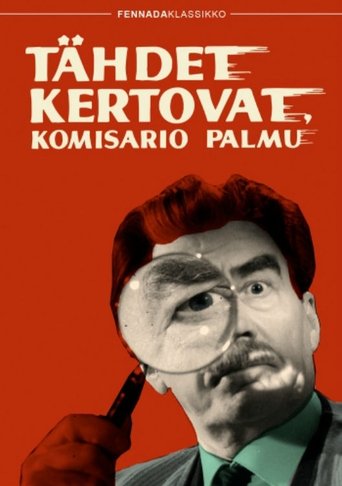
A man's body is found on Tähtitorninmäki in Helsinki. Palmu starts to investigate the case, but the scandalous newspaper story causes problems for the police.
Tähdet kertovat, komisario Palmu
1962
About the harmful effects of alcohol on the human body.
Alcohol in the Human Body
1961
 9.0
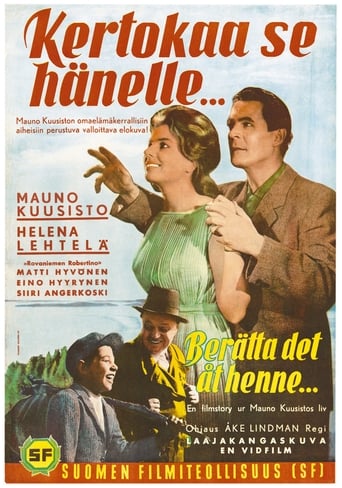
Mauno, an orphan boy, moves from the countryside to Tampere to live with his foster parents, Iida and Eero, who support him in his music studies. As an adult, Mauno travels to Helsinki to search for Helena, a Karelian girl he rescued during the war, who is studying violin. At first, the girl does not recognize Mauno, but a joint concert changes the situation.
Kertokaa se hänelle…
1961
1950s · 23 titles
Shoes are made from leather purchased with funds donated by Finnish Americans and distributed to children from poor families.
Lahjakengissä koulutielle
1950
Helsinki, buildings, parks, statues and monuments.
Helsingin kätköistä
1950
A film about how jewelry telegrams convey health to children. Care for premature babies, the opening of the Christmas Sign Home, children with brain damage in the yard of the Children's Palace, graduation ceremonies of a childcare school, a traveling dental clinic, children on the beach.
Tervehdyksin terveyttä
1954
Fertilizer factory operations, agriculture.
Leipä leveämmäksi
1951
The Olympic film presents the broadcasting of the Helsinki Olympic Games to Finland and abroad. The temporary radio center built at the Olympic Stadium for the Games is described as the largest in the world. The film also shows the lighting of the Olympic flame and covers the sports such as diving, canoeing, cycling, steeplechase and marathon.
Olympiaradio 1952
1952
Introducing the Hyvinkää market and life in 1953.
Hyvinkää nousee
1953
Car exhibition at the Helsinki Exhibition and Convention Center in 1952.
Autonäyttely
1952
The film introduces SOK's distribution system.
Maaseudun antimet
1952
The colorful competition city presents summer Helsinki and the competition venues in 1952, set to the music of Jean Sibelius and narrated by Carl-Erik Creutz.
Värikäs kisakaupunki
1952
Pictures from the London Olympics, the preparation for the Helsinki Olympics, the construction of the Stadium and other sports venues, and an introduction to Finnish society. The beginning of the film is in color, the Finnish section is in black and white.
Olympiasoihdun kutsu
1950
Uses of plastic and its manufacture.
Uusille urille!
1953
Film crew's trip to Stockholm.
Kävimme Tukholmassa
1951
Opening of the Helsinki Fair at the Helsinki School of Economics. President Paasikivi visits the exhibition in the Fair Hall. Presentation of the various sections.
Suurmessuilla 1950
1950
Manufacturing of ceramic objects at the Arabia factory.
Savesta käyttöesineitä
1952
Camera moves around the city of Turku. We also pay a visit to Naantali and Airistola.
Turku
1957
 NR
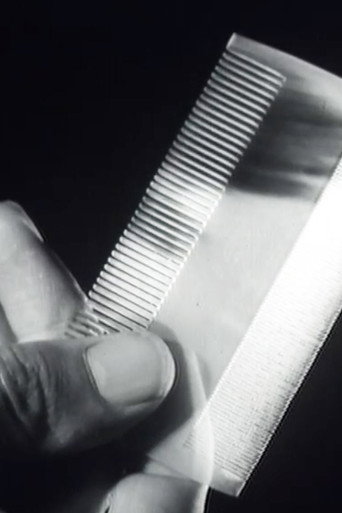
A detailed ethnographic documentary on the making of a horn comb. 85-year-old Eemil Alarik Ahlrot from Turku demonstrates his skills. The horn is heated and opened, and from it the horn comb is created in the hands of the craftsman, just like a lice comb.
Sarvikampa
1954
The camera takes us to Northern Savo to follow the burning of the forest. The different stages of the burning of the forest are filmed and the tools and methods associated with them are introduced, including the preparation of a firewood basket and the making of straw bales. The film tells about the food and childcare of the people who burn the forest. The film brings to life the life of the Finnish community of past centuries.
Kaskisavun mailta
1950
The first Finnish 35 mm color short film from May 1951, directed by Felix Forsman and produced by Felix-Film. It was commissioned by Paulig Oy to celebrate the company's 75th anniversary. It is a large-format commissioned film of its time, and no expense has been spared. The story of Finnish coffee begins in 1756 and continues with carefully dramatized episodes to 1951. The film ends grandly with the Paulig March, written by Uuno Kaila.
Kahvia, kahvia...
1951
Domestic products are presented in the exhibition hall.
Tuotantomme tuloksia
1952
Pictures from the art exhibition on Mexican art at Lilje Valki Art Salon in Stockholm.
Meksikon taidetta
1952
Portrait of writer Väinö Linna. The program was completed in 1955, written by Nils-Börje Stormbom and read by Carl-Erik Creutz.
Author of "Unknown Soldier", Väinö Linna
1955
Manufacturing of agricultural machinery at Wärtsilä Group Oy's Taali and Pietarsaari factories; product demonstration and maintenance of new machinery at the test farm.
Maatalouskoneiden käyttö ja huolto
1950
 5.0
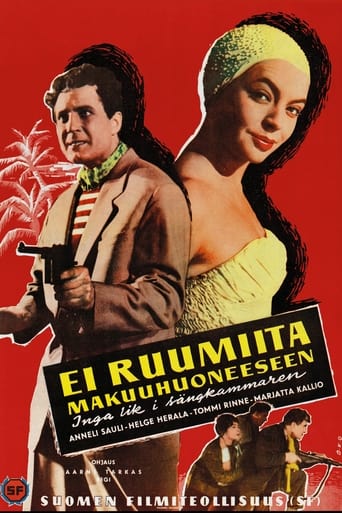
Two Finnish PI:s are hunted by a gang specialized to counterfeit banknotes from Malaga to Finland and Mallorca and back. The counterfeit money printing plates are desperately searched by the gang and our heroes try to hide from them by travelling to Mallorca, where some of the local hoods try to kill them and retake the missing plates.
Ei ruumiita makuuhuoneeseen
1959
1940s · 30 titles
Ruins of St. Olav's Monastery in Turku, paintings revealed under the plaster. Paintings by artist Nikolai Kaario. Yläne Manor, pictures found in the manor.
Turun kuvariita
1949
French mannequins showcase French fashion and explore Helsinki's attractions.
Pariisia Helsingissä
1948
A moving and passionate documentary about March 20, 1948, when the Finnish delegation left for Moscow to negotiate the YYA agreement under the leadership of Prime Minister Mauno Pekkala. The seriousness of the situation can be felt concretely, as the delegation is seen off at the Helsinki railway station by the entire nation in miniature. "And so the train left, taking the negotiating delegation to its important mission."
Suomi neuvottelee
1948
After the Continuation War and the Lapland War, Eino Mäkinen photographed the devastated Lapland rising from the ashes in 1945-1947. Lapin sisu is a harrowing depiction of a family arriving at the ruins of their home. But a new home is quickly built by a volunteer team. “Remember, Kansanapu is calling you too!”
Lapin sisu
1947
An introductory film about an Ostrobothnian city.
Uusikaarlepyy
1946
The revival of trade and cultural relations between Finland and England after the war, the documentary film depicts the unloading of the first English cargo ship and the presentation and mediation of English culture in Helsinki.
Meret aukenevat
1945
Introduction to the city of Turku and its history.
Suomen Turku
1949
The mint produces Finnish markkas.
Rahapaja
1949
Christmas sign homes were special shelters for newborns whose mothers had contracted tuberculosis. The film presents the operation of a Christmas sign home.
Joulumerkkikoti
1946
Fishing, rafting, floating, log cabins.
Napapiirin takana
1947
Finnish castles.
Vanhoja linnoja
1949
The morning program begins with a good day greeting from the film's narrator, Count Baron Carl-Erik Creutz. After this, commentators Pekka Tiilikainen and Eero Leväluoma and announcers Matti Tamminen and Kaisu Puuska, among others, join the campaign. "Uncle Markus" Rautio and parliamentary reporter Leo Meller also testify to the breadth of the program. The film moves from the room of program director Jussi Koskiluoma to the studios and workshops, until the camera has to face the director general at a session of the program council. The popular "Mini Parliament" gets a place when the "Radio Discussion Club", which has been meeting since the summer of 1945, lets its candidates elected by parliamentary power be heard by all the people, led by SKDL's Hella Wuolijoki.
Yleisradion päivä
1947
Pictures of the city of Raahe.
Raahe
1946
War reparations industry. Schooner manufacturing in Rauma at Holming Oy's shipyard.
Metsästä merelle
1947
Documentary film about Helsinki.
Pikakäynnillä Helsingissä
1947
Reconstruction and war damage after the Lapland War.
Joka kuudes
1946
The production and use of Paulig frozen foods.
Kesätuoreutta talveksi
1945
The "image hunger" was enormous in the post-war years. The Finnish film industry joined forces in the autumn of 1949 and held the first Finnish film week in both large cities and smaller towns. During the week, 20 premieres were shown. The interaction between the film industry and the film audience was emphasized with many stunts. The grand opening was held at the Kino-Palats in Helsinki. In 1949, there were 470 cinemas and 40 film rental companies in Finland. That year, Finns went to the cinema 26 million times.
Filmiviikko
1949
Presentation of the factory facilities of the Metal Industry Group Fiskars Oy, the production of iron and steel, and machine shop operations.
Tarinaa raudasta
1949
The short film describes President J. K. Paasikivi's activities as a statesman and especially as President of the Republic. Paasikivi takes the oath at the Parliament House. Independence Day celebration at the Presidential Palace.
Mies paikallaan
1949
A documentary about mine clearance in Lapland during the first summer of peace in 1945. Over 70,000 mines were left behind in the devastated Lapland after the war. The dangerous clearance work progresses with the help of mine rakes, mine dogs, and even Argentine canned meat.
Miinanraivaus
1946
A loosely ethnographic document from the late 1940s from Uimaharju, North Karelia. At that time, it was completely free to dump the nest, even directly from the nest in winter.
Kontion kaadannassa
1948
Documentary film about the production of glass in Finland.
Glass
1949
Pictures from Central Ostrobothnia from cultural and economic perspectives.
Keski-Pohjanmaa
1945
The film presents Finnish design and interior design accessories.
Kauneutta arkeen
1949
Landscape photos from Häme, including Hämeenlinna and Aulanko,
Heleätä Hämettä
1945
A dramatization of the life of Antti Ahlström and the history of the company that bears her name, based on biographies, letters and memoirs.
Talouselämämme uranuurtaja Antti Ahlström
1946
Athletics national competition in 1948. Including Viljo Heino and Tapio Rautavaara.
Suomi-Ruotsi yleisurheilussa
1948
Members of the Academy in the University of Helsinki's ballroom and at their work.
Suomen Akatemian juhlaa ja arkea
1949
The beer making process and a dramatized part of beer history.
Olutta
1949