
Acting
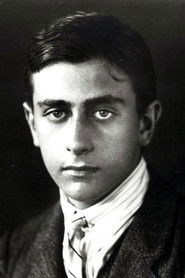
Edward Teller
Born — Died
1908-01-15 — 2003-09-09
Place of birth
Budapest, Austria-Hungary [now Hungary]
Known for
Acting
Credits
18 titles
Edward Teller (Hungarian: Teller Ede; January 15, 1908 – September 9, 2003) was a Hungarian-American theoretical physicist who is known colloquially as "the father of the hydrogen bomb" (see the Teller–Ulam design), although he did not care for the title, considering it to be in poor taste. Throughout his life, Teller was known both for his scientific ability and for his difficult interpersonal relations and volatile personality. Born in Hungary in 1908, Teller emigrated to the United States in the 1930s, one of the many so-called "Martians", a group of prominent Hungarian scientist émigrés. He made numerous contributions to nuclear and molecular physics, spectroscopy (in particular the Jah…
Known for
 5.8
5.8The Mike Douglas Show is an American daytime television talk show hosted by Mike Douglas that originally aired only in the Cleveland area during much of its first two years on the air. It then went into syndication in 1963 and remained on television until 1982. It was distributed by Westinghouse Broadcasting and for much of its run, originated from studios of two of the company's TV stations in Cleveland and Philadelphia.
The Mike Douglas Show
1961
 6.8
6.8The Dick Cavett Show has been the title of several talk shows hosted by Dick Cavett on various television networks.
The Dick Cavett Show
1968
 8.0
8.0With firsthand accounts and access to prominent figures around the world, this comprehensive docuseries explores the Cold War and its aftermath.
Turning Point: The Bomb and the Cold War
2024
No synopsis available yet.
Club 2
1976
Presents a filmed, intercontinental conversation that links moderator Edward R. Murrow in New York with three internationally known figures located in different parts of the world. What set this apart from other televised interview/discussion programs was the fact that its participants could not see each other but could hear one another via telephone lines and radio.
Small World
1958
 7.7
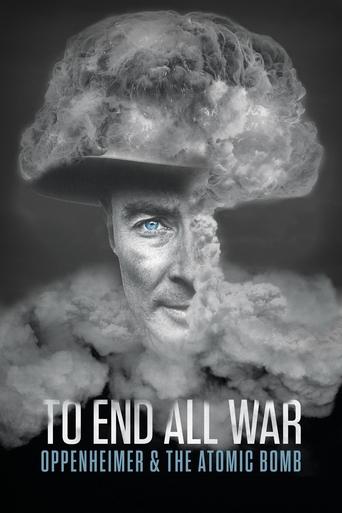
7.7Explore how one man's relentless drive and invention of the atomic bomb changed the nature of war forever, led to the deaths of hundreds of thousands of people and unleashed mass hysteria.
To End All War: Oppenheimer & the Atomic Bomb
2023
Film credits
2000s · 4 titles
 6.2
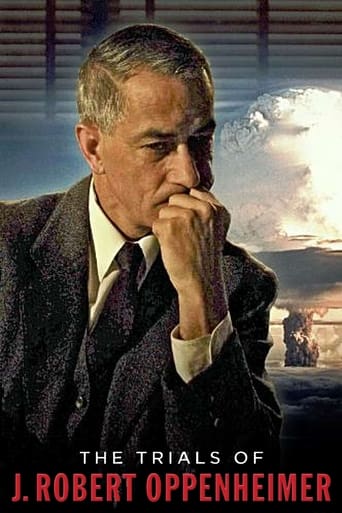
6.2J. Robert Oppenheimer was a national hero, the brilliant scientist who during WWII led the scientific team that created the atomic bomb. But after the bomb brought the war to an end, in spite of his renown and his enormous achievement, America turned on him - humiliated and cast him aside. The question the film asks is, "Why?"
The Trials of J. Robert Oppenheimer
2008
 NR
NRThe Moment in Time documents the uncertain days of the beginning of World War II when it was feared the Nazis were developing the atomic bomb. The history of the bomb's development is traced through recollections of those who worked on what was known as "the gadget."
The Moment in Time: The Manhattan Project
2000
 NR
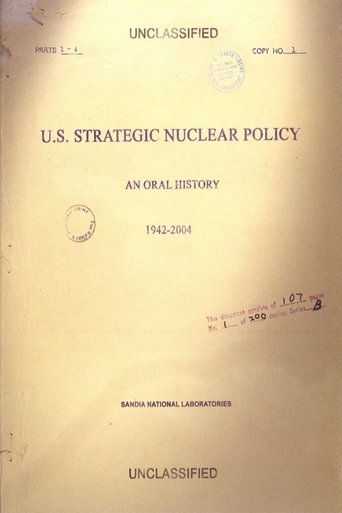
NRU.S. Strategic Nuclear Policy, An Oral History explores the origins of United States strategic nuclear policy and how it evolved. The documentary looks at this topic through the oral history of key participants including Robert McNamara, Edward Teller, James Schlesinger, Andrew Goodpaster, Harold Brown, Richard Garwin and William Kaufmann.
U.S. Strategic Nuclear Policy
2005
The enormous destructive power of nuclear explosions can be used, not just in theory, for peaceful purposes. In the second half of the 1950s, scientists from both nuclear superpowers began experimenting with smaller underground nuclear explosions, which were to be used to move large amounts of soil in the construction of canals, canals, and mining.
Nuclear Dynamite
2000
1990s · 2 titles
 7.2
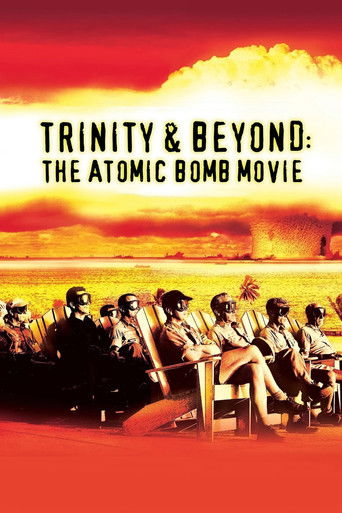
7.2"Trinity and Beyond" is an unsettling yet visually fascinating documentary presenting the history of nuclear weapons development and testing between 1945-1963. Narrated by William Shatner and featuring an original score performed by the Moscow Symphony Orchestra, this award-winning documentary reveals previously unreleased and classified government footage from several countries.
Trinity and Beyond: The Atomic Bomb Movie
1995
A rare view from within, as several of the Manhattan Project scientists, including Hans Berthe, Robert Serber, Edward Teller, Robert Wilson, and more, speak of their experiences on the path to a terrible shared destiny. As their lives and work at Los Alamos are revealed, they relate stories of contradictions and jealousies, and how each came to terms with the atomic era's most immediate consequence: the destruction of Hiroshima and Nagasaki.
I Am Become Death: They Made the Bomb
1995
1980s · 2 titles
 NR
NRA documentary composed of historical footage and contemporary interviews from the men and women of Los Alamos, recalling their experiences of the community and the creation of the atomic bomb from the inception of the program in 1943.
Los Alamos: The Beginning
1982
 9.0
9.0A chronicle of the rescue of oppressed intellectuals and artists from Europe before the outbreak of World War II. It studies the cultural and intellectual impact of this emigre population on American life.
The Exiles
1989
Series credits
5.8The Mike Douglas Show is an American daytime television talk show hosted by Mike Douglas that originally aired only in the Cleveland area during much of its first two years on the air. It then went into syndication in 1963 and remained on television until 1982. It was distributed by Westinghouse Broadcasting and for much of its run, originated from studios of two of the company's TV stations in Cleveland and Philadelphia.
The Mike Douglas Show
1961
6.8The Dick Cavett Show has been the title of several talk shows hosted by Dick Cavett on various television networks.
The Dick Cavett Show
1968
8.0With firsthand accounts and access to prominent figures around the world, this comprehensive docuseries explores the Cold War and its aftermath.
Turning Point: The Bomb and the Cold War
2024
No synopsis available yet.
Club 2
1976
Presents a filmed, intercontinental conversation that links moderator Edward R. Murrow in New York with three internationally known figures located in different parts of the world. What set this apart from other televised interview/discussion programs was the fact that its participants could not see each other but could hear one another via telephone lines and radio.
Small World
1958
No synopsis available yet.
Das Sonntagsinterview
1980
The Great Debate is a Canadian television series that featured debates between pairs of panelists over a given subject. It was first shown on Global Television Network in 1974, and later broadcast by CHCH-TV from Hamilton, Ontario. The series was produced intermittently until 1983.
The Great Debate
1974