

Acting
Jimmy Little
Born — Died
1937-03-01 — 2012-04-02
Known for
Acting
Credits
12 titles
Description taken from English Wikipedia. James Oswald Little, AO (1 March 1937 – 2 April 2012) was an Australian Aboriginal musician, actor and teacher, who was a member of the Yorta Yorta tribe and was raised on the Cummeragunja Reserve, New South Wales. Little started his professional career in 1951, as a singer-songwriter and guitarist, which spanned six decades. For many years he was the main Aboriginal star on the Australian music scene. His music was influenced by Nat King Cole, Johnny Mathis and American country music artist Jim Reeves. His gospel song "Royal Telephone" (1963) sold over 75,000 copies, and his most popular album, Messenger, peaked at No. 26 in 1999 on the ARIA Album…
Known for
 7.0
The Bob Hope Show hosted by Bob Hope, debuted on April 9, 1950. During the 1952-1953 season, NBC rotated with other variety shows in a Sunday night block known as "The Colgate Comedy Hour" (Sept. 1950 to Dec. 1955). Also known as, "The Chevy Show with Bob Hope." When the first special debuted in October of 1950 it was the most expensive television program made up to that point - costing an astronomical $1,500 a minute to produce. Bob Hope had his own television show and radio show at the same time. For the next three seasons, The Bob Hope Show was broadcast once a month on Tuesday nights, giving Milton Berle a week off. Bob ended his radio show in April, 1956. Bob Hope also had another show by a similar name, "The Bob Hope Show (All Star Revue)". In addition, he performed in "Specials" for many years. It is the longest running variety program in television's history with a record of 45 years of televised entertainment.
The Bob Hope Show
1950
 6.8
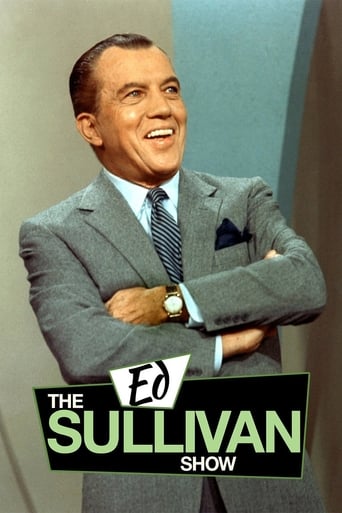
The Ed Sullivan Show is an American TV variety show that originally ran on CBS from Sunday June 20, 1948 to Sunday June 6, 1971, and was hosted by New York entertainment columnist Ed Sullivan. It was replaced in September 1971 by the CBS Sunday Night Movie, which ran only one season and was eventually replaced by other shows. In 2002, The Ed Sullivan Show was ranked #15 on TV Guide's 50 Greatest TV Shows of All Time.
The Ed Sullivan Show
1948
 7.1
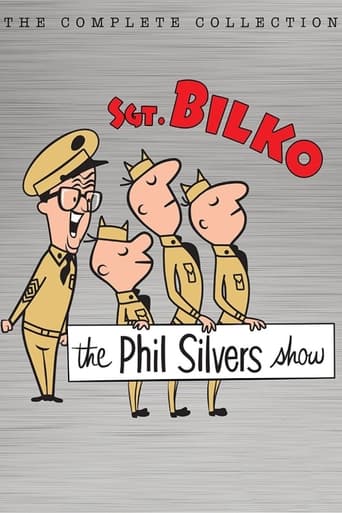
The Phil Silvers Show, originally titled You'll Never Get Rich, was a sitcom which ran on CBS from 1955 to 1959 for 142 episodes, plus a 1959 special. The series starred Phil Silvers as Master Sergeant Ernest G. Bilko of the United States Army. The series was created and largely written by Nat Hiken, and won three consecutive Emmy Awards for Best Comedy Series. The show is sometimes titled Sergeant Bilko or simply Bilko in reruns, and is very often referred to by these names, both on-screen and by viewers. The show's success transformed Silvers from a journeyman comedian into a star, and writer-producer Hiken from a highly-regarded behind-the-scenes comedy writer into a publicly recognized creator.
The Phil Silvers Show
1955
 6.7
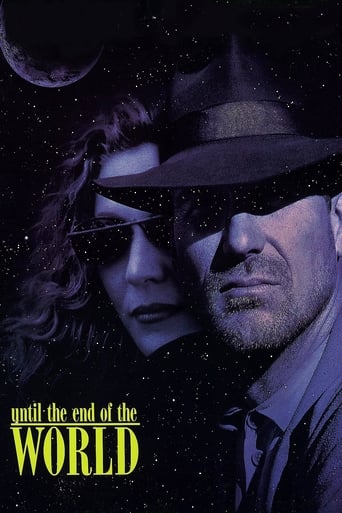
In 1999, a woman's life is forever changed after she survives a car crash with two bank robbers, who enlist her help to take the money to a drop in Paris. On the way, she runs into another fugitive from the law — an American doctor on the run from the CIA. They want to confiscate his father's invention – a device which allows anyone to record their dreams and visions.
Until the End of the World
1991
 4.4
In this amiable Columbia B musical, society girl Ann Miller escapes her Back Bay family by performing in the chorus line in a burlesque house. But trouble starts when her boss (William Wright) decides to build her up as a star. One of the many bread-and-butter Columbia productions graced by the contributions of Cole’s in-house dance studio. Cole dances behind Miller in “I’m Gonna See My Baby.” --Museum of Modern Art
Eadie Was a Lady
1945
 8.0
Musical comedy star Jimmy Leighter wants to get away from show biz and his leading lady Winnie Clark, so he joins the Army. There he gets the order to put on a show, Winnie Clark appears in a camp show, hears about his task and offers him his help. He thinks, she does it for her publicity only, so he doesn't want to know anything about this, till he finds out, that she has no such intentions.
Hey, Rookie
1944
Film credits
1990s · 3 titles
6.7In 1999, a woman's life is forever changed after she survives a car crash with two bank robbers, who enlist her help to take the money to a drop in Paris. On the way, she runs into another fugitive from the law — an American doctor on the run from the CIA. They want to confiscate his father's invention – a device which allows anyone to record their dreams and visions.
Until the End of the World
1991
 9.3
In this Australian drama, a department store collapses, trapping an old man (Barry Jenkins) and a young boy (Rowan Whitt) underneath. In hopes of keeping the child calm, the man tells him a series of folk tales which teach a moral lesson while they entertain. Somewhere In The Darkness received its world premier at the 1999 Slamdance Film Festival in the United States; it was later screened at Australia's Sydney Film Festival the same year. ~ Mark Deming, Rovi
Somewhere in the Darkness
1999
 5.0
A short film about the relationship between an Aboriginal daughter and her white mother. The daughter, now the sole carer of her dying mother, dreams of far away places, the haunted look in her eyes loaded with a sense of what could have been. Famous Aboriginal singer, Jimmy Little, sings 'Royal Telephone', evoking the presence of Christianity and its role in the assimilation of Aboriginal people. The final scene sees the daughter lying in a foetal position next to her mother, crying. Assimilation, then, can be understood as a pain experienced by both the Aboriginal daughter as well as the white mother.
Night Cries: A Rural Tragedy
1990

1950s · 3 titles
 5.1
A woman believes herself to be the reincarnated spirit of an ancient prince's lover. Meanwhile, a murderer turns out to be the reincarnated spirit of the prince himself.
Fright
1956
 6.8
A New York cab driver helps an Irish immigrant with a baby locate her missing husband.
Taxi
1953
 6.0
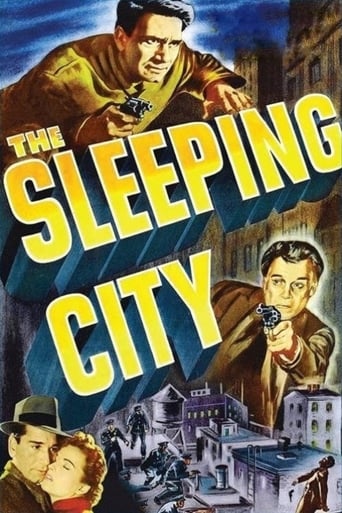
A young doctor taking a break from work is shot in the head, and the police can't find a clue even as to a possible motive. Inspector Al Gordon (John Alexander) decides that he has to put some men on duty at the hospital, and one of them is Fred Rowan (Richard Conte), a detective with experience as an army medic, masquerading as an intern. What Rowan finds is a high-pressure world in which interns are hopelessly squeezed for time, sleep, energy, and -- most of all -- money, and walk a fine line on the edge of personal and professional disaster.
The Sleeping City
1950
1940s · 2 titles
4.4In this amiable Columbia B musical, society girl Ann Miller escapes her Back Bay family by performing in the chorus line in a burlesque house. But trouble starts when her boss (William Wright) decides to build her up as a star. One of the many bread-and-butter Columbia productions graced by the contributions of Cole’s in-house dance studio. Cole dances behind Miller in “I’m Gonna See My Baby.” --Museum of Modern Art
Eadie Was a Lady
1945
8.0Musical comedy star Jimmy Leighter wants to get away from show biz and his leading lady Winnie Clark, so he joins the Army. There he gets the order to put on a show, Winnie Clark appears in a camp show, hears about his task and offers him his help. He thinks, she does it for her publicity only, so he doesn't want to know anything about this, till he finds out, that she has no such intentions.
Hey, Rookie
1944
Series credits
7.0The Bob Hope Show hosted by Bob Hope, debuted on April 9, 1950. During the 1952-1953 season, NBC rotated with other variety shows in a Sunday night block known as "The Colgate Comedy Hour" (Sept. 1950 to Dec. 1955). Also known as, "The Chevy Show with Bob Hope." When the first special debuted in October of 1950 it was the most expensive television program made up to that point - costing an astronomical $1,500 a minute to produce. Bob Hope had his own television show and radio show at the same time. For the next three seasons, The Bob Hope Show was broadcast once a month on Tuesday nights, giving Milton Berle a week off. Bob ended his radio show in April, 1956. Bob Hope also had another show by a similar name, "The Bob Hope Show (All Star Revue)". In addition, he performed in "Specials" for many years. It is the longest running variety program in television's history with a record of 45 years of televised entertainment.
The Bob Hope Show
1950
6.8The Ed Sullivan Show is an American TV variety show that originally ran on CBS from Sunday June 20, 1948 to Sunday June 6, 1971, and was hosted by New York entertainment columnist Ed Sullivan. It was replaced in September 1971 by the CBS Sunday Night Movie, which ran only one season and was eventually replaced by other shows. In 2002, The Ed Sullivan Show was ranked #15 on TV Guide's 50 Greatest TV Shows of All Time.
The Ed Sullivan Show
1948
7.1The Phil Silvers Show, originally titled You'll Never Get Rich, was a sitcom which ran on CBS from 1955 to 1959 for 142 episodes, plus a 1959 special. The series starred Phil Silvers as Master Sergeant Ernest G. Bilko of the United States Army. The series was created and largely written by Nat Hiken, and won three consecutive Emmy Awards for Best Comedy Series. The show is sometimes titled Sergeant Bilko or simply Bilko in reruns, and is very often referred to by these names, both on-screen and by viewers. The show's success transformed Silvers from a journeyman comedian into a star, and writer-producer Hiken from a highly-regarded behind-the-scenes comedy writer into a publicly recognized creator.
The Phil Silvers Show
1955