

Sound
Simon Plouffe
Place of birth
Laval, Québec, Canada
Known for
Sound
Credits
12 titles
Simon Plouffe lives and works as a filmmaker in Montreal / Tiohtià:ke / Mooniyang. He studied screenwriting at UQAM and film production at Concordia University. His film Others’ Gold (2011) was screened at Dok.Fest Munich and Big Sky Film Festival. Those Who Come, Will Hear (2018) won the Jury Award at the Ann Arbor Film Festival and Best Sound at the Gala Québec Cinéma in 2019. His exploratory short documentary Forests (2022) was presented at festivals including Krakow Film Festival and the Edinburgh International Film Festival, as well as the Hong-Gah Museum in Taiwan. It received the Art and Experimentation Award at Rendez-vous Québec Cinéma and the Jury Prize at the Trento Film Festival …
Known for
 9.0
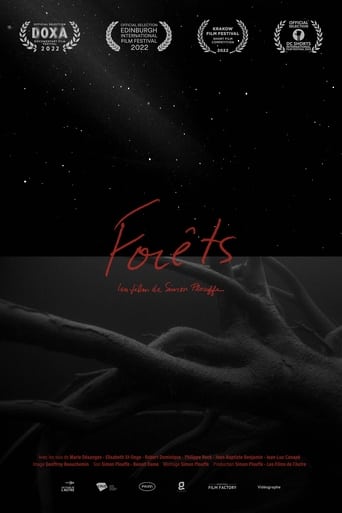
In a dark, ambiguous environment, minuscule particles drift slowly before the lens. The image focuses to reveal spruce trees and tall pines, while Innu voices tell us the story of this territory, this flooded forest. Muffled percussive sounds gradually become louder, suggesting the presence of a hydroelectric dam. The submerged trees gradually transform into firebrands as whispers bring back the stories of this forest.
Forests
2022
 9.0
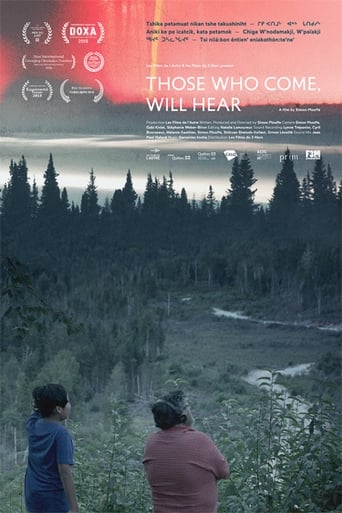
The documentary proposes a unique meeting with the speakers of several indigenous and inuit languages of Quebec – all threatened with extinction. The film starts with the discovery of these unsung tongues through listening to the daily life of those who still speak them today. Buttressed by an exploration and creation of archives, the film allows us to better understand the musicality of these languages and reveals the cultural and human importance of these venerable oral traditions by nourishing a collective reflection on the consequences of their disappearance.
Those Who Come, Will Hear
2018
 NR
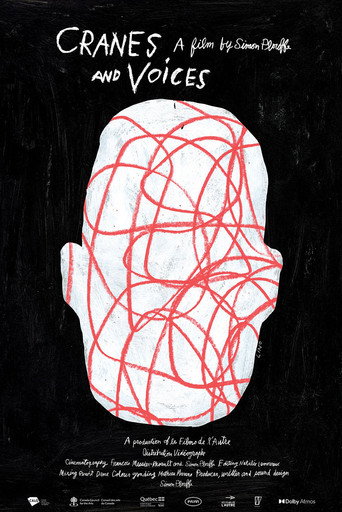
Cranes and Voices follows, on one side, people who hear voices and share their daily lives, and on the other, a collective of tenants who investigate their neighbourhood through its noises, its vibrations and its construction sites. The film moves through apartments, streets, meetings and moments of sound creation, where voices, urban noises and recorded materials are transformed into collective sound compositions and spaces for exchange. Sound appears here as an ambivalent force, at once invasive and generative, shaping the way we inhabit the city, other people and ourselves. Cranes and Voices invites us to pay attention to these singular listening experiences, to hear what they reveal about the housing crisis, about how mental health is viewed and about the ways we organise our shared spaces.
Cranes and Voices
2026
 9.0
The arrival of the mining company Osisko creates a lot of excitement in Malartic, a small community of 3600 souls in Quebec, Canada. Faced with the implacable Mining Act, which prioritizes the right to exploit subsoil resources rather than the right to property, many families and seniors need to write off certain elements of their heritage plus a part of their lifestyle to make room for the largest open-pit gold mine in Canada. The characters in Others' Gold experience in their own way this major change that will affect their lives and urban environment.
Others' Gold
2012
 NR
The film follows five people who lost their sight in armed conflicts, gathering fragments of their present-day lives. Through an enveloping sound composition, veiled archival material, footage shot by the protagonists themselves, and a sensitive visual approach, the film explores memory, perception, and our relationship to the visible. Steering away from spectacle, it invites us to hear what often goes unheard, and to feel differently. In an age saturated with images, this documentary offers a sensory experience where listening becomes a gesture of resistance and human reconnection.
Seeing Through the Darkness
2025
Behind the camera
9.0In a dark, ambiguous environment, minuscule particles drift slowly before the lens. The image focuses to reveal spruce trees and tall pines, while Innu voices tell us the story of this territory, this flooded forest. Muffled percussive sounds gradually become louder, suggesting the presence of a hydroelectric dam. The submerged trees gradually transform into firebrands as whispers bring back the stories of this forest.
Forests
2022
9.0The documentary proposes a unique meeting with the speakers of several indigenous and inuit languages of Quebec – all threatened with extinction. The film starts with the discovery of these unsung tongues through listening to the daily life of those who still speak them today. Buttressed by an exploration and creation of archives, the film allows us to better understand the musicality of these languages and reveals the cultural and human importance of these venerable oral traditions by nourishing a collective reflection on the consequences of their disappearance.
Those Who Come, Will Hear
2018
NRCranes and Voices follows, on one side, people who hear voices and share their daily lives, and on the other, a collective of tenants who investigate their neighbourhood through its noises, its vibrations and its construction sites. The film moves through apartments, streets, meetings and moments of sound creation, where voices, urban noises and recorded materials are transformed into collective sound compositions and spaces for exchange. Sound appears here as an ambivalent force, at once invasive and generative, shaping the way we inhabit the city, other people and ourselves. Cranes and Voices invites us to pay attention to these singular listening experiences, to hear what they reveal about the housing crisis, about how mental health is viewed and about the ways we organise our shared spaces.
Cranes and Voices
2026
9.0The arrival of the mining company Osisko creates a lot of excitement in Malartic, a small community of 3600 souls in Quebec, Canada. Faced with the implacable Mining Act, which prioritizes the right to exploit subsoil resources rather than the right to property, many families and seniors need to write off certain elements of their heritage plus a part of their lifestyle to make room for the largest open-pit gold mine in Canada. The characters in Others' Gold experience in their own way this major change that will affect their lives and urban environment.
Others' Gold
2012
NRThe film follows five people who lost their sight in armed conflicts, gathering fragments of their present-day lives. Through an enveloping sound composition, veiled archival material, footage shot by the protagonists themselves, and a sensitive visual approach, the film explores memory, perception, and our relationship to the visible. Steering away from spectacle, it invites us to hear what often goes unheard, and to feel differently. In an age saturated with images, this documentary offers a sensory experience where listening becomes a gesture of resistance and human reconnection.
Seeing Through the Darkness
2025