

Known for
 7.0
7.0No synopsis available yet.
Bakaláři
1972
 NR
NRAfter a bleak childhood, Jane Eyre goes out into the world to become a governess. As she lives happily in her new position at Thornfield Hall, she meets the dark, cold, and abrupt master of the house, Edward Rochester. Jane and her employer grow close in friendship and she soon finds herself falling in love with him. Happiness seems to have found Jane at last, but could Rochester's terrible secret be about to destroy it forever?
Jane Eyre
1973
 NR
NRThe funny TV fairy tale THE DOLL FROM THE VLTAVSKA POOL (1976) tells not only about the coexistence of the human and waterfowl races in Povltavia, but also about the fact that everything is good everywhere in the world, but at home it is best. And although this applies to the inhabitants of the banks and the depths, young people often have to verify this saying for themselves. THE DOLL FROM THE VLTAVSKA POOL is also full of songs with lyrics by Pavel Kopta, but there is also one folk song, the one that is perhaps the most suitable given the title of the fairy tale - The wide, deep, Vltava pool...
Panenka z vltavské tůně
1976
 7.6
7.6Strict and always dissatisfied grumbler Mr. Angel gets a voucher for summer recreation. He rejects it at first but he eventually decides to use it and spend 14 days in unionist hut Jezerka together with other merited co-workers.
Holiday with Angel
1953
 10.0
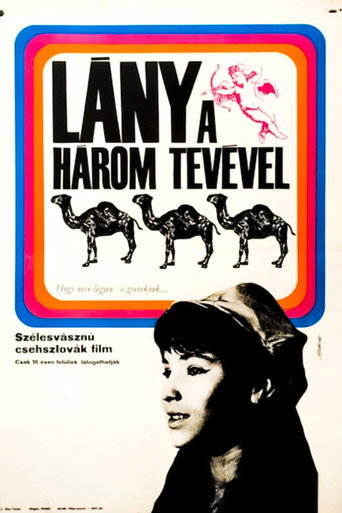
10.0The fates of the women are repeated: the 16-year-old daughter of a 32-year-old mother is also pregnant. Like her mother, the child remains unmarried and fatherless. From him, the girl receives only an exotic postcard with the titular three camels...
The Girl with Three Camels
1967
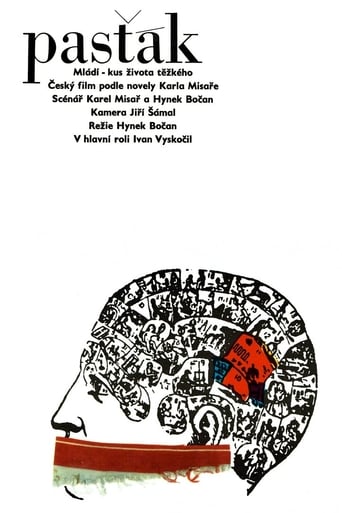
Ten-year-old Martin attends religion at school and is always an altar boy at church. That's the wish of his mother Anci, a bigoted believer. However, Martin encounters hypocrisy at every turn and begins to doubt that God exists. His older brother Eda steals money from his father with impunity, his father steals materials from the cooperative building, and even Martin's best friend Kovajs "sins" without scruples. Pastor Hornof tries in various ways to maintain his influence over his sheep, but is hindered by people with a "progressive" socialist mindset. When Martin's beloved Angora rabbits, who have done nothing wrong to anyone, die, the boy's faith is clear. He decides to join a pioneer organisation. All that's left is to keep it a secret from his mother...
Králíci ve vysoké trávě
1962
Film credits
1990s · 2 titles
1970s · 10 titles
NRThe funny TV fairy tale THE DOLL FROM THE VLTAVSKA POOL (1976) tells not only about the coexistence of the human and waterfowl races in Povltavia, but also about the fact that everything is good everywhere in the world, but at home it is best. And although this applies to the inhabitants of the banks and the depths, young people often have to verify this saying for themselves. THE DOLL FROM THE VLTAVSKA POOL is also full of songs with lyrics by Pavel Kopta, but there is also one folk song, the one that is perhaps the most suitable given the title of the fairy tale - The wide, deep, Vltava pool...
Panenka z vltavské tůně
1976
A section of the life of George of Poděbrady from his coronation to his death (1458–1471), creating a portrait of a remarkable monarch whose name shone as a symbol of Czech statehood, as a symbol of a victorious military leader and a prudent statesman; a powerful, complex and contradictory personality in the midst of a very dramatic fifteenth century. During thirteen years of independent rule, he wanted to defend with all his might what had been won by the Hussites; he wanted to defend it even in a time and environment that, on the contrary, wanted to settle accounts with the Hussites. It was during this tense time that Poděbrady's idea of creating an association of monarchs who would resolve conflicts through agreements and treaties, and not through war, arose. Even as a father, he made a sacrifice for his beloved country when he did not hand over the crown of the Czech king to his son, but to the Polish king Vladislav, the "Prince of Peace".
Králův kalich
1975
 5.4
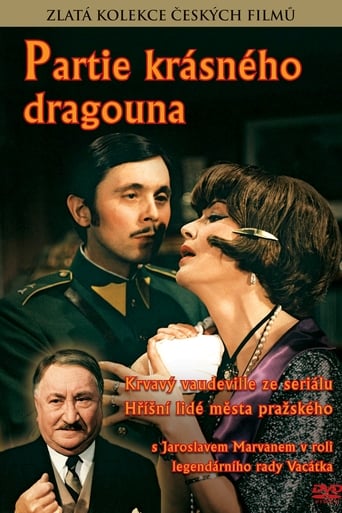
5.4In a suburban villa, a woman of means is murdered. Police Superintendent Zdychynec from the Prague Liben neighborhood reports the case to Police Councilman Vacátko, upon whose order an investigation is launched immediately. Zdychynec begins to suspect the wooer of his own daughter, a handsome dragoon named Rudi, of the crime. In Rudi's absence, Zdychynec searches his rented room in the apartment of the elegant Mrs Dragicová. All his findings - among others, sand left on Rudi's jackboots and a decent amount of money in his bedside table - convince the superintendent that he is following the right lead, especially when Rudi refuses to say where he was at the time of the murder.
The Matches of a Beautiful Dragoon
1971
No synopsis available yet.
Rodič
1976
Elishka loves animals. She rides a horse that got injured in the riding arena and has to be taken to the slaughterhouse. So the girl buys a horse and keeps it at home in the garden. Eliška's mother suffers her daughter's dog and cats at home, but she does not want to reconcile with the horse. With the help of the children, Eliška manages to place the horse in a nearby state farm. The children take care of the horse enthusiastically and intervene very actively when the sick horse threatens to die...
Ten kůň musí pryč
1975
 7.0
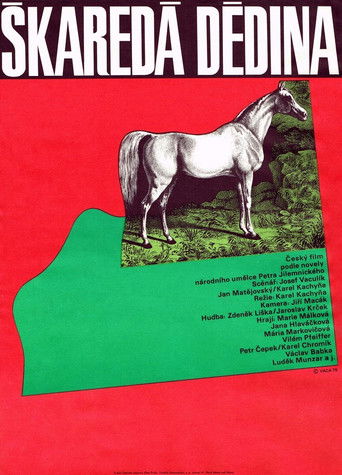
7.0The economic crisis in the early 1930s also affected the inhabitants of the distinctive Moravian-Slovak countryside. The protagonist and his family returned to their native cottage from the city because he could not find work anywhere. But his younger brother does not welcome him with open arms...
Škaredá dědina
1975
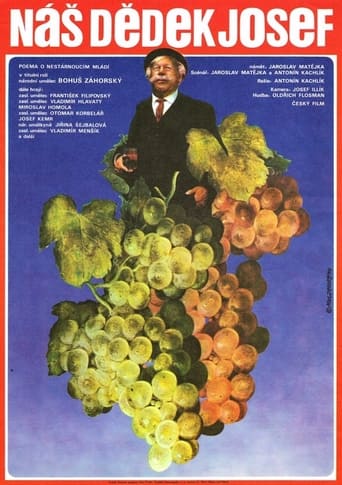 6.5
6.5Set in a 1950s Moravian wine village, an elderly Josef, guided by his quirky life philosophy and humor, recalls key moments from his past. Across nine seasonal vignettes filled with local folklore and customs, he and his fellow elders remain fully engaged in the joys and trials of village life.
Náš dědek Josef
1977
No synopsis available yet.
Holka modrooká
1978
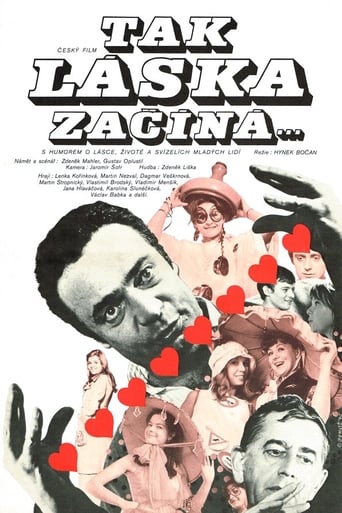 5.0
5.0Two hilarious short stories set in the milieu of apprentice youth, depicting the amorous travails of teenage boys. In the first story, "The Sorrows of the Devil's Apprentice", we see a talkative storekeeper who is constantly advising his charges on how they should behave, unaware that one of the young men has fallen in love with his daughter. Overcoming shyness is also depicted in the second of the stories, entitled "May I Beg, Helen?"
This Is How Love Begins...
1975
 NR
NRNo synopsis available yet.
Konec draka Kusodrápa
1971
1960s · 7 titles
10.0The fates of the women are repeated: the 16-year-old daughter of a 32-year-old mother is also pregnant. Like her mother, the child remains unmarried and fatherless. From him, the girl receives only an exotic postcard with the titular three camels...
The Girl with Three Camels
1967
Ten-year-old Martin attends religion at school and is always an altar boy at church. That's the wish of his mother Anci, a bigoted believer. However, Martin encounters hypocrisy at every turn and begins to doubt that God exists. His older brother Eda steals money from his father with impunity, his father steals materials from the cooperative building, and even Martin's best friend Kovajs "sins" without scruples. Pastor Hornof tries in various ways to maintain his influence over his sheep, but is hindered by people with a "progressive" socialist mindset. When Martin's beloved Angora rabbits, who have done nothing wrong to anyone, die, the boy's faith is clear. He decides to join a pioneer organisation. All that's left is to keep it a secret from his mother...
Králíci ve vysoké trávě
1962
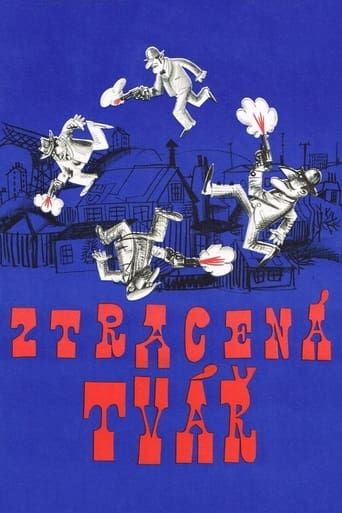 7.0
7.0It is the 1930s. Physician Bartos devotedly attends poor patients in the city suburbs, at the same time researching the possibilities of regeneration of human tissues after transplantation. His former colleague Rosen, now working as an assistant at the private clinic of surgeon Kirchenbruch, considers the research a mere utopia. The disappointed Bartos, trying to verify his theories, therefore accepts the outrageous proposal of Marion, owner of a brothel - to surgically replace the face of her lover, the wanted thief Cutter, with the face of murdered Father Hopsasa. Bartos is well paid but his successful operation remains a secret.
The Borrowed Face
1965
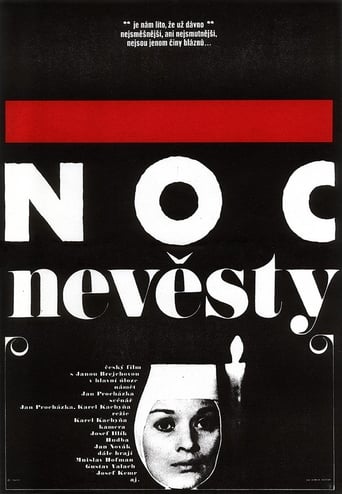 7.1
7.1A dark fable set in an early 1950s Czech village, a time of Soviet-style socialism which saw the implementation of collectivized agriculture and the mass closure of monasteries and convents.
The Nun's Night
1967
Radio announcer Petrícek reads the evening news in a studio. Viki, the female editor of a woman's program, is annoyed by the stereotypical information he provides as well as by the speaker's melodious voice and his heart-felt performance. Then she gets an idea for a prank. She calls the speaker from the neighboring room on the phone and pretends to be an unhappily married woman who draws all her strength to live from Petrícek's voice.
How to Get Rid of Helenka
1968
No synopsis available yet.
Komediantská historie
1969
No synopsis available yet.
Sedm sestřiček
1966
1950s · 4 titles
7.6Strict and always dissatisfied grumbler Mr. Angel gets a voucher for summer recreation. He rejects it at first but he eventually decides to use it and spend 14 days in unionist hut Jezerka together with other merited co-workers.
Holiday with Angel
1953
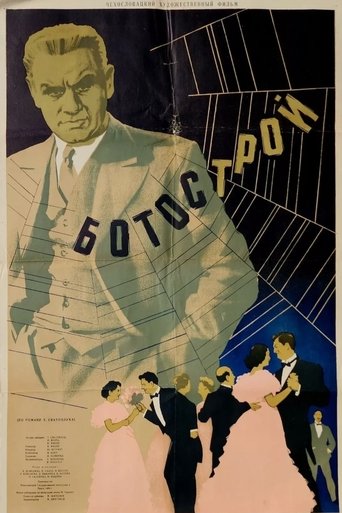 8.0
8.0The happenings in a shoe factory serve as a not very thinly veiled examination of the pros and cons of both socialism and democracy.
Shoesmachine
1954
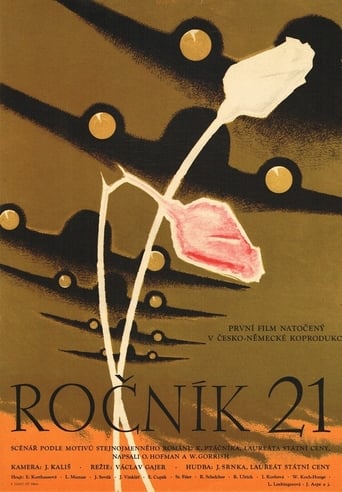 7.0
7.0At the beginning of the Second World War, Czech music student Honsik comes to Germany from Prague to join a "foreign worker company". After rescuing a boy from the rubble of a bombed-out house, he himself is seriously injured and taken to a hospital in Stralsund. There he is regarded as a second-class citizen and the Germans are preferred to him. Nurse Käthe stands up for him, cares for him and defies all prohibitions. A love affair is kindled between the two, but it is not under a good star. Honsik tries to flee to his homeland with his comrades and Käthe supports him. At the last moment, however, Honsik realizes that his love for Käthe is stronger than his homesickness and makes his way back. Once back home, he can only watch as Käthe is arrested by the Gestapo. With the help of a resistance fighter, the young man from Prague manages to escape after all.
Jahrgang 21
1958
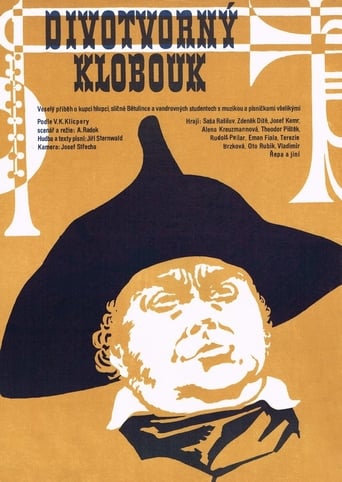 7.5
7.5Two poor students, Strnad and Křepelka, console themselves with the fact that Křepelka is to inherit, but it later turns out that the inheritance is only an old hat. The young man seeks help from his relative, the merchant Koliáš, who is the guardian of the beautiful Bětuška. Křepelka immediately falls in love with the girl, but the old miser does not want to hear about his poor nephew. Strnad finally comes up with an idea to use the hat to trick the greedy merchant...
The Magical Hat
1953
Series credits
7.0No synopsis available yet.
Bakaláři
1972
NRAfter a bleak childhood, Jane Eyre goes out into the world to become a governess. As she lives happily in her new position at Thornfield Hall, she meets the dark, cold, and abrupt master of the house, Edward Rochester. Jane and her employer grow close in friendship and she soon finds herself falling in love with him. Happiness seems to have found Jane at last, but could Rochester's terrible secret be about to destroy it forever?
Jane Eyre
1973