
Acting
Wu Fei-Song
Known for
Acting
Credits
9 titles
Known for
 6.0
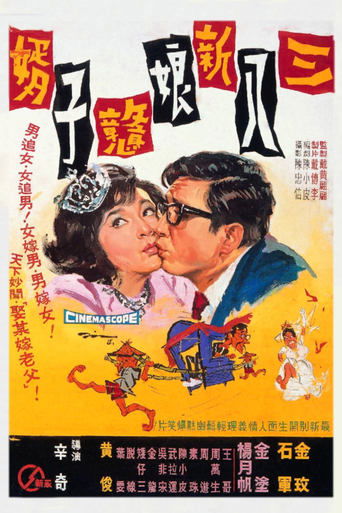
Bun-de (Wen-de in Mandarin, played by Shi Jun/Shih Chun) is a shy young man. Aggressively courted by all the girls in the neighbourhood, he only has eyes for the pretty and mischievous Gui-kia (Jin Mei/Chin Mei). She finds every means possible to meet up with her boyfriend, although he is closely watched over by a very protective father, A-Gao. When the parents finally agree on the wedding, they realise that they used to be in love. Accusing each other of betrayal, they refuse to allow their children to marry. Bunde and Gui-kia decide to elope.
Foolish Bride, Naive Bridegroom
1967
 NR
A Taiwanese language film
Nostalgic Song of Anping
1969
 NR
Flight Man takes place in Taiwan in 1933, when the country was under Japanese occupation after the First Sino-Japanese War. The Taiwanese people have signed a petition to have the Japanese establish a Taiwan council, but instead this merely provokes the Japanese police to hunt down and round up everyone who signed the petition.
Flight Man
1973
No synopsis available yet.
Wenquan County Guitar
1966
 NR
Tsi-Bing is living a wealthy and successful life. However, he is manipulated by his mistress into believing that his wife is having an affair and he throws her out. After his mistress vanishes with his money, Tsi-Bing is forced to relocate to a makeshift home with his three children, who take on various jobs, such as selling rice dumplings, to make ends meet. The story centers on a man who loses his social and economic status but manages to regain his place in his family through sacrifices – much like the experience of female protagonists in melodramas. This male-centric narrative was recognized as part of a subgenre of Taiwanese-language melodrama. The depictions of a powerful male figure losing his power before finally turning the tide, and a woman able to support herself after leaving home, both suggest the changing attitudes of the late 60s as people were less convinced of the perfect family, but could still find beauty in its cause.
The Rice Dumpling Vendors
1969
 NR
Cheung Ching Ching is superb, as usual, playing a blind girl who learns martial arts from an old master and who takes revenge on the Red Devil who murdered her entire family. Brilliant sword film as you'd expect from master auteur Joseph Kuo. —Wu Tang Collection
The Seisure Soul Sword of a Blind Girl
1970
Film credits
1970s · 3 titles
NRFlight Man takes place in Taiwan in 1933, when the country was under Japanese occupation after the First Sino-Japanese War. The Taiwanese people have signed a petition to have the Japanese establish a Taiwan council, but instead this merely provokes the Japanese police to hunt down and round up everyone who signed the petition.
Flight Man
1973
NRCheung Ching Ching is superb, as usual, playing a blind girl who learns martial arts from an old master and who takes revenge on the Red Devil who murdered her entire family. Brilliant sword film as you'd expect from master auteur Joseph Kuo. —Wu Tang Collection
The Seisure Soul Sword of a Blind Girl
1970
 1.0
A 1970 film.
Young Flying Hero
1970
1960s · 6 titles
6.0Bun-de (Wen-de in Mandarin, played by Shi Jun/Shih Chun) is a shy young man. Aggressively courted by all the girls in the neighbourhood, he only has eyes for the pretty and mischievous Gui-kia (Jin Mei/Chin Mei). She finds every means possible to meet up with her boyfriend, although he is closely watched over by a very protective father, A-Gao. When the parents finally agree on the wedding, they realise that they used to be in love. Accusing each other of betrayal, they refuse to allow their children to marry. Bunde and Gui-kia decide to elope.
Foolish Bride, Naive Bridegroom
1967
NRA Taiwanese language film
Nostalgic Song of Anping
1969
No synopsis available yet.
Wenquan County Guitar
1966
NRTsi-Bing is living a wealthy and successful life. However, he is manipulated by his mistress into believing that his wife is having an affair and he throws her out. After his mistress vanishes with his money, Tsi-Bing is forced to relocate to a makeshift home with his three children, who take on various jobs, such as selling rice dumplings, to make ends meet. The story centers on a man who loses his social and economic status but manages to regain his place in his family through sacrifices – much like the experience of female protagonists in melodramas. This male-centric narrative was recognized as part of a subgenre of Taiwanese-language melodrama. The depictions of a powerful male figure losing his power before finally turning the tide, and a woman able to support herself after leaving home, both suggest the changing attitudes of the late 60s as people were less convinced of the perfect family, but could still find beauty in its cause.
The Rice Dumpling Vendors
1969
No synopsis available yet.
娶某免本錢
1968
Li Tsui-Ying (Pai Hung), the Best Secret Agent, disguises herself as a train conductor to assist Changjiang guerrilla leader Chiang Hsiao-Tien (Wu Chia-Chi) to evade the patrol of Japanese troops. Li adopts the pseudonym of White Peony in her Peking opera performance for the puppet government president, Han Zhaogui. Chiang discovers that his former lover Liu Feng has become Han's wife, but he finds that Liu still loves him and keeps their love token golden pheasant heart. White Peony would like to destroy the Japanese army’s project of building a secret airport. However, when she rescues Chiang from Han’s secretary, Ma Zuo-wen during an attack of Han in the cinema, White Peony falls in love with Chiang, without knowing that Chiang’s lover is Liu. In a final duel between White Peony vs Ma and Han, she realises how much Chiang loves Liu. She returns the golden pheasant heart that Ma took away from Liu to the lovers. The next day when Liu wakes up, White Peony has gone.
The Best Secret Agent Part 3: Golden Pheasant Heart
1965