
Acting
Gaston Rébuffat
Born — Died
1921-05-07 — 1985-05-31
Place of birth
Marseille, Bouches-du-Rhône, France
Known for
Acting
Credits
26 titles
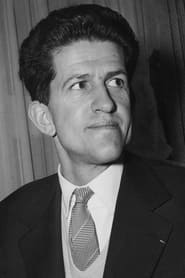
Gaston Rébuffat, born May 7, 1921, in Marseille and died May 31, 1985, in Bobigny, was a French mountaineer, notably a member of the 1950 French expedition to Annapurna, a high-mountain guide, writer, and filmmaker. Gaston Rébuffat discovered climbing in the Calanques of Marseille. At sixteen, he joined the French Alpine Club (Haute-Provence section), where he discovered high-altitude mountaineering and met Henri Moulin, whom he considered his "big brother in mountaineering." He then explored the Alps and the Mont Blanc massif, which became his playground. In 1940, he joined Jeunesse et Montagne (Youth and Mountain), where he met Lionel Terray, who became his friend. It was at the "School, …
Known for
 6.0
A talk show presented by Michel Drucker
Les Rendez-vous du dimanche
1975
 9.0
"Les Coulisses De L'Exploit" was a French television program of sports information created by Jacques Goddet and Raymond Marcillac, and broadcast on RTF Television then on the first channel of the ORTF from December 13, 1961 to August 16, 1972. The principle of this program is to report on sports news but also to meet men and women performing exceptional feats. According to Raymond Marcillac: "Competitive sport is not our only field of action. It never has been. We want to discover beings whose life is enriching, exhilarating; men who have accomplished acts that can be offered to our admiration without reluctance."
Les Coulisses De L'Exploit
—
 10.0
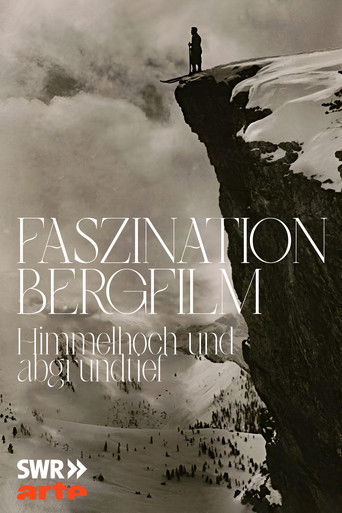
A fascinating chronology of 100 years of mountain film history in the Alps. This documentary focuses primarily on films shot on the Matterhorn, the Eiger, and the Grandes Jorasses, considered until the 1930s as the "last problems of the Alps," and shows the evolution of mountain filmmaking through numerous excerpts from documentaries and feature films – notably on the Matterhorn in 1901. The genre, appropriated as a means of mass exaltation by "fascist" regimes during the Second World War, was reinvented in the 1950s by Gaston Rebuffat, Marcel Ichac, and Lionel Terray in the Mont Blanc massif, avant-garde figures of French mountain cinema, who reintroduced, beyond performance, the values of the mountains – and in color – poetry, humor, and sharing among people from all walks of life.
Faszination Bergfilm - Himmelhoch und Abgrundtief
2008
 10.0
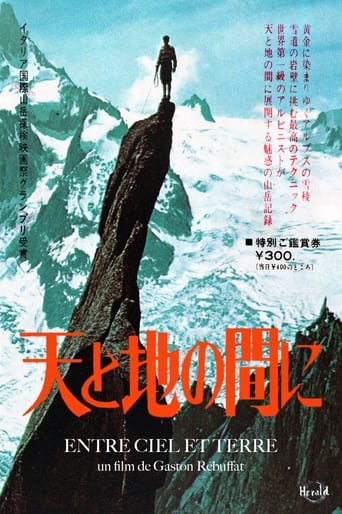
This is Gaston Rebuffat's fourth film, in which, with several close friends, he discovers the sublime landscapes of the Alps. “Mont-Blanc is beautiful. I climbed it several times depending on the time, the color of the sky and the shape of the cornices and ridges. Because of the weather and also because of this feeling of altitude, Mont-Blanc provides great pleasure. For the guide, Mont Blanc is his garden, but the garden becomes more beautiful when shown to a friend. Personally, I really like the bivouacs; only there one penetrates a little the mystery of the altitude. That's why I immediately accepted when Tazieff expressed the desire to spend the night at the top of Mont Blanc in an igloo. The film won the Grand Prix at the Trento Film Festival in 1961.
Between Heaven and Earth
1961
 10.0
With the proliferation of private climbing gyms and the sport's inclusion in the Olympic Games, climbing, long a counter-cultural movement, is undergoing a profound transformation and facing a major paradox. On the one hand, private gyms are enjoying increasing popularity, while on the other, natural climbing sites are under serious threat. What vertical legacy will we leave to future generations? Is outdoor climbing destined to disappear? What will the future hold for climbing? Led by Cédric Lachat, a multi-award-winning Swiss climber, the film provides an international overview of this counter-culture, which has recently become a social phenomenon.
The Future of Climbing
2025
 10.0
In 1950, a French expedition led by Maurice Herzog went to central Nepal to conquer the highest peak (8,091 meters): Annapurna. The film is not only made of what we see, but even more of what we don't see. Its imperfections are the negative imprint of the adventure. Memory is the most faithful of films.
Victory over Annapurna
1953
Film credits
2020s · 3 titles
10.0With the proliferation of private climbing gyms and the sport's inclusion in the Olympic Games, climbing, long a counter-cultural movement, is undergoing a profound transformation and facing a major paradox. On the one hand, private gyms are enjoying increasing popularity, while on the other, natural climbing sites are under serious threat. What vertical legacy will we leave to future generations? Is outdoor climbing destined to disappear? What will the future hold for climbing? Led by Cédric Lachat, a multi-award-winning Swiss climber, the film provides an international overview of this counter-culture, which has recently become a social phenomenon.
The Future of Climbing
2025
 9.0
The history of the Chamonix Guides Company is inseparable from that of mountaineering and the valley where it was born. For 200 years, guides have risen to multiple challenges, making their organization a legend. Today, they are the actors of a changing mountain: overcrowding, global warming, loss of freedom—the causes are multiple. This film is at a crossroads. Between tradition and modernity, it traces the history of the Chamonix Guides Company, evoking the incredible challenges it has met with dignity and those it now faces.
Roped
2021
 10.0
At once a high-level musician, member of the October Group, entertainer, theater artist, film actor, mountaineer, and skier, Maurice Baquet, always on the move, structured his life around two common threads: the cello and the mountains. He once defined himself as a "cellist-skier," "all alone" in this category, which prompted James Couttet, world ski champion, to say: "Of all the skiers I know, he's the best cellist." Echoing this, Professor at the Conservatoire National Supérieur, André Navarra, added: "Of all the cellists I know, he's the best skier." Throughout his varied yet coherent career, Baquet helped to project a joyful and artistic image of the mountains. Who better to talk about Maurice and all his adventures than his alter-ego: Cérébos, the faithful cello that never left his side? From Paris to Chamonix, from the stage to the granite slabs and snowy slopes, this film follows Cérébos, crossing the century and above all... smiling!
Maurice Baquet, The Accorded
2023
2000s · 3 titles
10.0A fascinating chronology of 100 years of mountain film history in the Alps. This documentary focuses primarily on films shot on the Matterhorn, the Eiger, and the Grandes Jorasses, considered until the 1930s as the "last problems of the Alps," and shows the evolution of mountain filmmaking through numerous excerpts from documentaries and feature films – notably on the Matterhorn in 1901. The genre, appropriated as a means of mass exaltation by "fascist" regimes during the Second World War, was reinvented in the 1950s by Gaston Rebuffat, Marcel Ichac, and Lionel Terray in the Mont Blanc massif, avant-garde figures of French mountain cinema, who reintroduced, beyond performance, the values of the mountains – and in color – poetry, humor, and sharing among people from all walks of life.
Faszination Bergfilm - Himmelhoch und Abgrundtief
2008
 10.0
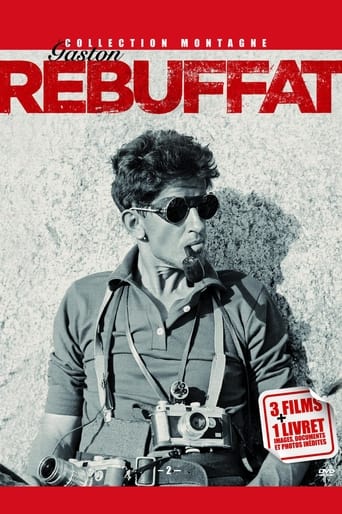
The World of Gaston Rébuffat is a documentary on mountaineering which takes place at Gendarme Du Pic Du Roc and Grande Candelle. Directed by Gilles Chappaz in 2009 and produced by Seven Doc, we find Christophe Profit, Françoise Rébuffat, Thierry Renault, Jean-Olivier Majastre, René Vernadet, Sam Beaugey and many others. Friendship of his rope companions, friendship of the mountain, friendship of all of nature, he spoke of the mountain with simplicity and happiness. A precursor, a visionary, Gaston Rébuffat was a resolutely committed person, without ever having spoken of an exploit, let alone a fight (among other achievements, he was the first to climb the six north faces of the Alps in a lifetime as a mountaineer).
The World of Gaston Rébuffat
2009
 10.0
Many mountaineers as part of their activity have used cameras and films to allow us to participate through images in their adventures and their emotions. Many of them have become true film professionals: Joseph Vallot, Lionel Terray, Marcel Ichac, Renè Vernadet, Jean Afanasieff, Pierre Royer, Denis Ducroz, Kurt Diemberg and many others are among the conquerors of the image of the mountain. The film depicts the passion of these men on the highest mountains in the world... behind the lens.
When the Mountaineers Make Their Cinema
2000
1960s · 2 titles
10.0This is Gaston Rebuffat's fourth film, in which, with several close friends, he discovers the sublime landscapes of the Alps. “Mont-Blanc is beautiful. I climbed it several times depending on the time, the color of the sky and the shape of the cornices and ridges. Because of the weather and also because of this feeling of altitude, Mont-Blanc provides great pleasure. For the guide, Mont Blanc is his garden, but the garden becomes more beautiful when shown to a friend. Personally, I really like the bivouacs; only there one penetrates a little the mystery of the altitude. That's why I immediately accepted when Tazieff expressed the desire to spend the night at the top of Mont Blanc in an igloo. The film won the Grand Prix at the Trento Film Festival in 1961.
Between Heaven and Earth
1961
 10.0
Retrospective of four major peaks climbed by French expeditions: Annapurna (8078m) in 1950; Makalu (8481m) in 1955; Mustagh Tower (7273m) in 1956 and Le Jannu (7710m) in 1962. A film by Lucien Berardini and Jean-Marie Perthus with the support of the French Alpine Club and the FFME (French Mountain and Climbing Federation).
Victories on the Himalayas
1960
1950s · 4 titles
10.0In 1950, a French expedition led by Maurice Herzog went to central Nepal to conquer the highest peak (8,091 meters): Annapurna. The film is not only made of what we see, but even more of what we don't see. Its imperfections are the negative imprint of the adventure. Memory is the most faithful of films.
Victory over Annapurna
1953
 10.0
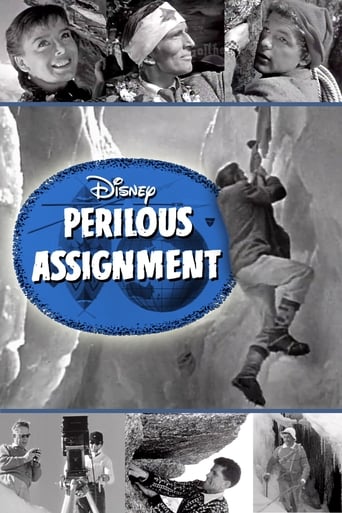
"Perilous Assignment" is an episode of ABC's Walt Disney Presents. Disney loved to show viewers behind the scenes of the daring shoots of its theatrically released or TV shows. The theme of the episode is the making of his next film, The Third Man on the Mountain, an adaptation of James Ramsey Ullman's novel Banner in the Sky, based on the true story of the first ascent of the Matterhorn. Walt Disney will not be limited to a simple promotional making-of. He offers to meet exceptional people, including the French mountain guide Gaston Rébuffat. The latter will show climbing techniques and then reveal breathtaking images of his ascents of steep cliffs with a client for the ascent of Mont-Blanc, filmed for the occasion. In 1958, Walt Disney will therefore offer him to be deputy director on the high mountain scenes of the film "The Third Man on the Mountain".
Perilous Assignment
1959
 10.0
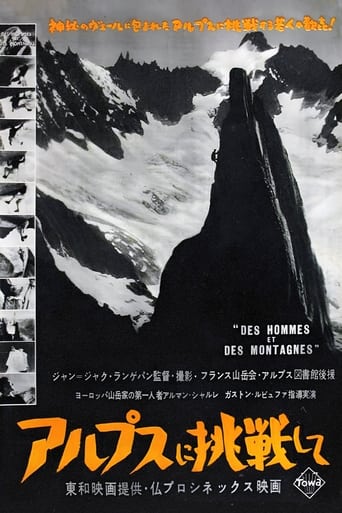
History, advice and demonstrations of mountaineering in the Mont Blanc massif by the renowned guides of the National School of Ski and Mountaineering from Chamonix. The film starts with an historical summary illustrating the aspirations and methods that lead man to conquer the mountains. Armand Charlet teaches mountaineering techniques and takes his students to the field for glacier or rock exercises. Gaston Rebuffat makes demonstrations of particularly dangerous climbs. At altitude, people move in solitude, cold and silence, like circus acrobats without spectators, but nothing stops the modern mountaineer.
Des Hommes Et Des Montagnes
1953
 10.0
Gaston Rébuffat is part of the history of mountaineering. Marseillais prodigy, high mountain guide of the Chamonix guide company and famous for the ascent of the most famous north faces: some are 1st rehearsals, others 1st French or 1st as a guide. Filmed by Georges Tairraz, this masterpiece released in 1955 reveals the beauty of effort and the pleasure of sharing in the mountains. Apart from the feat, the mountains are not there to satisfy egocentric ambitions. A classic !
Starlight and Storm
1955
Series credits
6.0A talk show presented by Michel Drucker
Les Rendez-vous du dimanche
1975
9.0"Les Coulisses De L'Exploit" was a French television program of sports information created by Jacques Goddet and Raymond Marcillac, and broadcast on RTF Television then on the first channel of the ORTF from December 13, 1961 to August 16, 1972. The principle of this program is to report on sports news but also to meet men and women performing exceptional feats. According to Raymond Marcillac: "Competitive sport is not our only field of action. It never has been. We want to discover beings whose life is enriching, exhilarating; men who have accomplished acts that can be offered to our admiration without reluctance."
Les Coulisses De L'Exploit
—
Behind the camera
10.0This is Gaston Rebuffat's fourth film, in which, with several close friends, he discovers the sublime landscapes of the Alps. “Mont-Blanc is beautiful. I climbed it several times depending on the time, the color of the sky and the shape of the cornices and ridges. Because of the weather and also because of this feeling of altitude, Mont-Blanc provides great pleasure. For the guide, Mont Blanc is his garden, but the garden becomes more beautiful when shown to a friend. Personally, I really like the bivouacs; only there one penetrates a little the mystery of the altitude. That's why I immediately accepted when Tazieff expressed the desire to spend the night at the top of Mont Blanc in an igloo. The film won the Grand Prix at the Trento Film Festival in 1961.
Between Heaven and Earth
1961
10.0History, advice and demonstrations of mountaineering in the Mont Blanc massif by the renowned guides of the National School of Ski and Mountaineering from Chamonix. The film starts with an historical summary illustrating the aspirations and methods that lead man to conquer the mountains. Armand Charlet teaches mountaineering techniques and takes his students to the field for glacier or rock exercises. Gaston Rebuffat makes demonstrations of particularly dangerous climbs. At altitude, people move in solitude, cold and silence, like circus acrobats without spectators, but nothing stops the modern mountaineer.
Des Hommes Et Des Montagnes
1953
 10.0
The guide Gaston Rébuffat, shares with us his view of his job and the nature that surrounds him by showing us some beautiful climbs made with friends, noting the importance of the friendship of the rope party. Born near the Calanques, he could have been a sailor, like him linked to storms and the stars. We follow him with Edwin Mattews (USA) in their ascent of the Barre des Ecrins, then in La Meije. Accompanied by Jean Juge (Switzerland), in the Mont Blanc Massif, for a crossing of the Aiguilles de Chamonix. With his Italian friend Lino Donvito, he climbs the Torre de Vijolet in the Dolomites. Then with Massulu Suzuki (Japan) in the Mont Blanc massif (Rochefort ridges, Dent du Géant via the south face). Christian Ringeval (France) accompanies him for an ascent of Vignemale. And finally return to the Mont Blanc massif, to the Grand Capucin (Bonatti route) with Konrad Krirch.
Les Horizons Gagnés
1974
10.0The guide Gaston Rébuffat, shares with us his view of his job and the nature that surrounds him by showing us some beautiful climbs made with friends, noting the importance of the friendship of the rope party. Born near the Calanques, he could have been a sailor, like him linked to storms and the stars. We follow him with Edwin Mattews (USA) in their ascent of the Barre des Ecrins, then in La Meije. Accompanied by Jean Juge (Switzerland), in the Mont Blanc Massif, for a crossing of the Aiguilles de Chamonix. With his Italian friend Lino Donvito, he climbs the Torre de Vijolet in the Dolomites. Then with Massulu Suzuki (Japan) in the Mont Blanc massif (Rochefort ridges, Dent du Géant via the south face). Christian Ringeval (France) accompanies him for an ascent of Vignemale. And finally return to the Mont Blanc massif, to the Grand Capucin (Bonatti route) with Konrad Krirch.
Les Horizons Gagnés
1974
10.0Gaston Rébuffat is part of the history of mountaineering. Marseillais prodigy, high mountain guide of the Chamonix guide company and famous for the ascent of the most famous north faces: some are 1st rehearsals, others 1st French or 1st as a guide. Filmed by Georges Tairraz, this masterpiece released in 1955 reveals the beauty of effort and the pleasure of sharing in the mountains. Apart from the feat, the mountains are not there to satisfy egocentric ambitions. A classic !
Starlight and Storm
1955
 10.0
"Flammes de Pierre" is the first documentary made by Gaston Rébuffat himself in 1947. It depicts Rébuffat in full ascent of the Flammes De Pierre, wild ridges in the heart of the Mont Blanc massif overlooking Chamonix. Like Roger Frison-Roche, Walter Bonatti, René Desmaison or Giusto Gervasutti, Gaston Rébuffat has written and filmed the great pages of contemporary mountaineering but above all, he knew how to talk about it with enough poetry so that it is not simply airtight race stories for spectators. Stories that have been triggers for many readers, who have come to know “stone flames” thanks to him.
Flammes De Pierres
1947