
Directing
Rob Rombout
Born
1953-07-08 (73)
Place of birth
Amsterdam, Noord-Holland, Netherlands
Known for
Directing
Credits
30 titles
Rob Rombout (born in Amsterdam, 1953; raised in Zaandam) is a documentary filmmaker, photographer and teacher, based in Brussels since 1975 and now also in Lisbon. Since a 1978 student film he has made some forty works, many broadcast by ARTE, RTBF and France Télévisions: films set in closed worlds that move, such as a night train to Moscow, a transatlantic liner and a North Sea oil rig, and films about places that borrowed a name, among them Amsterdam Stories USA (2012, with Rogier van Eck; IDFA; Audience Award, IndieLisboa 2013) and On the Track of Robert van Gulik (2016). His method is the subject of Marc-Emmanuel Mélon's monograph La mise en scène du réel (2022). He taught documentary di…
Known for
 5.0
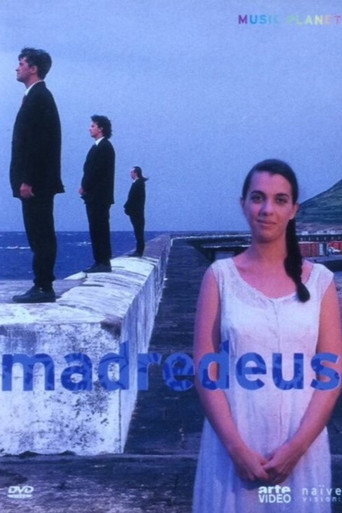
Lost in the Atlantic, the Azores have kept an identity of their own: sea and volcanic mountains, lush vegetation and fields of black lava, a light that changes from one moment to the next. Teresa Salgueiro, the singer of Madredeus, and Pedro Ayres Magalhães, the composer, travel from island to island and find the mixed origins of their music, traces of an imaginary Portugal: traditions that have vanished on the mainland live on here. A landscape, the words of an old man, a village feast call up their songs. Teresa’s voice, with a single guitar, rises on the shore of a still lake. “Madredeus is an isolated case,” says Pedro, “a little like the Azores, lost in the ocean.”
The Azores of Madredeus
1995
 NR
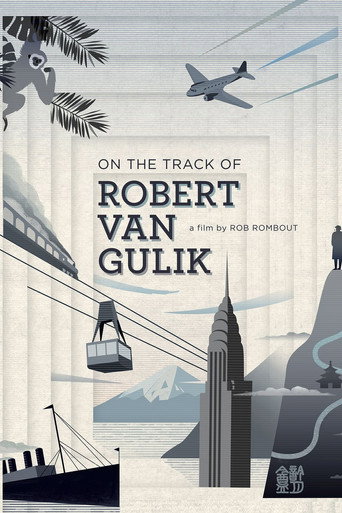
Robert van Gulik (1910–1967) served as a diplomat, collected Chinese lutes and invented Judge Dee, yet his own country barely remembers him. Rob Rombout travels from the Netherlands to Indonesia, Japan, the United States and China, through diaries, archives and the people van Gulik still haunts. Somewhere between biography and detective story, the man and his hero merge.
On the Track of Robert van Gulik
2016
 8.0
Fifteen towns in North America bear the name of the Dutch capital. From east to west, from New York, once Nieuw Amsterdam, to California, Rogier van Eck and Rob Rombout, two filmmakers of Dutch descent, link them by following that one name. Like an open sesame, it opens up small-town America, its reality and its imagination: sheriffs, poets, cowboys, a Vietnam DJ, a civil-rights veteran. An unfamiliar, intimate, sometimes strange America, in which the filmmakers are protagonists among others. Six hours, in four chapters: East, South, Midwest, West.
Amsterdam Stories USA
2012
 NR
Two towers stand a few kilometres apart near the Belgian-Dutch border. At Brunssum is AFCENT, NATO's command for Central Europe since 1967, which took over Charlemagne's arms and motto; its spokesman is Ed Frieser. At Eben-Emael stands the Eben-Ezer tower, foretold by the prophet Hermas, whose builder Garcet preaches a mystical pacifism: “Nation shall not lift up sword against nation.” A written monologue sets the two towers face to face, though neither hears the other.
Between Two Towers
1987
Canton is said to be the most Chinese of cities: eight million people, a city running wild, where the past disappears under concrete and tarmac. Rob Rombout and the video artist Robert Cahen follow five people caught between two cultures, two systems, two ideas of art. A window, a photograph, a painting or a foreign language always stands between them and the city. The film asks what it means to be in China and, at the same time, not to be there.
Canton, the Chinese City
2001
In 1896 Georges Nagelmackers launched the Nord Express from Paris to St Petersburg. In 1990 the film rides the 47 hours from Paris to Moscow, in a time of upheaval: in Paris railwaymen lay the new TGV lines, in Berlin the Wall is crumbling, and at Brest, on the Soviet border, the carriages are moved onto broad-gauge bogies. Galina, the sleeping-car attendant, makes tea. In the corridor Theodore, a student, looks out over the curtain. In West Berlin the painter Ben Wagin doubts we will ever go any faster.
Nord Express
1990
Behind the camera
5.0Lost in the Atlantic, the Azores have kept an identity of their own: sea and volcanic mountains, lush vegetation and fields of black lava, a light that changes from one moment to the next. Teresa Salgueiro, the singer of Madredeus, and Pedro Ayres Magalhães, the composer, travel from island to island and find the mixed origins of their music, traces of an imaginary Portugal: traditions that have vanished on the mainland live on here. A landscape, the words of an old man, a village feast call up their songs. Teresa’s voice, with a single guitar, rises on the shore of a still lake. “Madredeus is an isolated case,” says Pedro, “a little like the Azores, lost in the ocean.”
The Azores of Madredeus
1995
NRRobert van Gulik (1910–1967) served as a diplomat, collected Chinese lutes and invented Judge Dee, yet his own country barely remembers him. Rob Rombout travels from the Netherlands to Indonesia, Japan, the United States and China, through diaries, archives and the people van Gulik still haunts. Somewhere between biography and detective story, the man and his hero merge.
On the Track of Robert van Gulik
2016
8.0Fifteen towns in North America bear the name of the Dutch capital. From east to west, from New York, once Nieuw Amsterdam, to California, Rogier van Eck and Rob Rombout, two filmmakers of Dutch descent, link them by following that one name. Like an open sesame, it opens up small-town America, its reality and its imagination: sheriffs, poets, cowboys, a Vietnam DJ, a civil-rights veteran. An unfamiliar, intimate, sometimes strange America, in which the filmmakers are protagonists among others. Six hours, in four chapters: East, South, Midwest, West.
Amsterdam Stories USA
2012
NRTwo towers stand a few kilometres apart near the Belgian-Dutch border. At Brunssum is AFCENT, NATO's command for Central Europe since 1967, which took over Charlemagne's arms and motto; its spokesman is Ed Frieser. At Eben-Emael stands the Eben-Ezer tower, foretold by the prophet Hermas, whose builder Garcet preaches a mystical pacifism: “Nation shall not lift up sword against nation.” A written monologue sets the two towers face to face, though neither hears the other.
Between Two Towers
1987
Canton is said to be the most Chinese of cities: eight million people, a city running wild, where the past disappears under concrete and tarmac. Rob Rombout and the video artist Robert Cahen follow five people caught between two cultures, two systems, two ideas of art. A window, a photograph, a painting or a foreign language always stands between them and the city. The film asks what it means to be in China and, at the same time, not to be there.
Canton, the Chinese City
2001
In 1896 Georges Nagelmackers launched the Nord Express from Paris to St Petersburg. In 1990 the film rides the 47 hours from Paris to Moscow, in a time of upheaval: in Paris railwaymen lay the new TGV lines, in Berlin the Wall is crumbling, and at Brest, on the Soviet border, the carriages are moved onto broad-gauge bogies. Galina, the sleeping-car attendant, makes tea. In the corridor Theodore, a student, looks out over the curtain. In West Berlin the painter Ben Wagin doubts we will ever go any faster.
Nord Express
1990
The Queen Elizabeth 2 made her first crossing to New York in 1969. In 1992 she is the last ocean liner on the Atlantic, no longer a means of transport but a floating town of 1,500 passengers. A crew of 1,200, among them Captain Warwick, keeps her running day and night. From Southampton to New York, nearly 3,000 people live together for five days in a kind of complicity: first the unpredictable ocean, then New York, far away like a New World.
Transatlantic: Queen Elizabeth 2
1992
In the North Sea some sixty thousand people live offshore. On the F.G. McClintock drilling rig, eighty men and one woman work around the clock in search of black gold, while a stand-by vessel circles them for their safety. In such a closed space, facing the wild sea, there is little room to say how one feels. “The noise is everywhere, you can’t get away from it,” says Brian Spencer, the toolpusher. After Nord Express and the Queen Elizabeth 2, Rob Rombout films another small society behind closed doors.
Black Island
1994
 NR
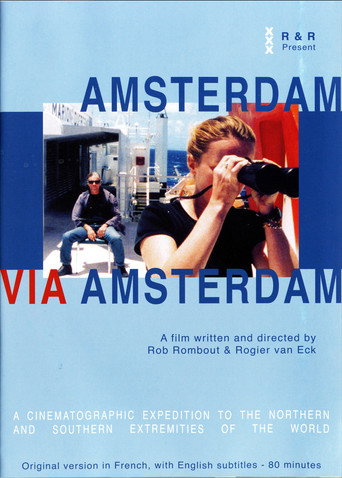
Four centuries ago Willem Barentsz sailed north and Cornelis de Houtman sailed south from Amsterdam, opening the way to two islands that bear the city's name, in Spitsbergen and in the southern Indian Ocean. Rob Rombout and Rogier van Eck, both with their roots in Amsterdam, follow their tracks. Their expedition is of another kind, but their doubts measure up to the daring of those navigators. Between the polar ice and the southern wind, the city comes into view as a triptych.
Amsterdam via Amsterdam
2004
NRFour centuries ago Willem Barentsz sailed north and Cornelis de Houtman sailed south from Amsterdam, opening the way to two islands that bear the city's name, in Spitsbergen and in the southern Indian Ocean. Rob Rombout and Rogier van Eck, both with their roots in Amsterdam, follow their tracks. Their expedition is of another kind, but their doubts measure up to the daring of those navigators. Between the polar ice and the southern wind, the city comes into view as a triptych.
Amsterdam via Amsterdam
2004
In Perm, an isolated city in the snowbound Urals, a festival named after Robert Flaherty, Flahertiana, brings together some forty Russian directors to take stock of documentary cinema. The debates are heated, at minus twenty-five degrees, and between the interviews their own films answer back. Rob Rombout is the only foreign filmmaker at this “international” festival. He is on a special Perm-mission.
Perm-mission
1999
In 1772 the navigator Yves de Kerguelen came upon an archipelago in the far south of the Indian Ocean. “These isles are a fearsome trap,” he wrote in his log; all he left there were the few cats he had on board. Two centuries later the scientists of the Popchat mission land on Kerguelen to trap the cats, which have gone wild, and to see how they have adapted to the freezing climate. But who is observing whom?
The Kerguelen Trap
2000
Rob Rombout crosses Alsace by train, a stranger passing through, and talks with the people he meets, among them Sylvie Levy, Philippe Poirier, Ibtissam Mellouki and Daniel Ziegler, about things that seem to have nothing to do with regional identity. In a compartment nobody knows anyone; all they share is the same train at the same time. Listening, looking out of the window, moving on: from their stories the film draws a portrait of a region, shared for a moment with strangers.
The Passengers of Alsace
2002
In 1998 Carnival, the largest cruise company in the world, bought the Cunard Line. A few people inside it dared to propose a new liner in the Cunard tradition, for an American market always looking for something new: the longest, largest and most expensive ship ever built. Micky Arison, the architect Stephen Payne, the interior designer Andrew Collier and Commodore Ronald W. Warwick take up the challenge, and at Saint-Nazaire the Queen Mary 2 takes shape.
Queen Mary 2: The Enterprise
2004
Roger Vandermeiren is a union delegate at Monsanto, a factory near Antwerp. When he defends a colleague accused of stealing documents, he is dismissed. A seven-week strike does not save his job. During six months of legal proceedings he goes on working as a delegate from a caravan at the factory gate, until a court confirms his dismissal. The film follows the case step by step, with library footage and his own account.
The Man Who Talked Too Much
1985
Noël N’Tunda is forty-two. Born in Rwanda, he has lived in Belgium since he was twelve, on a welfare allowance that is just enough to live on. His days are all alike: chance meetings in bars, appointments with social workers. Noël shows the places he passes every day and tells of those that shaped his life, and Rob Rombout follows him with direct questions. Noël answers with humour: “There is an ocean between what I expected from life and what I have become.” The film moves between past and present. And also: “If I could afford it… I would go swimming.”
No Present for Noël
1986
A parody of a television panel discussion, made as a student film at the RITCS in Brussels. In the studio, three experts debate the punk phenomenon. Jef, a punk, is invited to speak from experience. One expert, Dr John Pusher, author of “How Paradise Was Lost”, develops his theory live and reaches his conclusion: where crisis rises, punk rises. In his words: “Puncrises.”
Denken, denken, denken
1978