

Directing
JoAnn Elam
Born — Died
1949-04-20 — 2009-06-25
Known for
Directing
Credits
44 titles
JoAnn Elam (April 20, 1949 – June 25, 2009) was a Chicago-based filmmaker. Her films explored the themes of feminism and she was best known for her film Rape (1978). Elam also worked on other political and social documentaries such as her unfinished film Everyday People (1979–1990). Not only did Elam's work focus on these themes but she also focused on everyday life in her films. While living in San Francisco,California, and Yellow Springs, Ohio, where she attended Antioch College, Elam had completed these everyday life documentary films. These films and her other films were produced on 16mm and 8mm films, but mainly 8mm. Her films Rape and Everyday People have been subjects of great inter…
Known for
 NR
Portraits of Chuck’s cats and friends, as well as a self-portrait.
Shirley & Bruce
1979
 NR
Rape has three victims discussing their emotional, physical and intellectual responses, then and now, highlighted and commented upon by a series of visual interpolations.
Rape
1975
 NR
The film was made in response to an evening during which a number of male members of Chicago's experimental film scene gathered at JoAnn's house and proceeded to ignore both her and the chocolate cake she made for the occasion. The film consists of a series of shots documenting the making of a chocolate cake, followed by a shot of JoAnn's sandaled foot stepping in the middle of the cake. When JoAnn screened the film in homes or loft spaces in Chicago, she would always serve chocolate cake as an accompaniment. Date of production unknown (likely 1973).
Chocolate Cake
1973
 NR
"Popcorn" begins with a teenaged boy reading from an unknown text inside a living room. JoAnn Elam is seen knitting, presumably nearby, before entering the kitchen and proceeding to cook popcorn on the stovetop. Each step is filmed in extreme close-up, with an emphasis on hands and tactility. This attention to process is similar to other films from Elam, notably " Chocolate Cake " (F.2011-01-0166). At the end of "Popcorn," following a flurry of light leak and mis-aligned optical printing, the boy happily eats the popped and seasoned kernels. The exact date of production remains unknown.
Popcorn
—
 NR
8mm. experimental film shot by JoAnn Elam in Sanibel, Florida.
Sanibel
1978
Underexposed scenes from a backyard barbecue likely at the home of JoAnn Elam and Joe Hendrix, featuring members of the "Logan Square Rhinos" — a group of small gauge filmmakers that included Elam and filmmaker Chuck Kleinhans. Elam's husband Hendrix is seen grilling chicken while Elam (in a red "VOTE" shirt) talks in the yard with her mom and brother. Kleinhans' fellow Jump Cut co-founder John Hess can be seen helping at the grill.
Rhino BBQ
1981
Film credits
1970s · 3 titles
NRPortraits of Chuck’s cats and friends, as well as a self-portrait.
Shirley & Bruce
1979
 NR
A woman wakes up, gets dressed, makes breakfast and walks down the street. This daily ritual becomes extraordinary seen in a trance-like structure of continuous lap dissolves and continuous spectral color shifts.
Always Open/Never Closed
1971
 NR
Images of a shadow puppet play, intermittent rapid editing, and sweeping shots of a farm, dogs playing outside, plants, kitchens and interiors, provide a naturalistic portrait of peaceful spaces and friends. Date of production unknown.
Beauty and the Beast
1973
Behind the camera
NRRape has three victims discussing their emotional, physical and intellectual responses, then and now, highlighted and commented upon by a series of visual interpolations.
Rape
1975
NRThe film was made in response to an evening during which a number of male members of Chicago's experimental film scene gathered at JoAnn's house and proceeded to ignore both her and the chocolate cake she made for the occasion. The film consists of a series of shots documenting the making of a chocolate cake, followed by a shot of JoAnn's sandaled foot stepping in the middle of the cake. When JoAnn screened the film in homes or loft spaces in Chicago, she would always serve chocolate cake as an accompaniment. Date of production unknown (likely 1973).
Chocolate Cake
1973
NR"Popcorn" begins with a teenaged boy reading from an unknown text inside a living room. JoAnn Elam is seen knitting, presumably nearby, before entering the kitchen and proceeding to cook popcorn on the stovetop. Each step is filmed in extreme close-up, with an emphasis on hands and tactility. This attention to process is similar to other films from Elam, notably " Chocolate Cake " (F.2011-01-0166). At the end of "Popcorn," following a flurry of light leak and mis-aligned optical printing, the boy happily eats the popped and seasoned kernels. The exact date of production remains unknown.
Popcorn
—
NR8mm. experimental film shot by JoAnn Elam in Sanibel, Florida.
Sanibel
1978
 8.0
"Pup Birth" captures the excitement, chaos, and tenderness between a dog and her newly-born litter of puppies. In intimate close-up, the puppies crawl around and nuzzle with their mother, mirroring JoAnn Elam's own affection for dogs and animals in general. The date of production remains unknown.
Pup Birth
—
 NR
In this footage by JoAnn Elam, almost nothing is discernible, with the exception of buildings sometimes emerging in the dark and stripes of orange light invading the black screen near the end. Like other elements from this collection, Light Leak exemplifies the type of cinematic experimentations that Elam was interested in her work.
Light Leak
—
 NR
USPS workers go bowling.
Bowl
1976
 NR
Two women gardening on a sunny day.
Monterey '84
1984
 NR
Sprocket holes moving across the screen.
Sprockets
1976
 NR
Consists of frantic and (mostly) uninformative pans sprinting across Elam's lawn.
Backyard Winter
—
 NR
Gardening was an essential part of Elam’s life; she not only tended to her own, quite impressive, backyard garden, she also attained the status of Master Gardener and then helped Chicago communities develop gardens and landscape neighborhoods. Elam’s garden features prominently in many of her films, and here is captured with devotion and blended beautifully, through use of double exposure, with other elements of her home.
[Garden & Joe]
1980
 NR
Chicago streets.
Landscape
1973
Set to the Beatles 1965 song "You Like Me Too Much," Daytime Television consists of a series of close-up handheld pans of cleaning supply labels and packaging. Elam refuses to pull back and the abstracted visual effect is both dizzying, hypnotic, and full of rapidly flashing colors. The film looks at the feminist discourse of the "politics of housework," and of the anti-consumer discourse of the counterculture and left of the day.
Daytime Television
1974
 NR
"Closet Film" flickers hues of white and yellow intermittently. Stretching to its halfway point, the frame cuts to black as a myriad of blues barrage across the frame, before returning to the film’s original abstract yellow and white sequencing. Near the end, a lone human actor opaquely appears. The film concludes on a shot of what is seemingly a marred closet wall.
Closet Film
—
 NR
Abstract direct animation film made by JoAnn Elam.
Corduroy
1974
 NR
Contrasting environments, in and outside.
Windows
1984
Similar to her "Back Porch" films, JoAnn Elam's "Front Porch" documents the scenes of life in her neighborhood in Chicago. The film pays especial attention to the light flowing through different branches and leaves of plant growth and the rhythm of a gentle breeze swaying the blinds on the window. These patterns and abstractions repeat themes found throughout Elam's films.
Front Porch
1976
 NR
Farm work and nature.
Michigan
1976
 NR
A myriad of purple and blue markings flicker hypnotically across the screen in “Filmabuse.” Periodically a blue screen flashes, disturbing the trance induced by the colorful smudges. The rhythm of the colors gathers steam and accelerates as the film continues. Near the conclusion, for the entirety of one second, a woman appears; she is “put together” without a stray hair; however, her face appears scarred and swollen, juxtaposing the slight grin her lips muster.
Filmabuse
1975
Abstract images of flames and fire, including wide shots of the fireplace itself. This film appears to be an 8mm test or outtake for JoAnn Elam's 16mm work " Firelight " (F.2011-01-0277). The date of production remains unknown.
Fire
—
 NR
An outdoor gathering.
Ala - Dad
1979
 NR
Elam records several men moving boxes and furniture as they track across her backyard.
Moving
1981
 NR
Elam's husband prepares vegetables at the sink.
Joe & Greens
—
Experimental home movie documenting a visit by filmmakers Wayne and Eleanor Boyer and their nine-year-old son Brett to JoAnn Elam's home in Logan Square, Chicago, for a summer barbecue. Later in the film, Chuck Kleinhans and Julia Lesage, co-founders of the cinema journal Jump Cut join the group. Since Elam is on screen for much of the film, it was likely mostly filmed by Elam's husband Joe Hendrix, who also appears at the end of the film. During the visit, the friends relax on Elam's back porch and film her garden, both frequent locations in her work. A group of friends and colleagues that included Elam, Kleinhans, and Lesage adopted the name "The Rhinos" after walking to a screening at Kartemquin Films on a cold winter evening, and having a group of kids throw snowballs at them and tell them that they looked like a group of rhinos.
Boyers & Rhinos
1981
Abstract images of flames and fire.
Firelight
1973
Footage documenting Chicago's famed "Blizzard of '79," including some early examples of parking "dibs," people digging out their cars, and postal carriers delivering mail. Shot in Chicago's Logan Square neighborhood.
Blizzard of '79
1979
 NR
Two pumpkins.
Jack-O-Lanterns
1974
 NR
A covered bridge and the nature surrounding it.
Covered Bridge
—
 NR
“Windows” documents the views of and out from windows around JoAnn Elam’s Logan Square neighborhood in Chicago. The first section begins at an El train stop, capturing the station itself and the views of people playing tennis as seen from the moving train. A switch approximately halfway through the runtime moves the action to downtown Chicago’s Buckingham Fountain and then Logan Square as filmed through Elam’s window screen. The shapes of the buildings finally abstract into geometric forms on film.
Windows
1974
Filmed in extreme close-up, the lit-up pine needles of a Christmas tree are abstracted into forms of line and contrast. “Christmas Tree” then moves around the living room to focus on JoAnn Elam stringing popcorn, a playful dog, a tapestry on the wall, and a curly-haired man playing guitar.
Christmas Tree
—
Intimate portrayal of children at home and outsde in a park. At the start, a baby rolls around on the floor of a living room and bounces in a standing jumper. This is followed by two separate bursts of frames in rapid succession, combining shots of children, parents, a rooster, buffalo, plants, scenes of what appears to be San Francisco, and much more. The longest stretch of the film then focuses on many children in a park on a sunny day: playing, climbing, and jumping. The exact date of production and location of the park scenes are unknown.
Moody Movie
—
 NR
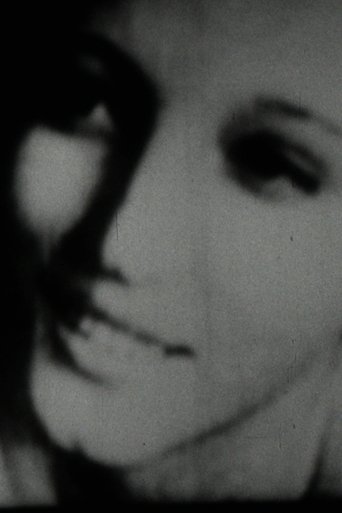
Lie Back & Enjoy It is a dialectical film about the politics of representation. Its image track consists of technologically manipulated images of women, and some printed titles. Its soundtrack consists of a dialogue between a Man (a filmmaker) and a Woman (of whom he's going to make a film).
Lie Back & Enjoy It
1982
 NR
Abstract, direct animation consisting of triangular shapes that flow past the frame. Apparently the source for "Filmabuse" (F.2011-01-0262) and "Filmabuse Loop" (F.2011-01-0263), this original painted material is presented in an edge-to-edge scan to replicate the look of the unslit double 8mm object. Although no date information is available, it was likely produced circa 1975 ahead of the other "Filmabuse" elements.
Filmabuse (Original)
1975
 4.0
Elam turns in place while filming nature.
BC
—
 NR
This footage is almost entirely black, save for a few shots possibly showing electric poles outside.
Garbage
1984
 NR
Experimental filmmaker JoAnn Elam guides (or limits) the viewer's eyes down a rural, wooded path.
Country Mile
1973
JoAnn Elam's unfinished project, EVERYDAY PEOPLE (filmed from 1979 to 1990), is based on her experiences as a letter carrier for the US Postal Service in Chicago (primarily the Logan Square neighborhood). Camera in hand, Elam follows co-workers as they deliver the mail throughout various Chicago neighborhoods. Elam's construction of this film-in-progress creates a lovely cadence and rhythm that transforms the repetitive motions of the postal worker -- pushing the mail cart, carrying the bag, avoiding the dogs, opening the gates, and climbing the steps to the front door -- to something poetic yet startlingly familiar. Their stories (heard mostly in voice-over) are those of everyday people who at the time struggled with issues of race and gender in relationship to their work.
Everyday People
1990
 NR
Cleaning supplies and flames.
Soap + Fire
—
NRImages of a shadow puppet play, intermittent rapid editing, and sweeping shots of a farm, dogs playing outside, plants, kitchens and interiors, provide a naturalistic portrait of peaceful spaces and friends. Date of production unknown.
Beauty and the Beast
1973
 NR
Joann Elam captures urban residents on the go in various seasons. The film begins in winter, as JoAnn captures sleepy neighborhood scenes from her snowy Logan Square windowsill. This is followed by manipulated summer scenes of a fast paced marathon. Through light flares and in-camera editing, marathon runners deconstruct into colorful forms.
Going Places
1980