Camera
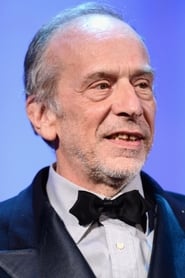
Renato Berta
Born
1945-03-02 (81)
Place of birth
Bellinzona, Ticino, Switzerland
Known for
Camera
Credits
9 titles
Renato Berta is a Swiss cinematographer and film director, best known for his collaborations with directors Alain Tanner and Jean-Marie Straub. Trained at the Centro Sperimentale di Cinematografia in Rome, Berta has worked as cinematographer in more than 100 films since 1969. He won a César Award for Best Cinematography for Au revoir les enfants in 1988 and a David di Donatello for Best Cinematography for Noi credevamo in 2011. In 2013, he was awarded the Chevalier of the Ordre des Arts et des Lettres. Source: Article "Renato Berta" from Wikipedia in English, licensed under CC-BY-SA 3.0.
Known for
 6.0
No synopsis available yet.
Kulturplatz
2004
 5.8
When director Daniel Schmid grew up, his parents ran a hotel in the Alps, and this singular setting was to influence his film. Rather by coincidence, he came to Berlin in the early 1960s and became part of the new German wave. Schmid worked with, among others, Wenders and Fassbinder, for example, as an actor in Wender’s The American Friend. He met Ingrid Caven, who was to play a diva in several of his films. This is a documentation of a part of modern European film history and a good analysis of artistry and how it corresponds to the individual behind the camera. A wealth of archival footage brings us close to many directors and actors in Schmid’s circle. If you’ve never seen a Daniel Schmid film, you are sure to want to after watching this portrait of his life.
Daniel Schmid: Le Chat Qui Pense
2010
 NR
Swiss filmmaker Daniel Schmid died on August 5, 2006, and German filmmaker Werner Schroeter on April 12, 2010. They were close friends, and along with Jean Eustache, Rainer Werner Fassbinder and Philippe Garrel were the most innovative filmmakers of the post-New Wave era.
In Memoriam Daniel Schmid Werner Schroeter
2012
Thirteen Swiss filmmakers, each from their own point of view, chronicle and reconstruct the narrative of Swiss cinema, from its beginning to the present day, and in doing so, retrace the history of the country.
Le film du cinéma suisse
1991
 7.6
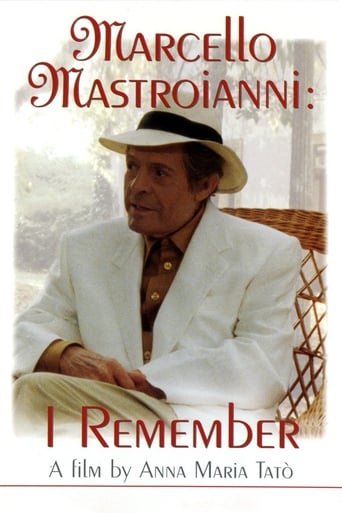
In 1996, Marcello Mastroianni talks about life as an actor. It's an anecdotal and philosophical memoir, moving from topic to topic, fully conscious of a man "of a certain age" looking back. He tells stories about Fellini and De Sica's direction, of using irony in performances, of constantly working (an actor tries to find himself in characters). He's diffident about prizes, celebrates Rome and Paris, salutes Naples and its people. He answers the question, why make bad films; recalls his father and grandfather, carpenters, his mother, deaf in her old age, and his brother, a film editor; he's modest about his looks. In repose, time's swift passage holds Mastroianni inward gaze.
Marcello Mastroianni: I Remember
1997
In the summer of 1986, Danièle Huillet and Jean-Marie Straub were working in the park of an old Sicilian mansion and in a clearing at the foot of Mount Etna shooting Der Tod des Empedokles. Assistant cameraman Jean-Paul Toraille toyed around, so to speak, with his first video camera, filming the daily work on the set. Now, 24 years later, he was joined by Jean-Marie Straub in editing the material into a film. Anyone who expected the shooting of Les Avatars de la mort d’Empédocle to be an austere affair, an exercise entirely devoid of humour or a Straubian tour de force is proven wrong: so much lightness, joy, concentration, spells of waiting for the sun to come out – and even proper slapstick in between – is hard to find.
Les avatars de la mort d’Empédocle
2010
Film credits

2010s · 4 titles
5.8When director Daniel Schmid grew up, his parents ran a hotel in the Alps, and this singular setting was to influence his film. Rather by coincidence, he came to Berlin in the early 1960s and became part of the new German wave. Schmid worked with, among others, Wenders and Fassbinder, for example, as an actor in Wender’s The American Friend. He met Ingrid Caven, who was to play a diva in several of his films. This is a documentation of a part of modern European film history and a good analysis of artistry and how it corresponds to the individual behind the camera. A wealth of archival footage brings us close to many directors and actors in Schmid’s circle. If you’ve never seen a Daniel Schmid film, you are sure to want to after watching this portrait of his life.
Daniel Schmid: Le Chat Qui Pense
2010
NRSwiss filmmaker Daniel Schmid died on August 5, 2006, and German filmmaker Werner Schroeter on April 12, 2010. They were close friends, and along with Jean Eustache, Rainer Werner Fassbinder and Philippe Garrel were the most innovative filmmakers of the post-New Wave era.
In Memoriam Daniel Schmid Werner Schroeter
2012
In the summer of 1986, Danièle Huillet and Jean-Marie Straub were working in the park of an old Sicilian mansion and in a clearing at the foot of Mount Etna shooting Der Tod des Empedokles. Assistant cameraman Jean-Paul Toraille toyed around, so to speak, with his first video camera, filming the daily work on the set. Now, 24 years later, he was joined by Jean-Marie Straub in editing the material into a film. Anyone who expected the shooting of Les Avatars de la mort d’Empédocle to be an austere affair, an exercise entirely devoid of humour or a Straubian tour de force is proven wrong: so much lightness, joy, concentration, spells of waiting for the sun to come out – and even proper slapstick in between – is hard to find.
Les avatars de la mort d’Empédocle
2010
 NR
Davide Pozzi, who oversaw the delicate process of scanning the original camera negative, discusses the restoration of Alain Resnais' 1959 film HIROSHIMA MON AMOUR with cinematographer Renato Berta, a special consultant on the project.
Revoir Hiroshima...
2013