
Production
Steven R. Talley
Known for
Production
Credits
7 titles
Known for
 8.0
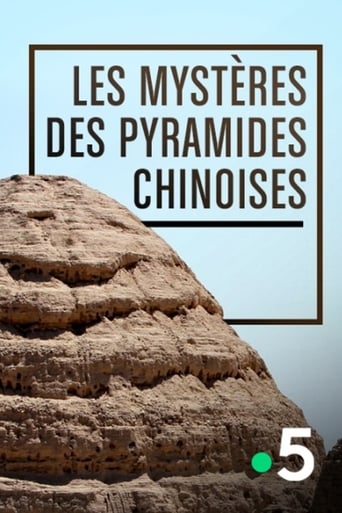
8.0In China, there exists an astonishing place. A burial ground to rival Egypt’s Valley of the Kings, where pyramid tombs of stupendous size are full of astonishing riches. In 221 BC, China's first Emperor united warring kingdoms into a nation that still exists today. To memorialise this achievement, he bankrupted the national treasury and oppressed thousands of workers to build one of the world’s biggest mortuary complexes. China's second dynasty, the Han, inherited the daunting challenge of building larger tombs to command respect and establish their right to rule without running the nation into the ground. Although no Han emperor's tomb has been opened, the tombs of lesser Han aristocrats have revealed astonishing things: complete underground palaces (including kitchens and toilets) and at least one corpse so amazingly well-preserved some believe Han tomb-builders knew how to "engineer immortality".
China's Lost Pyramids
2010
 NR
NRNo synopsis available yet.
Last Days of the Maya
2005
The Poor Knights of Christ and the Temple of Solomon grew quickly into a powerful religious order - only to stand accused of devil worship. Were the Knights Templar betrayed by the Pope or their own greed?
In Search of History - The Knights Templar
1997
A Channel 5 documentary about a Chinese Mummy
The Riddle of The Chinese Miracle Mummy
2004
 NR
NRScientists perform an autopsy on the best preserved mummy ever discovered: that of a Han aristocrat named Lady Dai. More than 2000 years after her death her flesh is still resilient and the blood in her veins is still red. What can she tell us about life in ancient China?
The Diva Mummy
2004
Behind the camera
8.0In China, there exists an astonishing place. A burial ground to rival Egypt’s Valley of the Kings, where pyramid tombs of stupendous size are full of astonishing riches. In 221 BC, China's first Emperor united warring kingdoms into a nation that still exists today. To memorialise this achievement, he bankrupted the national treasury and oppressed thousands of workers to build one of the world’s biggest mortuary complexes. China's second dynasty, the Han, inherited the daunting challenge of building larger tombs to command respect and establish their right to rule without running the nation into the ground. Although no Han emperor's tomb has been opened, the tombs of lesser Han aristocrats have revealed astonishing things: complete underground palaces (including kitchens and toilets) and at least one corpse so amazingly well-preserved some believe Han tomb-builders knew how to "engineer immortality".
China's Lost Pyramids
2010
8.0In China, there exists an astonishing place. A burial ground to rival Egypt’s Valley of the Kings, where pyramid tombs of stupendous size are full of astonishing riches. In 221 BC, China's first Emperor united warring kingdoms into a nation that still exists today. To memorialise this achievement, he bankrupted the national treasury and oppressed thousands of workers to build one of the world’s biggest mortuary complexes. China's second dynasty, the Han, inherited the daunting challenge of building larger tombs to command respect and establish their right to rule without running the nation into the ground. Although no Han emperor's tomb has been opened, the tombs of lesser Han aristocrats have revealed astonishing things: complete underground palaces (including kitchens and toilets) and at least one corpse so amazingly well-preserved some believe Han tomb-builders knew how to "engineer immortality".
China's Lost Pyramids
2010
8.0In China, there exists an astonishing place. A burial ground to rival Egypt’s Valley of the Kings, where pyramid tombs of stupendous size are full of astonishing riches. In 221 BC, China's first Emperor united warring kingdoms into a nation that still exists today. To memorialise this achievement, he bankrupted the national treasury and oppressed thousands of workers to build one of the world’s biggest mortuary complexes. China's second dynasty, the Han, inherited the daunting challenge of building larger tombs to command respect and establish their right to rule without running the nation into the ground. Although no Han emperor's tomb has been opened, the tombs of lesser Han aristocrats have revealed astonishing things: complete underground palaces (including kitchens and toilets) and at least one corpse so amazingly well-preserved some believe Han tomb-builders knew how to "engineer immortality".
China's Lost Pyramids
2010
NRNo synopsis available yet.
Last Days of the Maya
2005
The Poor Knights of Christ and the Temple of Solomon grew quickly into a powerful religious order - only to stand accused of devil worship. Were the Knights Templar betrayed by the Pope or their own greed?
In Search of History - The Knights Templar
1997
A Channel 5 documentary about a Chinese Mummy
The Riddle of The Chinese Miracle Mummy
2004
NRScientists perform an autopsy on the best preserved mummy ever discovered: that of a Han aristocrat named Lady Dai. More than 2000 years after her death her flesh is still resilient and the blood in her veins is still red. What can she tell us about life in ancient China?
The Diva Mummy
2004