
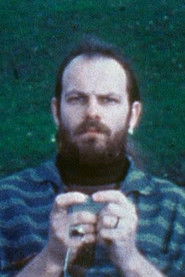
Directing
Jakobois
Born — Died
1950-04-16 — 2022-09-16
Place of birth
Riom, Puy-de-Dôme, France
Known for
Directing
Credits
58 titles
The road which led Jakobois, like many experimental film-makers, to filmic expression was painting. This development he owes to a succession of encounters and personal choices rather than to a university or art school. He has worked in the mediums of sculpture and painting since 1972, influenced by the writings of Jean Dubuffet and the work of Paul Klee, exploring the confluence between minimal art and gestural expression. His first encounters with experimental film date back to 1976, and occurred in the meeting places and specialized programs which at the time proliferated on both banks of the Seine in Paris. He began with using the Super 8 medium, working autonomously as an "artist film ma…
Known for
 5.0
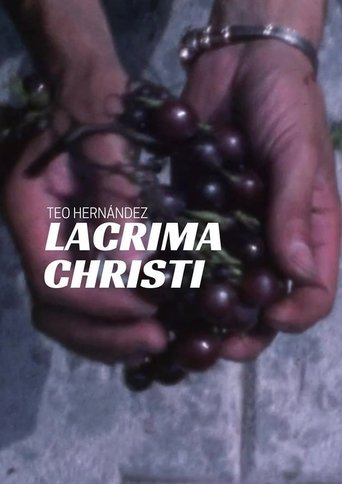
5.0Lacrima Christi is an exploration of the transfer between desire and myth that takes as its starting point a series of objects found in the flea market of Belleville.
Lacrima Christi
1980
 3.2
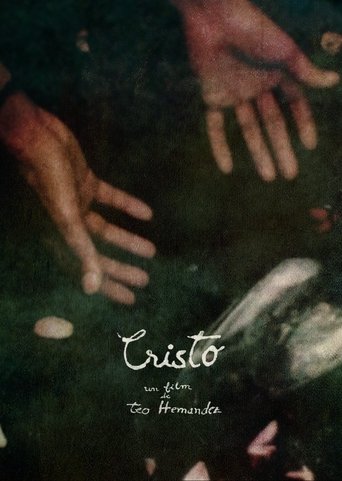
3.2All of history, that of Christ or any other, permeates the world, leaves its mark, modifying and informing history, and all that the human reproduces and creates. The best way for historical interpretation or literary adaptation is to move as far as possible from literal interpretation. That is, it is a contemporary and personal interpretation. The story of Christ is an archetypal story. It has modified and informed a morality and a vision of the human being in the West, it must be taken for what it is and what it has become: matter.
Cristo
1977
 6.0
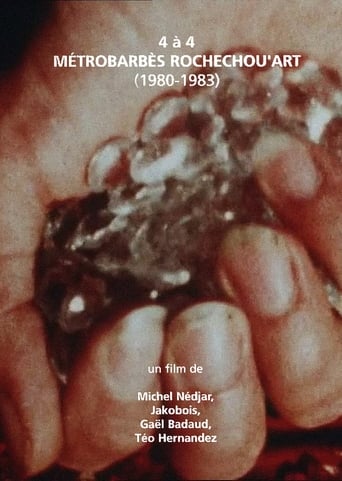
6.0In the early '80s, this collective of artists invented a style of cinema made in 4 hands, where each of the protagonists is also a filmmaker.
4 à 4 Métro-Barbès-Rochechou-Art
1983
 4.9
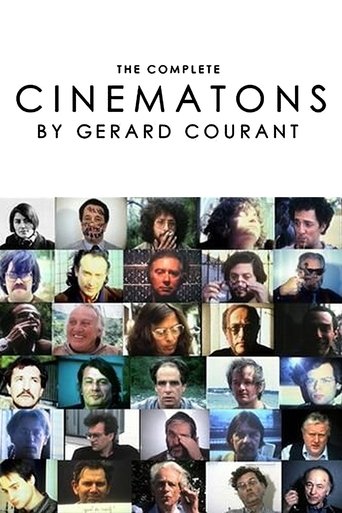
4.9Cinématon is a 156-hour long experimental film by French director Gérard Courant. It was the longest film ever released until 2011. Composed over 36 years from 1978 until 2006, it consists of a series of over 2,821 silent vignettes (cinématons), each 3 minutes and 25 seconds long, of various celebrities, artists, journalists and friends of the director, each doing whatever they want for the allotted time. Subjects of the film include directors Barbet Schroeder, Nagisa Oshima, Volker Schlöndorff, Ken Loach, Benjamin Cuq, Youssef Chahine, Wim Wenders, Joseph Losey, Jean-Luc Godard, Samuel Fuller and Terry Gilliam, chess grandmaster Joël Lautier, and actors Roberto Benigni, Stéphane Audran, Julie Delpy and Lesley Chatterley. Gilliam is featured eating a 100-franc note, while Fuller smokes a cigar. Courant's favourite subject was a 7-month-old baby. The film was screened in its then-entirety in Avignon in November 2009 and was screened in Redondo Beach, CA on April 9, 2010.
Cinématon
1978
 NR
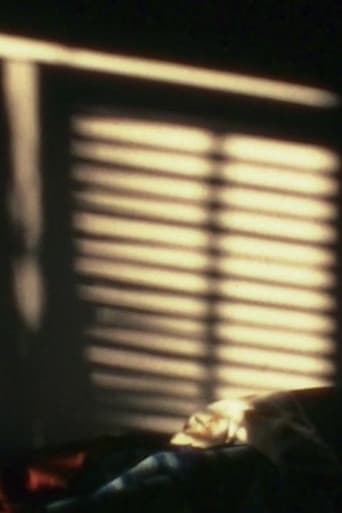
NREyes and ears travel discontinuously through everyday life and the sub-worlds of the city and the body. A fragmented and subjective day-to-day chronicle that outlines a recurring obsession for registering even the most ordinary things, where the least poetic aspects of life, that is to say, the most somber ones, become the eye’s filter.
Fragments
1987
 4.2
4.2No synopsis available yet.
Sur Graal de T.H.
1981
Film credits
1980s · 12 titles
5.0Lacrima Christi is an exploration of the transfer between desire and myth that takes as its starting point a series of objects found in the flea market of Belleville.
Lacrima Christi
1980
6.0In the early '80s, this collective of artists invented a style of cinema made in 4 hands, where each of the protagonists is also a filmmaker.
4 à 4 Métro-Barbès-Rochechou-Art
1983
NREyes and ears travel discontinuously through everyday life and the sub-worlds of the city and the body. A fragmented and subjective day-to-day chronicle that outlines a recurring obsession for registering even the most ordinary things, where the least poetic aspects of life, that is to say, the most somber ones, become the eye’s filter.
Fragments
1987
4.2No synopsis available yet.
Sur Graal de T.H.
1981
 NR
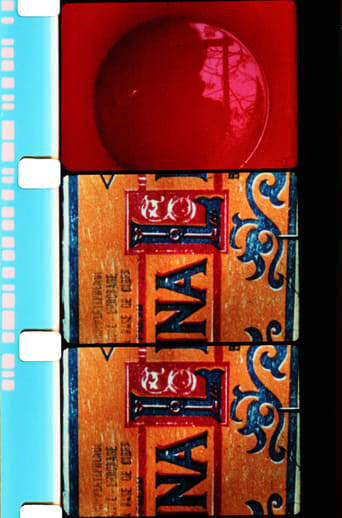
NRTeo Hernandez films waste and scrap found on the pavements of the streets of Paris. “Sidewalks are great subjects: garbage, objects and materials, stains, signs, are a movie subject.”
Mesures de miel et de lait sauvage
1984
 NR
NRChutes de Lacrima Christi is an 95‑minute experimental collage film assembled entirely from unused outtakes of Teo Hernández’s earlier work Lacrima Christi. Co‑created with Gaël Badaud between 1979 and 1980, it repurposes discarded Super 8 color footage into a series of non‑linear vignettes that fuse Christian myth with everyday imagery. Using the “chute” technique—physically gluing scraps of film into new sequences—the film explores the meeting of two cultures, Europe and America, and reveals dreamlike resonances in mundane moments. By reframing offcuts from the Passion tetralogy, Hernández invites viewers to discover hidden narratives and poetic meaning in material that was originally deemed surplus.
Chutes de Lacrima Christi
1984
Reel 26 of Gérard Courant’s on-going Cinematon series.
Cinématon XXVI
1982
 NR
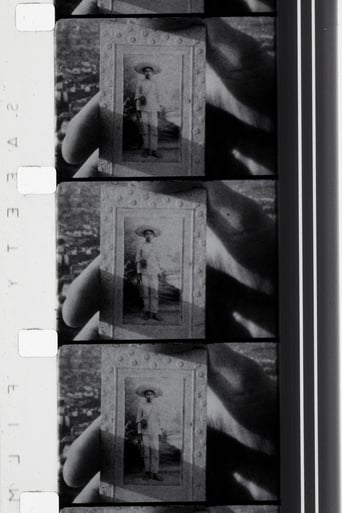
NRAn autobiographical black-and-white short in which Teo Hernández portrays his Purépecha father by holding backlit old photographs atop the Montparnasse Tower while reading a manifesto of sorts on his filmmaking.
Three Drops of Mezcal in a Glass of Champagne
1983
 NR
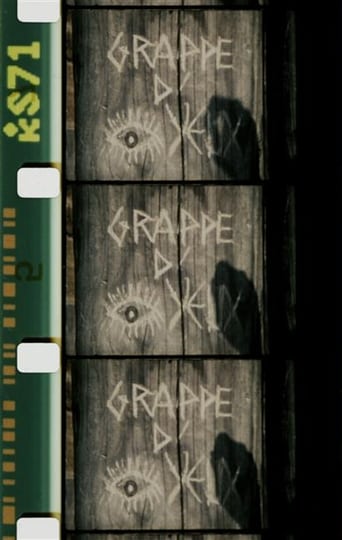
NRThrough the use of portraits, shadow play and reflections, this series of exercises with and from body language compose a "four-handed" look against the notion of authorship: a vindication of the community content (repressed?) in every image.
Bouquet of Eyes
1983
 NR
NROuttakes from the movie
Chutes de Michel Nedjar
1984
 9.0
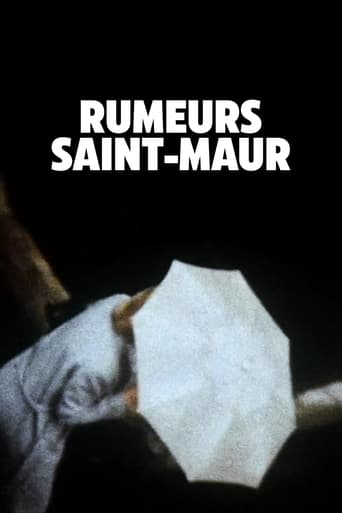
9.0"Sounds of images" come to me from the windows overlooking rue Saint-Maur (the former pilgrims' path to Saint-Denis) and suddenly make me want to take a closer look. "Images", at the same time, spring from T.S.F.'s post, Louis Moreau Gottschalk starts playing on the keyboard of the pedestrian crossing at the bottom, there, just below my windows; Henri Vieuxtemps makes the umbrellas dance to an old American tune and Gaël, on a visit, takes up this tune on his magic flute. "Some naturalists claim that insects adapt to the vegetation around them and modify their physiology accordingly," says Louis Moreau Gottschalk; I claim that some filmmakers adapt to the spectacle around them and modify their perception of the world accordingly. Certainly I am one of them, and I console myself by thinking that I am not the only one of my kind.
Rumeurs Saint-Maur
1986
 NR
NRNo synopsis available yet.
Cinématon n°251 : Jakobois
1982
1970s · 4 titles
3.2All of history, that of Christ or any other, permeates the world, leaves its mark, modifying and informing history, and all that the human reproduces and creates. The best way for historical interpretation or literary adaptation is to move as far as possible from literal interpretation. That is, it is a contemporary and personal interpretation. The story of Christ is an archetypal story. It has modified and informed a morality and a vision of the human being in the West, it must be taken for what it is and what it has become: matter.
Cristo
1977
4.9Cinématon is a 156-hour long experimental film by French director Gérard Courant. It was the longest film ever released until 2011. Composed over 36 years from 1978 until 2006, it consists of a series of over 2,821 silent vignettes (cinématons), each 3 minutes and 25 seconds long, of various celebrities, artists, journalists and friends of the director, each doing whatever they want for the allotted time. Subjects of the film include directors Barbet Schroeder, Nagisa Oshima, Volker Schlöndorff, Ken Loach, Benjamin Cuq, Youssef Chahine, Wim Wenders, Joseph Losey, Jean-Luc Godard, Samuel Fuller and Terry Gilliam, chess grandmaster Joël Lautier, and actors Roberto Benigni, Stéphane Audran, Julie Delpy and Lesley Chatterley. Gilliam is featured eating a 100-franc note, while Fuller smokes a cigar. Courant's favourite subject was a 7-month-old baby. The film was screened in its then-entirety in Avignon in November 2009 and was screened in Redondo Beach, CA on April 9, 2010.
Cinématon
1978
 NR
NRNo synopsis available yet.
Paranorama 1 et 2
1978
 NR
NRFilm in three parts: (1) Paranorama 3 and 4: a handmade Région Centrale. At once observation and description of the realm of vision, of what is possible to see (sound recorded at the time of shooting). (2) Paranorama 5: simple observation of the realm of vision (sound added at a later time: illustration). (3) Pierre Rivière and I: attempt at reading the first lines from Pierre Rivière's testimony, as an embodiment rather than a stage direction.
Lougarou de Nouillorque
1978
Behind the camera
6.0In the early '80s, this collective of artists invented a style of cinema made in 4 hands, where each of the protagonists is also a filmmaker.
4 à 4 Métro-Barbès-Rochechou-Art
1983
 NR
NROuttakes from the movie
Chutes de 4 à 4 Métro-Barbès-Rochechou-Art
1983
No synopsis available yet.
Fleur Bleue
1980
 NR
NRNo synopsis available yet.
Déjà ? vu
1980
Self-observation of the sleeper in an elliptical time ordered according to the rhythm of the shots. Revelation of a gesture that cinema does not usually take into account.
Ma nuit
1979
NRThrough the use of portraits, shadow play and reflections, this series of exercises with and from body language compose a "four-handed" look against the notion of authorship: a vindication of the community content (repressed?) in every image.
Bouquet of Eyes
1983
Will the homosexual find his alter-ego? Who's on the phone? While the hair is cut, the faces parade, which one is the good one? So many questions-pretexts for a visual and sound delirium.
Rézo-zéro
1981
No synopsis available yet.
Mon tricot (Thanx to Wilma Schoer)
1979
No synopsis available yet.
Souvenir-Souvenir
1978
No synopsis available yet.
F.H. 79 (Arrête ton cinéma)
1979
No synopsis available yet.
Visions Fugitives
—
Eclamorphoses balances a loop of sound (by La Monte Young) with loops of visual material derived from re-photographed slides of amorphous painted abstractions which are carefully and systematically permuted by super-impositions, scratches, punctures, slices, reticulated paint-on-the-film-strip, step-printing, changes of projector speed, and finally zooming of the image with the projector lens and live manipulation of the projector and light beam (with a hand-held prism).
Eclamorphoses
1977
No synopsis available yet.
? U.N.K. (Royaume de Nature Non Identifiée)
1980
 9.0
9.0"...the main thing, both during filming and during editing, was not to pay attention, simply to wait to be surprised by a detail and let myself be carried away to another visualization in a dance-like movement."
Image Noise (Osmin's Windows)
1984
 NR
NRWhen going from a painting job to a cinematographic work, I felt the need to establish the basic concepts of my creative activity. The day before I left the workshop where I had been working for two years, I decided to make a film about the glances thrown by the passers-by of the rue Louis-Blanc in the window of this room. —Jakobois
Du regard comme objet (b)
1977
No synopsis available yet.
For Renésio (Tribute to a Found Friend)
1984
9.0"Sounds of images" come to me from the windows overlooking rue Saint-Maur (the former pilgrims' path to Saint-Denis) and suddenly make me want to take a closer look. "Images", at the same time, spring from T.S.F.'s post, Louis Moreau Gottschalk starts playing on the keyboard of the pedestrian crossing at the bottom, there, just below my windows; Henri Vieuxtemps makes the umbrellas dance to an old American tune and Gaël, on a visit, takes up this tune on his magic flute. "Some naturalists claim that insects adapt to the vegetation around them and modify their physiology accordingly," says Louis Moreau Gottschalk; I claim that some filmmakers adapt to the spectacle around them and modify their perception of the world accordingly. Certainly I am one of them, and I console myself by thinking that I am not the only one of my kind.
Rumeurs Saint-Maur
1986
No synopsis available yet.
Schizodrame
1977
Diary-films, portraits of visitors. Visiteurs is the result of great editing work, while Portrait de Gaël was made in two times, two places, without editing, improvising with the camera.
Visiteurs + Portrait de Gaël
1981
No synopsis available yet.
Vues du pont
1994
No synopsis available yet.
La fenêtre et le néant
1977
These are two diaries (filmed) from the holidays at the foot of the cliffs of Etretat, which served as a style exercise for me.
Deux films en aiguille
1987
No synopsis available yet.
Child Play - Traffic Jam
1990
No synopsis available yet.
Le dit de l'escalator
1989
No synopsis available yet.
Paris vue par vue
1987
No synopsis available yet.
Punky's Way
1978
Throughout the trip to present the action film Le Sexe du loup-garou in Lyon, in 1980, Jakobois and his assistant undertake a travel diary. The Super 8 camera, a very common type (it does not allow focusing) passes alternately from one person's hands to the other's. There is even a sequence filmed by a passing observer (Catherine Haubois). Different filming styles were used within the limits of the small camera's possibilities. The trip continues with a family visit of which some reminiscences were captured. The return was through Vichy.
Deux poules dans la neige
1980
No synopsis available yet.
Un an d'une vie
1988
 NR
NRSarah B. relives her awkward film debut. On a pedestal table, a headline, on the front page of France-Soir, challenges her, she immediately transcends it, then resumes "Phèdre" one last time under the astonished gaze of the kids of Belleville before spending one last summer in Belle-Île.
Horrible Tragedy
1980
 NR
NRNo synopsis available yet.
Les ponts d'Asnières
1987
No synopsis available yet.
Cinema de camera 1. 2. 3. 4.
1986
No synopsis available yet.
Le sexe du Loup-Garou
1978
 NR
NRFilm made by passing - passing through - passing through - passing from an erotic desire to a filmic desire. The eye slipping from one object of desire to another. Some pass, others enjoy. Ejaculation film during the transition from winter to spring. Suites d'enfilades, suites d'enculades. Suites of variations on the theme of the passage. Passage from underground to overground. Switch from black and white to color. Passage from day to night - passengers in the shade. Passage of desire. Switching from one image to another. Passage - message. Passage from the near to the far, from the far to the near: setting in the abyss. New fleeting visions in a public passage that does not lead to the metro.
Passage du thermomètre
1983
 NR
NRImages from the bridge over Canal Saint-Martin in Paris. The inland waterway vessels Rose and Pluie de roses pass each other. Changes pile up and the camera unravels them, through shooting, for a mise en abyme of the fall.
A Rain of Roses (To Rose Lowder)
1984
 NR
NRPassage du désir, a prelude by Jakobois uses the pornographic video-image to which a rhythmical treatment has been given. The sexual activity is explicit. We can clearly understand what is going on. Ultimately there Is the Impression of a stained glass window fixed over the screen. It seems that the desire of the film-maker is to create a new sensual vision out of the perception of the video Image.
Passage du désir
1988
Film based on a phrase by Teo Hernández: "Each new film is for me a step into the void, into darkness, into mystery." Film-poem about the possibility of making an entire film about a face of the moon, a face of tears; Mother of souls, mother of our souls, the moon illuminates our cinematic nights – from its enigmatic roundness arises the origin of our tears at the end of the day, the dawn of our souls, the dawn of our tears.
Lune à tics
1984
NRNo synopsis available yet.
Paranorama 1 et 2
1978
No synopsis available yet.
Passage des petit Métiers
1993
Intervalometered cafe scene from 1988. The transient beauty of Paris in Summer captured on so many 8mm frames.
Sans titre (25 julliet 1988)
1989
March 29, 1983 (2:30 p.m.): filming of "Sur la voie" begins. Along the way the words guide me; It is about reaching them on the fly to try to reveal them immediately. There is no reflection that serves as support, it is about assembling the passage to the image of the word. A word is never isolated, it exists in a support, in a frame. Let's try to find the light and movement that make cinema, hurt ourselves in body and soul, just to see...
Film sans cocaïne
1985