
Directing
Hannah Wilke
Born — Died
1940-03-07 — 1993-01-28
Place of birth
New York, New York, U.S.
Known for
Directing
Credits
9 titles
Hannah Wilke was an American artist known for her confrontational work which addressed issues relating to sexuality and femininity. Her groundbreaking performance and photographic pieces criticized the history of art for glorifying the male gaze and sought to reclaim the image of the female body. "To diffuse self-prejudice women must take control of and have pride in the sensuality of their own bodies and create a sensuality in their own terms, without referring to the concepts degenerated by culture," the artist said. In one of her most important works, S.O.S. Starification Object Series (1974–75), the artist takes nude self-portraits of herself covered in small vagina-shaped pieces of chew…
Known for
 NR
Hello Boys documents a performance at the Gallery Gerald Piltzer in Paris. Seen through the glass of a large fish tank, Wilke, nude, performs a repertoire of studied erotic gestures to the accompaniment of rock music. Entrapped in her fish bowl, on display behind glass, she is both subject and object. Suggesting the iconic female figure of a mermaid, with its ambiguous implications of sexual power and powerlessness, Wilke explores the representation of female sexuality and the male gaze.
Hello Boys
1975
 10.0
Two screens of film about - and sometimes shot by - Claes Oldenburg, detailing his inspiration, his methods and his relationship with his partner Hannah Wilke.
The Great Ice-Cream Robbery
1971
Philly documents a 1976 performance at the Philadelphia Museum of Art, in which Wilke interacts with Marcel Duchamp's Large Glass. Edited by John Sanborn, the piece juxtaposes behind-the-scenes dialogue and preparations with the performance itself, showing us a playful Wilke.
Philly
1977
 NR
Assuming roles of both performer and director in "Gestures", Wilke explores her own face as artistic material. Whether kneading her skin into misshapen contortions or enacting stereotypical poses, she stages a fluid, continuous sequence of actions in front of the camera. Her performance calls attention to and deconstructs familiar representations of women, as well as encourages the viewer's personal or cultural associations with these gestures while also reclaiming agency over such depictions as her own.
Gestures
1974
 NR
In this haunting performance, Wilke conflates the private and the public as autobiographical theater. The audience "eavesdrops" on a series of phone messages intended for Wilke, recorded from her answering machine. This voice-over litany of messages becomes an intimate if one-sided narrative of Wilke's life, a diary of personal and professional relationships — family, lovers, friends, colleagues — that is oddly elegiac. Wilke strips to reveal that her body is covered with the names of the individuals we have heard speaking; she then methodically removes the names until all traces have disappeared.
Intercourse With...
1978
 NR
Hannah Wilke, upon Tschinkel's suggestion, cuts fellow artist, Claes Oldenburg's hair, which is taped for Tschinkel's Manhattan Cable TV show, Inner-Tube Video. This memorable piece reflects a caring relationship.
Hannah's Haircut
1975
Film credits
1970s · 3 titles
10.0Two screens of film about - and sometimes shot by - Claes Oldenburg, detailing his inspiration, his methods and his relationship with his partner Hannah Wilke.
The Great Ice-Cream Robbery
1971
NRAssuming roles of both performer and director in "Gestures", Wilke explores her own face as artistic material. Whether kneading her skin into misshapen contortions or enacting stereotypical poses, she stages a fluid, continuous sequence of actions in front of the camera. Her performance calls attention to and deconstructs familiar representations of women, as well as encourages the viewer's personal or cultural associations with these gestures while also reclaiming agency over such depictions as her own.
Gestures
1974
NRHannah Wilke, upon Tschinkel's suggestion, cuts fellow artist, Claes Oldenburg's hair, which is taped for Tschinkel's Manhattan Cable TV show, Inner-Tube Video. This memorable piece reflects a caring relationship.
Hannah's Haircut
1975
Behind the camera
NRHello Boys documents a performance at the Gallery Gerald Piltzer in Paris. Seen through the glass of a large fish tank, Wilke, nude, performs a repertoire of studied erotic gestures to the accompaniment of rock music. Entrapped in her fish bowl, on display behind glass, she is both subject and object. Suggesting the iconic female figure of a mermaid, with its ambiguous implications of sexual power and powerlessness, Wilke explores the representation of female sexuality and the male gaze.
Hello Boys
1975
Philly documents a 1976 performance at the Philadelphia Museum of Art, in which Wilke interacts with Marcel Duchamp's Large Glass. Edited by John Sanborn, the piece juxtaposes behind-the-scenes dialogue and preparations with the performance itself, showing us a playful Wilke.
Philly
1977
NRAssuming roles of both performer and director in "Gestures", Wilke explores her own face as artistic material. Whether kneading her skin into misshapen contortions or enacting stereotypical poses, she stages a fluid, continuous sequence of actions in front of the camera. Her performance calls attention to and deconstructs familiar representations of women, as well as encourages the viewer's personal or cultural associations with these gestures while also reclaiming agency over such depictions as her own.
Gestures
1974
NRIn this haunting performance, Wilke conflates the private and the public as autobiographical theater. The audience "eavesdrops" on a series of phone messages intended for Wilke, recorded from her answering machine. This voice-over litany of messages becomes an intimate if one-sided narrative of Wilke's life, a diary of personal and professional relationships — family, lovers, friends, colleagues — that is oddly elegiac. Wilke strips to reveal that her body is covered with the names of the individuals we have heard speaking; she then methodically removes the names until all traces have disappeared.
Intercourse With...
1978
 NR
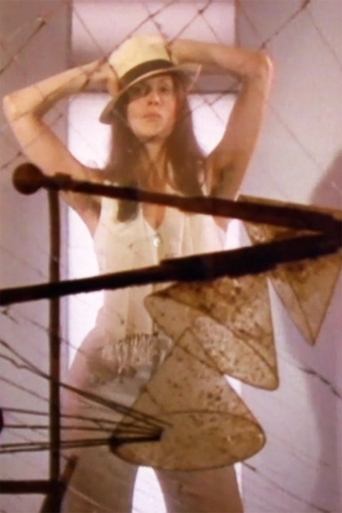
Hannah Wilke Through the Large Glass documents one of Wilke's most effective and well-known performances, in which she performs a deadpan striptease behind Duchamp's The Bride Stripped Bare by Her Bachelors, Even (also known as The Large Glass) at the Philadelphia Museum of Art. Dressed in a fedora and a white suit, and evoking the style of 1970s' fashion icons such as Helmut Newton and Yves Saint-Laurent, Wilke strikes a series of poses and then strips. She is seen through the glass of the Duchamp sculpture. In her self-conscious affectation of the often absurdist posturing of a fashion model, Wilke willfully uses her own image and her sexuality to confront the erotic representation of women in art history and popular culture.
Hannah Wilke Through the Large Glass
1976
This documentation of a 1982 event at the A.I.R. Gallery in New York features a riveting performance by Wilke, who is nude (except for high heeled-shoes) and aiming a gun. As she stalks the performance space like Emma Peel crossed with an exotic dancer, two cameramen follow her, recording her every movement. Dissonant music and a voiceover text about art, violence, power and gender provide the aural counterpoint to her often provocative physical gestures.
So Help Me Hannah
1982