
Writing
Krzysztof Magowski
Born
1952-05-04 (74)
Place of birth
Poznań, wielkopolskie, Polska
Known for
Writing
Credits
14 titles
Known for
 8.0
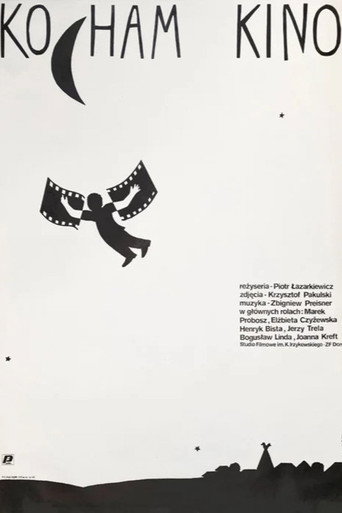
The manager of a small provincial cinema finds her lost son, and he tries to save the movie theater.
I Love Cinema
1988
The film reveals the mechanisms of the communist institution of censorship. Famous filmmakers - Kazimierz Kutz, Andrzej Wajda, Krzysztof Kieslowski, Filip Bajon and Marcel Lozinski - talk about their contacts and experiences with censors, how their films were censored, what parts were considered contrary to the ideology of the socialist state. These interferences were often of an absurd nature. At the same time, the filmmakers mention how much of the intended content they managed to smuggle out. The film is also an attempt to analyze and summarize the role of censorship in a totalitarian state and its impact on culture and art.
Tren na śmierć cenzora
1992
Ignacy Jan Paderewski returns to Poland. A journalist who is supposed to describe his arrival is called to the editorial office.
Powrót do Polski
1988
A documentary in which a picture of pre-war Poznan is reconstructed with the help of archival materials from regional collections and staging. The structural axis of the film is a radio broadcast from August 1939 with the participation of well-known and respected residents of the city, who answer the question: is there going to be a war?
Will There Be a War
1986
 NR
Czeslaw Niemen, who died ten years ago, was an icon for several generations of Poles. In Poland under communism he managed to raise popular music to the rank of true art; he also won renown abroad. He was born in 1939 in Stare Wasiliszki (today's Belarus) and his biography was largely shaped by the tempestuous history of this part of Europe. The film is a portrayal of the charismatic musician, made up of unique archive materials and reminiscences of his family and friends.
A Dream of Warsaw
2014
The patients of a provincial psychiatric hospital reminisce about their lives: a man exiled to Russia in 1940, a girl who served as a liaison during the Warsaw Uprising, a former partisan, a textile factory worker. Among the younger ones is an epilepsy patient, a bearded man having troubles with the militia, a blind woman, and a doctor, who ended up working there due to a collapse of his personal and professional life. Their words are accompanied by archival footage.
Na etapie
1983
Film credits
Behind the camera
The film reveals the mechanisms of the communist institution of censorship. Famous filmmakers - Kazimierz Kutz, Andrzej Wajda, Krzysztof Kieslowski, Filip Bajon and Marcel Lozinski - talk about their contacts and experiences with censors, how their films were censored, what parts were considered contrary to the ideology of the socialist state. These interferences were often of an absurd nature. At the same time, the filmmakers mention how much of the intended content they managed to smuggle out. The film is also an attempt to analyze and summarize the role of censorship in a totalitarian state and its impact on culture and art.
Tren na śmierć cenzora
1992
Ignacy Jan Paderewski returns to Poland. A journalist who is supposed to describe his arrival is called to the editorial office.
Powrót do Polski
1988
A documentary in which a picture of pre-war Poznan is reconstructed with the help of archival materials from regional collections and staging. The structural axis of the film is a radio broadcast from August 1939 with the participation of well-known and respected residents of the city, who answer the question: is there going to be a war?
Will There Be a War
1986
NRCzeslaw Niemen, who died ten years ago, was an icon for several generations of Poles. In Poland under communism he managed to raise popular music to the rank of true art; he also won renown abroad. He was born in 1939 in Stare Wasiliszki (today's Belarus) and his biography was largely shaped by the tempestuous history of this part of Europe. The film is a portrayal of the charismatic musician, made up of unique archive materials and reminiscences of his family and friends.
A Dream of Warsaw
2014
The patients of a provincial psychiatric hospital reminisce about their lives: a man exiled to Russia in 1940, a girl who served as a liaison during the Warsaw Uprising, a former partisan, a textile factory worker. Among the younger ones is an epilepsy patient, a bearded man having troubles with the militia, a blind woman, and a doctor, who ended up working there due to a collapse of his personal and professional life. Their words are accompanied by archival footage.
Na etapie
1983
 7.5
The esteemed transplantologist is the victim of a conspiracy of his colleagues, as a result of which his brain is transplanted into a pig.
Piggate
1990
7.5The esteemed transplantologist is the victim of a conspiracy of his colleagues, as a result of which his brain is transplanted into a pig.
Piggate
1990
Sie macie ludzie is a documentary about the vocalist of Dżem - Ryszard Riedel. It includes interviews with former band members (those present did not agree to be interviewed), Ryszard's friends, his family, and several archival statements of the singer.
Sie macie ludzie
2004
Sie macie ludzie is a documentary about the vocalist of Dżem - Ryszard Riedel. It includes interviews with former band members (those present did not agree to be interviewed), Ryszard's friends, his family, and several archival statements of the singer.
Sie macie ludzie
2004